Kasparov: Russians are not angry because Russia committed a crime against Ukraine. They are angry because Putin cannot win.
They do not criticize him for killing Ukrainians — they criticize him for killing too few and too slowly.
🎙️ “I’ve Lived in Both — The Difference Is Obvious”
A man who has lived in Russia, Ukraine, Ukrainian Crimea, and now in occupied Crimea says the difference between Ukraine and Russia is enormous — economically, in terms of freedom, and in mentality.
And this is where it gets uncomfortable for many narratives.
Because when someone has seen both systems from the inside, propaganda stops working. You don’t compare slogans — you compare how people live, how they speak, how they breathe under pressure.
He describes occupation not as something abstract, but as something people feel daily: fear, control, silence, and the slow disappearance of normal life.
At the same time, he shares something even more important — what people in occupied territories actually think.
Many of his friends in Donbas blame the police who betrayed Ukraine. Because without that internal collapse, without those who switched sides, the scenario could have been completely different. Occupation doesn’t start only with tanks — it starts when institutions inside the country stop resisting.
And here is the part that most people outside don’t want to hear:
A lot of people in Donetsk, Luhansk, Crimea would want to fight for Ukraine. Not hypothetically — genuinely. But they don’t. And the reason, according to him, is not fear of Russia alone, but also distrust toward the system they might return to — especially structures like TCC, which are essentially a mafia. He also says that the best outcome for everyone would be if Russia were to collapse as a state.
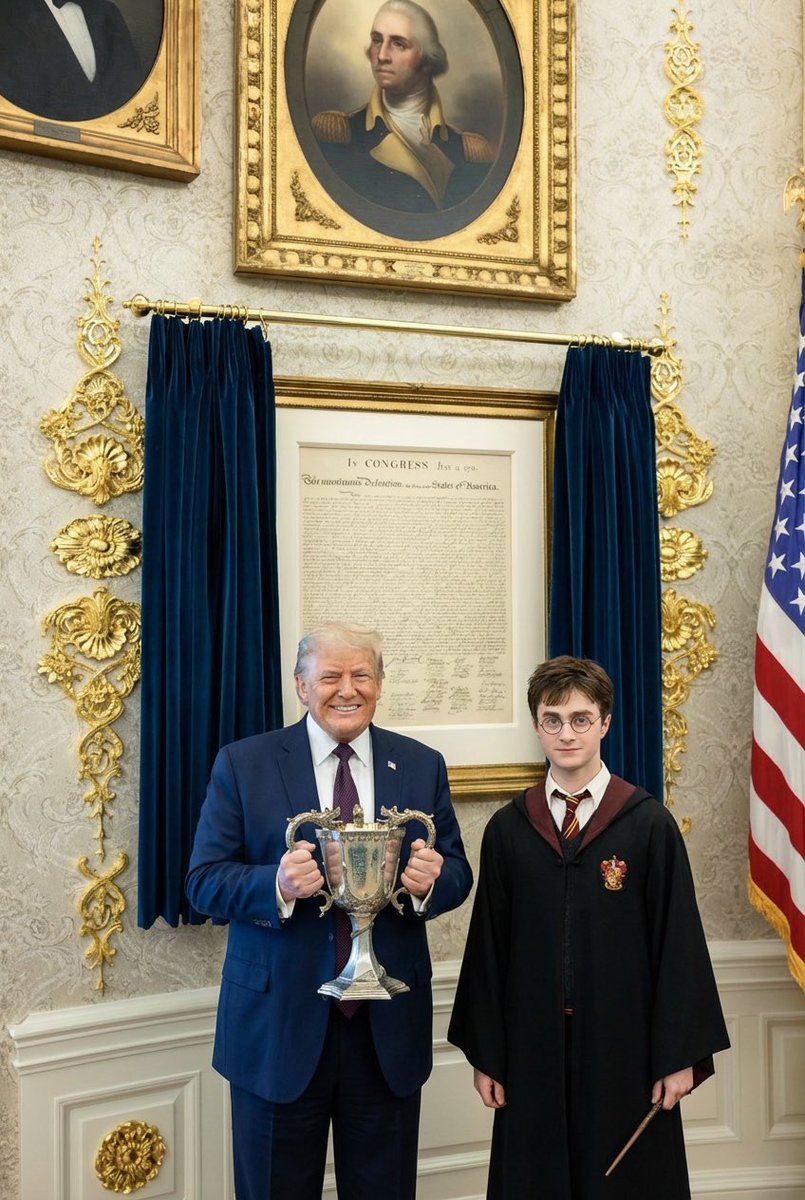
President Donald J. Trump meets with Harry Potter of Hogwarts in the Oval Office, during which Mr. Potter presented the President with his Triwizard Cup in recognition of the President’s extraordinary proficiency in the dark arts of misinformation, illusion and reality distortion. ✨
Remember the price Ukrainians pay every single day.
No home. No walls. No safety. Yet still alive. Today, just surviving feels like a luxury.
This isn’t a story about luck.
It’s the story of the unimaginable cost we bear to keep living… while the world merely watches.
Halyna Ivanova
Дослідження Джона МакВортера — професора лінгвістики з Колумбійського університету, який вивчав складність мов.
Він проаналізував понад 200 мов світу за параметрами: граматика, словотвір, фонетика, система відмінків — і виклав результати в статті, яка підірвала лінгвістичне ком’юніті.
Цитата, яку запам’ятали назавжди:
«Українська мова — це лінгвістичний парадокс. Вона має 7 відмінків, 3 роди, складну систему дієслів, але при цьому ЛОГІЧНІША за англійську».
Він пояснював:
«У більшості складних мов є виключення з виключень. Латина, німецька, французька — там треба вчити напам’ять тисячі форм.
А українська побудована як конструктор Lego. Є правила — і вони ПРАЦЮЮТЬ. Майже немає неправильних дієслів, як в англійській.
Ви розумієте систему — і можете створити будь-яке слово».
Найбільше його вразило словотворення.
Він показував приклад:
«читати» → «прочитати», «зачитатися», «дочитати», «перечитати», «недочитати», «вичитати», «зачитати»…
«Одне слово породжує 15+ смислів через префікси. При цьому КОЖЕН носій інтуїтивно розуміє різницю між “зачитатися” і “зачитати”. Це генетична пам’ять мови, якій тисячі років».
А потім він сказав фразу, яку цитують по всьому світу:
«Англійська спрощувалася століттями, щоб стати lingua franca. Ми втратили відмінки, роди, складні форми — заради простоти.
А українська зберегла ВСЮ складність і при цьому залишилася логічною.
Це означає одне: носії цієї мови мають неймовірну когнітивну гнучкість».
нагадую.
якщо у вас є непотрібні речі: одяг, посуд, постільна білизна, ковдри та подушки, будь ласка, не поспішайте їх викидати. приділіть трохи часу, знайдіть волонтерський пункт у вашому місті та привезіть ці речі туди.
переселенці все ще існують.
і їх тільки більшає.