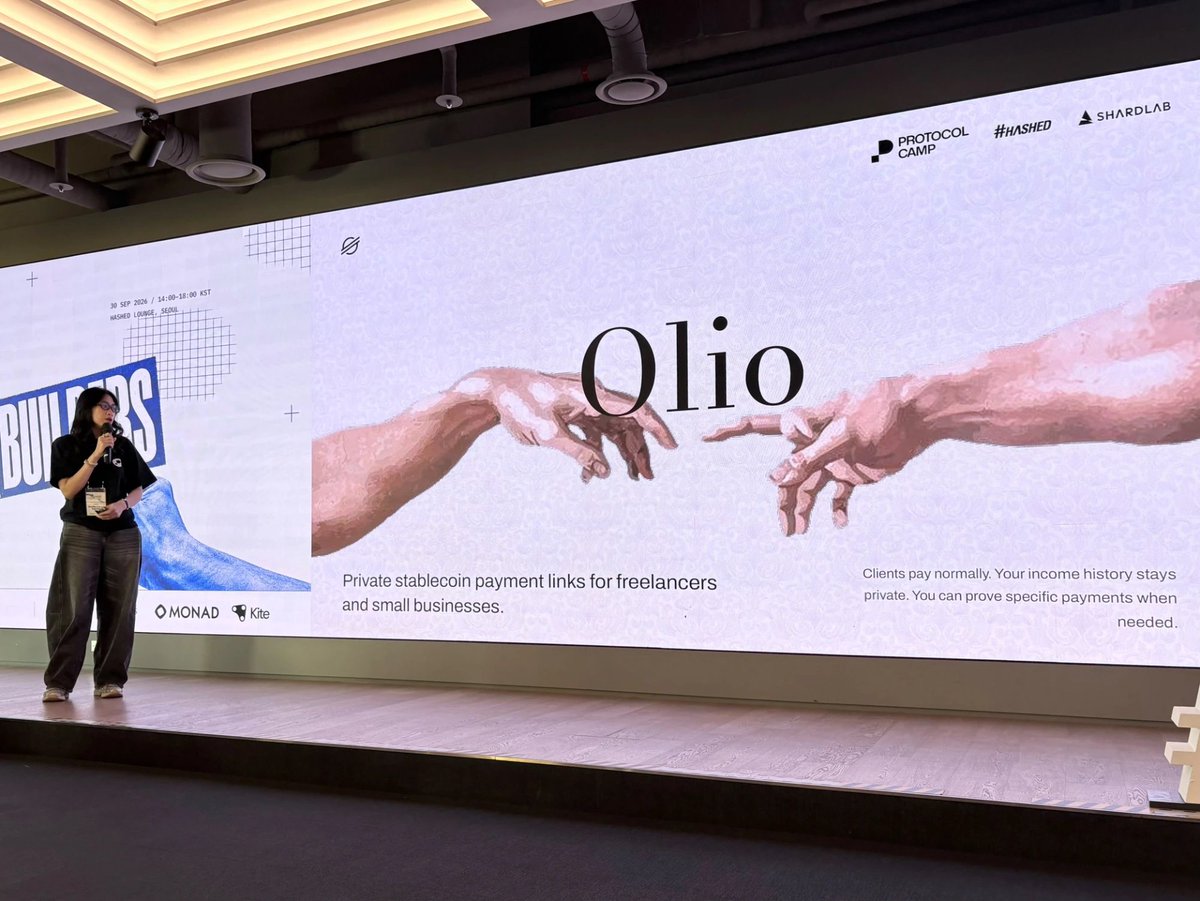
Olio is at HSC Singapore, Fairmont.
Find us near the @Trezor & @StellarOrg stage. Talk private payments with us, leave with free Olio merch.
What you earn is nobody's business, free merch is everybody's.
@Indo_Stellar@riseinweb3
HSC Asset Management Singapore, October 8, 14:00–14:40
Trezor & Stellar's Stage. Panel: Onchain Asset Security
Register: https://t.co/NqKueUbGUK
Speakers
▫️Pauline Barnades (@PauChan23), Technical Product Manager at @lavanetxyz Foundation
▫️Jag Foo (@blocksaurus), Chief Security and Policy Officer at @Safeheron
▫️Daniel Lee, CEO at @CactusCustody
▫️Aneirin Flynn, Co-Founder & CEO at @getfailsafe
▫️Jan Šetina, Firmware Product Lead at @Trezor
This panel gets into where onchain asset security actually holds up today, and where it still doesn't
See you there!
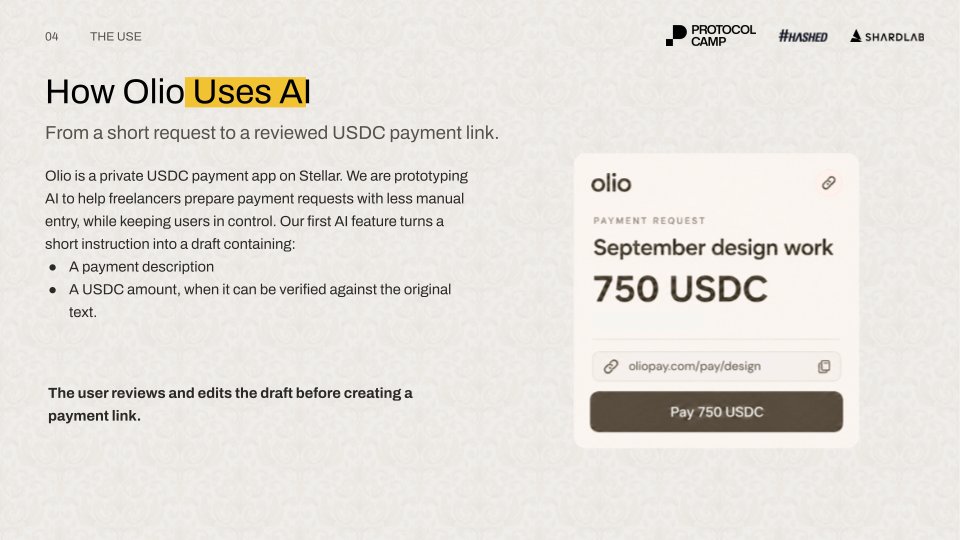
Olio got asked how their team uses AI. Most of the answer covered what the AI can't touch.
The model drafts a payment request from one line you type. It never sees your keys or your payment history, and it can't pick a recipient or send money.
Invoicing is the chore I'd hand off first. Deciding who gets paid stays with me, and that's where they drew the line too.
Same rule as the payments: private by default, provable when needed. The drafting is a prototype for now, and the payment links run on Stellar testnet.
Try the flow here: https://t.co/P4YeEsD7S6
In a privacy product, the AI can't be the leak. Same principle as every Olio payment link.
Private by default. Provable when it counts.
The AI drafting is still a prototype, but private payment links are already live on Stellar testnet.
Try it: https://t.co/O3HFvkkWBz
What the model never gets:
- Your wallet keys
- Your private notes
- Your payment history
- The power to pick a recipient or send money
Only the text you type is sent. Prompts aren't stored or logged.
Every on-chain payment is public by default. Your balance, who you pay, your full history.
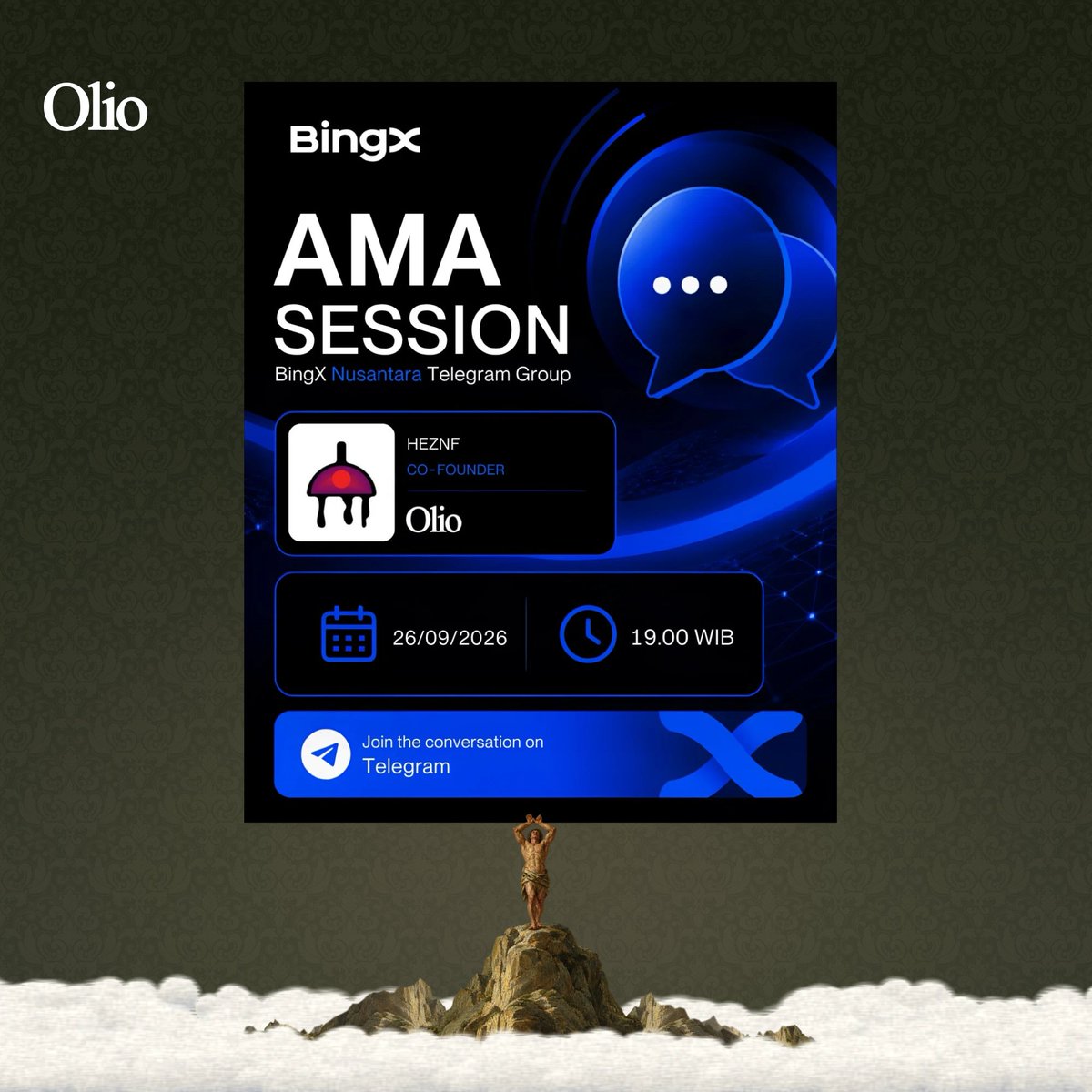
Our co-founder @HeznFatkhan joins @BingXNusa for an AMA on why payments need privacy.
Sat, Sep 26 · 19:00 WIB
Telegram voice chat
3 Olio merch up for grabs
https://t.co/vE8rGkRxi9
Olio is officially in @ProtocolCamp Cohort 10.
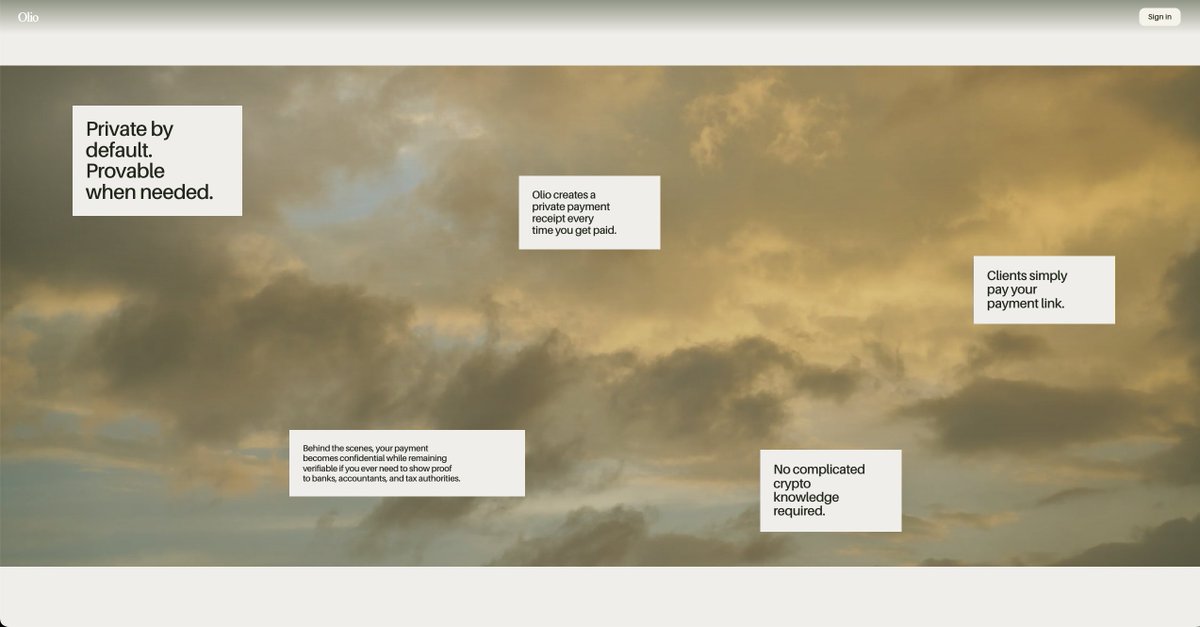
We build private @USDC payments on @StellarOrg. Balances and payment history stay shielded, and any single payment is still provable when a client asks.
Private by default. Provable when it counts.
https://t.co/O3HFvkkoM1
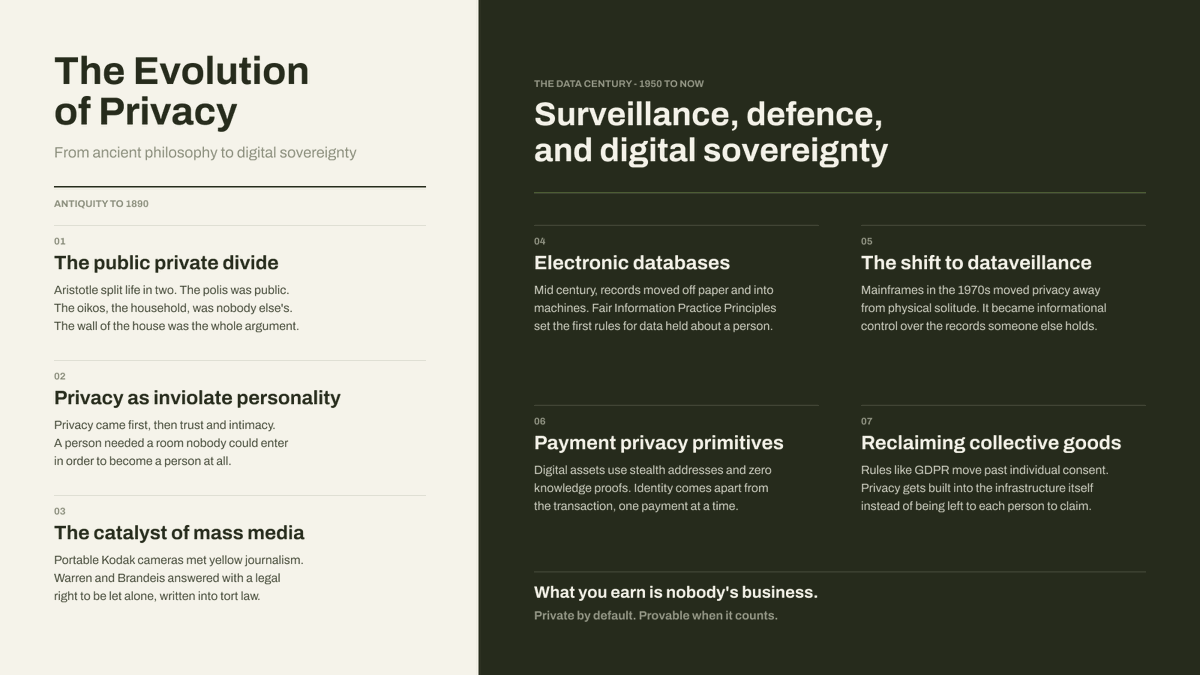
Why privacy matters more than ever.
Privacy protects human dignity, personal autonomy, and democratic freedom. Here is why it remains a fundamental pillar of a free society:
- The right to be let alone. In 1890, Samuel Warren and Louis Brandeis defined privacy as "the right to be let alone," shielding an individual's "inviolate personality" against intrusive new technologies.
- Informational control. Sociologist Alan Westin defined privacy as a person's claim to determine "when, how, and to what extent" information about them reaches others.
- A gateway right. Privacy makes freedom of thought, expression, and political association possible.
- Stopping the chilling effect. Pervasive surveillance pushes citizens to self-censor and conform out of fear of being watched.
- Technological safeguards. From Phil Zimmermann's PGP in 1991 to the EU's GDPR, protecting privacy takes both cryptographic defense and legal accountability.
Privacy preserves who we are.