🇨🇳BONE GLUE. That's what Chinese scientists have invented, and it fixes broken bones in 3 minutes.
No metal plates. No screws. No big surgery. Just inject it, and the broken pieces bond together in minutes, even in a bloody surgical site.
In one trial, a shattered wrist was fully repaired through a tiny 3cm cut. Three months later, full recovery, zero complications.
Over 150 patients have already been treated. Clinical trials are ongoing.
Photo: AI Generated
Sources:
https://t.co/kbniLAeuD0
https://t.co/0sBiJtsSlM
https://t.co/LsNVVTfM1P
@politicsusa46 Grumpy Chinese Guy is his name. He was more on point when he was living in north america, as he had a stake in the game. But now that's he's moved back to China, i think he's softened
Seven-year-old Cassidy Baracka vomited for over eight hours after receiving her first Covid mRNA injection.
She was then given a second dose, which proved fatal.
Despite this, her death certificate says she died from Covid-19.
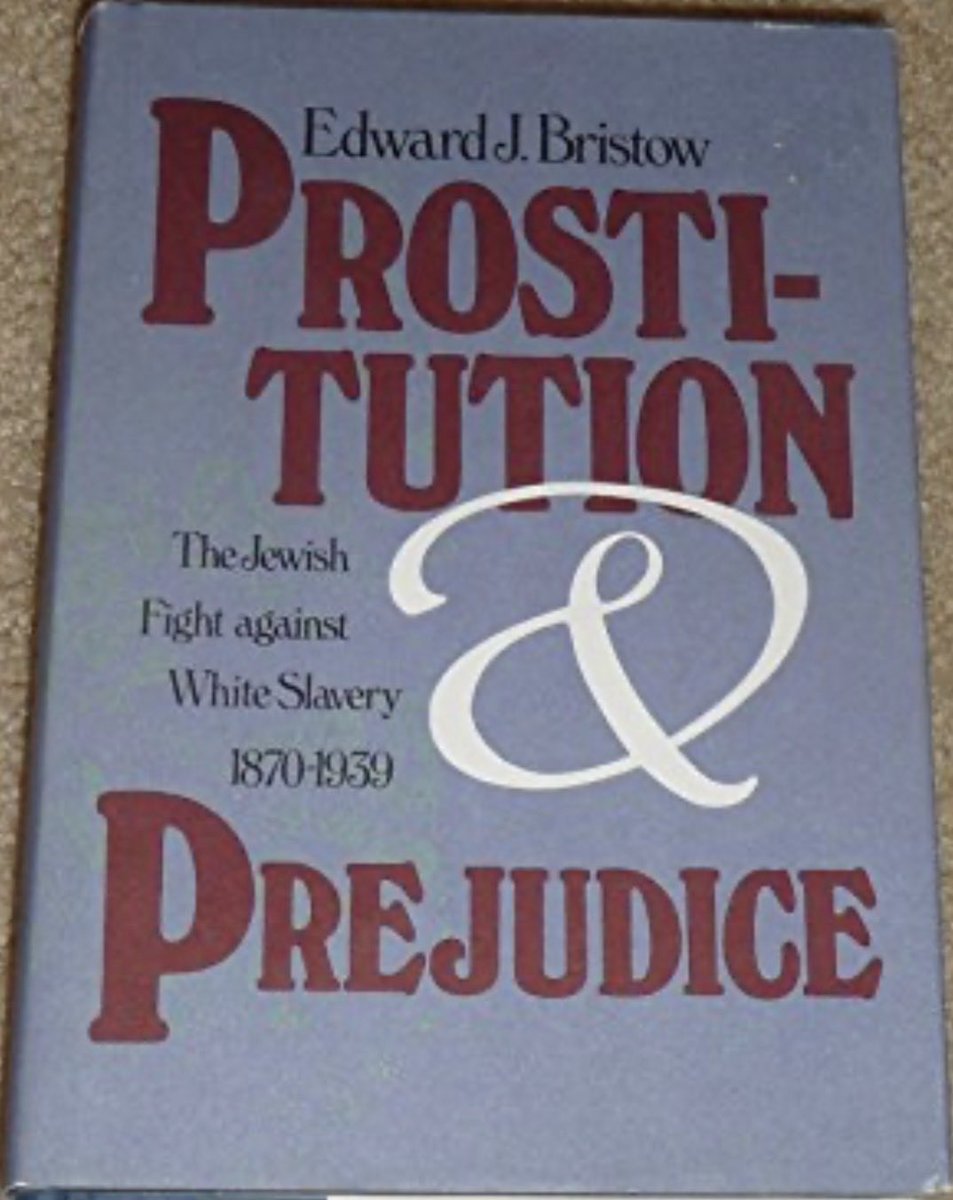
This is the book that is impossible to find, the one you will never hear about in school, the suppressed history they prefer stays buried: Edward J. Bristow’s Prostitution and Prejudice: The Jewish Fight Against White Slavery, 1870–1939.
It is the meticulously documented, stomach-churning exposé of how Jewish criminal syndicates especially the infamous Zwi Migdal built a vast international empire of sexual slavery that preyed on poor, desperate young women and teenage girls from Eastern Europe.
The girls (and young women) in Bristow’s Prostitution and Prejudice were overwhelmingly teenagers and very young women typically between 12-15 years old…oldest being 22 years old.
The “Meat Markets” Naked Auctions Upon Arrival
Newly arrived girls were ordered to strip completely naked in places like the Hotel Palestina or Café Parisienne in Buenos Aires. They were then paraded, inspected, groped, and auctioned off like livestock to pimps and brothel owners. This “meat market” turned human beings into commodities right after the hellish voyage. The largest brothels housed 60–80 women each, with the Zwi Migdal ultimately controlling around 2,000 such hellholes and roughly 4,000 women in Argentina alone at its peak.
Rape and “Breaking In” Starting on the Ships
The abuse often began the moment the girls were at sea. Many were raped repeatedly during the transatlantic crossing by the very men who had lured them (or their accomplices). Young virgins were especially targeted“broken in” through repeated rape, beatings, and starvation to destroy any will to resist before they even reached South America.
Fake Marriages and Total Betrayal by Their Own People
Pimps used the “shtille chupah” a secret religious wedding ceremony with no legal validity to trick girls into thinking they were married and heading to a better life. Once in Argentina, the “husband” revealed himself as a pimp, abandoned the legal protections of marriage, and sold or forced the woman into prostitution. The criminals even maintained their own synagogue and burial society while running this rape empire.
Brothel Slavery: Dozens of Men a Night, Beatings, and Perpetual Debt
Inside the brothels (many on Junín Street in the Jewish quarter), women were locked in and forced to service 20–60+ clients per day/night. Refusal, low earnings, or resistance meant savage beatings, heavy fines, or transfer to even worse rural whorehouses. They lived in crushing debt bondage owing inflated sums for the voyage, clothes, room, and “protection” that could never be repaid. Every transaction was logged like a business. Prostitutes who failed to please clients were routinely beaten, starved, or punished.
Physical and Psychological Destruction
Bodies were ravaged by rampant venereal diseases (syphilis and gonorrhea causing disfigurement, madness, infertility, and death). Forced abortions, exhaustion, and injuries from violent clients were common.
Psychologically, the control was total: isolation from family, constant threats of violence against relatives back home, surveillance, and brainwashing to prevent escape or testimony. Many died by suicide or were hunted down and beaten if they tried to flee.
The International Scope and Sales to Harems
The trade wasn’t limited to Buenos Aires. Girls were trafficked to Brazil, New York, South Africa, India, Constantinople (where Jews reportedly ran most brothels at one point), and even sold into harems in the Middle East and Africa. The 1892 L’viv (Lwów) trial in Galicia prosecuted Jewish traffickers(men and women)for systematically exporting the girls(estimates up to thousands annually)
These are not fictional exaggerations. Bristow’s book compiles them from primary sources: police files, trial transcripts (including Raquel Liberman’s), contemporary reports, organizational records, and survivor testimonies. The scale tens of thousands of young girls and teenagers enslaved by a Jewish criminal syndicate that operated for decades.
@LightTemple@KennethRWebster@Rainmaker1973 China is an old country. In the past the bride might have been far away, with no phone, no internet, no cars, no post mail, no trains. Sometimes the bride might never have seen her parents again after marriage.
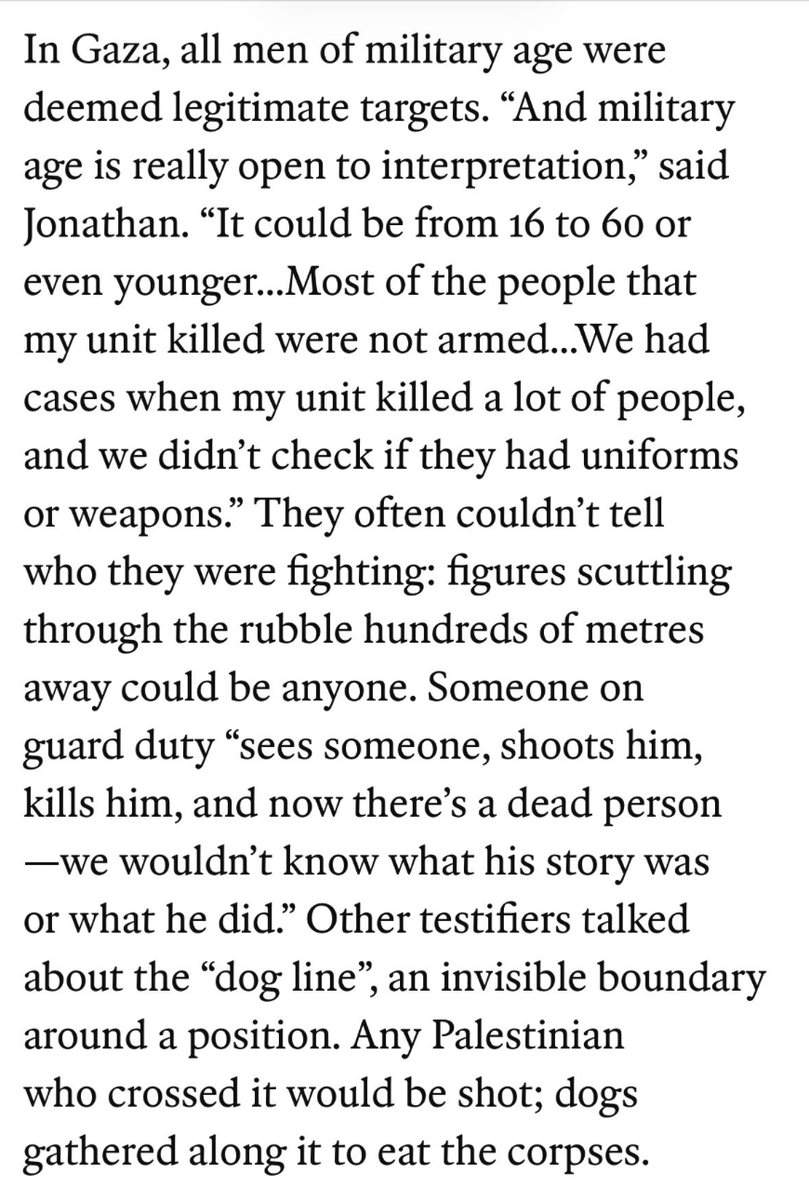
words, phrases, and acronym innovations by the 'jewish state' in the past 2.5 years:
1. WCNSF: wounded child, no surviving family
2. "dog line": see below image for explanation
3. UASC: unaccompanied and separated children
4. DFS: deaf from shelling, used to describe people, mostly children, whose ear drums or internal ear architecture were damaged from shelling
5. "killing safe zones"
add what I've missed.
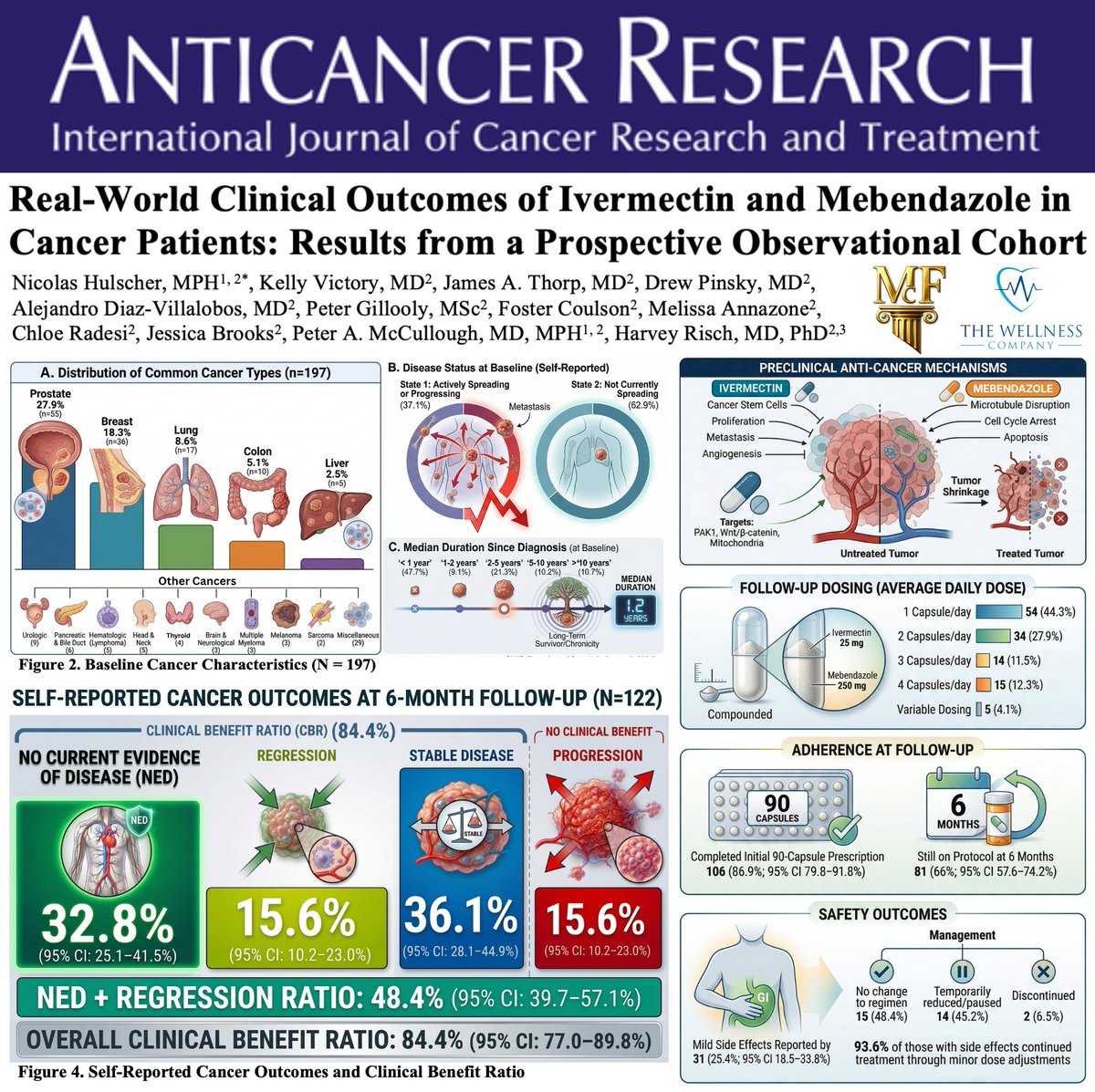
BREAKING: Largest Human Cancer Study of Ivermectin + Mebendazole Is Now PEER-REVIEWED and PUBLISHED in a MAJOR Cancer Journal
84.4% of cancer patients taking ivermectin + mebendazole for 6 months declared either CANCER DISAPPEARANCE, TUMOR REGRESSION, or CANCER STABILIZATION.
Our study, “Real-world Clinical Outcomes of Ivermectin and Mebendazole in Cancer Patients: Results from a Prospective Observational Cohort,” is now peer-reviewed and published in Anticancer Research—a major international oncology journal of the International Institute of Anticancer Research (IIAR), established in 1995.
The results represent one of the most compelling clinical signals ever documented for repurposed anti-parasitic therapies in oncology.
A diverse population of cancer patients (n=197) was prescribed compounded ivermectin–mebendazole through a U.S. telemedicine platform, with each capsule containing 25 mg ivermectin and 250 mg mebendazole.
Participants were followed for approximately six months using standardized digital surveys assessing cancer outcomes, medication adherence, and tolerability.
At approximately six months post-treatment initiation, we observed an 84.4% Clinical Benefit Ratio (CBR)—meaning more than four out of five patients reported either:
No evidence of disease (32.8%)
Tumor regression (15.6%)
or Cancer stabilization (36.1%)
Importantly, adherence was remarkably high, with 86.9% completing the initial prescription and 66.4% remaining on therapy at six months.
Side effects were predominantly mild and manageable, reported in 25.4% of patients (primarily gastrointestinal), with 93.6% of those experiencing side effects continuing treatment after minor dosing adjustments.
This groundbreaking peer-reviewed publication was made possible through a unique collaboration between The Wellness Company, the McCullough Foundation, and the Chairman of the President’s Cancer Panel—uniting real-world clinical data, frontline medical experience, and epidemiologic expertise to evaluate inexpensive, repurposed therapies with major translational potential.
With these extraordinarily promising results, double-blind, placebo-controlled clinical trials are now required.
In the meantime, many cancer patients are exercising their right to try.
@twc_health@McCulloughFund@IIAR_Journals@P_McCulloughMD@DrHarveyRisch@DrKellyVictory@jathorpmfm@drdrew@PeterGillooly@FosterCoulson
This is absolutely fascinating: Jason Furman, one of the foremost economists in the U.S. and former chair of the Council of Economic Advisers, explains why the so-called "China shock" is a myth.
According to him, "85 to 95% of Americans benefited" from trade with China, and "China has been part of helping [the US economy] work, not hurting it work."
In other words, the narrative that China "stole" American jobs and wages is the exact opposite of reality.
Furman's logic is pretty ironclad:
1) He points out, which is factual, that "the slowdown of wage growth and the rise of inequality began in the 1970s, when there basically was no trade with China." It then accelerated in the 1980s-90s when China trade was small, and **slowed down** after 2000. And "since about 2013," when trade with China was at its highest, "we've had pretty fast real wage growth," with "the fastest real wage growth for moderate income households."
In other words, the timing doesn't fit: if China was the cause, the problem should have gotten worse as trade with China increased. Instead, it got better.
2) A common narrative one hears about China is "who cares about affordable goods, we need well-paying jobs." But Furman points out it's actually one and the same thing: "the way we measure jobs is how much your wages can buy. If you improve purchasing power, you are making every single job in the economy better."
In very concrete terms, if salaries stay flat but Chinese imports make goods 10% cheaper, your purchasing power just went up 10%, as if you got a 10% wage hike. This makes every single job in the economy better.
In effect "jobs vs. cheap goods" is a false dichotomy: cheap goods ARE better jobs.
3) Furman also points out, rightly, that the majority of what U.S. imports from China isn't consumer goods: "more than half of what we import is actually inputs into the manufacturing process itself."
In other words, Chinese imports make U.S. manufacturing MORE competitive as it decreases their input costs. If you were to cut all Chinese imports, you'd cripple U.S. manufacturing as it would no longer be able to compete on price with anyone. And, as per point 2 above, you'd also destroy Americans' purchasing power, making every single U.S. worker worse off.
4) Last but not least, Furman says that the "China shock" literature is fundamentally flawed, as it "doesn't answer the most important question, which is what the net effect was." It "doesn't consider other causes for the job losses, doesn't look at all the places that gained jobs and wages, and doesn't integrate the consumer side."
All in all, he believes that if one were to actually calculate the net effect of trade with China on the U.S. economy, it'd show that "85 to 95% of Americans benefited." And even for the 5-15% who lost out, Furman says these people were failed by "our labor policies, our social safety net" - not by China.
What Furman is saying is more relevant than ever because, both in the U.S. and in Europe, this notion that China is somehow "stealing" Western jobs and prosperity has become the unquestioned premise of so many of today's policies.
Nobody even debates it anymore, it's almost universally assumed correct.
In my own country France, Macron keeps repeating it all the time, leading the charge in Europe to slap tariffs on Chinese imports, warning that China is "killing its own customers" and that it's a question of life or death for European industry (https://t.co/Auq9rvyEwk). He literally called last week for the EU to build its own version of America's Section 301 - the same protectionist tool Trump uses (https://t.co/yHJ6M43suw).
BUT, if Furman is right, and the data strongly suggests he is, France and Europe are about to inflict economic self-harm in the name of a problem that doesn't exist.
Much more affordable cars, for instance, would literally give every single European a big wage hike. It's Furman's argument on "85 to 95% benefiting" vs 5% to 15% losing out: the vast majority of Europeans would see their money go further, while a small number of jobs in legacy automakers would be disrupted. Instead of helping those workers transition, Europe wants to prevent making everyone better off.
Anyhow, please do watch the whole podcast, which has many other fascinating insights because Furman also debates with Justin Yifu Lin, the former Chief Economist of the World Bank and State Council Counsellor of China.
They're both interviewed by my friend @Hansong_Li - also a professor and an immensely smart man - in his excellent new podcast "worldviews" (imho one of the best new podcasts our there). The video is here: https://t.co/M7sVgk9v3a
@Uday0Eng1Inv2@AngelicaOung@Willy_OAM Angelica's post wasn't about comparing US and China or profitability of infrastructure projects.
But FYI China bailed out US after 2008
An anonymous developer built a library so big it made Elsevier's legal team cry.
It's called Anna's Archive.
This got 99 million books and papers. Every shadow library on earth mirrored and searchable in one place. Domain takedowns bounce off it. It just moves to a new URL and keeps going.
Here's the story behind it.
In November 2022, US law enforcement seized Z-Library's domains and arrested its operators. The largest ebook library on the internet was gone overnight.
A pseudonymous developer going only by "Anna" had already seen it coming.
She had spent months as part of an anonymous group called the Pirate Library Mirror, quietly making full copies of every major shadow library before they disappeared. When Z-Library fell, she had the entire thing backed up.
Days later, Anna's Archive went live.
Here's what makes it unkillable.
It does not host a single file. It indexes metadata and links to third-party mirrors. Legally, there is nothing to seize. Technically, there is no central server to shut down.
The entire codebase is open source. The entire dataset is distributed via torrents and IPFS, a decentralized file system where data lives across thousands of nodes simultaneously. If every domain gets blocked tomorrow, anyone can spin up a new mirror in minutes from the same data.
Italy blocked it. Germany blocked it. Publishers sued it. The US Trade Representative put it on their notorious markets list.
It added new domains and kept going.
What you get for free:
→ 99M+ books and academic papers
→ Sci-Hub, Library Genesis, Z-Library, Internet Archive all mirrored in one search
→ No account required
→ No subscription
→ Download via IPFS, torrent, or direct link
→ Works across multiple mirror domains when one goes down
Elsevier charges universities $2 billion a year for journal access. A single anonymous developer with a pseudonym and a backup drive just made that business model look embarrassing.
100% Opensource.
https://t.co/HCUQBVrpUu