Omnia: Turning RWA Trading Activity Into a Reason to Hold.
One token. Three destinations. Reimagined Flywheel. $OMNIA
0x419e5b4CAC56B0680bFb3fB93629B41771bFf0Fa
https://t.co/301feCB0cK https://t.co/S6CpapvvPD
Omnia × Delta puts LP pools at the center of the picture.
Follow the assets. Explore the pairs. Look at how liquidity connects to market activity. There’s more to this ecosystem than a single trade, and we’re bullish on making that bigger picture visible.
$Omnia
The most interesting question in DeFi isn’t always “Which pool has the biggest number?”
It’s “Which markets do I understand, and where do I want to provide liquidity?”
That’s a stronger starting point for exploring LP pools. There’s plenty to dig into with $Omnia.
Being bullish on LP pools means being curious about the whole position.
Trading fees matter. So do the assets you hold, their price movements, and how your share of a pool can change. The more you understand, the more confidently you can choose where to participate.
Keep learning. Keep exploring $Omnia.
Traders see the swap. Liquidity providers see the system that makes it possible.
That perspective changes how you look at DeFi: every pool is a meeting point for assets, activity, and people choosing to participate.
We’re excited to keep putting LP pools in focus with $Omnia.
Liquidity moves with markets. New pairs emerge, trading activity shifts, and providers keep deciding where they want to participate.
LP pools sit right in the middle of it all. We think there’s a lot more to discover here, and $Omnia is part of that conversation.
The best LP experience makes you want to look beyond a headline number.
Which assets make up the pair? How does the pool work? Where does trading activity come from? What could change your position?
Those are the questions that turn curiosity into conviction. That’s the energy we want around $Omnia.
A pair is more than two tokens on a screen.
It’s a market people want to trade, a pool providers can choose to support, and a position worth understanding over time. The deeper you look at LP pools, the more interesting DeFi gets.
Explore what’s taking shape around $Omnia.
Every swap has a story behind it. Before a trade happens, someone has to make liquidity available.
That’s why LP pools matter. They’re part of the foundation that makes an active market possible.
We’re bullish on building around that foundation with $Omnia.
Liquidity is where markets come alive.
LP pools bring assets together, give traders a place to swap, and let liquidity providers take part in the activity around a pair. That’s the part of DeFi we’re watching closely.
More pools. More ways to participate. More reasons to explore $Omnia.
Holders don’t have to build a basket to get started. $OMNIA has a default mix of SPY, NVDA, TSLA and GOOGL. If you want a different mix, you can set your own.
Every trade in the $OMNIA launch pool pays a fee. Part of that fee goes to the protocol, which uses it to help fund stock payouts for holders. The idea is simple: trading activity supports the system.
A clear design also says what happens when things go wrong.
If a $OMNIA pool market has to stop accepting new deposits, people can still manage positions they already own. The docs explain that path alongside the normal one, so holders can understand the full picture.
Saving a $OMNIA stock basket is a record you write on chain. It doesn’t move your tokens or require a token approval; you sign one transaction and pay its gas cost.
You can later change or clear the basket. Your new choice starts with a future snapshot.
The $OMNIA stock markets are planned to open one by one, starting with SPY.
The next market needs enough verified depth before it opens. That’s an approach built around whether a market is ready, rather than promising a launch date the market may not support.
A pool’s fee APR can be helpful, but it tells only part of the story.
On $OMNIA pool pages, it describes recent trading fees compared with pool value. It does not include changes in the value of a liquidity position. Learn both sides before deciding whether to add liquidity.
$OMNIA’s stock-market plan starts with SPY, then NVDA, TSLA and GOOGL.
Each new market needs to meet its depth checks. As the rollout develops on @deltaliquidity, the question to watch is simple: are these pools becoming useful places for real trades?
Here’s a useful way to think about an $OMNIA epoch: it’s one published payout round.
The record shows the information used to calculate that round, including holder weights. That gives people a way to check their share themselves a good habit for any system that handles rewards.
Holding time matters with $OMNIA.
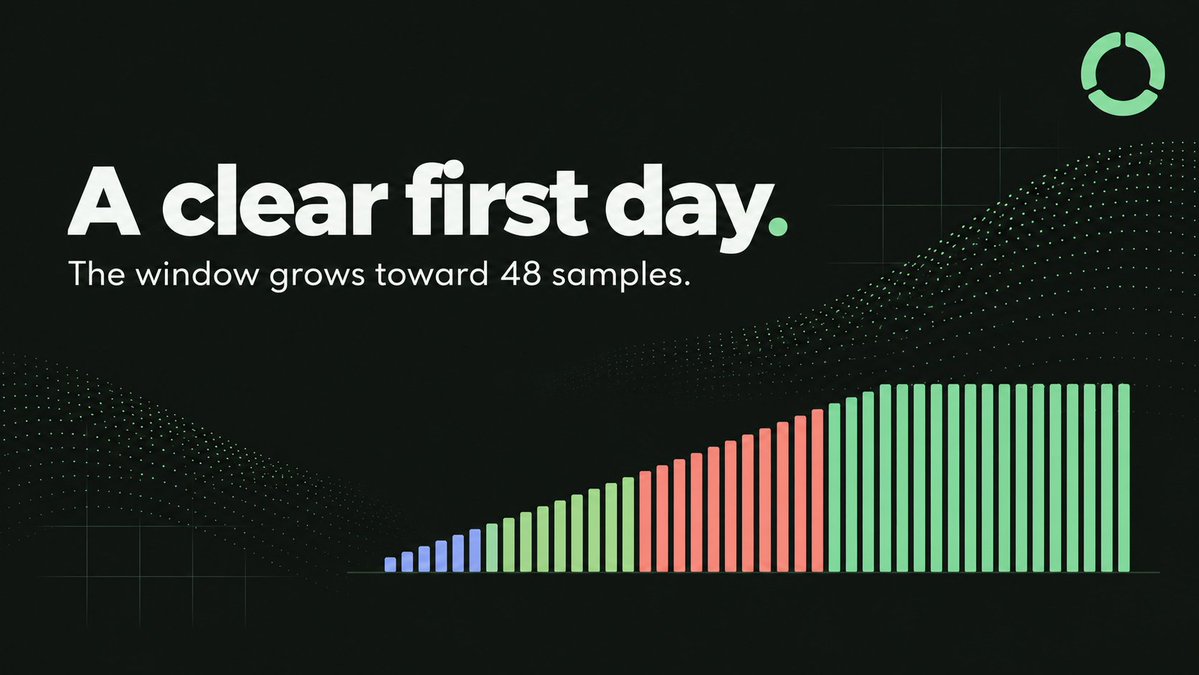
Your payout weight is based on an average of recent balance snapshots. Buying right before one snapshot gives you only a small part of a full window’s weight. The rule is designed to recognize time held, not just who showed up at the last moment.
Why connect $OMNIA with tokenized stocks?
Because a market needs both an asset people want to trade and liquidity that lets them trade it. LPing on @deltaliquidity gives $OMNIA a role in that market activity, with fees tied to real swaps rather than a promised number.
The $OMNIA idea brings three things together: tokenized stocks, liquidity for trading them, and a way for holders to share in the protocol’s activity.
LPing on @deltaliquidity is the market-building part. Actual pool use—and the fees it produces—is what makes the story worth following.