@bulktrade giving away free AURA every Saturday.
All you need is a code. Mine is Omzy47.
If you do not use it, I will assume you enjoy watching others win.
https://t.co/dCIF4awYzE
Building a personal brand in Web3 is a massive trap. I wasted a year tweaking thread templates, manufacturing engagement loops, and chasing followers, only to realize the process was making my actual research lazy. When your income depends on pleasing a distribution algorithm, you stop writing deep analysis and start writing empty hype.
I only broke out of that loop when I stopped playing the influencer game and started testing the platform. The waitlist is officially gone now, meaning @RallyOnChain is open to everyone.
This shifted everything for me because it replaced the popularity contest with hard infrastructure. When I submit my research now, it does not get filtered by a centralized timeline. Instead, the backend leverages GenLayer intelligent contracts deployed across Base and zkSync Era to completely automate the evaluation. Because the system runs decentralized AI consensus at the execution layer, the network grades the structural logic, factual validity, and contextual relevance of the text itself. Watching my work rank on a live leaderboard based on cryptographic validation rather than my follower count proved that clout is entirely obsolete.
It showed me that smaller creators who focus purely on quality can out-earn massive legacy accounts because the underlying technology removes human bias from the payout loop.
Now that the doors are open to everyone, the era of the empty-hype influencer is over. You can link your X profile, submit your sharpest insights, and let the protocol evaluate your actual merit at https://t.co/9cmJt7iZcS.
If you are ready to stop grinding for algorithmic clout and start earning on your actual knowledge, what is the most complex protocol thesis you have been holding back? Let me know below.
someone asked a good question yesterday
'what if hyperliquid add rfq? wouldn't that be bad for @variational_io?'
@0xMGB responded:
'the unique part of variational isn't just rfq alone. it's rfq plus the broker-like model (i.e. aggregating liquidity from a variety of sources)
rfq is not what enables the tradfi liquidity on-chain, it's the broker model being able to connect directly to tradfi liquidity
this takes very intentional platform design from day-1 (i.e. having a single market maker) which is very difficult (if not impossible) for order book platforms to emulate without major major reworks.'
gvar
The Real Reason Most "AI Experts" Will Be Obsolete in 18 Months (And What Actually Survives)
Everyone’s hyping AI tools, agents, and “prompt engineering” careers.
But after looking into what’s actually shipping at frontier labs, enterprise deployments, and indie builders in 2026, I see a brutal filter coming.
Most people calling themselves AI experts today are about to hit a wall.
Here’s the breakdown of what’s changing and who thrives.
DACHAIN Approaches Mainnet and TGE: important information from @dac_chain
-The Dac Testnet page is back online after some updates have been done or implemented.
-TGE/ Mainnet is around the corner. No more faucet claims. Existing faucet dispense will be granted on Mainnet.
Hope you have been engaging ?
No bank will miss the average retail customer even if you have 100s of millions.
Highest your account officer will not be able to meet their targets.
You people should not whine yourselves biko.
Countries need to tokenize their stocks, allowing worldwide buyers. (RWA)
Countries need to issue their own stablecoin(s), to expand their currency's usage on the blockchain.
Mastering Databases is the key 🔑 for cracking System Design Interviews. Let's cover some must to know concepts.
Databases power modern applications, enabling efficient data storage and retrieval. Understanding database fundamentals is key to designing scalable systems.
1. Types of Databases
Relational databases use structured tables and ACID compliance for transactions. NoSQL databases handle unstructured data flexibly. In-memory databases offer ultra-fast data access for caching.
2. ACID Properties
ACID ensures reliable transactions: Atomicity (all or nothing), Consistency (valid data), Isolation (independent transactions), and Durability (permanent changes).
3. Scaling Databases
Vertical scaling increases CPU, RAM, and storage for performance. Horizontal scaling distributes data across servers using sharding and replication.
4. Boosting Performance
Caching stores frequently accessed data for quick retrieval. Indexing improves lookup speed. Query optimization refines SQL execution to reduce latency.
5. CAP Theorem
A distributed system balances two of three: Consistency (same data), Availability (every request gets a response), and Partition Tolerance (handles network failures).
Mastering these concepts helps in designing efficient, scalable, and high-performance database systems.
More in graphics below. What would you add to this that you think is essential related to Databases?
𝗗𝗮𝘆 𝟭𝟳/𝟲𝟬 𝗼𝗳 𝗦𝗤𝗟 𝗦𝗲𝗿𝗶𝗲𝘀 — 𝗚𝗿𝗼𝘂𝗽𝗶𝗻𝗴 𝗗𝗮𝘁𝗮 – 𝗚𝗥𝗢𝗨𝗣 𝗕𝗬 𝗮𝗻𝗱 𝗕𝗮𝘀𝗶𝗰 𝗔𝗴𝗴𝗿𝗲𝗴𝗮𝘁𝗶𝗼𝗻𝘀
Aggregate functions become even more powerful when combined with grouping.
Instead of calculating a single value for an entire table, SQL allows you to calculate summaries for different categories of data.
Today’s lesson covers one of the most important analytical tools in SQL 👇
1️⃣ 𝗪𝗵𝗮𝘁 𝗶𝘀 𝗚𝗥𝗢𝗨𝗣 𝗕𝗬?
GROUP BY is used to organize rows that have the same values into groups.
Once grouped, aggregate functions can be applied to each group separately.
Example:
SELECT department
FROM employees
GROUP BY department;
2️⃣ 𝗚𝗥𝗢𝗨𝗣 𝗕𝗬 𝘄𝗶𝘁𝗵 𝗖𝗢𝗨𝗡𝗧()
Count the number of records in each group.
Example:
SELECT department,
COUNT(*) AS employee_count
FROM employees
GROUP BY department;
Result:
HR → 12
IT → 25
Finance → 8
3️⃣ 𝗚𝗥𝗢𝗨𝗣 𝗕𝗬 𝘄𝗶𝘁𝗵 𝗦𝗨𝗠()
Calculate totals for each category.
Example:
SELECT department,
SUM(salary) AS total_salary
FROM employees
GROUP BY department;
This shows total salary expenses per department.
4️⃣ 𝗚𝗥𝗢𝗨𝗣 𝗕𝗬 𝘄𝗶𝘁𝗵 𝗔𝗩𝗚()
Calculate averages within groups.
Example:
SELECT department,
AVG(salary) AS average_salary
FROM employees
GROUP BY department;
Useful for comparing department performance and budgets.
5️⃣ 𝗚𝗥𝗢𝗨𝗣 𝗕𝗬 𝘄𝗶𝘁𝗵 𝗠𝗜𝗡() 𝗮𝗻𝗱 𝗠𝗔𝗫()
Find the smallest and largest values within each group.
Example:
SELECT department,
MIN(salary) AS lowest_salary,
MAX(salary) AS highest_salary
FROM employees
GROUP BY department;
6️⃣ 𝗘𝘃𝗲𝗿𝘆 𝗻𝗼𝗻-𝗮𝗴𝗴𝗿𝗲𝗴𝗮𝘁𝗲𝗱 𝗰𝗼𝗹𝘂𝗺𝗻 𝗺𝘂𝘀𝘁 𝗯𝗲 𝗶𝗻 𝗚𝗥𝗢𝗨𝗣 𝗕𝗬
When using aggregate functions, any selected column that isn't aggregated must be included in the GROUP BY clause.
Correct:
SELECT department,
COUNT(*)
FROM employees
GROUP BY department;
7️⃣ 𝗚𝗿𝗼𝘂𝗽𝗶𝗻𝗴 𝗯𝘆 𝗺𝘂𝗹𝘁𝗶𝗽𝗹𝗲 𝗰𝗼𝗹𝘂𝗺𝗻𝘀
You can create more detailed groupings using multiple columns.
Example:
SELECT department,
job_title,
COUNT(*)
FROM employees
GROUP BY department, job_title;
8️⃣ 𝗚𝗥𝗢𝗨𝗣 𝗕𝗬 𝗵𝗲𝗹𝗽𝘀 𝘀𝘂𝗺𝗺𝗮𝗿𝗶𝘇𝗲 𝗱𝗮𝘁𝗮
Instead of viewing thousands of rows, you can quickly see meaningful summaries.
Examples:
• Sales per region
• Orders per customer
• Employees per department
• Revenue per product
9️⃣ 𝗚𝗥𝗢𝗨𝗣 𝗕𝗬 𝗮𝗻𝗱 𝗢𝗥𝗗𝗘𝗥 𝗕𝗬 𝘄𝗼𝗿𝗸 𝘄𝗲𝗹𝗹 𝘁𝗼𝗴𝗲𝘁𝗵𝗲𝗿
After grouping data, you can sort the results.
Example:
SELECT department,
COUNT(*) AS employee_count
FROM employees
GROUP BY department
ORDER BY employee_count DESC;
This displays the largest departments first.
🔟 𝗚𝗥𝗢𝗨𝗣 𝗕𝗬 𝗶𝘀 𝗳𝘂𝗻𝗱𝗮𝗺𝗲𝗻𝘁𝗮𝗹 𝘁𝗼 𝗮𝗻𝗮𝗹𝘆𝘁𝗶𝗰𝘀
Business reports, dashboards, KPIs, and data warehouses all rely heavily on GROUP BY to generate insights from raw data.
💡 𝗞𝗲𝘆 𝘁𝗮𝗸𝗲𝗮𝘄𝗮𝘆:
GROUP BY allows you to organize data into categories and apply aggregate functions to each group.
When combined with COUNT(), SUM(), AVG(), MIN(), and MAX(), it becomes one of the most powerful tools for SQL reporting and analysis.
Grab SQL Playbook:
https://t.co/0bRVxTZBbK
What is the most useful GROUP BY query you've used in a real-world project?
Two backend engineers designed payment processing.
Design A - Update Database Then Charge Card
Design B - Event-Driven Workflow + Idempotency Keys
$10 million processed daily.
Which one are you adopting?
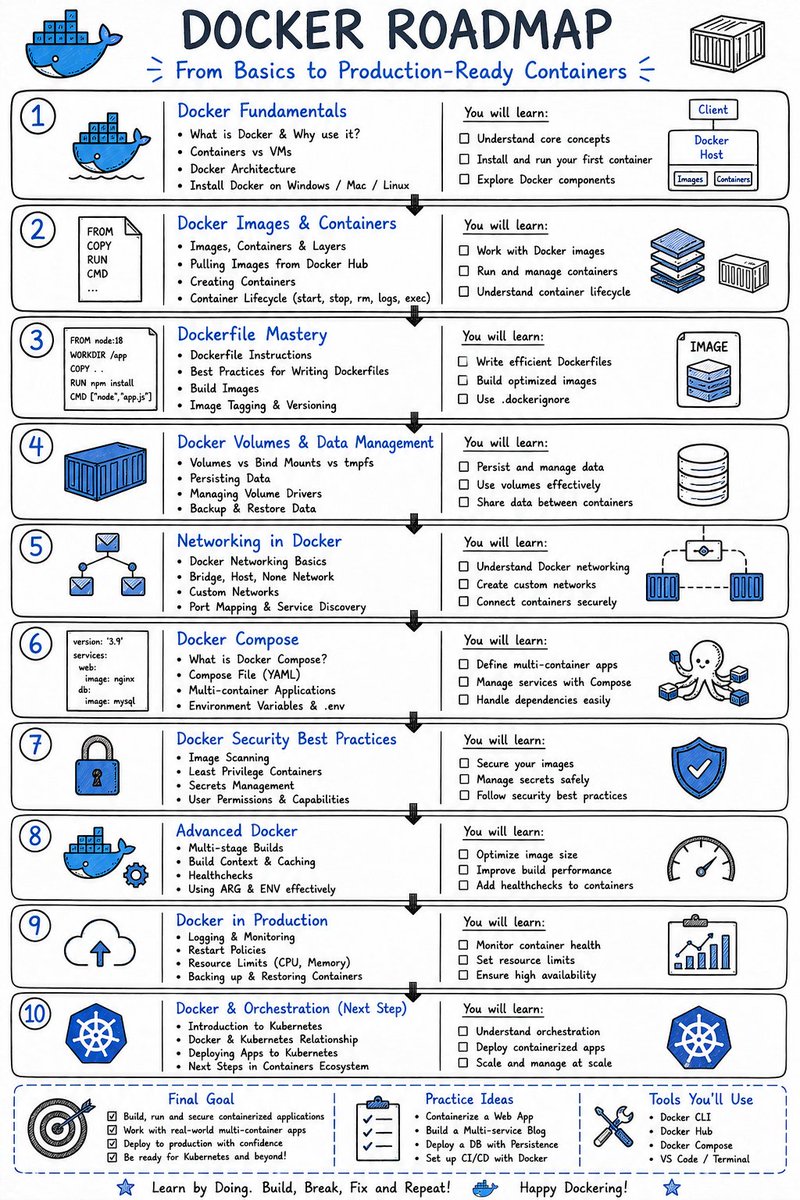
Docker 101: Run vs. Attach vs. Exec 🔽
A peek under the hood of the key Docker commands, with a bunch of hands-on exercises to make the knowledge stick: https://t.co/1GieeVjbd0
NIBSS processes millions of NIP transactions daily.
Even a 0.1% failure rate means thousands of people whose money moved but confirmation never arrived.
Nobody announced it. No incident report. Nothing.
This is why reconciliation isn’t optional…it’s the most critical job in Nigerian fintech infrastructure.
Does your team actually run it?
PiggyVest
Let me break down PiggyVest mathematically so you understand exactly what happens to your money in each feature, using their current June 2026 rates.
PiggyBank and Target Savings pay up to 16% annually, calculated daily and paid monthly. Put N1,000,000 in for one year and you earn N160,000, ending with N1,160,000. Simple, disciplined, automated.
Flex Naira is your liquid wallet, paying 12% annually but only if you stay under 4 withdrawals monthly. Same N1,000,000 earns N120,000 in a year while remaining fully accessible.
SafeLock is where it gets interesting. Lock N1,000,000 for one year at 18.5% and PiggyVest pays you the entire N185,000 interest upfront the moment you lock the funds, not at maturity. Your principal stays locked but you already have N185,000 sitting in your Flex Naira wallet to spend or reinvest immediately.
Lock for over two years and the rate jumps to 21% per annum. That same N1,000,000 compounds to N1,464,100, meaning N464,100 in pure interest.
Now here is the smart move serious users do. Lock your money in SafeLock, collect that upfront interest immediately, then drop that interest into Flex Naira to keep earning 12% while your principal is still locked elsewhere. You are earning twice on the same capital simultaneously.
PiggyVest is not just an app. It is a discipline engine. The features exist to stop you from touching money you cannot afford to spend, while still making that same money work in the background.
Pick the feature based on your need. Discipline, lock it in SafeLock. Liquidity, use Flex Naira. Consistency, use PiggyBank.
. @dac_chain Inception is entering its final chapter
The faucet is now closed, and the team is focusing on the final preparations
⏳ TGE Coming
⛓️ Mainnet Coming
If you've been active, now it's time to stay tuned for what's next.
DAC: The Final Chapter of the Testnet Before Mainnet Launch
After the latest technical maintenance, the @dac_chain Inception Testnet page is available again. We can continue accumulating QE while the team prepares for the Interstellar Mainnet launch & TGE.
Inception Testnet page: https://t.co/w3eC0Hrukg
What we know at the moment:
• The DAC mainnet launches soon (possibly this month, but not confirmed).
• Users can continue earning QE until the mainnet launch - your rating will be preserved.
• The faucet is closed, new claims are unavailable (your existing faucet dispenses will be granted at mainnet).
• The "Conviction" section for locking DACC has been disabled (awaiting updates on this).
• Minor bugs have been fixed.
What I think about this?
• From the limited information available now and what was presented yesterday, it's clear that the mainnet will be launching very soon.
• We will receive rewards for the Inception Testnet in DACC tokens (based on our testnet balances).
• Don't expect a huge reward - these are basically gas tokens that will allow us to participate in the Interstellar Mainnet.
• It's possible that participation in the mainnet will already bring us a proper reward in $DACT tokens (according to the roadmap, the DACT token launch is scheduled for Q3 of this year).
In any case, I'm continuing to participate!!!
My results are in the screenshot! Share your results in the comments.