Wenn man die Gehälter vergleicht, wird schnell klar, wer hier wirklich „den Gürtel enger schnallen“ soll.
In Schweden verdient ein Abgeordneter 7.000–8.000 € im Monat – genug, um gut zu leben, aber nicht genug, um komplett den Bezug zur Realität zu verlieren.
In Deutschland dagegen kassiert ein Bundestagsabgeordneter 11.833 € + 5.349 € steuerfreie Pauschale, also über 17.000 € im Monat, bevor die ganzen Extras überhaupt anfangen. Der Bundeskanzler liegt bei rund 30.000 € monatlich.
Und das Beste: Deutsche Politiker gehören damit zu den bestbezahlten in ganz Europa.
Natürlich. Irgendwer muss ja zeigen, wie „Verzicht“ richtig geht.
Während man unten erklärt, warum die Bürger sparen, verzichten und „Verantwortung übernehmen“ sollen, könnte man oben eigentlich mal bei sich selbst anfangen zu kotzen, bevor man wieder nach unten zeigt.
Denn wenn Schweden mit 7–8k auskommt und Deutschland sich 17k+ gönnt, dann ist klar, wer hier im Luxus badet – und wer dafür das Wasser bezahlt.😌
In Spanien steht Klimaunterricht auf dem Stundenplan. Er soll auf die Auswirkungen der Klimakatastrophe vorbereiten, u.a. Verhalten in Notfallsituationen und Erkennen von Desinformationen.
🇪🇸🇪🇸🇪🇸
Es gibt zu viele negative News, deswegen poste ich jeden Tag eine #guteNewsdesTages.
Jedes öffentliche Gebäude, das in Zukunft gebaut wird, sollte verpflichtend mit Klimaanlagen ausgestattet sein. Es kann nicht sein, das bei über 30 Grad Raumtemperatur Unterricht stattfinden soll oder Patienten behandelt werden.
Studie von @transenv zeigt: Autos werden immer größer – auf Kosten von Sicherheit und öffentlichem Raum. Wir fordern klare Größenlimits, höhere Parkgebühren für überdimensionierte Fahrzeuge und ein Verbot von Monster-SUV und Pick-ups in Innenstädten! https://t.co/d94oj2Giqj
🧵💊What antihistamines make the most sense to take for an acute COVID infection?
You’ve probably seen at least some information floating around over the past few years that over-the-counter antihistamines could be a beneficial addition to COVID treatment protocols.
The science behind H2 blockers is more robust, and picking a product is also a much easier task. There’s really only one on the market that makes sense, which is Famotidine/Pepcid. In 2022, we got this small randomized clinical trial suggesting that Famotidine during an acute infection can improve the rate of symptom resolution: https://t.co/ElSSNYkdRk
For H1 blockers (the more common antihistamines that you probably think of (eg. Benadryl)), there is also speculation that they may be beneficial in treating acute COVID, however, the choice of selecting a product is a lot more complicated, with close to a dozen potential options on the market.
The theory that H1 blockers may be beneficial mainly stems from this 2024 paper, which demonstrates that the H1 histamine receptor can act as an alternative receptor for SARS-CoV-2 entry, in addition to ACE2: https://t.co/fmCOOfy79s. Therefore, an H1 blocker that competitively binds to H1 should theoretically work to prevent SARS2 entry.
From what I’ve been able to identify, there are 3 options that likely stand out above the others:
• Fexofenadine (Allegra)
• Cetirizine (Zyrtec)
• Levocetirizine (Xyzal), the active, purified component of cetirizine
That 2024 paper also studied the IC50 of 11 different antihistamines, which is the concentration that would be required to inhibit SARS2 binding by 50%. Their choices of antihistamines, though, aren’t very helpful, because those 11 only included a couple of OTC options that would make sense for outpatient COVID treatment, like Benadryl and Claritin. However, the takeaway is still important - although there was some slight variation, the IC50 of all 11 antihistamines fell into the range of 1.6 to 3.6 micromolars (μM). For the sake of making a choice, since it’s the only thing that we can really do, we can assume that most available OTC antihistamines will also likely fall within that same range, or at least be similar.
From that starting point, we can look at the Cmax of available OTC antihistamines, which is the maximum plasma concentration that they achieve in the body, and comparing them to the IC50 range that the study lays out. At the typical oral dose, these are the Cmax concentrations of some popular OTC options:
• Fexofenadine (Allegra) - 0.98μM
• Cetirizine (Zyrtec) - 0.80μM
• Levocetirizine (Xyzal) - 0.69μM
• Diphenhydramine (Benadryl) - 0.27μM
• Dimenhydrinate (Dramamine) - 0.15μM
• Chlorpheniramine - 0.055μM
• Loratadine (Claritin) - 0.020μM
As you can see, the 3 that I mentioned are the only options that come anywhere close to reaching the desired concentrations.
Based solely on the mechanism, combined with the fact that none of the options actually do reach the required Cmax, I might not yet suggest H1 blocking antihistamines as a blanket treatment that everyone infected should automatically take. But it’s certainly a legitimate pathway to consider, and is fairly low-risk.
So, if you do want to add an antihistamine, why not just select the best performing in Cmax, which is Fexofenadine (Allegra)? Well, there are some other individual characteristics to consider.
Fexofenadine (Allegra) is the one option that comes with essentially no risk of drowsiness, while both Cetirizine (Zyrtec) and Levocetirizine (Xyzal) do both typically come with with at least slight drowsiness, the caveat being that they’re also slightly more potent at their job of H1 blockade. Allegra is more polar, meaning that it’s less “membrane sticky”, which means that it crosses the blood brain barrier less, which is why we get the benefit of no drowsiness. However, that relative lack of concentration at lipid membranes also means that it may not perform as well in the SARS2 cell entry context, since that area is where the viral entry is happening. This could theoretically increase the IC50 of Allegra, making it more similar (or even a slightly worse option) when compared to Zyrtec or Xyzal. Our best guess is that it probably wouldn’t increase the IC50 dramatically, but it’s still something that should be considered.
So, my recommendation would be:
• If you want the safest bet with an all-around favorable profile, and you don’t mind some drowsiness or plan to take it at bedtime, then the best options are either Cetirizine (Zyrtec) or Levocetirizine (Xyzal).
• If you don’t tolerate drowsiness at all, or if you want the option that may perform better, but does have some question marks surrounding its mechanism for blocking SARS2 cell entry, then the best option is Fexofenadine (Allegra).
Kleidung ist immer Kommunikation.
Paul Watzlawick formulierte es klassisch: „Man kann nicht nicht kommunizieren.“ Kleidung ist ein zentraler Teil der nonverbalen Kommunikation. Sie signalisiert in Sekundenbruchteilen:
- Selbstachtung und Disziplin (gepflegt vs. schlampig)
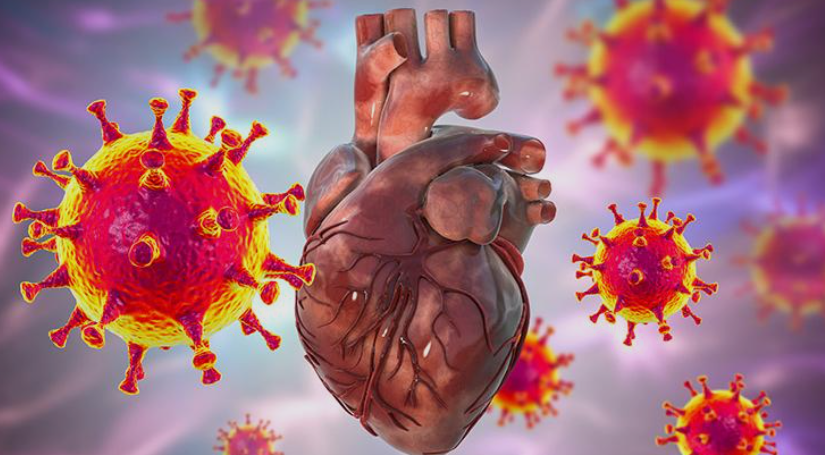
The long-term cardiovascular risks of SARSCoV2 infection and reinfections
Your heart is under silent, cumulative attack from SARSCoV2, and every reinfection can reload/worsen the damage.
Here a personal recap of 10 important studies from the last 2 years showing exactly how this virus and its reinfections can/may shape (and shorten) your cardiovascular future.
Evidence is clear, long-term, and growing.
Print and show your Cardiologist.
Let’s connect the dots…
1. Immunothrombosis multi-omics study:
3 months after hospitalisation, long COVID patients still have blood biologically “clot-ready” with persistent endothelial activation and prothrombotic signalling.
https://t.co/9yj7zVbgxO
2. IL-6 & SAA 6-year study:
Higher acute-phase IL-6 and SAA levels independently predict cardiovascular events and death up to 6 years later, the initial inflammatory storm leaves a lasting CV mark.
https://t.co/Vk7FvK9fQc
3. MIS-C long-term outcomes:
Up to 4.5 years later, MIS-C raises cardiovascular disease risk 14× and hypertension 9× in children, with risks still accumulating.
https://t.co/itRENsOlOS
4. Viruses & cardiac disease review:
SARS-CoV-2 stands out for direct cardiomyocyte invasion + explosive damage + relentless accumulation of risk with every reinfection.
https://t.co/fOX07JNW2o
5. Mayo PET long COVID study:
Persistent cerebral hypometabolism in fatigue/PEM patients still detectable up to 2 years post-infection.
https://t.co/puvllNfghC
6. Reinfection CV outcomes summary:
Reinfections worsen cumulative heart damage, arrhythmias, thrombosis, stroke risk and long COVID cardiovascular symptoms.
https://t.co/B3q7DzyxCZ
7. Youth reinfection & long COVID study:
Reinfection roughly doubles PASC risk, with myocarditis up to 3.6× higher, heart disease ~2× higher and increased thromboembolism.
https://t.co/aqN3VV0kMX
8. Mild infection + reinfection risk:
Even mild cases trigger lasting endothelial damage and prothrombotic state (1.5–2× long-term CV risk), each reinfection compounds the burden.
https://t.co/SvPzOBSOx1
9 Mitochondrial dysfunction in long COVID:
Persistent mitochondrial dysfunction and suppressed oxidative phosphorylation remain in long COVID, pointing to durable multi-organ impact.
https://t.co/98MbV19R9r
10. Cumulative reinfection impact on future CV health:
Reinfection stacks additional damage on prior endothelial injury and inflammation, increasing lifetime risk of heart failure, arrhythmias, thrombosis and accelerated cardiovascular disease.
https://t.co/aqN3VV0kMX
11. Extra, my earlier general reminder post on this exact theme: https://t.co/o3QT12nIG4
‼️Overall convergence across the studies:
Immunothrombosis, acute inflammation markers, direct invasion, endothelial damage, and mitochondrial issues create lasting CV vulnerability that reinfections can keep reloading. #L0ngC0vid
The pattern is very clear.
Fewer infections = lower lifetime cardiovascular risk.
You only have one heart.
Protect it!
#AvoidSars2 #AvoidReinfections #CleanAir #VaccineUpdated
Now many people are asking: how did Trump become President of the United States?
A surprisingly complete answer to that question was given 500 years ago by Niccolò Machiavelli. In his view, power is first and foremost a performance. Victory does not always belong to the person who knows the most, but to the one who appears the most confident. People are often persuaded less by truth than by the way it is presented.
Modern psychology supports this observation. Intelligent people tend to see complexity, weigh consequences, acknowledge uncertainty, and avoid simplistic answers. But in times of crisis, most people seek confidence rather than nuance, certainty rather than analysis.
This is why loud and self-assured politicians often outperform more competent rivals. It is closely related to the Dunning–Kruger effect, where less competent individuals overestimate their abilities while genuine experts are often more aware of their limitations.
When one person says, “I know exactly how to solve this,” and another explains that the issue is complicated and requires careful analysis, many people will choose the first. Confidence is often mistaken for strength, even when it is unsupported by knowledge.
Politics provides countless examples. Charismatic and decisive figures inspire trust, even when they lack competence. Meanwhile, thoughtful people who speak cautiously and acknowledge uncertainty are frequently overlooked. As William Shakespeare famously wrote: “The fool doth think he is wise, but the wise man knows himself to be a fool.”
The real problems begin when such people gain power. Machiavelli argued that the best way to judge a ruler is by the people they surround themselves with. Weak leaders fear strong, independent minds. Instead of promoting competence, they reward loyalty. Instead of welcoming criticism, they prefer agreement.
Over time, mediocrity begins to reproduce itself. Competence is pushed aside, criticism becomes unwelcome, and institutions gradually weaken.
History has repeated this pattern many times. Such systems often struggle in times of crisis because they lack expertise, flexibility, and the ability to acknowledge mistakes.
The deeper paradox is that societies repeatedly choose these leaders. The reason lies not only in the politicians themselves but in human psychology: while an intelligent person is still weighing risks and uncertainties, a confident one is already moving forward. People often mistake confidence for competence—and that is the trap.
Recent COVID vaccination has broad cardioprotective effects with a reduced risk of events like heart attacks and stroke, hospitalization, and death in people who had received the vaccine.
https://t.co/Pp3GuuLw5O
Drei aktuelle Veröffentlichungen zeigen erneut: Impfen schützt!
»In dieser nationalen Kohorte US-amerikanischer Veteranen war die Verabreichung des aktualisierten COVID-19-Impfstoffs (2024–2025) mit einem geringeren Risiko für COVID-19-bedingte schwerwiegende kardiovaskuläre …
In einer grossen Studie wurde untersucht, wie sich die Leistung von über 26'000 Schülern in China während 30 Monaten veränderte, wenn sie anfingen, KI-Chatbots zu nutzen.
Ihre Hausaufgaben wurden rund 20% besser.
Sie benötigten für die Hausaufgaben rund 20% weniger Zeit.
Das ist super.
Aber: Bei Prüfungen (wo KI verboten ist) wurden sie rund 20% *schlechter*. Das ist eine massive Verschlechterung.
KI kann Denkkompetenz aufbauen, wenn sie als eine Art Tutor eingesetzt wird. Dann spricht man von kognitivem Scaffolding.
Die Realität ist aber, dass die Strategie des kognitiven Offloading der Weg des geringsten Widerstands ist: Denkarbeit an Chatbots auszulagern, ist instrumentell gesehen rational. Ein Fehlanreiz.
Diese Entwicklung ruiniert Bildung. Und sie ist ein systemisches Risiko: Was passiert, wenn eine ganze Generation noch weniger als frühere Generationen lernt, eigenständig zu denken?
1/1 Wenn Widerwärtigkeit zum Standard wird!
@ninawarken: "Die gesetzlichen Vorgaben für Pflegeheime sollten auf das Mindestmaß reduziert werden" - Dafür sollen Bedürftige dann jetzt auch mehr zahlen, ja?
https://t.co/F61wYK4QWV
I’m a chemist. I need to say this - because it’s getting dangerous out there. The biggest health myth in the world isn’t about vaccines.
Or GMOs. Or fluoride.
It’s the root of all of them.
It’s called chemophobia - and it’s killing science.
Fear of “chemicals” now drives vaccine rejection, GMO bans, food hysteria, and entire political movements.
From tampons to tap water, people have been taught to fear chemistry - the very thing that keeps us alive.
Chemophobia tells us:
“Natural is good.”
“Synthetic is bad.”
That’s a lie.
Botulinum toxin is 100% natural and one of the deadliest molecules known. Aspirin is synthetic and life-saving.
We’ve gone from banning harmful substances for good reason…to banning safe, well-tested molecules for emotional reasons.
You’ve seen the slogans: “If you can’t pronounce it, don’t eat it.” “Paraben-free.” “Clean beauty.”
They sound empowering. But they’re not science - they’re marketing. And they’re making the world dumber, poorer, and sicker.
Your body doesn’t care if a molecule comes from a plant or a lab. Vitamin C is vitamin C.
Formaldehyde is formaldehyde and your body makes more of it every day than any vaccine ever could.
Dose matters. Source doesn’t.
This fear isn’t harmless.
It shapes public policy.
It blocks innovation.
It raises food prices.
It slows down cancer treatments.
Chemophobia is now mainstream and it’s costing lives. Scientists aren’t losing because we’re wrong.
We’re losing because fear spreads faster than facts. Because influencers sell fear for clicks.
Because lawyers monetize doubt. And because scientists are too tired to fight back.
So here’s my message, as a chemist and as a citizen: Learn how toxicology works.
Call out chemical fear-mongering. Support policies based on evidence, not emotion.
Chemistry isn’t the enemy. It’s the reason you have clean water, safe food, and modern medicine.
If we let fear win, we lose all of it.
No AI. Just human ingenuity for the divine
With the blessing of Pope Leo XIV, this was the breathtaking inauguration of the Jesus Christ Tower at Sagrada Família.
A magnificent tribute to Antoni Gaudí on the 100th anniversary of his death
Absolutamente increíble. Lo que hoy ha hecho Barcelona se recordará mucho tiempo. La Sagrada Familia, Gaudí y los que durante 140 años han creído en ello, lo merecían.
Ich bin Professor Mojib Latif für diese Worte sehr dankbar.
"Ich kann Politikern nichts mehr beibringen. Die wissen alles. Die handeln wider besseren Wissens."
Zumindest ist das damit geklärt.
You have noticed it. ChatGPT feels dumber than it used to. Your prompts that worked six months ago produce worse results now. The writing sounds flatter. The ideas sound safer. The internet itself feels like it is shrinking. Every article reads the same. Every email sounds the same. Every answer sounds like it was written by the same voice.
You thought it was you. It is not you.
Researchers at Oxford and Cambridge published a paper in Nature proving what is happening. They call it Model Collapse.
Here is the mechanism in one sentence. AI trained on AI-generated data gets dumber every generation until it forgets what real human data looked like.
The internet is filling with AI-generated content. Blog posts. Articles. Reviews. Comments. Social media. AI companies scrape the internet to train the next generation of models. Which means the next generation of AI is being trained on the output of the current generation.
Each cycle loses information. Not randomly. It loses the rarest, most unusual, most creative parts first. The researchers call these the "tails of the distribution." The weird ideas. The unexpected perspectives. The things that made the internet feel human. Those disappear first.
What remains is the average. The safe. The expected. The bland.
Then the next generation trains on that. And loses more. And the next generation trains on that. And loses more. The researchers proved this is not a slow decline. Major degradation happens within just a few iterations. Even when some of the original human data is preserved.
They tested it on large language models. On image generators. On statistical models. The pattern was the same every time. The output converges toward a narrow, flattened version of reality that looks nothing like the original data.
The lead researcher put it plainly. "Large language models are like fire. A useful tool. But one that pollutes the environment."
The pollution is invisible. You cannot see which sentence on the internet was written by a human and which was written by AI. Neither can the AI that is about to train on it. And once the tails are gone, they do not come back. The damage is irreversible.
This is not a prediction anymore. It is a diagnosis.
The internet you grew up on was built by humans writing things no algorithm would have written. Strange, personal, imperfect, alive. That internet is being diluted. One generation of AI at a time. And the models trained on what remains are learning a smaller and smaller version of the world.
Model Collapse is not a technical problem. It is a cultural one. The thing that made the internet worth reading is the thing that disappears first.
Wir können #Psychotherapeuten das Einkommen einfach mal so kürzen, weil kein Geld da ist und man Lust dazu hat. Die Diäten von Abgeordneten zu kürzen oder einfach nur mit deren Nebeneinkünften zu verrechnen wäre allerdings ein Skandal sondergleichen.