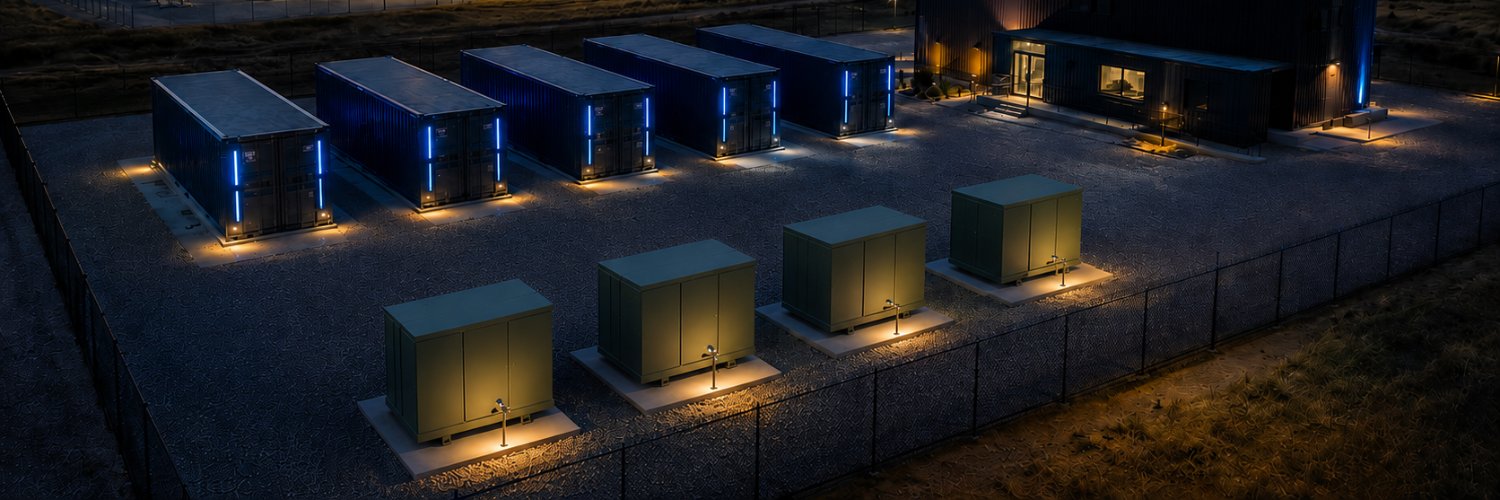
I’m building a crypto mining site from scratch.
Here’s the reality no one talks about:
• Power at $0.07/kWh is barely viable
• ASIC ROI can hit 10+ years
• Competition is brutal
I’m sharing everything as I build DigitalQuarry.
Follow if you want real numbers, not hype.
@danbulmer70 Check out SkyFi, you can task a satellite to take a picture of any area in the world. It'll tell you the exact time it is scheduled to fly over and capture your image. It's pricey, but very cool.
Mining has a way of testing conviction.
Prices move. Difficulty climbs. Sentiment flips overnight.
But the builders who last are usually the ones who keep doing the boring work when the market gets loud.
Know your numbers. Protect your downside. Keep improving. Keep building.
Math > Hype.
@satsltc@coinbase I moved a few LTC two weeks ago to cover mining cost, the normal 6 confirmations in 10 minutes and was finally able to use it on Coinbase an hour and a half later. So 1 hour and 40 minutes in total from storage to exchange. 🫣
That’s not what he’s saying.
Pick one:
1. Temporary economic pressure at home.
2. Risk allowing a hostile regime with a long history of violence and proxy warfare access to nuclear weapons capabilities.
You can disagree with how he weighs those risks, but clipping it into “he doesn’t care about Americans” is misleading.
Almost every industrial colocated server deployment or hosted mining farm in the country would fail tax treatment if simply using a hosting provider disqualified Section 179. The key is ownership, business use, and operational control. Not whether the machines sit in your garage versus a professional facility.
To be clear, I am not anti-mining. I also own and operate a successful mining infrastructure. It's just not a "fast-track to financial freedom" like some make it out to be.
My issue is with framing the hardware deduction like it offsets the entire machine purchase. It does not. It reduces taxable income, and the value depends on your actual tax rate and tax situation.
Mining still has to survive the real math like power, hosting, pool fees, downtime, difficulty growth, income tax on rewards, repairs, and eventual hardware depreciation.
For anyone wondering, a $250,000 deduction is not a $250,000 refund.
At a 30% tax rate, it is roughly a $75,000 tax shield.
$250,000 of S21 Pros would be roughly 166 used units. At a $0.07/kWh hosting, that is about $748,000 in power cost over 24 months.
If the fleet mined 8 BTC over that period, BTC would need to be around $115,000 just to break even after the hardware tax shield and power cost.
And that still does not factor in taxable income from mined rewards, pool fees, downtime, repairs, volatile energy markets, or hardware depreciation.
Mining can work, but the comparison needs to include the full operating cost.
@the_hlee@simpleminingio Agreed. At $0.06/kWh or below, the risk/reward profile changes a lot. At $0.07+ hosted, you have to be much more careful with assumptions.
@BDNcontent@simpleminingio Exactly. The write-off can improve the math, but it does not replace good unit economics. If power, pool fees, downtime, difficulty growth, hosting margins, and taxes on mined rewards are ignored, the comparison starts looking way cleaner than it actually is.