New in Physics and Imaging in Radiation Oncology
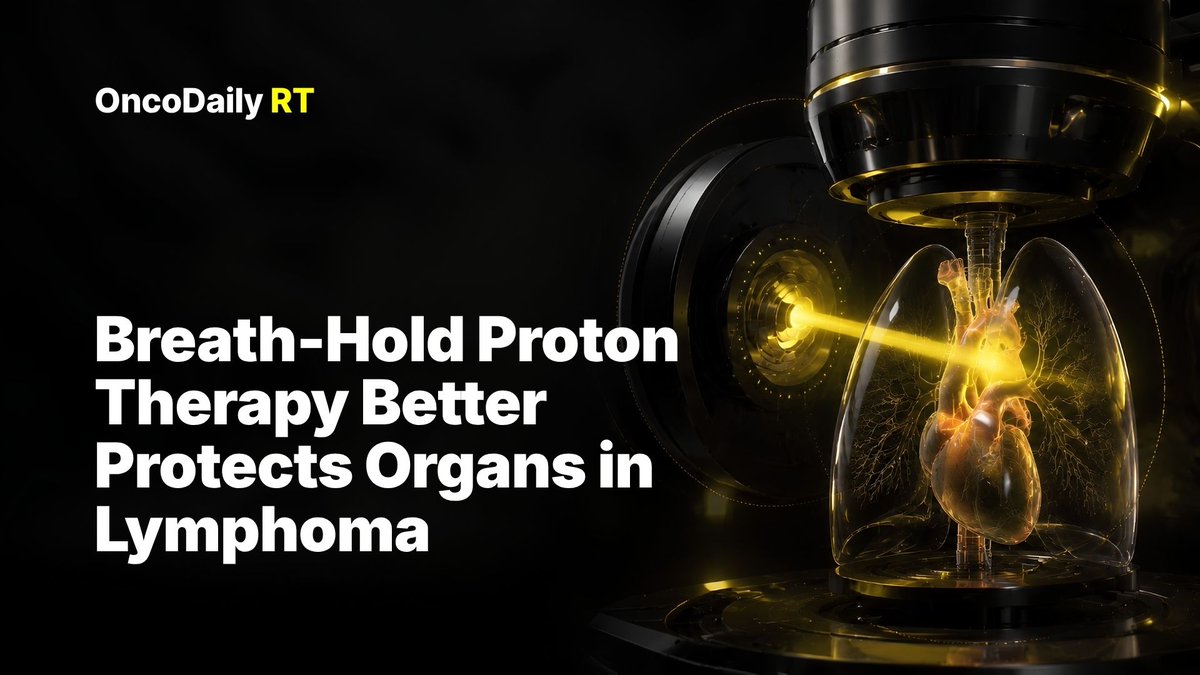
In 58 mediastinal lymphoma patients, IMPT with breath hold achieved the lowest average organ doses compared with VMAT free breathing, VMAT breath hold, and IMPT free breathing.
Mean heart dose
5.4 Gy with IMPT breath hold vs 8.0 Gy with VMAT free breathing
Mean lung dose
6.7 Gy vs 9.2 Gy
Bilateral mean breast dose
2.1 Gy with IMPT vs 3.2 Gy with VMAT
IMPT techniques were optimal for at least 69% of patients, but the best technique varied individually.
For young lymphoma survivors, organ sparing is long-term survivorship care.
https://t.co/Z2DyI5xd2z
Can one treatment be enough for localized prostate cancer?
In the prospective multicenter ONE-SHOT trial, single-fraction 19 Gy prostate SBRT achieved a 3-year biochemical relapse-free survival of 92.9% in carefully selected patients with low- or intermediate-risk disease.
At 3 years:
• Grade 2 GU AEs: 9.8%
• Grade 2 GI AEs: 4.9%
• Only one grade 3 event was reported
• GI quality-of-life impact was minimal
The protocol used urethra-sparing planning, real-time motion tracking, and prospective RTQA.
Promising results, but 5-fraction SBRT remains the standard for now. Longer follow-up and larger studies are needed.
https://t.co/7PBKti0cKl
@CiroFranzese
𝗥𝗮𝗱𝗶𝗼𝘁𝗵𝗲𝗿𝗮𝗽𝘆 𝗧𝗵𝗶𝘀 𝗪𝗲𝗲𝗸: 𝗝𝘂𝗻𝗲 𝟭𝟱–𝟮𝟭
From same-day SABR for early-stage lung cancer to more scalable VMAT-TBI verification, this week’s radiotherapy updates show how innovation is reshaping both treatment delivery and patient experience.
📰 New research, major technology milestones, ESTRO recognition, re-irradiation advances, and global efforts to strengthen access to modern radiation therapy are all featured in our latest roundup.
What could faster, safer, and more personalized radiotherapy mean for the future of cancer care?
https://t.co/UlSGdtWgEC
☢️ 𝗥𝗲𝗶𝗿𝗿𝗮𝗱𝗶𝗮𝘁𝗶𝗼𝗻 𝗶𝗻 𝗚𝘆𝗻𝗲𝗰𝗼𝗹𝗼𝗴𝗶𝗰 𝗖𝗮𝗻𝗰𝗲𝗿: 𝗧𝗵𝗲 𝗥𝗼𝗹𝗲 𝗼𝗳 𝗕𝗿𝗮𝗰𝗵𝘆𝘁𝗵𝗲𝗿𝗮𝗽𝘆
For carefully selected patients with locoregionally recurrent gynecologic cancer after prior radiation, image-guided brachytherapy may offer a meaningful salvage option delivering focused treatment while trying to protect surrounding organs.
A new systematic review highlights encouraging local-control outcomes, but also a crucial reality: severe late toxicity, inconsistent reporting, and limited quality-of-life data still make every decision highly individualized.
🎯 Precision can create another chance, but only with expert teams, careful selection, and transparent discussion of risk.
Read the full article below:
https://t.co/A5JZ9BXa3w