There are people who die without ever understanding why. Ahmed Shanan was one of them.
Ahmed was a man with Down syndrome.
He was born into this world without choosing it, born to a family in Gaza, into a life that would demand from him things he could never fully understand.
He lived the war the way a child lives a storm.
He walked with his family through displacement, not fully understanding what “leaving” meant. To him, “home” was simply a word that kept changing, a place his parents gave a name to, then took away, then gave to somewhere else. Again and again.
He heard explosions, but he did not understand them. He looked at the sky, saw warplanes, and thought they were butterflies, or perhaps toys.
Because that was how he saw the world.
With a heart untouched by hatred. With a mind that could not comprehend war. Only a childlike innocence living in a body that grew older while the world around him kept collapsing.
Yesterday, the heat was unbearable. So Ahmed did something simple.
He stepped outside and sat by the door, searching for a little air, a little freedom, just a moment of relief.
Then, for a reason he would never understand, an Israeli strike hit an apartment across from him.
The explosion tore through the air. Shrapnel flew. And it reached him.
Ahmed was taken to intensive care. He remained there for one day. And then he died.
Ahmed was the purest definition of a civilian.
He did not know war. He did not choose sides. He did not hate. He did not even understand what was happening around him.
And yet, like so many others, he paid the price for something he never did. Not because of a decision. Not because of a choice. But simply because he was there, at that moment.
And he did not die during a declared war. He died during what the world calls a “ceasefire.”
In the past two days, Israeli attacks across Gaza have intensified again. Without announcement. Without headlines. Under the quiet cover of what is still being called a truce.
So tell me:
What kind of ceasefire is this, where the innocent continue to die?
What kind of calm is this, where even someone like Ahmed is not spared?
If a man who looked at warplanes and saw butterflies can be killed like this, then this is not peace.
This is war, stripped only of its name.
#WoundedGaza
Today, on my road to the clinic, I climbed into that miserable chariot which has become the common carriage of Gaza: a broken cart dragged forward by an exhausted car, itself seeming to cough rather than move, like some old beast condemned to labor beyond mercy.
Beside me sat a young man, hardly past the threshold of youth, perhaps twenty eight years of age.
He held in his hands a torn plastic sack, poor banner of a fallen life. His garments were worn thin, his face hollow with fatigue, and on his brow there rested that dreadful expression one learns only in famine: the look of a man who has spent the day searching not for fortune, not for comfort, but merely for bread.
When he entered, the driver asked him: “Do you have money for the fare?”
He replied at once, with the haste of wounded pride: “Yes.”
He paid.
Then he turned toward me. There was no anger in him, no noise, no rebellion. There was only ruin.
He drew out his phone and said in a low voice: “Look at how our life used to be.”
He showed me photographs.
“We used to import clothes from Israel and Turkey. We sold them. We had everything.”
He stopped, as though memory itself had struck him in the chest.
“Then the war destroyed it all. Our goods, our homes .. everything.”
He lowered his eyes to his hands, those empty hands that perhaps once counted profit, folded children’s clothes, opened doors of his own house.
“But I do not steal. And I do not ride without paying.”
Then he spoke words I shall carry like a stone in the heart: “We are people of dignity .. but life humiliated us.”
In those few syllables, he was defending an invisible kingdom.
Perhaps before me. Perhaps before himself.
He wished it known that this shadow seated in dust was not the whole man.
That once he had walls around him. Trade in his hands. Purpose in his mornings.
That before the sky fell, he had been someone standing upright beneath it.
He did not quarrel with the driver. He begged no pity.
He asked for something rarer than charity.
He asked to be recognized.
He wanted some human voice to tell him:
“I see you.
I know who you were.
I know this is not your true life.”
He wanted a hand laid gently upon his shoulder. A sentence strong enough to keep a soul from collapsing.
A small lamp against the vast humiliation. And while I listened to him, I understood.
This is not only the story of one man.
This is Gaza.
A land filled with men and women who, while roofs fall, bread vanishes, and history tramples them beneath iron feet, still labor in silence to preserve the last fortress left to them: dignity.
Perhaps this is what they need most now.
Not bread alone. Not shelter alone.
But someone to whisper to them, with tenderness and truth:
This misery is not your name.
And one day, when the smoke has passed and the ruins have finished speaking, you shall be seen again as you truly were.
#WoundedGaza
We cannot have sustainable energy because it threatens the oil industry. We cannot have healthcare because it threatens insurance. We cannot have peace because it threatens the weapons industry. Capitalism built a system where doing the right thing is treated like bad business.
Do you still remember us?
Or have we become a fading echo in the world’s memory, dissolving with each witnessless dawn?
We are still here…
Still alive—yet life is being torn from us, piece by piece.
We cling to breaths heavy with smoke,
trying to survive like a drowning soul waving to a silent sky.
We are the children of a story never fully told,
writing our names upon the walls of fear,
planting stubborn seeds of hope in the ashes,
perhaps to bloom one day… or at least be remembered.
So if we ever pass through your prayers, your thoughts, or your memories,
do not forget—
we are still here,
living… despite all that seeks our end.
I believe this world, in this blind era of its history, has descended into a bottom so deep that no lower depth remains beneath it.
People now witness tragedies streamed before their eyes as passing scenes, yet nothing within them trembles— as if blood has lost its color and pain has become a language no one understands.
Souls have grown numb, injustice has become habit, and ruin is now daily news that stirs neither conscience nor heart.
Stories of corruption, crimes, and violations are told and met with the same cold indifference as a forgotten headline.
What a time this is, when the scales of justice have shattered—silence has become an accomplice to wrongdoing, and truth lies wounded, unable to stand.
As if the earth itself has lost its ability to refuse, and the heavens watch in prolonged silence, awaiting an accounting whose hour no one knows.
Is there anyone who will respond… in a world where the echo of the call dies before the sound is born?
it’s crazy that 95% of people just want a nice normal life on our beautiful, already abundant planet where they can have their basic needs met and cute experiences with their loved ones and then we have these 5% of evil, narcissistic goons at the top fucking it up for all of us
A girl was murdered and buried inside her brother’s tent.
For twenty days, no one knew.
There are moments when I feel as though this land is not merely wounded, but marked by something older than suffering, something that seeps into the soil and into the souls of those who walk upon it. Not because beauty is absent, no, beauty still exists here, stubborn and fragile, like a flower growing through cracked stone. But because pain here does not end. It does not pass. It accumulates, layer upon layer, until it becomes the air itself.
And if I am honest, there are things I hate here far more than I love. I confess this quietly, almost with shame, as though I am betraying something sacred. Yet reality has been relentless, so relentless that there is rarely space to speak of these things aloud, as though even words must struggle to survive.
One of those things is this:
The quiet, normalized injustice against girls.
Here, many girls do not live. They endure. They exist the way one carries a burden that was never chosen, yet cannot be put down. They grow up beneath an invisible weight, in a world that observes them with suspicion rather than shelters them with care. Their existence is examined, measured, doubted.
Today, they discovered the body of a girl.
She had been killed by her own brother more than twenty days ago, and buried inside his tent.
Twenty days.
Twenty days during which the earth held her silence, while life continued above her, indifferent, distracted, exhausted. A human life reduced to stillness beneath the ground, hidden in the very place that was meant to protect her. The shelter became the grave. The brother became the executioner. And the world, meanwhile, continued to breathe.
And the reason?
It will be the same cursed word, always ready, always waiting. A word that society accepts, and around which even the law, at times, bends as though compelled by an invisible force.
“Honor.”
What a terrifying word. Hollow, and yet filled with blood. A word capable of transforming love into suspicion, suspicion into judgment, and judgment into death. A word that allows the hand meant to protect to become the hand that kills.
Here, “honor” may begin with something as small as a phone call. A conversation. A message. It may begin with her clothes. A pair of pants. It may begin with her walking in a public place beside a man.
And suddenly, that is enough.
Enough for suspicion.
Enough for judgment.
Enough, in the eyes of some, for death.
There is something profoundly broken in a place where a girl must constantly justify her right to exist safely, where her life can be taken and explained away with a single word, as though the complexity of a human soul could be erased by a syllable.
But perhaps the most painful part is not only the crime itself.
It is how familiar it feels.
How expected.
How easily it dissolves into the noise of everything else, swallowed by the endless procession of tragedies, each one stepping over the last.
Sometimes I wonder how much a place can demand from you before love begins to erode into something else. Not hatred, no, something quieter, something more dangerous. A fatigue of the heart.
Because each time I believe I have reached the limit of what I can bear, this land finds a new way to push me further, to make me question it again, to wound me in a way that does not heal.
And slowly, almost imperceptibly, like the fading of a light at dusk,
it makes me love it less.
#HerLifeMatters #JusticeForHer
Heartbroken doesn’t even begin to cover it.
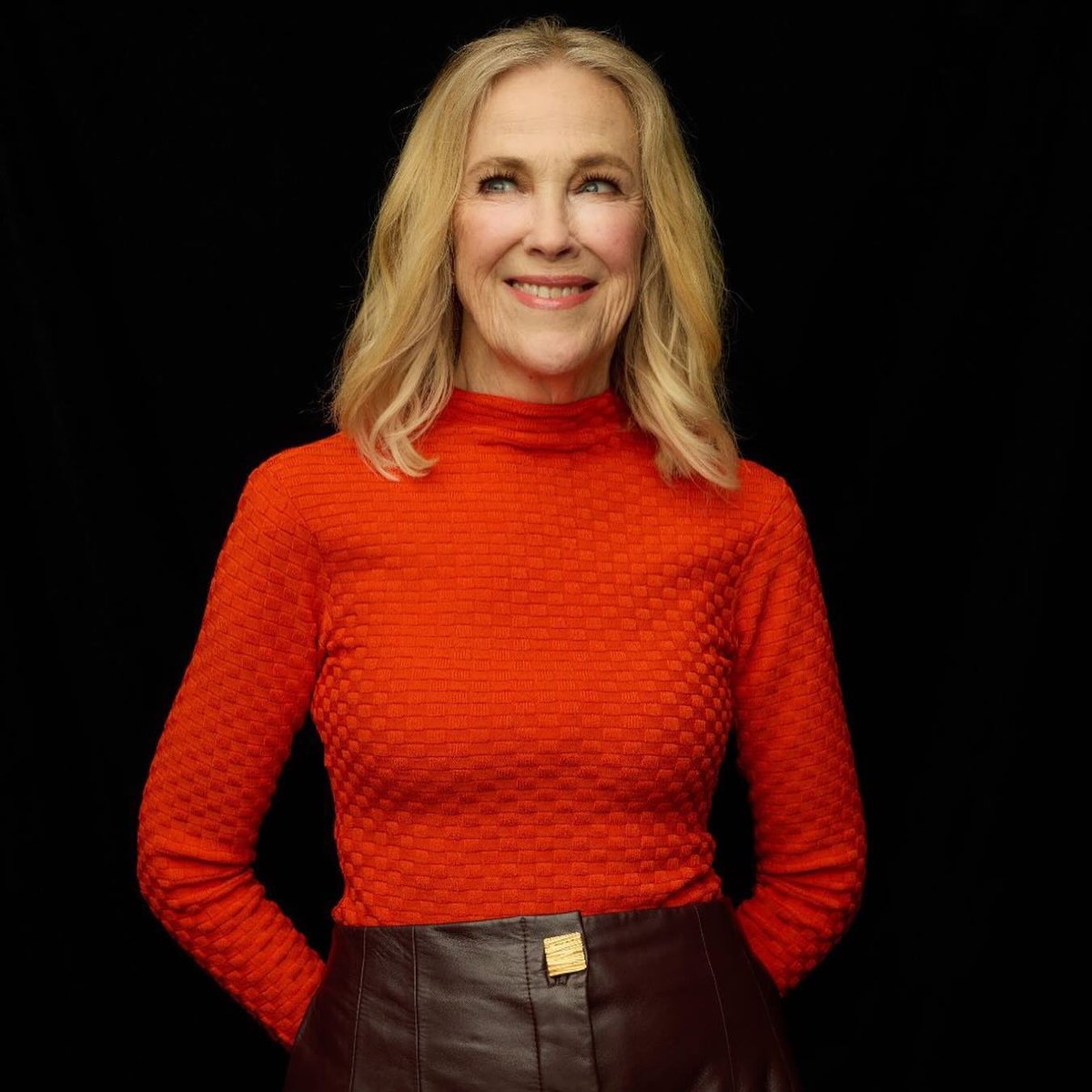
Catherine O’Hara was one of a kind. A rare light in this world and her passing hits with a weight I can’t fully put into words.
She wasn’t just a legendary artist,
actor and comedian. She was an ambassador for Canada in the truest sense: brilliant, fearless, deeply original, and so full of humanity. She made the world laugh, but she also made people feel seen.
As an artist, she inspired me more than she’ll ever know. She set the bar for what it means to represent your country with excellence and grace and all without ever losing warmth or humility.
My heart is broken for her family, her loved ones, and everyone who adored her, both here in Canada and around the world.
If you’re grieving this loss, you’re not alone. We’re all holding a piece of this sadness together.
Rest easy, Catherine. Thank you for everything. 🇨🇦❤️
My late cousin, who I adored and miss every day, once said to me: Never make fun of someone for mispronouncing a word. It means they learned it by reading.