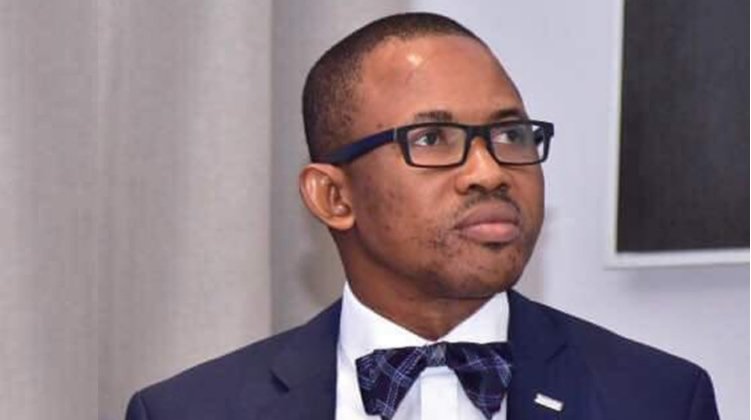
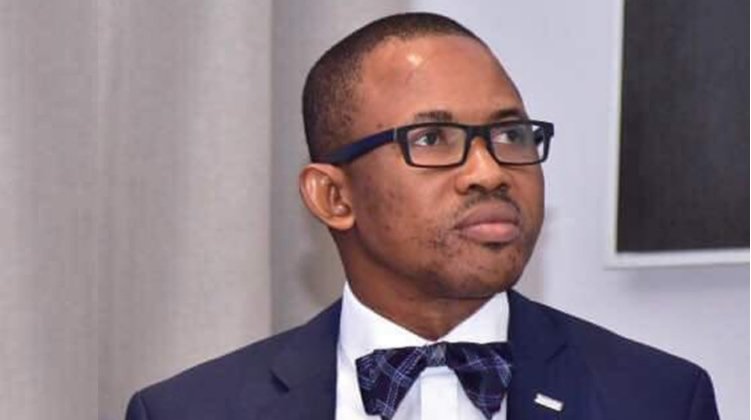
The Ondo State Government has intensified its sweeping crackdown on land grabbing and fraudulent land transactions, as the Magistrate Court sitting in Oke Eda, Akure, on Thursday took decisive action against another set of suspects accused of engaging in illegal land activities
#LandGrabbing: Court Remands Monarch, Others in Olokuta Prison as Gov. Aiyedatiwa Declares Total War on Land Grabbers
...Ondo AG says the law will spare no one, irrespective of status or influence
*To be continued *
*CONTINUATION *
Ajulo: To the new lawyers: abandon passive expectation. Seek mentorship with active enthusiasm; engage with potential legal leaders, participate in branch discussions, get involved with NBA sections, and ask incisive questions. The profession is eager to uplift those who reach out.
To senior colleagues: fulfill the sacred responsibility that comes with your accomplishments. Your legacy remains unfinished until it serves as a foundation for others. Offer guidance generously; true legacy endures beyond individual achievements.
Q: In conclusion, how do you envision the role of the Committee in shaping the future of the Nigerian Bar?
Ajulo: This endeavor transcends mere administration; it is a deliberate effort to ensure that no extraordinary intellect languishes due to lack of guidance, nor any promising vocation falter without direction. Regardless of academic standing, authentic growth in our profession begins with embracing mentorship and, over time, giving it back.
The Bar aspires to cultivate principled, successful, and transformative leaders from its emerging members. Mentorship is the enduring framework for achieving that vision. We call upon all to engage in this journey.
Q: Thank you, Dr. Ajulo, for this enriching conversation.
Ajulo: The honor is mine. And before I forget this, new lawyers should apply to join this mentorship scheme through their bar branches, and senior lawyers are invited to participate and lend their invaluable support.
*CONTINUATION *
Herein lies the eternal bridge: mentorship; the structured sharing of experiential wisdom that no classroom can truly replicate. As the ancients understood, knowledge can be taught, but wisdom is fostered through fellowship with those who have cultivated it.
Q: You have referred to this as the “First-Class Trap.” Could you elaborate on how academic excellence can sometimes hinder rather than help one's career?
Ajulo: Indeed. The trap lies in the alluring illusion that excellence in exams guarantees success in practice. Many graduates with First-Class honors enter the professional arena believing that credentials alone will attract clients, as if intrinsic value inevitably follows academic achievement. However, when faced with real-world challenges; economic fluctuations, adversarial conflicts, and ethical dilemmas; they discover the absence of an unspoken curriculum: securing initial retainers without familial connections, building a firm culture that nurtures talent, rebounding from unfavorable judgments, or transforming seemingly inconsequential engagements into significant opportunities.
Mentorship mitigates this imbalance. It accelerates the acquisition of insights that unassisted talent often lacks. The gap is not one of inherent ability but of meaningful engagement with seasoned judgment; a principle Aristotle emphasized in cultivating *phronesis* through fellowship with the virtuous.
Q: From your experiences, how has mentorship transformed your own journey?
Ajulo: I am a living testament to its profound impact. During my undergraduate years at the University of Jos, I engaged in “shadow mentorship”—observing the forensic skills of Chief Frederick Rotimi Alade Williams, SAN, attending court as a quiet observer and immersing myself in his jurisprudence. The rise of Prince Lateef Fagbemi, SAN, to silk while I was still an undergraduate ignited ambition among many in our faculty; we celebrated his achievements even without having met him. Figures like Chief GOK Ajayi, SAN, Chief Gani Fawehinmi, SAN, Kanmi Ishola-Osobu, Chief Afe Babalola, SAN, Olisa Agbakoba, SAN, and Chief Wole Olanipekun, SAN, became inspirational ideals through thoughtful observation, rendering direct encounters unnecessary.
A pivotal conversation with Chief Williams at the Supreme Court, while I served as State Counsel, recalibrated my entire path. By standing upon the shoulders of these giants, I gained a broader perspective. The enduring truth is that privilege of birth is not a necessity; diligent observation and committed engagement are sufficient to channel this timeless force.
Q: How does the NBA Mentorship Committee institutionalize and make this guidance universally accessible, beyond chance encounters?
Ajulo: The Committee aims to fill this very gap. Its mission is clear: while the Law School provides qualified practitioners, mentorship cultivates leaders and sustains enduring achievements within this noble profession.
We decentralize Project Unleash Real Mentorship across various branches to ensure equitable access; a National Summit on Mentorship is on the horizon, proposing a National Policy on Mentorship. We are organizing capacity-building workshops for newly called lawyers and seek international collaboration, including exchanges with counterparts in Canada. We connect aspirants with experienced mentors, promote the “shadow mentor technique”—whereby one who observes seven mentors with diligence becomes the eighth—and showcase living exemplars, allowing theory to manifest in practice.
Q: What advice would you offer to new lawyers who, despite their academic success, feel unfulfilled, and to senior practitioners in the Bar?
An Exclusive Interview with Dr. Olukayode Ajulo, OON, SAN
Dr Ajulo, SAN pontificates on The First-Class Trap: Why Mentorship, Not Merely Academic Excellence, Forges Enduring Success in the Legal Profession And On The Eternal Pursuit of Wisdom: Mentorship as a Timeless Bridge from Scholarly Achievement to Lasting Excellence in the Legal Profession
Q:To begin our conversation, I would like to pose a foundational question: In a time when the quest for knowledge often boils down to tangible achievements and accolades, how do you differentiate mere erudition from the deeper virtue of wisdom that fosters a life of genuine professional and moral significance in the legal field?
Ajulo: Thank you for this excellent starting point. Erudition, as recognized by the ancients, is the accumulation of facts and doctrines; a valuable yet static asset. Wisdom, or *phronesis* in Aristotelian terms, embodies the living art of application: the ability to discern good in context, to act justly amid uncertainty, and to navigate the complexities of human interactions with prudence and foresight.
In our profession, erudition may earn you a First-Class degree and admiration in academic circles, but it is only wisdom that enables one to grasp not just the letter of the law, but the essence of the client, the mood of the judge, and the often unspoken demands of justice itself.
The misfortune of many brilliant minds lies in confusing the map with the journey. They may master the knowledge outlined in textbooks but stumble when the path turns into the unpredictable terrain of human conflicts, economic pressures, and ethical dilemmas.
Wisdom is not an innate quality nor one acquired in isolation; it ignites through interactions with those who have walked the path before us. This underscores the timeless need for mentorship; not merely as instruction, but as the transmission of a vital flame from one knowledgeable soul to another in formation. Without this sacred companionship, even the brightest intellect risks becoming a brilliant yet barren flame.
This distinction lies at the core of what we will explore: why some individuals who attain academic accolades may falter, while others with more modest accomplishments rise to exemplify the true essence of our calling.
Q: Thank you for this illuminating introduction. As the inaugural Chairman of the Nigerian Bar Association’s Mentorship Committee and Attorney General and Commissioner for Justice of Ondo State, you have shed light on a perplexing aspect of the legal profession: why do certain individuals, adorned with First-Class degrees from Law School, remain in the shadows, while others with less distinguished academic backgrounds reach remarkable heights of influence and virtue? What do you attribute this divergence to?
Ajulo: Your observation resonates deeply throughout human endeavor. The rigors of Law School assess one’s mastery of doctrine, analytical skills, and intellectual resilience—qualities that are essential yet insufficient for the soul’s full flourishing in our esteemed vocation.
The practice of law is not merely theoretical; it is relational, reputational, and intrinsically commercial. A meticulously crafted contract or a recitation of legal principles means little without the underlying trust, the art of knowing when to persist and when to compromise, and the nuanced understanding of judicial temperament and client aspirations.
Those who, despite First-Class accolades, find themselves hindered often lack practical wisdom—*phronesis*—that experience imparts. Conversely, individuals with humble academic records who ascend to Senior Advocate of Nigeria or establish successful practices have typically benefited from deliberate *paideia*: the guided sharing of lived knowledge.
Ondo State Anti-Land Grabbing Taskforce Holds First Meeting of the Year, Vows Strong Action Against Land Grabbers in 2026.Declares Zero Tolerance.
The Ondo State Anti-Land Grabbing Taskforce has issued a stern warning to land grabbers to desist from their illegal activities or face the full weight of the law, as it reiterated its commitment to safeguarding property owners across the state.
The warning was issued during the Taskforce’s first meeting of the year, held at its office in Oke-Eda, Akure, where renewed strategies were outlined to curb land-related crimes in the state and strengthen enforcement efforts in 2026.
The Chairman of the Taskforce and the Honourable Attorney-General and Commissioner for Justice, Dr. Olukayode Ajulo, SAN, OON, in his address, declared that 2026 would be a decisive and difficult year for land grabbers in Ondo State. He warned that anyone who violates the Ondo State Properties Protection and Its Documentation Law, 2024 would face the full weight of the law, stressing that the successes recorded in 2025 were only the beginning, as sufficient time had been given for offenders to desist from the unlawful acts.
According to the Chairman, “The grace period has expired with 2025. Any land grabber operating in Ondo State should know that this year will be different. Recall that I earlier stated that we have compiled the names of individuals our investigations have confirmed to be deeply involved in land grabbing, turning themselves into veterans of illegality. In 2026, we are going all out against them, and the law will be enforced strictly without compromise.”
He further warned that the Taskforce would no longer tolerate illegal land sales, multiple sales of land by owning families, intimidation of lawful owners, or any form of forceful land acquisition, adding that offenders would be arrested, prosecuted, and made to face the consequences of their actions.
The Chairman also applauded the Governor for allaying long-standing fears associated with land-related fraud through the enactment of the Ondo State Properties Protection and Its Documentation Law, 2024, which criminalises land grabbing and related offences. He stressed the Governor’s continued support in providing the necessary resources to ensure the effective operation of the Taskforce.
“In my capacity and on behalf of the Committee, I sincerely appreciate Mr Governor for his commitment to this initiative. Through the enactment of this law, he has once again demonstrated his unwavering commitment to the well-being of the people of the State and the protection of their lawful property rights. With this law in place and the full backing of government, investors can now operate without fear, property owners can be assured of protection, and the era of impunity for land grabbers in Ondo State is effectively coming to an end." The Chairman said.
The committee equally commended the Governor for his sustained commitment to the anti-land grabbing initiative, particularly the approval of crucial operational resources for the Taskforce, noting that such support would further enhance effectiveness and ensure prompt response to complaints across the State.
Members present at the meeting included the Commissioner for Works, Land and Infrastructure, Engr. Olawoye Abiola, former House of Representatives member representing Ondo East/West Federal Constituency, Hon. Iranola Akinlaja, Pro-Chancellor and Chairman of the Governing Council of Adekunle Ajasin University, Akungba-Akoko (AAUA), Dr Tunji Abayomi, the Surveyor-General of Ondo State, Barr. Banjo Ayenakin; Surveyor Idowu Abiodun; ACP Olawoye Ezekiel, who represented the Commissioner of Police; and Officer Obaade, who represented the Amotekun Commander, among others.
*CONTINUATION *
He noted that Governor Aiyedatiwa is deeply committed to the rule of law, a commitment that has been demonstrated repeatedly through his actions, decisions, and leadership style. According to him, the Governor has consistently shown restraint, respect for due process, and unwavering confidence in the judiciary, even in matters of intense public interest and political pressure.
The Attorney General cautioned against efforts to compel law enforcement agencies to act solely on the basis of media speculation, warning that any attempt to effect an arrest without a valid warrant or subsisting court order would itself constitute an abuse of legal process.
He appealed to members of the public, commentators, and stakeholders to exercise restraint and allow due process to run its full course, reminding all that the justice system operates on established procedures, timelines, and safeguards that must be respected by every citizen and institution alike.
Dr. Ajulo also confirmed ongoing efforts aimed at resolving the issues between the Chief Magistrate, Mrs. Temitope Alphonsus, and the Honourable Commissioner for Women Affairs, Dr. Seun Osamaye, whom he described as respected sisters and women of great accomplishments, with a shared commitment to service and the administration of justice.
Reaffirming the position of the government, Dr. Ajulo stated that Ondo State, under the leadership of Governor Lucky Orimisan Aiyedatiwa, remains firmly committed to the rule of law, constitutional governance, and unwavering respect for judicial authority, and will continue to act transparently, responsibly, and in strict compliance with the law in all matters.
Alleged Arrest Order: Ondo HAG Clarifies Facts, Reaffirms Government’s Unwavering Commitment to Rule of Law
The Attorney General and Commissioner for Justice of Ondo State, Dr. Olukayode Ajulo, SAN, OON, has addressed the wave of commentaries, speculations, and criticisms circulating across social and conventional media concerning reports of an alleged arrest order involving the Honourable Commissioner for Women Affairs and Social Development, Dr. Seun Osamaye, and her subsequent appearance at a public function alongside Governor Lucky Orimisan Aiyedatiwa of Ondo State.
Dr. Ajulo stated unequivocally that as at this moment, there is no material evidence before the Office of the Attorney General and/or any other person or authority confirming the existence of any written court order or warrant of arrest that has been duly issued and served. He stressed that what is presently in circulation remains largely speculative and rooted in media narratives rather than in properly extracted and served court processes.
According to him, immediately reports of an alleged order filtered into the public space, the Office of the Attorney General took proactive and responsible steps to apply for the Certified True Copy (CTC) of the purported court order, being the only lawful basis upon which advice can be rendered to the Governor and any further constitutional action taken.
"Unfortunately, the day following when the purported order is said to have been given was the 1st of January, 2026, a New Year public holiday, while the second day, Friday the 2nd of January, was declared a work-free day. It is now within public knowledge that court workers embarked on an industrial action last Monday, the very day the request was made. Consequently, no written order has been issued, extracted, or served on any authority." The Attorney General explained.
Dr. Ajulo emphasised that governance and law enforcement do not operate on hearsay, assumptions, or social media commentaries, but strictly on duly issued legal instruments that are properly extracted and served in accordance with the law.
"I owe both a constitutional duty and personal fidelity to the Governor, to the good people of Ondo State, and to the entire realm of justice. As a Minister in the Temple of Justice, and indeed, as a Prince within it, I can state without equivocation and on my honour that there has never been a court order issued that I would allow to be disobeyed. This instance will not be an exception." He said.
The Attorney General further clarified that it is legally impossible to act on, or advise on, a matter for which no formal court notice has been sighted. He assured that once any such order is lawfully obtained, examined, and served, the government will take appropriate, lawful, and responsible steps strictly in line with due process.
He further stated that the Governor and the entire government of Ondo State hold the judiciary in the highest regard, noting that the title of Ambassador of Rule of Law in Nigeria bestowed on Governor Lucky Orimisan Aiyedatiwa is not ornamental, but a reflection of his consistent adherence to constitutional governance and respect for judicial authority.
Dr. Ajulo disclosed that he has engaged the Commissioner of Police and other critical stakeholders, as well as the Honourable Commissioner for Women Affairs, who has voluntarily resolved to approach law enforcement agencies. However, he queried the legal basis upon which any arrest could be effected, stressing that without a duly issued and served court order, such action would amount to a violation of the law, as the purported order remains unavailable and unverified. He noted that the issue will be appropriately addressed and conclusively resolved in accordance with due process when the court resumes.
The Untold Story: The Goldmine Behind Nigeria’s Legal Profession - And Dr. @KayodeAjulo, the Mentor Who Showed @StanAlieke Where to Dig.
…From Japa Dreams to Legal Stardom.
The September 5, 2025, feature in Lawverse Magazine was not a direct interview with the present Attorney General and Commissioner for Justice, Ondo State, Dr. Olukayode Ajulo, SAN, OON, but rather an in-depth conversation with Stan Alieke, Managing Partner of Law Capitol, who credited Dr. Ajulo as the pivotal mentor who transformed his career trajectory.
Titled "For Stan Alieke, the legal profession is a goldmine, if you know how to package yourself". The piece highlighted Alieke’s journey from contemplating emigration (“japa”) out of frustration with Nigeria’s legal landscape to establishing his own successful firm.
Dr. Ajulo’s influence was central, portrayed as a life-changing mentorship that instilled resilience, strategic thinking, and a commitment to excellence. The interview, published digitally across Lawverse‘s platforms (including X, Instagram, and Facebook), emphasised themes of mentorship, entrepreneurial grit, and the untapped potential in Nigeria’s legal sector, particularly intellectual property (IP) and entertainment law.
While the full verbatim Q&A transcript is not publicly available in text form beyond promotional teasers (with a "link in bio" directing to the magazine’s site; https://t.co/JkDiH6rEKv), the content is synthesised from detailed excerpts and promotional descriptions. Below is a comprehensive summary structured by key sections, drawing on Alieke’s reflections and Dr. Ajulo’s indirect voice through his mentee’s experiences.
*CONTINUATION *
Only three years ago, a landmark case in which I represented the President of the Senate, Senator Ahmed Lawan, Speaker of the House of Representatives, Rt Hon Femi Gbajabiamila and National Assembly came before the Supreme Court. President Muhammadu Buhari and the then all-powerful Attorney General of the Federation, Abubakar Malami, SAN, CON, sought the deletion of Section 84(12) of the Electoral Act. Many confidently predicted that the Supreme Court would never rule against such an administration. Yet a full panel of seven Justices, led by Justice Musa Dattijo Muhammad, delivered a bold and principled judgment rooted firmly in law. That is not the behaviour of a compromised bench.
As for the late Senator Buruji Kashamu’s alleged boasting about pre-written judgments, we must remember he is no longer alive to respond. In all my years, I have never encountered a judge worth his office who would allow a lawyer to write a judgment for him. That boast may have been empty, bluster meant to impress or intimidate, but it should never be used to condemn an entire institution.
Yes, the judiciary, like every profession, has its bad eggs. The National Judicial Council has sanctioned and continues to sanction many. But the overwhelming majority of Nigerian judges are upright, hardworking, principled, and deeply committed to justice. These are men and women who sit late into the night, manage impossible caseloads, endure limited resources, and still deliver judgments that uphold our democracy. They deserve fairness, encouragement, and respect.
If we genuinely want a better Nigeria, we must strengthen institutions, not destroy them with sweeping generalisations. Constructive criticism is necessary. Unbalanced condemnation is not.
As we speak about the challenges in the judiciary, we must also honour the excellence within it. As we confront misconduct where it exists, we must highlight integrity where it thrives. And while we demand reforms, we must never undermine the last hope of the common man.
A nation cannot survive without a judiciary it trusts. But that trust must be built on truth, whole truth, balanced truth, responsible truth.
*CONTINUATION *
However, Mr Falana insisted that the matter was not about politics but about trust, character, and integrity. And so, despite the political implications, we began the long but purposeful journey from the Federal High Court through the Court of Appeal to the Supreme Court.
At no point in that process was there ever a hint of bribery or corruption. We prepared meticulously, relying solely on law, facts, and logic. We were confident of victory because we knew the case was strong on its merits and that justice was on our side. The judiciary validated that confidence. We won at every stage, from the Federal High Court, to the Court of Appeal and then to the apex, the Supreme Court, without inducing anyone, without buying influence, and without compromising our values. This is the side of the judiciary Senator Ojudu benefited from, the side thousands of Nigerians experience daily.
Law, as one of my lecturers used to say, is like blind men touching an elephant. The one who touches the tusk says it feels like marble; the one who touches the leg calls it a pillar; the one who touches the body describes it as a wall. A single interaction does not represent the whole.
Another example is the case involving leaders of the Oodua People’s Congress in the build-up to the 2007 elections. The late Dr. Frederick Iyiotan Fasehun, Iba Gani Ige Adams (now the Aare Ona Kakanfo of Yorubaland), and four others were arrested in Lagos by the State Government over allegations of public disturbance. They were later released by the administration of the current President, Asiwaju Bola Ahmed Tinubu, who was then the Governor of Lagos State. The Federal Government under President Olusegun Obasanjo subsequently rearrested them, transferred them to Abuja, detained them for an extended period, and eventually charged them with treasonable felony.
I joined the defence team led by eminent legal giants such as G.O.K. Ajayi and W.K. Shittu, now both Senior Advocates of Nigeria, alongside Oluwole Kehinde. At one point, Festus Keyamo, now also a Senior Advocate of Nigeria and the current Minister of Aviation, joined the team. As the only member of the defence team resident in Abuja, it naturally fell on me to attend court daily. I filed five separate bail applications, each time facing firm resistance from the prosecution, who repeatedly invoked so-called "orders from above" to oppose the applications and ensure continued detention. Yet we persisted, confident that the law was on our side.
Yet Hon. Justice Anwuli Chikere of the Federal High Court delivered a courageous ruling, freeing them. Despite the boast from the top that they will not be released until after the 2007 general election. That was the judiciary standing firm against executive pressure.
There is more. Under President Muhammadu Buhari’s civilian administration, known for its strong anti-corruption posture, several military officers implicated in the arms procurement scandal were arrested and had their properties seized. The central figure was a Nigerien arms dealer, Hima Aboubakar, whose properties and funds were forfeited to the Federal Government on the order of the court. When I was briefed, I discovered glaring legal issues that made the forfeiture questionable. Many warned me that the President was personally invested in the matter and that no one had ever succeeded in reversing such a forfeiture under his regime. Yet we challenged it on law, argued it on merit, and won. The forfeiture was reversed without paying a penny to anyone. That victory was not about influence, it was about the judiciary doing its duty and upholding the law.
For twenty-five years, from Magistrate Courts to the Supreme Court, I have never attempted to bribe a judge, nor has any judge ever demanded such from me. My mentors are individuals of unshakeable integrity. If the judiciary were as rotten as suggested, honest lawyers would not survive, let alone excel.
Is Justice Truly for Sale in Nigeria? A Necessary Balance to Senator Ojudu’s “How They Buy the Judges & Break the Country”
By Dr Olukayode Ajulo SAN, OON
I read the recent piece by Senator Babafemi Ojudu with mixed feelings. Senator Ojudu is a big brother, a believer, and a man I deeply respect, an activist of uncommon courage, an accomplished journalist, a Senator of the Federal Republic, and a public servant who has contributed immensely to national discourse and democratic development. It is precisely because of this respect that I feel compelled to respond. My conscience will not allow me to ignore a narrative which, if left unchallenged, may become an unfair yardstick and statistics for judging the integrity of the Nigerian judiciary and the many noble men and women who serve within it.
We must also acknowledge Senator Ojudu’s courage in bringing his concerns into the open. He has never been one to shy away from difficult conversations. Throughout his career, he has confronted abuses, exposed corruption, and spoken truth to power at great personal cost. His voice has shaped public debate for decades. It is also in this same spirit of open engagement that I offer this necessary balance.
The Senator shared a troubling experience, one any reasonable person would find unsettling. I acknowledge his right to tell his story. However, a single negative encounter should never define an entire institution. Narratives, especially those presented by respected voices, must be balanced or they risk distorting reality and misleading posterity. And since Senator Ojudu did not highlight the positive encounters I know he equally enjoyed within the same justice system, I believe it is necessary to assist him by offering context, perspective, and my own experiences drawn from twenty-five years of legal practice.
Before his public service, Senator Ojudu was known for his fearless journalism. He fought vices and confronted institutional decay when silence would have been easier. But public office often presents new realities, pressures, and perspectives. This observation is not a criticism; it is a reminder that institutions look different depending on where we stand. As we interrogate the judiciary, we must first acknowledge a truth that applies to every sector: corruption, where it exists, is not the exclusive disease of any single arm of government or profession.
I reject the dangerous insinuations that suggest all judges or judicial processes are compromised. This is as unfair as claiming that all journalists accept brown envelopes. We know such stereotypes circulate, but we also know the many journalists whose integrity is unimpeachable. Dr. Seye Kehinde of City People Magazine published my essays from my secondary school days without ever asking for a kobo, even when I became capable of paying. Not only Seye Kehinde, the names are endless, there are many of his likes who write and publish what is right because it serves the public, not because it is bought. If journalists can be upright, so can judges. It is unjust to condemn an entire institution because of the failings of a few.
Let me remind Senator Ojudu of something very important, he skipped: one of his greatest political victories was delivered, not by political power, but by the judiciary he now paints with such broad strokes.
When his senatorial mandate was challenged by Senator Bode Ola of Ekiti Central after the Action Congress primaries, it was the judiciary that resolved the matter. The respected human rights lawyer, Mr Femi Falana, SAN, a major contributor to my practice, personally reached out to me to handle the case. I initially expressed reservations because I was then a committed chieftain of the Labour Party, serving as its Acting Legal Adviser before becoming the National Secretary. The party was the ruling party in my home state, Ondo State, and I had contested for the FCT Senate seat under its platform in Abuja.
*CONTINUATION *
I commend the Nigerian Bar Association (NBA) Akure branch for its remarkable initiatives and visionary leadership. Their dedication to honouring distinguished individuals in our community serves as an inspiration for all.
I particularly applaud the decision to honour several great Nigerians, including Senator Dr Bode Olajumoke, Chief Femi Fani-Kayode, and to recognise the remarkable 91-year-old Uncle Sam Amuka-Pemu, founder of Vanguard Newspaper, as the Friends of the Akure Bar.
As the Attorney General of Ondo State and with the permission of His Excellency, Dr. Lucky Orimisan Aiyedatiwa, FCA, it is important to amend this acknowledgement to reflect his broader influence; Uncle Sam Amuka is truly a Friend of Ondo State.
Uncle Sam Amuka-Pemu is not just a prominent figure in journalism; he is an institution in his own right and a living legend. His contributions have shaped media discourse in Nigeria and left a lasting impact on generations of journalists and citizens alike.
Once again, I commend the NBA Akure branch for its foresight in recognising and honouring such significant contributions to our society.
Empowering Justice for All: Governor Aiyedatiwa's Role as Ambassador of the Rule of Law
-Dr. Olukayode Ajulo, OON, SAN
In a landmark event celebrating legal excellence, the Nigeria Bar Association, Akure Branch, honoured Governor Dr. Lucky Orimisan Aiyedatiwa with the prestigious title of Ambassador of Rule of Law in Nigeria. This accolade, awarded during the Dinner and Gala Night marking the conclusion of their week-long Law Week, serves as a powerful testament to the crucial role that the rule of law plays as the foundation of peace, justice, and democracy in our society.
Significance of the Honour
Being named Ambassador of Rule of Law goes beyond simple recognition; it reflects a profound commitment to justice, equity, and the legal principles that uphold our nation. In a time when societal cohesion is often challenged by division and uncertainty, this title acts as a guiding light, encouraging leaders to advocate for justice and empower citizens through increased understanding and equitable reforms.
Aiyedatiwa’s Legacy in Justice
Dr Aiyedatiwa’s considerable contributions to the justice sector underscore his merit for this honour. As a champion of the rule of law, he has overcome numerous legal challenges to secure his office, demonstrating his dedication to fairness and justice. His steadfast commitment to the independence and welfare of the judiciary has strengthened the foundations of justice in Ondo State.
Reflection of Leadership
Governor Aiyedatiwa’s elevation to this esteemed role exemplifies his deep-rooted belief in the transformative power of law to effectuate meaningful change. As an ambassador, he will serve not only as a custodian of the law but also as a visionary leader who inspires collaboration among legal professionals, policymakers, and civil society. His responsibilities extend beyond governance; he embodies the essence of justice, motivating others to uphold legal integrity in their everyday actions.
Influence on Policy and Governance
The title of Ambassador of Rule of Law unlocks new opportunities for influencing policy and governance in Ondo State:
A. Enhanced Legal Framework: The title can spur vital legal reforms, ensuring laws align with principles of justice and equity while prioritising judiciary funding for timely justice.
B. Strengthening Accountability: It advocates for transparent governance, enriching trust between citizens and the administration through robust checks against corruption.
C. Public Awareness and Engagement: This role promotes initiatives to educate citizens about their rights, encouraging active participation in governance and policy dialogues.
D. Promotion of Equity and Justice: A focus on inclusivity can lead to equitable policies supporting marginalised communities and improving access to justice for all.
E. Holistic Development Initiatives: The governor can use this honour to align state policies with sustainable development goals, promoting collaboration with civil society and international organisations.
F. Global and National Recognition: This title enhances Ondo State's reputation as a centre for legal excellence, attracting investments and setting a governance model for other states in Nigeria.
Conclusion
The honour of being named Ambassador of Rule of Law is far more than a ceremonial title; it represents a transformative opportunity for reshaping governance and policy in Ondo State. By embedding justice, transparency, and accountability into the administration’s core values, Governor Aiyedatiwa can spearhead significant reforms that steer Ondo State toward a future defined by equity, prosperity, and an unwavering commitment to the rule of law. As we celebrate this honour, let it inspire every citizen to actively participate in this ongoing journey, nurturing a culture of respect for the law and reinforcing the democratic values that unite us.
Commendation for NBA Akure’s Initiatives