After surviving two military coups, fleeing Uganda twice and spending nearly two decades in exile, Miria Kalule Obote made an unexpected entry into frontline politics at the age of 69, becoming the first woman to lead a major Ugandan political party and contest for president.
Born on July 16, 1936, in Kawempe, Kampala, Miria was the wife of former President Apollo Milton Obote, whom she married on November 9, 1963, at Namirembe Cathedral despite opposition from her family over their ethnic differences.
She attended Gayaza High School, studied at Makerere University College and later worked as a secretary for Uganda’s delegation to the United Nations in New York.
She became First Lady in 1966 when Obote assumed the presidency but was forced into exile following Idi Amin’s January 1971 coup. The family eventually settled in Tanzania under the protection of President Julius Nyerere.
After Obote returned to power in 1980, she resumed her First Lady role until the 1985 coup by Tito Okello forced the family into exile again, this time largely in Zambia.
Following Obote’s death in Johannesburg on October 10, 2005, Miria returned to Uganda, where the UPC elected her party president on November 28, 2005, and presidential candidate.
In the February 2006 elections, she finished fifth with 57,071 votes, representing approximately 0.82 per cent.
She led UPC until 2010, when Olara Otunnu succeeded her, but remains an important figure in the party’s history.
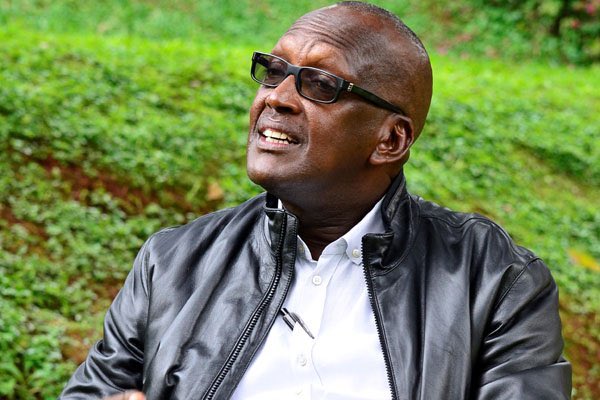
President Museveni once described Abdu Katuntu as a “poisonous mushroom” accused of suffocating government programmes, but years later, the outspoken opposition legislator crossed to the ruling National Resistance Movement (NRM) and campaigned for the same president.
The political reversal marked one of the most striking turns in Katuntu’s career, which spanned about 25 years in Parliament, opposition politics, public accountability and, eventually, an alliance with a government he had spent years scrutinising.
Born on December 3, 1965, Katuntu is a lawyer who studied at Makerere University, obtaining a Bachelor of Laws degree before completing a Diploma in Legal Practice at the Law Development Centre. He previously worked at Kadaga & Company Advocates, a law firm associated with former Speaker Rebecca Kadaga.
He entered Parliament in 2001 on a Uganda People’s Congress (UPC) ticket as Bugweri County MP.
In the 2006 elections, he lost to Kirunda Kivejinja amid widespread allegations of intimidation and torture. A court subsequently nullified the election, allowing Katuntu to reclaim the seat in a by-election.
He later became a founding member of the Forum for Democratic Change (FDC), serving as Shadow Attorney General before aligning with Mugisha Muntu’s faction, which championed the formation of the Alliance for National Transformation.
Katuntu rose to national prominence as chairperson of Parliament’s Committee on Commissions, Statutory Authorities and State Enterprises (COSASE), where he led investigations into public expenditure and pursued accountability from government institutions.
He was credited with helping recover Shs47 billion from Chinese road contractors in 2016 and championed access to information legislation. He also served in the Pan-African Parliament as rapporteur on justice and human rights.
In 2019, he announced plans to retire after 20 years in Parliament but later reversed the decision, contesting as an independent.
By 2024–2025, he had joined the NRM at State House and campaigned for Museveni.
His parliamentary career eventually ended in the 2026 elections, when he lost Bugweri County to an NRM candidate.
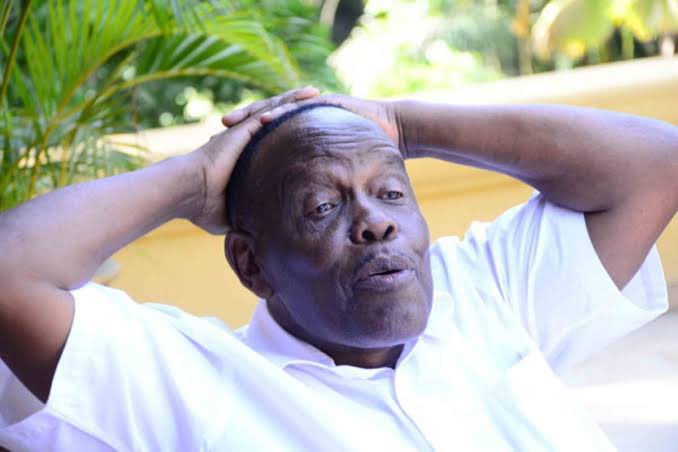
Paul Kawanga Ssemogerere believed he had been robbed of the presidency in Uganda’s disputed 1980 elections, but instead of taking up arms to challenge Milton Obote’s return to power, he chose to lead the opposition in Parliament, becoming one of Uganda’s most enduring advocates of constitutional politics.
Ssemogerere (11 February 1932 – 18 November 2022) was a veteran Democratic Party (DP) leader who twice contested for the presidency and spent decades navigating Uganda’s turbulent political landscape through elections, constitutional petitions and government service.
Born at Bumangi Catholic Mission in the Ssese Islands, present-day Kalangala District, Ssemogerere was the last-born in his family. His father, a fisherman, died when he was still an infant, leaving him to grow up partly under the care of relatives and through Catholic mission institutions.
He attended St Henry’s College Kitovu and St Mary’s College Kisubi, where he distinguished himself beyond academics. He served as head prefect, president of the debating society and captain of both the tennis and boxing teams. He also became Uganda’s national featherweight boxing champion around 1951.
He later obtained a Diploma in Education from Makerere University, specialising in biology and chemistry, before pursuing further studies at Allegheny College in Pennsylvania, United States. In 1979, he earned a PhD in Public Administration from Syracuse University.
His political journey began in the early 1960s when he became parliamentary secretary to then DP leader Benedicto Kiwanuka and Member of Parliament for North Mengo.
Following Kiwanuka’s disappearance under Idi Amin’s regime, Ssemogerere assumed leadership of the Democratic Party in 1972 while in exile, a position he would hold for more than three decades.
His defining political moment came after the controversial 1980 general elections, in which the Uganda People’s Congress (UPC), led by Milton Obote, was declared victorious.
The elections were marred by allegations of intimidation, electoral interference and irregularities, with Ssemogerere and his supporters believing that DP had been denied victory.
Rather than join the armed rebellion that eventually brought down Obote’s government, Ssemogerere opted for parliamentary opposition, maintaining that political change should be pursued through constitutional means.
He subsequently served in several governments, including those of Tito Okello and President Yoweri Museveni.
Under Museveni, he held positions including Minister of Internal Affairs, Foreign Affairs and Public Service, as well as Deputy Prime Minister. He also chaired the Organisation of African Unity (OAU) Council of Ministers between 1988 and 1990.
However, he resigned from government in 1995 and returned to the presidential contest in 1996 under the Inter-Party Forces Cooperation and Democratic Party banner.
He challenged Museveni in the election but lost, securing approximately 24 per cent of the vote against Museveni’s 74 per cent.
Despite his electoral defeats, Ssemogerere remained influential in Uganda’s struggle for multiparty democracy. He pursued constitutional petitions that contributed to the dismantling of the Movement political system and the eventual restoration of multiparty politics.
In 2005, he retired from the leadership of the Democratic Party, ending a political career that had spanned more than four decades.
He was married to economist Prof. Germina Namatovu and was widely remembered for his calm political demeanour, commitment to constitutionalism and preference for peaceful political engagement.
His aversion to violence was reflected even in his death. When he was buried in November 2022, his family requested that there be no gun salute, consistent with the principles of a man who had spent much of his political life advocating change without taking up arms.
For 10 years, Fred Mukasa Mbidde represented Uganda in the East African Legislative Assembly (EALA), serving two consecutive terms, but his repeated attempts to win a seat in Uganda’s Parliament through constituency elections have ended in defeat.
From Makindye West to Kalungu East, Nyendo-Mukungwe and, most recently, Buwekula County, Mbidde has struggled to translate his long-standing influence in opposition politics into an electoral victory at home.
His political record presents an unusual contrast: two successful terms at EALA against a series of unsuccessful constituency parliamentary contests spanning more than two decades.
Following his latest defeat in the 2026 general elections, Mbidde reportedly made a striking observation about his electoral record, saying he had only succeeded in elections dominated by voters with Senior Six-level education or higher.
The remark added another dimension to the political career of a man who has spent more than two decades in Uganda’s opposition politics, rising through the Democratic Party (DP) from student leadership to senior party positions.
Born in Masaka District on October 15, 1973 or 1974, Mbidde is a lawyer, human rights activist, mass communication specialist and businessman. He is the managing partner of Mbidde & Co Advocates and has business interests that include Elsie Hotels.
He studied Mass Communication and Law at Makerere University before obtaining a Diploma in Legal Practice from the Law Development Centre. He has also pursued further studies in oil and gas law.
Mbidde’s political journey began in student politics. He joined the Uganda Young Democrats (UYD) in 1999, where he served as deputy treasurer and secretary for students’ affairs.
In 2001/2002, he was elected Makerere University Guild President, succeeding Asuman Basalirwa. His student leadership provided a platform for his subsequent rise within the Democratic Party.
He later became UYD national vice president in 2005, DP national deputy campaigning director in 2006, national legal adviser and eventually national vice president, a position he assumed around 2015.
Despite his growing influence within the party, winning a direct parliamentary seat proved elusive.
His first major attempt to enter Parliament through a constituency election was in Makindye West around 2005/2006, where he lost to Hussein Kyanjo of the Justice Forum (JEEMA).
He subsequently contested the Kalungu East by-election in 2007 but lost. He blamed President Yoweri Museveni for the circumstances surrounding that election.
Mbidde returned to contest the same constituency in the 2011 general elections but finished third.
In 2021, he shifted his political ambitions to Nyendo-Mukungwe, where he lost to National Unity Platform’s Mathias Mpuuga. His 2026 attempt in Buwekula County also ended in defeat.
His electoral fortunes, however, took a different turn at the regional level.
After losing the 2011 parliamentary elections, Mbidde challenged the process through which Uganda’s representatives to the East African Legislative Assembly were selected, eventually securing court redress.
He was elected to EALA in 2012 on the Democratic Party ticket and retained his position in 2017, serving two consecutive terms until approximately 2022.
During his time at the regional assembly, he chaired the Committee on Communication, Trade and Investments and also served on committees responsible for Legal, Rules and Privileges, as well as Regional Affairs and Conflict Resolution.
His EALA career established him as a regional parliamentary figure despite his inability to win a constituency seat in Uganda.
Beyond politics, Mbidde is known for his technical and elaborate language during speeches and public commentary, a characteristic that has become part of his public identity.
The contrast between Samuel Walter Lubega Mukaaku’s decades in opposition politics and his modest performance at the ballot box has defined much of his political career. After contesting Uganda’s 2011 presidential election and polling 32,726 votes, he later received 719 votes in the 2021 Rubaga South parliamentary race and 1,001 votes in the 2026 elections.
A veteran opposition politician, Mukaaku describes himself as a “freedom fighter” and federalist. He is known for his long association with the Democratic Party (DP), his involvement in opposition formations and repeated attempts to win elective office.
Born in Buseebwe-Sango, Mawokota County, Mpigi District, and raised in Kawempe-Mbogo, Kampala, Mukaaku holds a Bachelor of Science degree in Agricultural Economics from Makerere University and a Master of Science degree in Policy Planning and Management from the University of Wales, Swansea.
He previously taught in Uganda and the United Kingdom before turning his attention to politics.
Mukaaku’s political activism dates back to the mid-1980s, when he became involved in Democratic Party activities, taking on responsibilities in policy, mobilisation and campaigning.
In 1995, he co-founded the Uganda Young Democrats (UYD), the party’s youth wing, and served as its National Speaker. He also led Nkoba za Mbogo, a Baganda cultural and youth organisation.
Between 1996 and 1998, he lived in exile, which he has linked to his political activities.
His most prominent electoral contest came in the 2011 presidential election, when he stood as an independent after failing to secure the Democratic Party ticket. He polled 32,726 votes, representing 0.41 per cent of the total vote.
He later contested the Rubaga South parliamentary seat in 2021 on the Social Democratic Party ticket, receiving 719 votes, or 0.9 per cent. In the 2026 elections, he again sought the constituency seat, this time under the Democratic Front (DF), but lost to the National Unity Platform’s Eugenia Nassolo with 1,001 votes.
Beyond electoral contests, Mukaaku has moved through several opposition political formations.
He was among the early supporters of the People Power movement, which later evolved into the National Unity Platform (NUP). He briefly served as vice-chairperson of NUP’s Electoral Management Committee before being removed in 2020 following accusations that he was promoting Democratic Party candidates.
He subsequently worked with the DP Bloc and the Holy Alliance and was also associated with opposition activities alongside former Forum for Democratic Change president Kizza Besigye.
Mukaaku later became National Chairman of the Democratic Front, adding another chapter to a political journey marked by shifting party affiliations and continued involvement in opposition politics.
Despite spending years in opposition politics, serving in senior leadership positions and enduring repeated arrests, Harold Kaija has yet to win an elective political seat.
Kaija, a longtime ally of veteran opposition leader Dr Kizza Besigye, has built his political career within the opposition, rising through the ranks of the Forum for Democratic Change (FDC) before joining the People’s Front for Freedom (PFF) following the party’s split.
His electoral journey, however, has been marked by repeated defeats.
In 2016, Kaija contested for Kampala Central Member of Parliament on the FDC ticket, polling 5,134 votes but losing to incumbent Muhammad Nsereko, who stood as an independent candidate.
He returned to the same constituency in the 2021 general elections but performed worse, securing 1,679 votes as Nsereko retained the seat.
In 2022, Kaija was selected as the FDC flagbearer for the East African Legislative Assembly (EALA) elections. However, he secured only 99 votes in Parliament’s ballot, missing out on the regional legislative position.
Following the divisions that rocked the FDC, Kaija aligned himself with PFF, where he remains active in opposition politics and discussions about political strategy, national dialogue and institutional reforms.
Between 2025 and 2026, he sought another opportunity to enter Parliament, this time contesting for the Nansana Municipality seat on the PFF ticket.
His campaign focused on improving service delivery, advocating for Nansana’s elevation to city status and ensuring that residents benefit more directly from the taxes collected within the municipality.
During his campaigns, Kaija also raised concerns about voter apathy, particularly through his door-to-door engagements with residents.
Born into a politically active family, Kaija’s involvement in opposition politics was influenced by his mother, Mary Gorreti Nassanga, an outspoken opposition politician, and his maternal uncle, who served as a Member of Parliament and political commissar in the Federal Democratic Movement (FEDEMU).
He was raised between Kampala and Wakiso alongside his father, Boniface Nyakabwa, and later attended Uganda Martyrs High School Lubaga.
He pursued business management studies at Kyambogo University, obtained a Master of Business Administration and further qualifications in economic policy management from Makerere University.
His political activism has also come with personal costs. Kaija has been arrested several times, including in the aftermath of the 2016 general elections, and detained at facilities including the Special Investigations Division (SID) in Kireka.
Despite his unsuccessful electoral bids, he has remained a visible figure in opposition politics, particularly within the political camp associated with Besigye.
Singer Sheebah: My focus has never been waiting on a man to come and save me. I have never been there imagining my wedding, yet 80 to 90% of girls, their dream is to get a husband
In April 2012, Ugandan political activist Ingrid Turinawe was dragged out of her car by police officers as she headed to a political rally, before a male officer squeezed her breast in an incident captured on camera and broadcast widely.
The assault triggered nationwide outrage and solidarity protests, becoming one of the defining moments in her activism and years of confrontation with security forces.
Turinawe, who was at the forefront of the opposition’s Walk-to-Work protests, endured repeated arrests, beatings, teargas attacks, home sieges and other forms of police violence but repeatedly returned to political activism.
Born Ingrid Kamateneti on November 23, 1973, in Kashojwa village, Kanungu District, she grew up in a large polygamous family as the fourth of nine children born to her mother, Jane Bakesiga.
Her father, Stanley Bakwatilenda, had several wives, creating an environment in which children and their mothers competed for attention and limited family resources.
Her father died when she was about nine years old, leaving the family to navigate difficult circumstances.
Turinawe has previously described her upbringing as a struggle that shaped her determination and fighting spirit. She credited her mother, whom she described as hardworking and intolerant of failure, for influencing her character.
She attended local schools, obtained a diploma in teaching and later graduated from Nkumba University.
In 1992, she married businessman Jackson Turinawe, with whom she has five children. Her entry into politics began at the local level in Rukungiri before she joined the Forum for Democratic Change (FDC), where she rose through the party ranks to become chairperson of its Women’s League and national mobiliser.
Her prominence grew during the 2011–2012 Walk-to-Work protests, organised by opposition figures to challenge rising commodity prices and the cost of living.
As one of the visible opposition mobilisers, Turinawe became a frequent target of security operations, facing arrests, physical confrontations and repeated disruptions of political activities.
The April 2012 incident in which she was sexually assaulted by a police officer became particularly significant in her political journey.
Turinawe later described the incident as the worst terror she had experienced. The footage prompted public condemnation and demonstrations by women who protested the treatment she had received.
She was subsequently charged with treason alongside other opposition figures and spent two months in Luzira Prison.
Her confrontations with security agencies also included incidents in which she was stripped during arrests, experiences she publicly described as deeply humiliating. She said she would rather endure prolonged detention than go through such treatment again.
The violence and public exposure of the incidents also affected her family, with her children reportedly traumatised by images of their mother’s treatment circulating in the media.
Despite repeated arrests and hospitalisations, Turinawe continued participating in opposition activities, often returning to protests after recovering from injuries.
She became known for her defiant declaration that she would rather die like a lion than live like a rat, a statement reflecting her determination to continue challenging the authorities despite the risks.
Her activism continued through subsequent divisions within the FDC and later opposition demonstrations, including actions in 2025 demanding the release of political prisoners.
More than a decade after the Walk-to-Work protests, Turinawe remains associated with Uganda’s opposition activism, with her political journey marked by confrontations with security agencies, personal sacrifice and repeated returns to public protest.
At just 13, Patrick Bitature lost his father, who was murdered during Idi Amin’s regime, leaving the family without its properties, farms, vehicles and financial security. As the eldest of several children, Bitature was forced to assume responsibility for the family, setting him on an entrepreneurial journey that would eventually make him one of Uganda’s prominent businessmen.
Born on May 10, 1960, in Fort Portal, Kabarole District, Bitature grew up in a middle-class family whose parents worked with the East African Community.
His father’s death plunged the family into financial hardship, forcing the young Bitature to look for ways to support his siblings and keep the family going.
He began trading sugar imported from Kenya, supplying areas in Uganda experiencing shortages. He later diversified into clothing, shoes and other merchandise, gradually building his business experience while pursuing his education.
His education was supported in part by Fr Damien Grimes, who helped him meet school fees while studying at Namasagali College.
Bitature completed his O-level education at Namasagali College before proceeding to Nyakasura School for his A-levels. He later trained at the London School of Accountancy and became a Fellow of the Institute of Chartered Secretaries and Administrators.
A significant turning point in his early business career came in the late 1980s when businessman Mukwano helped him access approximately $20,000 worth of textiles through a contact in Dubai.
The opportunity enabled Bitature to expand his trading activities and strengthen his position in business.
In 1998, together with his wife, Carol, he established Simba Telecom as an MTN Uganda franchisee and distributor of mobile airtime.
The company grew into one of Uganda’s largest mobile airtime distribution businesses, benefiting from the expansion of mobile telecommunications and the increasing demand for mobile services.
Simba Telecom subsequently became part of the diversified Simba Group, whose investments expanded beyond telecommunications into hospitality, energy, real estate, agriculture, mining and other services across East Africa.
In the hospitality sector, the group has invested in properties including Protea Hotel Kampala and Skyz Hotel, while its energy interests include Electro-Maxx, a thermal power plant in Tororo.
Bitature also served as chairman of Umeme for an extended period, becoming one of the prominent private-sector figures in Uganda’s energy industry.
Beyond business, he has held leadership positions in several institutions, including the Private Sector Foundation Uganda and the Uganda Investment Authority.
He also serves as Australia’s honorary consul in Uganda and participates in philanthropy through the Patrick and Carol Bitature Foundation.
In recent years, his business empire has faced financial challenges, including a prolonged financing dispute with South African investment firm Vantage Capital, which was subsequently settled.
Despite the challenges, Bitature remains an influential figure in Uganda’s private sector, with a business journey shaped by personal tragedy, early entrepreneurship and the expansion of investments across multiple industries.
Adolf Kasaija Mwesige’s five-year tenure as Clerk to Parliament ended in November 2026 following a series of controversies, including scrutiny over Shs1.7 billion service awards to parliamentary commissioners and investigations into alleged misuse of parliamentary funds.
Mwesige, who served as Parliament’s administrative head and principal accounting officer from August 2021, was among officials affected by President Museveni’s November 9 reshuffle of permanent secretaries and accounting officers.
In August 2024, High Court Judge Douglas Singiza directed the Secretary to the Treasury to institute disciplinary proceedings against him over his role in processing the service awards. In May 2026, State House investigators and auditors also raided and sealed offices associated with Mwesige and then-Speaker Anita Among amid investigations into alleged financial irregularities. He was not formally charged in the related investigations.
Born on April 4, 1966, Mwesige is a lawyer and politician who represented Bunyangabu County in Parliament for five consecutive terms between 1996 and 2021.
He previously served as Minister of Local Government, Minister of Defence and Veteran Affairs, and Minister for General Duties in the Office of the President.
A Makerere University law graduate, he was enrolled as an advocate of the High Court in 1994 and practised law before joining senior government positions.
Dr Pius Bigirimana’s public service career took him from the centre of a multibillion-shilling government funds scandal at the Office of the Prime Minister to the administration of Uganda’s Judiciary, where he spent his final seven years in public service before retiring on November 9, 2026.
Bigirimana came under scrutiny during his tenure as Permanent Secretary at the Office of the Prime Minister (OPM), where billions of shillings meant for northern Uganda’s recovery under the Peace, Recovery and Development Plan were lost through financial irregularities. He maintained that he had raised concerns about the irregularities and received public backing from President Museveni. In 2021, he won a defamation case against Monitor Publications over its reporting on the matter.
Born on March 22, 1958, in Kisoro District, Bigirimana began his public service career in 1983 as an Assistant District Commissioner in Kisoro before serving in Mbale. He subsequently held several senior administrative positions in the Office of the President and different government ministries.
In October 2008, he was appointed Permanent Secretary at OPM, a position he held until 2013. He was later transferred to the Ministry of Gender, Labour and Social Development, where he served until July 2019 and was associated with programmes such as the Youth Livelihood Programme and Uganda Women Entrepreneurship Programme.
In July 2019, he was appointed Permanent Secretary and Secretary to the Judiciary, becoming responsible for its administration, budgeting, procurement, human resources and planning.
During his seven-year tenure, the Judiciary expanded the Electronic Court Case Management Information System (ECCMIS), advanced construction of the Supreme Court and Court of Appeal twin-tower complex, and increased the use of video conferencing to connect courts with prisons.
His contribution to judicial reforms was recognised in 2026 when he received the Responsible Investment Global Award as Uganda’s Judicial Reforms Champion.
Bigirimana holds a Bachelor of Arts in Political Science and Public Administration from Makerere University, postgraduate qualifications in Development Administration from the University of Manchester and an MBA from ESAMI.
Beyond public administration, he is an author whose books include Corruption: A Tale of Wolves in Sheep’s Clothing, Unchained: A Public Servant with a Private Sector Mindset, Abundance Mentality and Naked Truth.
He retired following the November 9, 2026 reshuffle of permanent secretaries and was succeeded at the Judiciary by Doreen Katusiime.
Maj Gen (Rtd) David Kasura-Kyomukama was part of the military team that developed the Uganda People’s Defence Forces (UPDF) doctrine and helped design the army’s structure before moving into public administration, where he spent his final five years as Permanent Secretary of the Ministry of Agriculture.
Kasura-Kyomukama retired on November 9, 2026, following President Yoweri Museveni’s reshuffle of permanent secretaries and senior accounting officers. He was replaced at the Agriculture Ministry by Barbara Namugambe, formerly Under Secretary for Finance and Administration at the Ministry of Works and Transport.
During his military career, which spanned more than three decades, he held various command and staff positions in the National Resistance Army and the UPDF. He was part of a team led by the late Lt Gen Pecos Kutesa that developed the Uganda Defence Doctrine and worked on the structure and establishment of the UPDF. He also contributed to the establishment of the Internal Security Organisation and the reorganisation of the National Leadership Institute at Kyankwanzi.
Before his appointment to the Agriculture Ministry in August 2021, he served as Director of the National Leadership Institute and Uganda’s Defence Liaison Officer at the East African Community Secretariat in Arusha.
At the Agriculture Ministry, he focused on increasing productivity, promoting commercial farming, mechanisation, irrigation, value addition and improving farmers’ access to markets.
Kasura-Kyomukama holds a Bachelor of Science degree from Makerere University and a master’s degree from the University of Salford in the United Kingdom. He attained the rank of Major General during his military career.
In 2012, Syda Bbumba resigned as Finance Minister following a controversial Shs142 billion compensation payment to businessman Hassan Basajjabalaba, in one of Uganda’s biggest financial scandals.
The compensation followed the cancellation of Basajjabalaba’s companies’ leases and management agreements for several Kampala markets, including Nakasero, Nakawa, St Balikuddembe (Owino) and Shauri Yako, as well as Constitutional Square.
Bbumba, alongside then Attorney General Khiddu Makubuya and Bank of Uganda Governor Emmanuel Tumusiime-Mutebile, faced scrutiny over the payments and financial guarantees, which parliamentary investigations and the Auditor General questioned as illegal and irregular.
President Museveni also criticised aspects of the transaction as scandalous and unacceptable. On February 16, 2012, Bbumba and Makubuya resigned, saying they were taking political responsibility, although Bbumba maintained her innocence.
In 2013, she was also linked to investigations into the alleged misappropriation of billions of shillings from a government initiative intended to support market vendors and small traders. The allegations included irregular beneficiary lists and questionable SACCOs.
Bbumba, who also previously served as Energy Minister, faced criticism over oil production-sharing agreements signed during her tenure.
Despite the controversies, she remained a Member of Parliament until 2021.
In 2011, Owekitiibwa Joseph Godfrey Mulwanyamuli Ssemwogerere played a key role in mentoring and guiding young politicians through Suubi 2011, a pressure group formed to champion Buganda’s interests and advocate for political reforms.
As the group’s patron, the former Buganda Katikkiro provided leadership and guidance to emerging politicians, including Medard Sseggona, Betty Nambooze, Mathias Mpuuga and Muwanga Kivumbi, helping them organise and build a political platform around issues affecting Buganda.
Under his mentorship, the young politicians championed federalism (Federo), the return of Buganda kingdom properties and broader political change. Ssemwogerere also helped connect their activism to the wider opposition movement, having earlier supported the Inter-Party Cooperation and Kizza Besigye’s presidential bid.
Ssemwogerere served as Katikkiro from 1993 to December 2005 after being appointed by Kabaka Ronald Muwenda Mutebi II. He is remembered for helping rebuild the kingdom’s administrative structures following the restoration of traditional institutions.
Before his appointment, he had a career in banking and public administration, holding senior positions at Sembule Investment Bank and other institutions.
He remains an influential elder in Buganda’s traditional and political circles, particularly for his contribution to nurturing a generation of young political leaders.
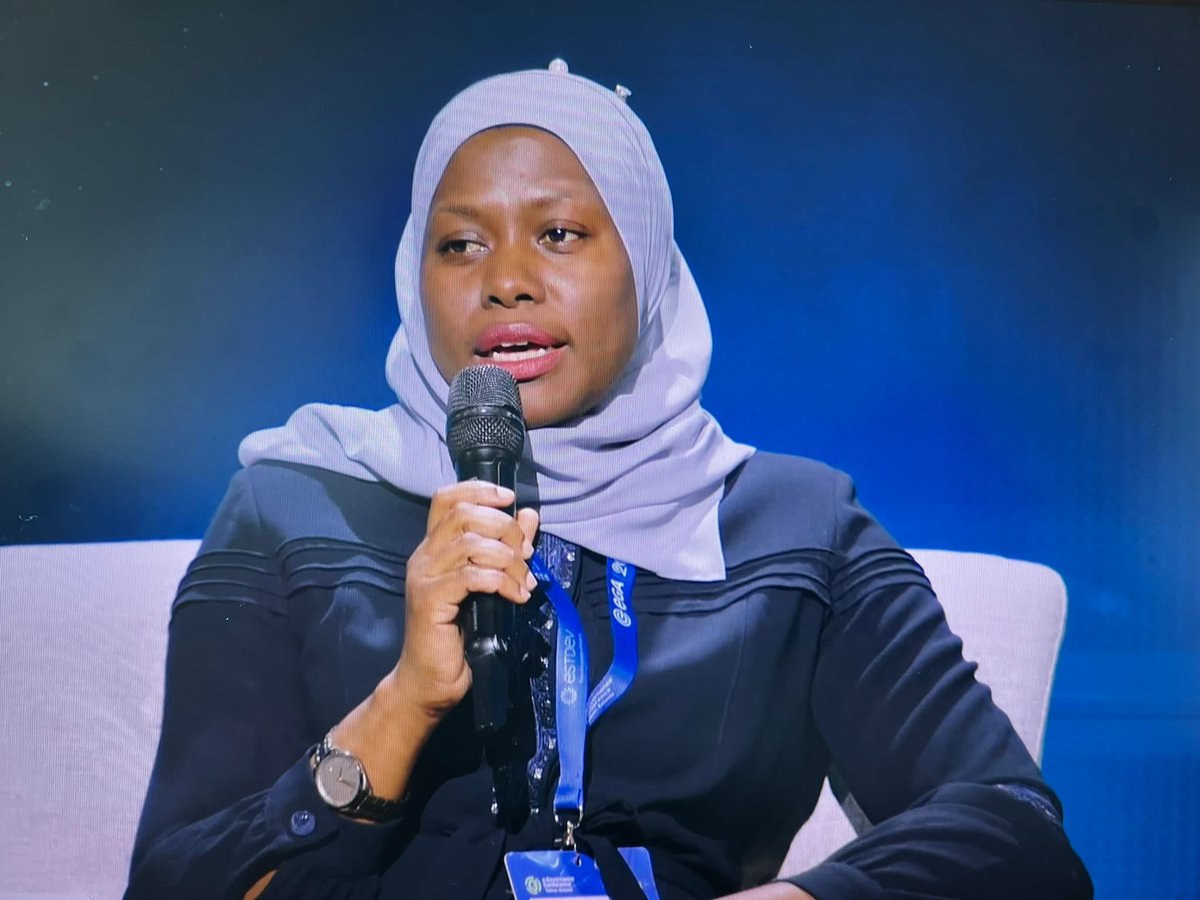
When President Yoweri Museveni appointed Dr. Aminah Zawedde Permanent Secretary of the Ministry of ICT and National Guidance on July 15, 2021, she became the first woman to hold the position.
Zawedde replaced Vincent Waiswa Bagiire, who was transferred to the Ministry of Foreign Affairs, in a major reshuffle that saw several permanent secretaries retired or reassigned.
She served in the position for more than five years before being dropped on November 8 2026, when Museveni undertook another major reshuffle involving ten permanent secretaries. Prof. Stephen Akandwanaho will replace Dr. Aminah Zawedde as Permanent Secretary in the Ministry of ICT and National Guidance.
Before her appointment, Zawedde had built an academic and professional career spanning computer science, software engineering and public administration.
She was a lecturer at Makerere University’s School of Computing and Informatics Technology, where she taught and conducted research.
She holds a PhD in Software Engineering from Eindhoven University of Technology in the Netherlands, which she obtained in 2016, and a master’s degree in Computer Science from Makerere University.
She also served on the board of the National Information Technology Authority-Uganda (NITA-U), including as acting chairperson, bringing experience in digital transformation and ICT policy.
During her tenure, she was involved in implementing Uganda’s digital transformation agenda, expanding digital skills and promoting the country’s business process outsourcing industry.
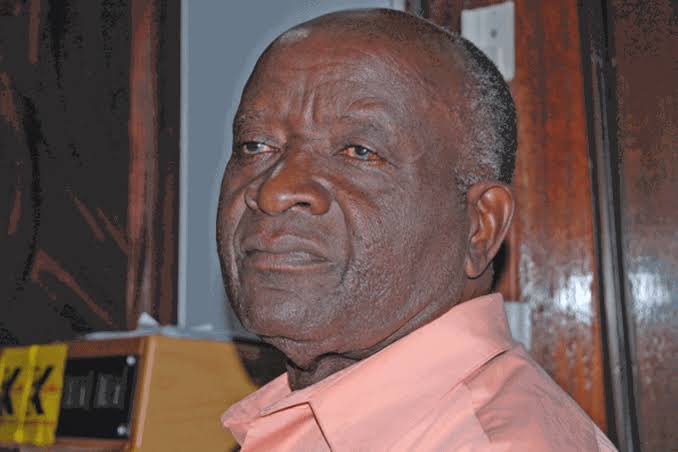
The man credited with helping build Kampala City Council FC into one of Uganda’s most successful football clubs also played a major role in shaping the country’s local government system before falling out with President Yoweri Museveni over the removal of presidential term limits.
Jaberi Bidandi Ssali, a veteran politician and former long-serving Cabinet minister, occupies a distinctive place in Uganda’s political and sporting history, having combined a passion for football with decades of public service.
Born on July 17, 1937, in Butambala, Bidandi became one of the influential figures behind the rise of Kampala City Council Football Club (KCC), now KCCA FC, particularly during the 1960s and 1970s.
He coached and managed the club during much of that period, helping it rise through the football ranks and establish itself as a dominant force in Ugandan football. Under his influence, KCC won league titles, including consecutive championships in 1976 and 1977, before adding the 1978 CECAFA Club Championship to its achievements.
His contribution extended to the national team, the Uganda Cranes, where he was involved in the football structures during the 1970s and early 1980s. Uganda reached its only Africa Cup of Nations final in 1978, an achievement that remains one of the country’s greatest football milestones.
His influence earned him the nickname “Mister”, by which he is still remembered among football enthusiasts. In 2025, former KCCA players and football legends visited him at his home to recognise his contribution to the club.
Beyond football, Bidandi became an important figure in Uganda’s post-independence politics and public administration.
He initially mobilised support for the Uganda People’s Congress (UPC) in Buganda and later served in different political and administrative capacities. In 1964, he was appointed Deputy Mayor of Kampala, where he participated in the city’s development initiatives.
He later became associated with the Uganda People’s Movement and, following the National Resistance Movement’s assumption of power in 1986, emerged as one of its influential figures.
His most enduring contribution to government was as Minister of Local Government, a position he held from 1989 to 2004.
During his tenure, Uganda expanded its decentralisation programme, transferring administrative responsibilities and service-delivery functions from the central government to local authorities. The system strengthened local councils and district administrations, fundamentally changing how government services were organised and delivered across the country.
Although he was not among the fighters who joined Museveni in the bush war, Bidandi was reportedly sympathetic to and quietly supportive of the NRA struggle.
His relationship with Museveni, however, eventually deteriorated over the question of presidential term limits.
In 2004, Bidandi resigned from Cabinet in protest against moves to amend the Constitution to remove presidential term limits, which would allow Museveni to seek another term in office.
The decision marked a significant break with the ruling establishment, particularly because Bidandi had been among the senior figures who helped consolidate the NRM government.
He subsequently founded the People’s Progressive Party (PPP), which he used as a platform to challenge the government. In 2011, he contested the presidential election, although he did not emerge as a major challenger to Museveni.
He remained associated with the party for several years before gradually withdrawing from active politics, partly because of health concerns.
Bidandi’s personal life has also attracted public interest. He is the father of musician Moses Ssali, popularly known as Bebe Cool, and has a large family with his wife, Susan/Suzaana.
His educational journey was unconventional. He studied agriculture in Pakistan during his younger years but did not complete the course. Decades later, he returned to university.
Maj Gen (Rtd) Matayo Kyaligonza slapped Traffic Sergeant Esther Namaganda on February 24, 2019, after she stopped his vehicle for making an illegal U-turn in Seeta, Mukono District, in an incident that sparked nationwide outrage.
A video of the confrontation showed the retired army general, accompanied by two military police guards, confronting and physically assaulting Namaganda as she attempted to enforce traffic regulations.
Namaganda later said Kyaligonza slapped her while she was performing her duties. The general, however, defended their actions, claiming they were trying to avoid a chaotic accident scene ahead and that the officer had insulted them.
Police opened investigations into allegations of assault and obstruction of an officer on duty. The two military police guards, identified as Lance Corporal Peter Bushindiki and Private John Robert Okurut, were also implicated in the incident.
The confrontation triggered widespread condemnation, prompting Parliament to pass a motion calling for Kyaligonza’s recall as Uganda’s ambassador to Burundi.
President Yoweri Museveni also publicly insisted that the retired general should face the law.
A Uganda Broadcasting Corporation (UBC) journalist, Peter Otai, who filmed the confrontation, subsequently sued Kyaligonza, alleging that he too had been assaulted while recording the incident.
Kabaka Ronald Muwenda Mutebi II broke down in tears on March 17, 2010, as he surveyed the charred remains of the Kasubi Tombs, in what was widely reported as a rare public display of emotion by the Buganda monarch.
The previous night, fire had gutted the main mausoleum, Muzibu Azaala Mpanga, at the UNESCO World Heritage Site in Kampala. The structure housed the remains of four Buganda kings Muteesa I, Mwanga II, Daudi Chwa II and Muteesa II making the destruction a devastating loss for the kingdom and its subjects.
Contemporary media reports, including those by Daily Monitor, described the Kabaka arriving at the site in the early afternoon, accompanied by the Nnabagereka, Sylvia Nagginda. He was received by emotional crowds who welcomed him with ululations and the Buganda anthem as he walked through the grounds of the destroyed mausoleum.
The fire had destroyed the historic structure and damaged cultural regalia and other artefacts associated with the royal tombs. The site was also deeply significant because it contained the remains of the Kabaka’s father, Sir Edward Muteesa II, alongside those of three other former monarchs.
The Kabaka did not address the gathering, observing the cultural solemnity surrounding the tragedy. He later declared a period of mourning as the kingdom grappled with the loss of one of its most important cultural and spiritual landmarks.
His tears attracted particular attention because of the cultural expectations surrounding the Buganda monarchy. Traditionally, a reigning Kabaka is expected to maintain composure in public, making the emotional display an extraordinary moment. While some royalists interpreted it through the lens of traditional beliefs, many Baganda saw it as an expression of the collective grief of a kingdom mourning the destruction of a treasured heritage site.
The visit also took place against a backdrop of heightened political tension between the Buganda Kingdom and the central government.
President Yoweri Museveni had visited the site earlier that day, but his arrival was met with hostility from sections of the crowd. Protests escalated into clashes with security forces, leaving at least two people dead, according to contemporary accounts, although some reports put the toll higher.
The violence further deepened suspicions among sections of the public about the circumstances surrounding the fire, with some questioning whether it was an act of arson linked to strained relations between the kingdom and the government. These suspicions emerged amid lingering tensions following the September 2009 riots in Kampala.
Although reports indicated that the kings’ remains in the inner sanctum had largely survived the fire, the destruction of the main mausoleum and its cultural treasures dealt a major blow to Buganda’s heritage.
More than the destruction itself, the Kabaka’s emotional reaction became one of the defining images of the tragedy — a rare moment when the monarch’s personal grief appeared to mirror that of his kingdom.
#Flashback: Lt Gen (rtd) Henry Tumukunde has been arrested twice in high-profile cases, first in 2005 after opposing the removal of presidential term limits and again in 2020 over allegations of treason.
Tumukunde, a former intelligence chief, Security Minister and 2021 independent presidential candidate, was first arrested in May 2005 after opposing the constitutional amendment commonly known as kisanja, which removed presidential term limits.
Following his opposition to the amendment, President Museveni ordered him to resign his seat as an army representative in Parliament. Soldiers, including those operating under then security chief Gen Kale Kayihura, surrounded his home before arresting him.
He was detained for nearly two years at an officers’ mess, with restricted access to communication. He faced charges of abuse of office, military misconduct and spreading harmful propaganda, although the propaganda charge was later dropped.
In 2013, the General Court Martial upheld the misconduct charge and issued him a severe reprimand.
Tumukunde was arrested again on March 12, 2020, just weeks after declaring his intention to challenge Museveni in the 2021 presidential election.
A joint security team comprising the Special Forces Command (SFC), Joint Anti-Terrorism Task Force (JATT), Chieftaincy of Military Intelligence (CMI) and Criminal Investigations Directorate (CID) arrested him at his Kololo office.
The arrest followed televised remarks in which he suggested Rwanda could support efforts to bring about political change in Uganda. Police accused him of treason and incitement.
He was subsequently charged with treason and illegal possession of firearms and remanded to Luzira Prison. He was later released without conviction.
Now, Tumukunde serves as Minister of Gender, Labour and Social Development and Member of Parliament representing Rukungiri Municipality under the National Resistance Movement (NRM).
Once one of President Museveni’s most outspoken military insiders, Gen David Sejusa has largely fallen silent, keeping a low public profile after years of confrontation with the government.
Sejusa, formerly known as David Tinyefuza, was once Coordinator of Intelligence Services and a senior presidential adviser. His relationship with the government deteriorated after he criticised alleged plans for President Museveni’s son, Gen Muhoozi Kainerugaba, to succeed his father.
In December 2014, Sejusa returned to Uganda from exile in the United Kingdom. However, his return was followed by restrictions on his movements.
In January 2015, he was placed under house arrest at his Naguru residence, with soldiers stationed outside his gate. Security forces reportedly required him to obtain clearance and an escort whenever he wanted to travel.
Government officials argued that his conduct after returning to Uganda violated expectations for a serving military officer.
On January 31, 2016, weeks before the general elections, soldiers arrested him at his home.
He was charged before the General Court Martial with absence without leave, participating in partisan politics, insubordination and conduct prejudicial to good order.
The charges followed his 2013 departure from Uganda, media statements in which he described Museveni’s government as a dictatorship, involvement in opposition vote-protection activities and attendance at political events.
He was remanded to Luzira Prison before later being granted bail.
Sejusa was formally retired from the Uganda People’s Defence Forces (UPDF) in 2022 under Batch 12.
Since his retirement, he has maintained a lower political profile, although he occasionally comments on governance, African affairs and regional developments through social media and public statements.