David Lange (2000) “Democratic government can accommodate Maori political aspiration in many ways. It can allocate resources in ways which reflect the particular interests of Maori people. It can delegate authority, and allow the exercise of degrees of Maori autonomy.“ 1/-
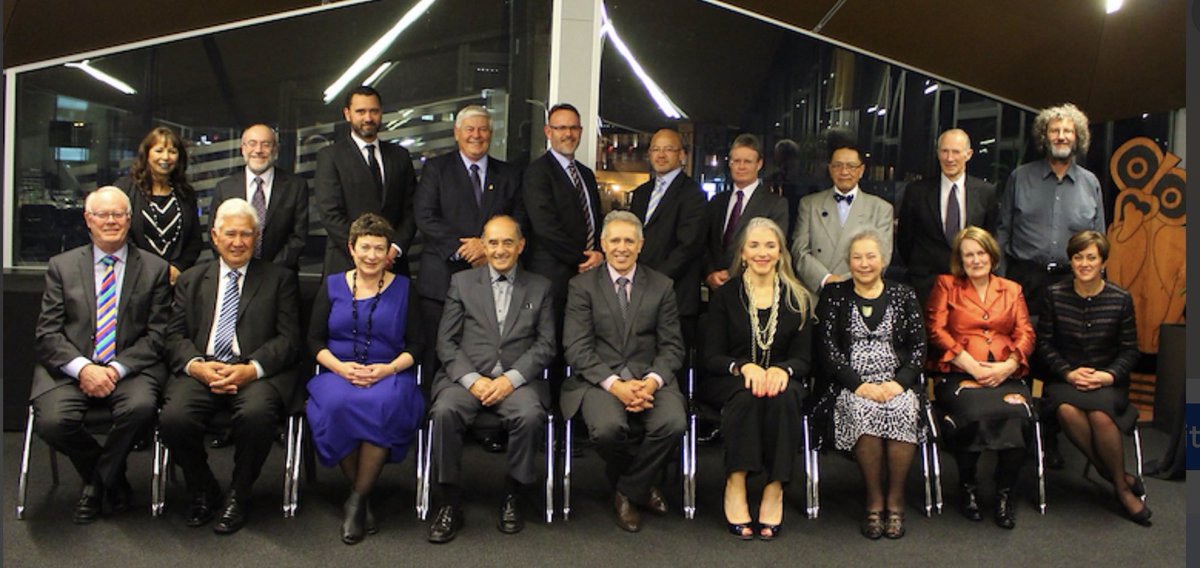
This is the Waitangi Tribunal. Just the running costs alone for these parasites has cost us over $350 million in the past decade.(Excluding their settlement judgments). Is there any working Maori out there who feel they’ve benefited from these grifters?
So I assume the government will now remove the NZTA board?
They’re unelected people making decisions for our transport network including overseeing $32B budget over 3 years.
Also isn’t the Health NZ unelected?
Wait… does ACC board have MPs on it or unelected people? Wait…
OMFG how good is the Reserve Bank Governor? All she spoke of was economics. In English. No jargon. No virtue signalling te reo. A breath of fresh air! Thank you Sweden!
OMFG how good is the Reserve Bank Governor? All she spoke of was economics. In English. No jargon. No virtue signalling te reo. A breath of fresh air! Thank you Sweden!
Apparently, job losses are only a national tragedy when they happen to people with university degrees.
Over the past decade, New Zealand has lost:
• Around 300 direct jobs at Marsden Point when our only oil refinery closed. Local leaders estimate including contractors and supply-chain businesses, the loss was well over 1,000 jobs.
• Around 120 direct jobs when the Holcim cement plant at Westport shut down, with significant flow-on effects for contractors, transport operators, and the coal industry that supplied it.
• Around 230 direct jobs when Winstone Pulp closed its Karioi pulp mill and Tangiwai sawmill, along with many forestry, harvesting, engineering, and transport jobs that depended on those operations.
• Around 230 direct jobs at Kinleith Mill when paper production was shut down, affecting contractors and suppliers throughout Tokoroa and the wider forestry sector.
• Around 175-230 direct jobs when the Whakatāne paper mill collapsed, plus the contractors, trucking companies, maintenance firms, and local businesses that relied on it.
• Around 300 direct jobs when the Waimate Meat Company closed, with major impacts on livestock transport, contractors, and local service businesses.
• Between 1,500 and 2,000 direct jobs across the coal sector following the collapse of Solid Energy and the decline of mining operations, alongside hundreds of contractor jobs in engineering, maintenance, transport, and support services.
All up, that's around 3,000–4,000 direct blue collar jobs gone. Once you include contractors, suppliers, transport firms, engineers, maintenance crews, and the businesses that depended on those workers spending money in their communities, the true impact was likely somewhere between 6,000 and 10,000 jobs.
Thousands lost their livelihoods. Sure there were a few stories, but they often emphasised how necessary it was for the environment or some other cause.
In many cases, the same people now lamenting public sector redundancies were actively cheering these closures on. We were told they were necessary. A transition away from unethical or dirty sectors. Progress. The price of climate action.
Workers were told to retrain. Learn how to code!!! "You just need to adapt!"
Now the cuts have reached Wellington and suddenly every redundancy is treated as a national emergency.
The same people who told coal miners, refinery workers, and mill workers to embrace change are now horrified that policy analysts, communications advisors, and bureaucrats might have to do the same.
Losing your job is hard regardless of who you are. A miner's mortgage matters just as much as a social media manager's mortgage. A forestry worker's family matters just as much as a policy advisor's family.
But the reaction over the past decade suggests many people in our political and media class don't actually believe that. To them, a blue collar worker losing their job was economic progress and necessary climate action.
A public servant losing theirs is a humanitarian crisis.
It seems that job losses only become a national conversation when they happen to people with the power to dominate the conversation.
Guys. They’ve fixed the economic crisis. By… increasing the font size of the English words and making the te reo Māori words smaller. It’s just what you all were hoping was a priority right now.
Imagine being new minister & this is what you think is important. How embarrassing.
Happy to have a crack at answering this, @RichardHills_
Inclusivity is a mantra at Auckland Council, so as a councillor this is a pretty disappointing take.
Not every gay person or ally buys into the full activist agenda you seem to preach. Some of us support consenting adults living freely — without state overreach or compelled speech. Pride was originally about openness and liberation, not Left-wing loyalty oaths.
The fact that centre-right MPs are now turning up shows Pride has gone mainstream across the political spectrum. Isn’t that a good thing?
The event shouldn’t be treated as an exclusive club that can be weaponised against anyone who steps out of line or dares to express a different view.
Auckland Council is a proud Pride Partner. For a city councillor to question the value of anyone attending based purely on their political party is frankly disgraceful — and the exact opposite of what the event is supposed to be about.
@SandeChin@chrishipkins@nzlabour Well … they were pretty bad ... so maybe not worse … but yeah. They‘ve learned nothing. That Willow Jean media release is traumatising .
So @chrishipkins and @nzlabour say they’re not stoking culture wars. Then on the same day promise to restore Ti Tiriti in every school child’s education AND deny the basic right of girls to use public toilets bathrooms without some hairy arsed stiff cocked trannie. FFS.
I see Chippie and Labour are not supporting the What is a woman bill. For fucks sake. They have had over 3 years to work this out. Is this seriously the type of person you would want running the country?
@Suitandtie9999 Pushing this treaty nonsense resulted in fewer and fewer children attaining even NCEA Level 1, particularly amongst Maori and Pacifica students.
Why does Labour not want these kids educated?
Probably because educated people with agency won't vote Labour.
This is so fucking depressing. Apparently losing half their seats and putting a right wing government in office wasn’t enough to wake these stupid cunts up.
It speaks volumes that Labour’s first big education policy is restoring Treaty of Waitangi obligations on school boards.
Not helping the kids (especially Māori and Pasifika) that have fallen furthest behind, not advancing structured literacy, better teacher training, or lifting achievement.
Just more Treaty bureaucracy.