People consulting firm in Istanbul, Turkey, since 2007. Retained executive search, outplacement, executive coaching & mentoring. Member of @careerstargroup
OneWorld Consulting partner Tim Bright was the guest on Tugrul Agirbas's Rahat Battı podcast this week. Listen (in Turkish) to hear about Tim's experiences in executive search and coaching over 30 years. It's on YouTube and Spotify- https://t.co/iN8kpTKtJV
We've still got such a long way to go .... "Men were more likely to get sacked for abusing a male colleague rather than a female colleague" https://t.co/cEknkNdNQj
The famous incident from the 2003 Carlsberg Cup, where Danish midfielder Morten Wieghorst intentionally missed a penalty against Iran.
The referee had awarded the penalty because an Iranian defender caught the ball with his hands inside the box, mistakenly thinking he had heard the half-time whistle.Since the penalty was awarded due to a misunderstanding, Wieghorst consulted his coach and deliberately fired his shot wide as a display of sportsmanship, an act for which he later won an Olympic Committee Fair Play Award.
Football is great
Heading into London studio and already seen some Arsenal fans gathering (very early) for the parade. Arsenal are evolving. They can celebrate the title with today’s parade, rightly so after evolving to claim top spot after three second-placed finishes. The Premier League was their priority this season and they’ve done that. They’ve proved a lot of people wrong this season (me included).
Islington will be packed with hundreds of thousands cramming the streets, reflecting the huge size of the club and the pride in this team. Mikel Arteta, his players and Andrea Berta’s talent acquisition department, can then focus on developing further in Europe, the final frontier.
There is no shame losing out to PS-G, the best team in the world with the likes of the peerless Vitinha and the best manager in the world in Luis Enrique. PS-G are an intelligently assembled and well-blended side, and brilliantly coached. They are one of the greatest sides in European history showing their silk last season and silk and steel this season. They were worthy winners last night; more adventure, more possession, more expertise in the shootout.
Arsenal, as they continue to evolve, know they have to become more expansive, and take some risks which they didn’t dare against PS-G, who’ve ripped apart more open sides. That will come with further strengthening and that’s been promised by the Kroenkes and will be executed by Berta and Arteta.
The next step is adding more guile and style in the attacking third, recruiting a left-sided player of the elite level of Morgan Rogers (frustrating for Villa fans but PSR) or Marcus Rashford (unless Barcelona can juggle resources and keep him).
Also on the left, Piero Hincapie was so good again that Arsenal surely have to make his loan move from Bayer Leverkusen permanent for £45m (and quickly if Barcelona interest is real). Centre-forward has to be a focus. Viktor Gyokeres is settling in, and has been good since the turn of the year, but the fact that he didn’t start in Arsenal’s biggest game of the season was telling. But which elite centre-forward is out there and gettable? Julian Alvarez looks off to Barcelona.
Evolution also means building around Declan Rice as leader, making him team captain. He embodies that will to win required for the evolution to continue. Rice’s demeanour at the final whistle signalled his determination to drive this team onwards and further upwards. Keep Martin Odegaard as club captain, brilliant role model and ambassador for the club.
Also, ensure Gabriel and Eberechi Eze receive the necessary support; Arsenal will wrap the pair with love, of course, it’s what good families and dressing-rooms do. But the memory of penalty misses stays with players, and with opposing fans. Psychologists have helped others who have missed. Their penalties were poor, neither on target, neither testing the keeper, but the criticism is excessive. Football’s tribal, online is a febrile battle ground, but the mockery of Gabriel online is disgusting, some of it from crowing fans of teams that Gabriel would walk into - and captain. He’s bound to be in the UCL team of the year.
Arsenal should - and will - enjoy the parade today – and let’s hope everyone going stays safe because it will be crowded. The players then disperse to catch their breath for some before heading to the World Cup, a longer break for others. Arteta certainly looks like he needs a break. Before they all go again next season, minds and bodies refreshed, and team strengthened (not just squad). The evolution continues. #AFC
Insightful article on the experiences of highly qualified Turkish professionals who move abroad for work.
Reversing brain drain: Why high-skilled Turks leave Germany for Türkiye
"A practical way to spot and reduce these habits without losing personality is to pay attention to the emails you receive and notice how different styles make you feel - what sounds clear, confident or reassuring, and what feels excessive" https://t.co/lWz5hBtVlY
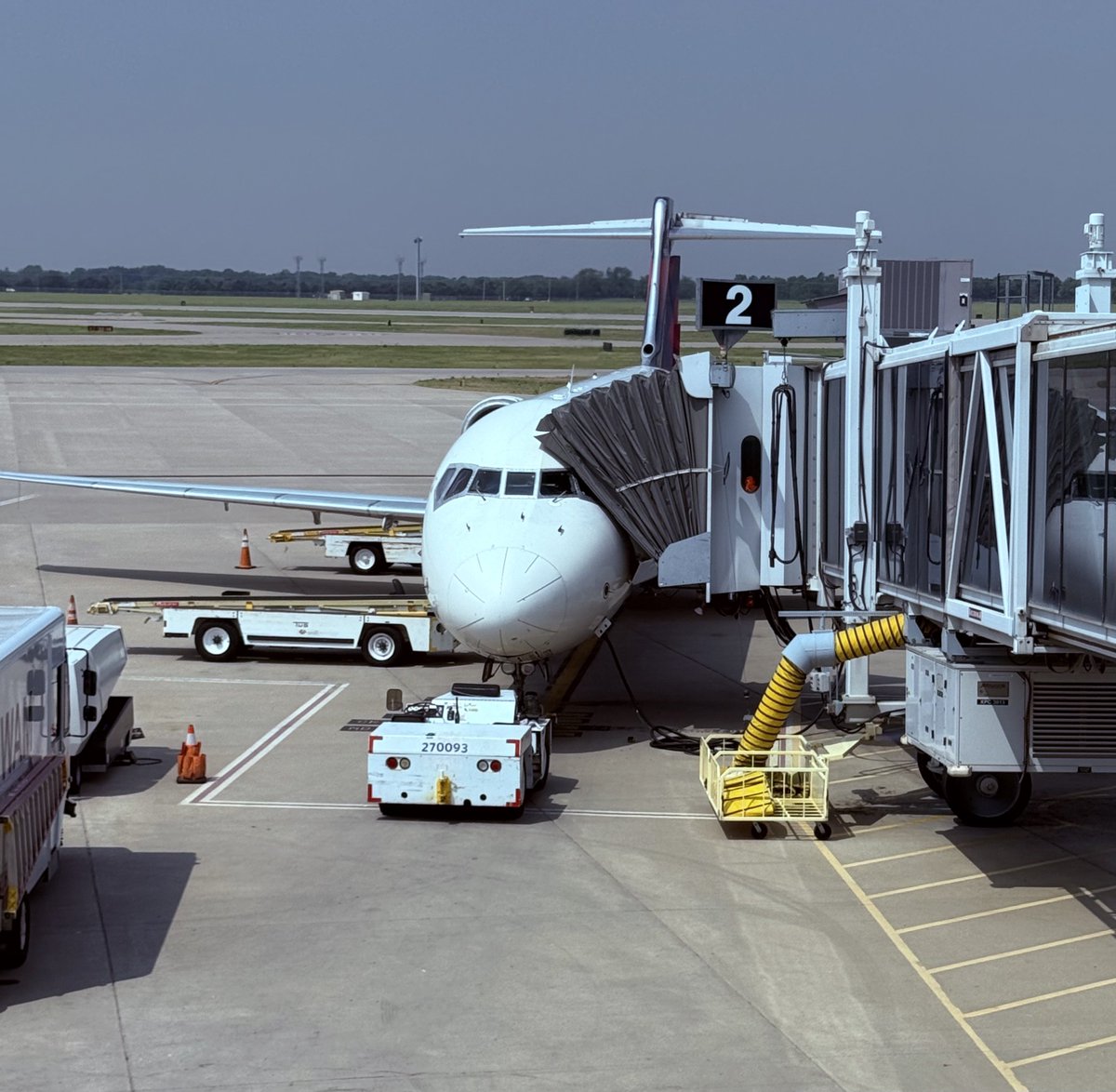
I just had the craziest experience at the airport.
We are about to board a flight to Atlanta when the pilot from the incoming plane walks out of the jetway. Guy is probably late 50s, salt and pepper hair, military look. The kind of pilot you instantly feel good about seeing on your flight.
Pilot walks over to the counter, gets on the PA system, and starts addressing everyone. “Folks, I’ve been doing this a long time. Flying one of these jets is easy. The hard part is looking at 130 people and telling them their flight is going to be delayed.”
Audible groans throughout the boarding gate. Most people here are flying to Atlanta as a layover before another flight. 130 people just had their day become a complete mess.
The pilot goes on. “I get it, trust me. But here’s the deal: During our landing, we had a small mechanical issue. I’m not your pilot for the next leg, but I don’t feel confident the jet’s safe to fly until we have a mechanical team look it over, and I don’t feel comfortable asking the next pilots to fly you guys until we get confirmation.”
He points at the agents next to him behind the counter: “Now, none of this is the agents’ fault. Please be kind to them. I’m the one who made this decision, not them, so any inconvenience you experience is my fault. Just please know that I don’t do this lightly, and I’m only doing it because I believe it’s in the best interests of everyone’s safety.”
Now this is where the story gets crazy. The pilot puts the microphone down, grabs his suitcase, and all the people in the gate…
Start clapping.
I’m not joking, everyone starts clapping for the guy. 130 people who just had their travel plans ruined give an ovation to the guy who made the decision and delivered the message.
All because he addressed them with decency and transparency, took ownership of the decision, made it clear that it was necessary, and explained why it was in everyone’s best interest.
It’s honestly one of the best examples of strong communication—of strong leadership, for that matter—that I’ve seen in a long time.
@Delta, whoever your Atlanta to Wichita pilot was this morning, he’s one of the good ones. Please tell him the delayed passengers of flight 1637 appreciate what he did.
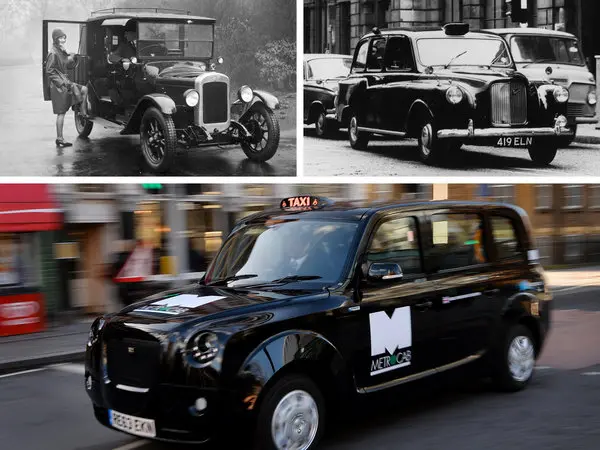
To get a license to drive a black cab in London, you have to memorize 25,000 streets, 20,000 landmarks, and the fastest route between any two points in a six-mile radius of Charing Cross. It takes most people three to four years.
A British neuroscientist asked the obvious question nobody had thought to ask. What does that actually do to a human brain?
Her name was Eleanor Maguire. The study changed neuroscience forever.
The exam is called The Knowledge. It was introduced in 1865, and the format has barely changed since.
Applicants ride a moped around London for years with a clipboard strapped to the handlebars, tracing every possible route between every possible pair of points in the city.
They get tested in person by an examiner who can ask them, on the spot, for the shortest legal route between any two addresses in a database of tens of thousands. Half the people who attempt it fail.
The ones who pass have spent an average of four years studying full time and have taken the test 12 times before getting through.
Maguire was watching a TV movie about it in 1995 when she had the idea. These were not ordinary people. They were people running one of the most extreme spatial memory training programs that exists anywhere on Earth.
If the human brain could be reshaped by experience, this was the cleanest natural experiment anyone was ever going to find.
She put 16 of them in an MRI machine.
Their posterior hippocampi were significantly larger than the brains of matched controls. The longer a driver had been working, the bigger the difference got.
A 40-year veteran had a measurably more developed hippocampus than a 5-year veteran, and both had more than someone who had never driven a cab.
Here is why that finding broke a century of consensus.
Until 2000, every neuroscience textbook in the world taught a version of the same idea. The adult brain is essentially fixed. You are born with a set number of neurons. Childhood is the window where the wiring gets laid down. After puberty, the structure freezes, and the rest of your life is just slow decline.
Maguire's study was one of the first pieces of human evidence that this was simply wrong. Adult brains physically remodel themselves in response to what you ask them to do. Not metaphorically. Structurally. With grey matter you can measure on a scan.
The skeptics had an obvious objection. Maybe people with bigger hippocampi were just more likely to become taxi drivers in the first place. The brains were not changing. The job was selecting for brains that already looked that way.
So Maguire ran the experiment again. Properly this time.
She recruited 79 trainees who were just starting to study for The Knowledge and 31 controls who were not. She scanned all of them at the start. Then she waited four years. Of the 79 trainees, 39 eventually passed the exam and 20 failed. She scanned them again.
The trainees who passed had grown larger posterior hippocampi over those four years. The trainees who failed had not. The controls who never studied had not. The brain change was not selection. It was construction.
The act of memorizing the city had physically rebuilt the part of the brain responsible for spatial memory, and the rebuild only happened in the people who actually did the work.
There is a quieter finding from this research that almost nobody quotes, and it is the one I cannot stop thinking about.
The drivers had a bigger posterior hippocampus, but they had a smaller anterior hippocampus. The brain had not magically expanded. It had reallocated. Tissue that was being used for one type of memory had been compressed to make room for another.
When Maguire ran follow-up cognitive tests, the cabbies were measurably worse than controls at certain visual memory tasks unrelated to navigation. They had paid for The Knowledge with something else. The trade was real.
She also ran a second control experiment that is the part of the story most people never hear. She scanned London bus drivers. Same hours behind the wheel. Same city. Same traffic. Same stress. The only difference was that bus drivers follow fixed routes. They do not have to navigate. Their hippocampi looked completely normal.
The cab drivers had not grown bigger hippocampi from driving. They had grown them from the constant, active, effortful retrieval of spatial information from memory.
That distinction is the entire study.
Then in 2020, McGill researchers ran the inverse experiment. They tracked 50 regular drivers and measured how often they used GPS. The participants who relied most heavily on turn-by-turn navigation had measurably weaker spatial memory. When the researchers retested a subset of them three years later, the heavier GPS users had declined fastest.
The hippocampus, the same region the cabbies had built up by ignoring shortcuts, was being slowly hollowed out in everyone else by accepting them.
The mechanism Maguire spent 25 years documenting works in both directions. Brains grow what you make them grow. They lose what you stop asking them to do.
The taxi drivers were running the most intense spatial memory training program on Earth. Most of the rest of us are running the opposite program without realizing it.
Maguire died in early 2025. UCL's tribute described the cabbie study as a stroke of creative genius. She had spent her entire career on a single question. What does it physically take to remember something, and what changes inside a person who remembers a lot of it.
The answer is the part that should change how you live.
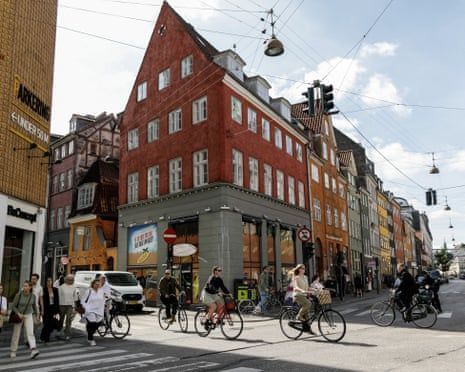
Open Spotify on your phone. That app was built in Stockholm. Same goes for Minecraft, Klarna, and Candy Crush. The cobblestones in those photos have produced more billion-dollar tech companies per person than anywhere on Earth except Silicon Valley.
Sweden has just 10 million people, roughly half the size of New York state. But it has produced more than 46 billion-dollar tech companies, with 11 of them based in Stockholm right now. The latest two arrived in 2025. Lovable, an app that lets anyone build software just by typing what they want, was worth 6.6 billion dollars by December. Legora, a tool that handles paperwork for lawyers, was valued at 1.8 billion dollars in October.
Three things explain how this keeps happening. The first is what Swedish people grew up with. In 1998, the government launched a program called the Home-PC reform. Employers bought personal computers and let workers pay them off in tiny chunks taken from their paychecks over three years. About 850,000 computers ended up in Swedish homes that way, reaching nearly a quarter of the country. By 2005, when Klarna was started, Sweden had 28 broadband connections per 100 people. The US had 17. The world average was under 4. A generation of Swedish kids grew up online before most countries even had reliable internet.
The second is the safety net. A founder whose startup blows up in Sweden still has healthcare and unemployment support. Risk feels different when failure doesn't mean homelessness.
The third is the money cycle. The people who got rich building Spotify and Klarna twenty years ago keep pouring that money back into new Swedish startups. Former Klarna employees alone have started 62 new companies.
Today, the Swedish tech scene is worth around 345 billion dollars. The country pulls in more startup investment per person than anywhere else in Europe. Spotify alone now has 293 million paying users. About 30 of them for every single person living in Sweden.
Times columnist Fraser Nelson pointed out over the weekend that new Home Office statistics paint a striking picture: net migration has fallen dramatically since Labour entered government, now sitting around 80 per cent below the record highs reached under the Conservatives.
And it is not just the headline figure shifting. Remove international students from the equation and long-term immigration levels are now “probably at a multi-year low”, Nelson wrote on his Substack — a remarkable turnaround after years of Tory chaos, broken promises and soaring numbers.
The asylum backlog is also being rapidly reduced under Labour. After ballooning in the aftermath of Covid while successive Conservative ministers appeared paralysed and unwilling to grip the crisis, Home Secretary Shabana Mahmood has begun making serious progress in clearing the system.
Away from the Westminster psychodrama and endless Reform stunts, an uncomfortable reality is emerging for Labour’s opponents: the Government may quietly be delivering results where the Tories failed for years.
Source: The London Economic
That bee is the mother of every other bee in the hive. All 40,000 to 60,000 of them. She lays 2,000 eggs a day, more than her own body weight, every day for years. Pull her out and the hive starts dying off in three weeks.
She is the queen. The only female in the hive who lays eggs. Worker bees live four to six weeks; she lives two to five years. Without her, no new babies show up, and the whole colony falls apart in two to three months.
She mates exactly once in her entire life. About a week after she is born, she flies a few hundred feet up and mates with 12 to 20 male bees in mid-flight. The males die right after. She stores about 5 million of their sperm in a tiny sac inside her body, and uses just two sperm cells per egg for the rest of her life. Over a million babies from one afternoon flight.
What keeps the colony glued together is a chemical scent the queen gives off. Her helper bees lick her, then pass the scent bee-to-bee through the hive. As long as that smell is around, the worker bees don't grow egg-making organs, no rival queen gets raised, and the bees that go out for food stay organized. When she dies, the hive figures it out within 15 minutes. The buzzing changes pitch.
Beekeepers cage her, like in this video, to put a tiny paint dot on her back. The international color code rotates every five years. White, yellow, red, green, blue. Beekeepers remember the order with the phrase "Will You Raise Good Bees." A queen born in 2026 gets a white dot. The dot tells the beekeeper her age at a glance, because she lays fewer eggs after her first or second year, and commercial beekeepers swap queens out twice a year.
In 2024, US farmers paid beekeepers $400 million to truck their hives to farms during flower season, per USDA data. California almond growers alone paid $326 million of that. US honey bees pollinate about $15 billion worth of crops every year. Worldwide, animal pollination supports $235 to $577 billion in yearly food production, and 71 of the world's top 100 crops depend on bees.
US honey bee colonies have crashed from 6 million in 1947 to roughly 2.5 million today. Each one runs on one queen. When a commercial beekeeper pays $30 to $50 for a single mated queen, they are buying the seed of an entire 60,000-bee economy.
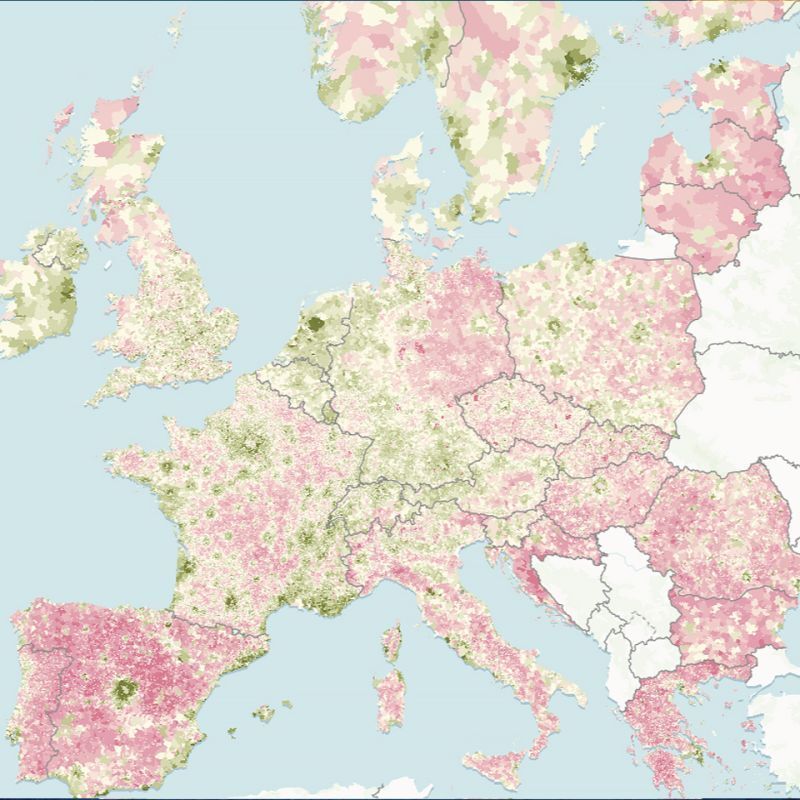
It's hard to oversell this map - make sure to bookmark it and share it with your friends. Fantastic research that must have been soooo labour intensive: How has the population of evert single small geographic region across Europe changed from 1961 to 2024? You will want to study this map in detail. Source (keep scrolling for a while): https://t.co/2akdcsaBpm