A self-help guide for anti-imperialists
This self-reflection checklist is designed to encourage critical thinking & help examine whether your views are consistent with your principles, especially when dealing with complex geopolitical issues.
Ideological Rigidity & Cognitive Dissonance
1. Do you hold strong anti-Western or anti-imperialist views that shape your opinions on global issues?
2. When confronted with evidence of atrocities committed by regimes you support, do you find yourself dismissing or downplaying this evidence rather than re-evaluating your stance because it challenges your core beliefs about the West & the USA?
3. Do you often find yourself justifying the actions of regimes opposed to the West, even when those actions conflict with your principles on human rights & justice?
Manichaean Worldview (Good vs. Evil)
4. Do you tend to see global politics in a binary "good vs. evil" framework, where the West & its allies represent "evil" & those who oppose them are automatically seen as "good"?
5. Do you believe that anyone who opposes the US must be inherently virtuous, regardless of their actions or policies?
6. To what extent do you think this worldview might over-simplify complex geopolitical issues, potentially leading to support for authoritarian regimes?
Group Identity & Social Influence
7. Do you align your views with a political or social group that strongly opposes Western policies, even if it means defending regimes with questionable human rights records?
8. Have you ever found yourself defending a position primarily because it aligns with the views of your social or political group, rather than based on your independent assessment of the situation?
9. On a scale of 1 to 5, how much do you think your stance on certain regimes is influenced by the desire to fit in with a particular group or to maintain a certain identity?
Projection and Attribution Bias
10. Do you often attribute the world's problems primarily to US or Western influence, minimising the responsibility of other countries or regimes for their actions?
11. Have you noticed a tendency to excuse or overlook the negative actions of regimes opposed to the West because you believe these actions are a direct result of Western interference?
12. How often do you critically assess the actions of both Western & non-Western governments with the same level of scrutiny?
Historical Grievances & Mistrust
13. Do you have deep-seated mistrust towards any narrative or information coming from the US or its allies, regardless of the evidence presented?
14. Have historical grievances against Western colonialism or intervention led you to automatically side with any regime that opposes the US, even when there is clear evidence of that regime's human rights abuses?
15. On a scale of 1 to 5, how open are you to re-evaluating your stance when presented with credible information from sources you may not fully trust?
Moral Relativism
16. Do you find yourself adopting a morally relativistic stance, where the actions of regimes opposed by the US are justified or seen as less severe compared to the actions of the US & its allies?
17. Have you ever rationalised or downplayed human rights abuses by a regime because they were in opposition to Western imperialism?
18. How do you reconcile your anti-imperialist views with the need to advocate for universal human rights & justice, regardless of who the oppressor is?
After answering these questions, consider the degree to which these tendencies influence your views on global issues. Does your stance truly align with your core values, or is it driven by opposition to certain powers, sometimes at the expense of supporting justice & human rights?
Thanks so much @CaracasChron . These are pretty much my full answers (from a few days ago) and I gave my honest opinion - both positive and negative - and asked them to reflect that.
(The part about being approached by intelligence police they added at the end, as I hadn't really experienced issues until yesterday.)
I went back to La Guaira yesterday and there was a different kind of sadness. Not the shock and panic of the first few days but almost an emptiness. It felt quieter - buildings and piles of rubble, but abandonded, now without anyone scouring through them.
At other sites there were noisy diggers clearing the dusty concrete and remnants of people's lives - books, clothes, broken furniture. Most of the international rescue teams had gone, much of the press had too.
I spoke to one guy who had written 'We are alive' on the outside of his house to let people know he and his mother were ok if he nipped out anywhere. But speaking to him I found out his two daughters had been killed in Catia la Mar. He was far from ok.
Another guy walked out from a collapsed building that was mostly concrete slabs and told me he was picking up the remains of his brother and nephew. The remains were just bones. The earthquake had started a small fire that burned their bodies.
A nun stood looking at a heap of debris. I wondered what she was thinking, trying to make sense of it all. And probably unable to.
@rubenriverow@Cat_lucy1 Rubén, you are a disgusting piece of garbage. You creep. You and all chavistas will SOON pay for how much hurt you've caused my country. You DO NOT own Venezuela or the truth, and you shall pay for this.
@rubenriverow@Cat_lucy1 I think it’s HILARIOUS that Delcy took 7 hours and chose the same question 3 times over. I think it’s HILARIOUS they still blame bots when it’s been shown it’s you people the pathetically unpopular ones. I think it’s so funny that you consider laughter a threat. #28julio2024 BYE!
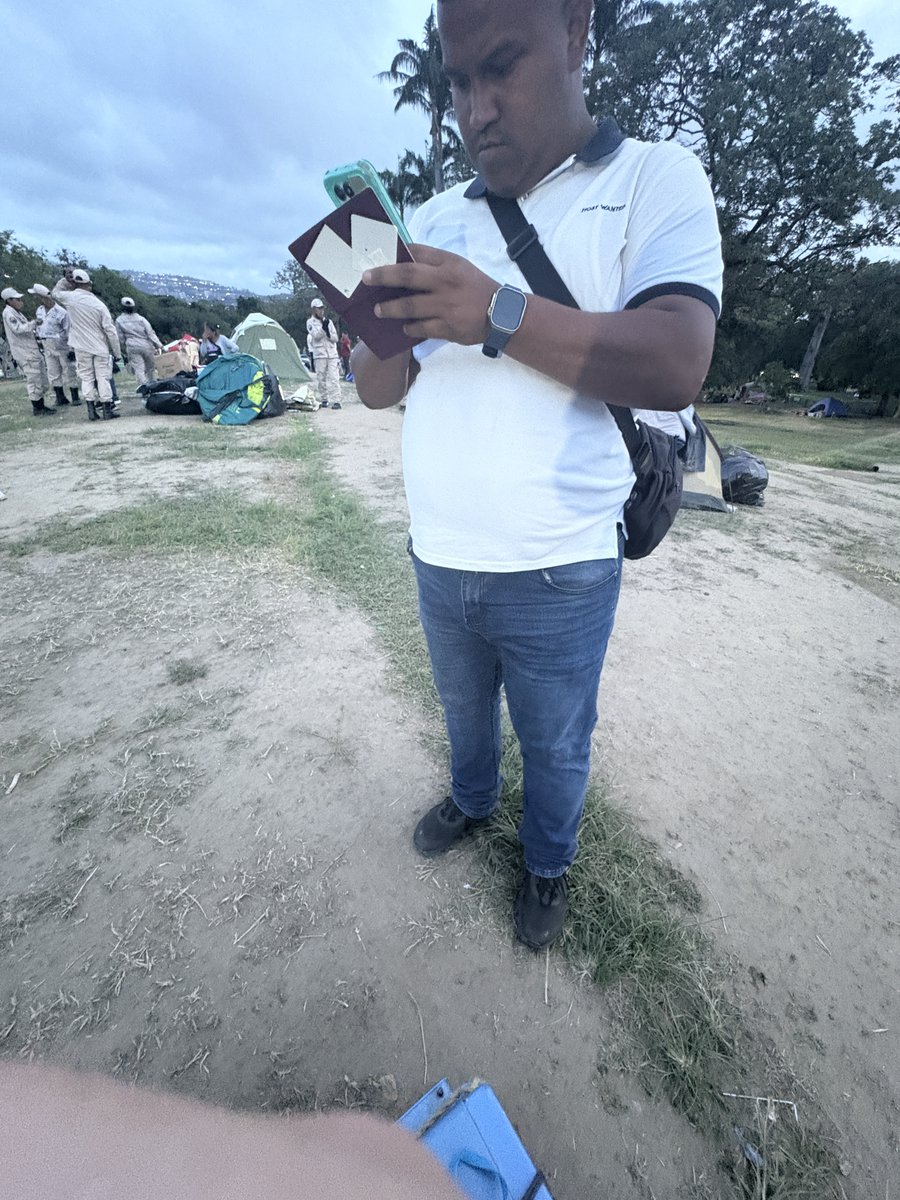
I was in Parque del Este tonight speaking to volunteers and affected families camping there. I was chatting to one family when two men came over to look what was going on then left. I started helping the family move their stuff to the road (I was carrying the cat!) as they were moving somewhere else. The two men called me over, asked me if I was a journalist, to which I said yes and showed them my wristbands. Asked more questions, who I was, where from, what I was doing. I asked who they were, as they still hadn't introduced themselves by this point. One (the politer one) said they were intelligence police, asked what I was doing, so I said speaking to the family etc. Asked if I knew them, I said no. Then asking qus like my age, which was weird as one had my passport which has my DOB. Took photos of my passport. Asked where I lived, said I didn't want to give that info. I asked why they wanted to know all this, they said for security and that people were taking children, so I asked if they thought I was taking kids. They said no. I told me they were asking me because I was a journalist and there was not a real free press. One was fairly polite and said they didn't want to make me uncomfortable. I said they already had. Eventually they gave me it back. It's ok to check who someone is, check they have a wristband which you now should have in the park - but I did, and I showed them, so why the need for questionning and taking photos of my passport? And why was the first qu, are you a journalist? Does everyone who enters the park get that level of treatment?
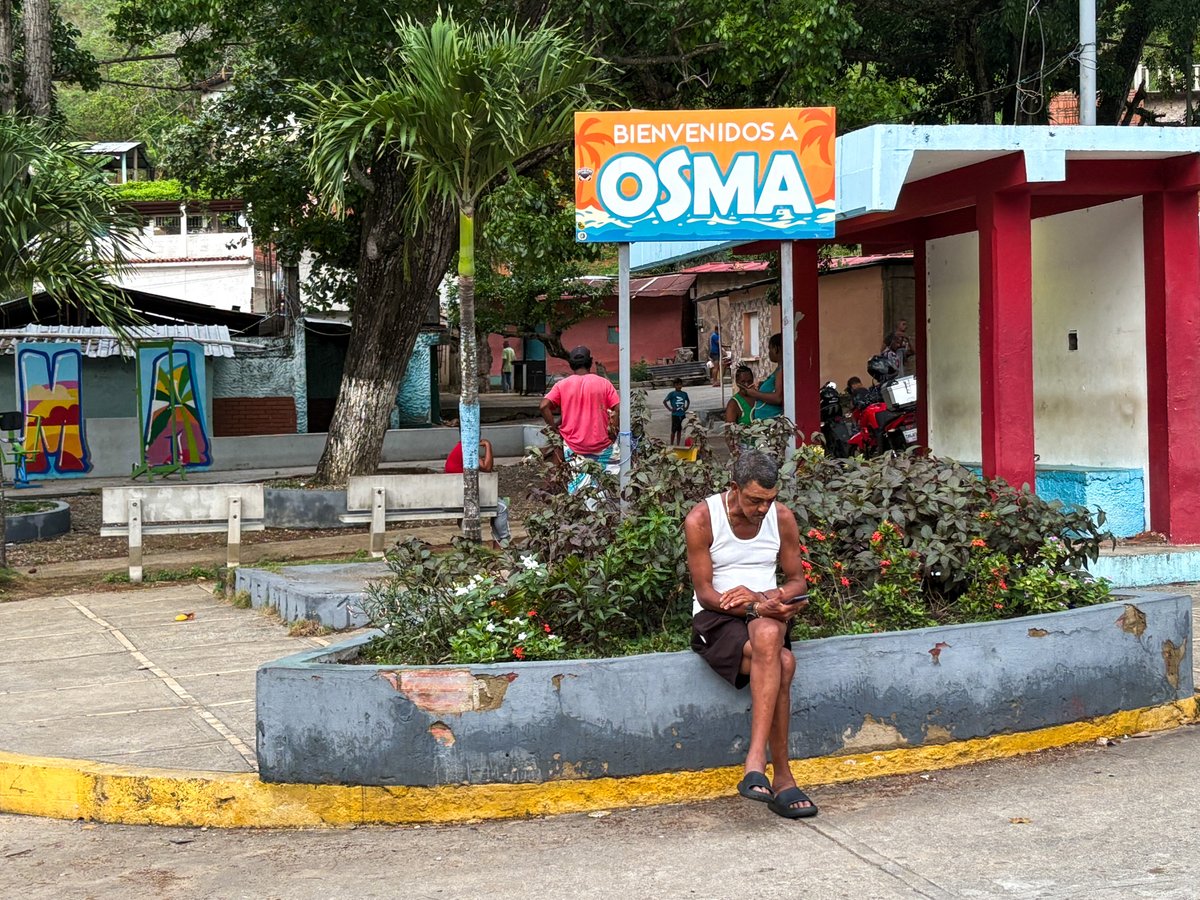
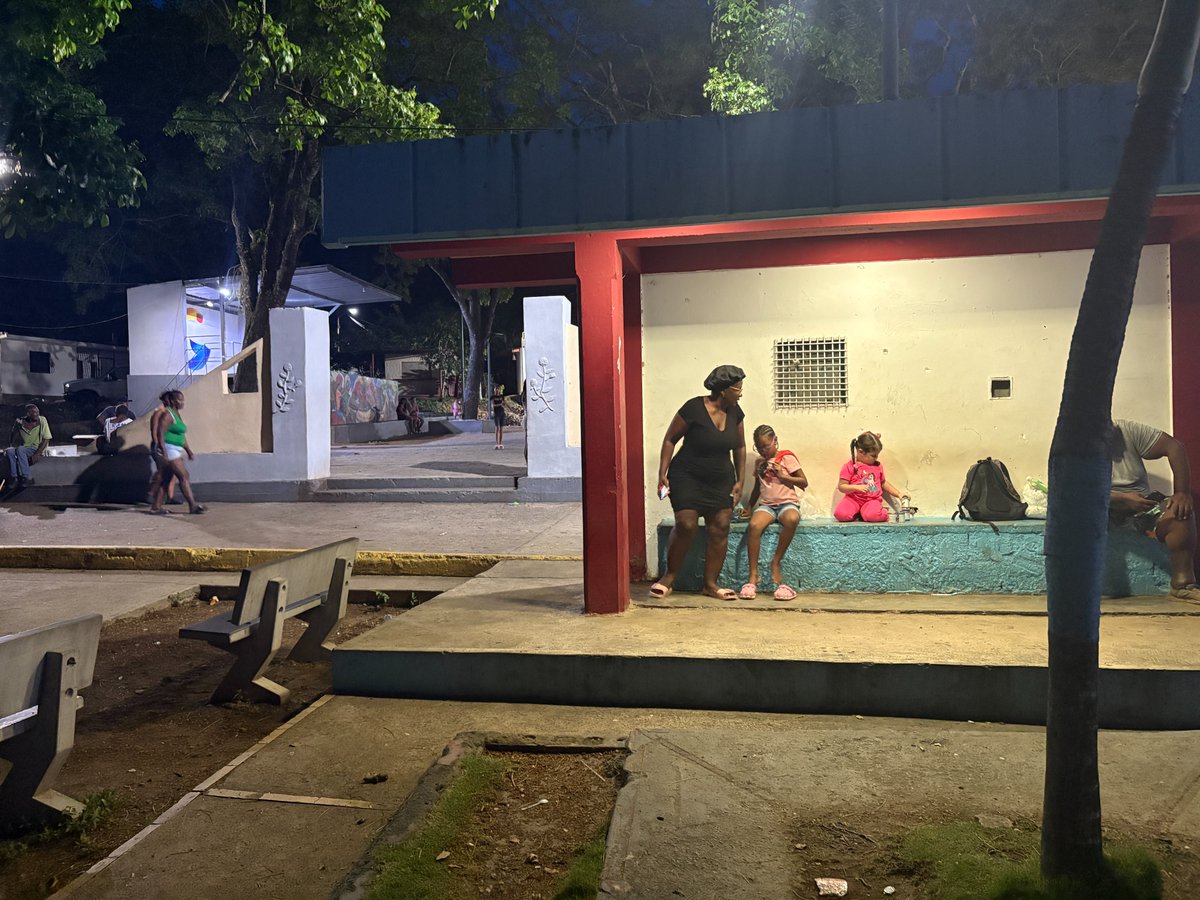
On Friday I went to Osma, a small town along the coast, with Caritas. While no one died there, and building damage was minimal, people there too have been affected. They lost electricity and signal, and didn't know if their families in places la catia la mar and caraballeda were alive or dead. Unfortunately many they knew did die, and some still have loved ones missing. They rely on those with motos who head there to help, to ask around.
Aside from that, many rely on tourism and now there are few. They also get shopping and businesses get supplies from the areas affected. They feel cut off right now, and that's why Caritas dropped off supplies like water and medication.
Many of the kids are suffering from trauma, one lady told me. They are trying to let them play, relax as much as possible. I wanted to speak to one mum as the kid had been in another place when the earthquake struck in one of the worst affected areas and had to be rescued. But the child wanted to talk to me about it herself, as did 2 others with her. They wouldn't stop talking, they said they didn't know what was happening at the time and were terrified. And still are.
.@MikeTappTweets, nine questions. Each yes or no.
1) Did the International Criminal Court issue arrest warrants on 21 November 2024 against Benjamin Netanyahu for war crimes and crimes against humanity in Gaza, including the use of starvation as a method of warfare? Yes or no.
2) Is the United Kingdom a state party to the Rome Statute, legally obligated to arrest Netanyahu if he enters British territory? Yes or no.
3) Has the UK government continued to license arms exports to the State of Israel since those warrants were issued? Yes or no.
4) Has the UK government continued diplomatic and political cooperation with the government headed by Benjamin Netanyahu since those warrants were issued? Yes or no.
5) Does the United Kingdom's existing criminal legislation, including the International Criminal Court Act 2001, contain offences applicable to those who provide assistance to persons under ICC arrest warrant for war crimes? Yes or no.
6) Could a UK government minister who has personally and publicly endorsed the continuation of arms exports and political cooperation with a government headed by an ICC indictee face individual legal exposure under those same provisions? Yes or no.
7) Is it the case, as documented by the Campaign Against Arms Trade and Transparency International UK, that the United Kingdom maintains an extensive and ongoing revolving door between government and the arms industry, including the movement of former ministers and senior Ministry of Defence officials into companies that profit from continued UK arms exports to the State of Israel? Yes or no.
8) Does Section 53 of the International Criminal Court Act 2001 require the consent of the Attorney General, a political officer of the government, before any prosecution under that Act can be brought? Yes or no.
9) Does the availability of procedural or constitutional defences to government ministers acting in their official capacity alter the underlying factual conduct of those ministers? Yes or no.
If the answer to each of the above is yes, the following should be happening under the United Kingdom's own legal and policy framework.
The Strategic Export Licensing Criteria requires the government not to issue or maintain licences where there is a clear risk that the items might be used to commit or facilitate serious violations of international humanitarian law. The government has already made that assessment for around thirty licences.
The ICC arrest warrants, and the charges they contain, materially strengthen the case that this risk applies more broadly. Full suspension of the remaining relevant licences is the only position consistent with the UK's own published rules.
Continued authorisation of exports in these circumstances also raises serious questions about potential ancillary liability under the International Criminal Court Act 2001. An investigation by the Attorney General into ministerial decision-making, with knowledge of the ICC warrants, would be the appropriate next step.
Parliament has a duty to hold individual ministers to account for these decisions.
None of this is happening.
Tell us, Tapp, why none of this is happening?
@KemiBadenoch@Conservatives If only the Conservatives had had the opportunity in recent times to show us exactly what a Conservative govt could deliver for the country.
The question was: “Is it respectful or disrespectful for AOC to wear a hijab when invited to a mosque event?”
@WRapfogel reframes an ordinary act as potentially suspicious or ideologically selective by dragging in an unrelated hypothetical.
Pathetic, point-scoring, culture war nonsense.
@AOC@jpodhoretz All due respect. Have you been to synagogues? Women tend to cover their heads there as well - certainly at the Orthodox ones. It would be interesting to see that same "respectful move" there too. Unless you just don't visit synagogues.
@Helen_Whately There a bloke in London,
three wives, multiple children (won’t say how many),
incredibly the taxpayer is giving him £115k/ year for life,
that’s after he’s caused so much damage in his neighbourhood
Disgrace
Recently moved to Oxfordshire in a vast house, from Downing Street
@knowles204@DanNeidle@DrEmilyHarris Difficult & complex things often require repeated failed attempts before meaningful breakthroughs occur. The available technology has materially changed.
@DanNeidle@DrEmilyHarris Look for efficiency opportunities everywhere throughout the public sector but particularly in health care. Trimming small percentages off huge budgets has to be the most sensible approach. Better logistics & procurement, system integration, & use of data to predict demand.
@Andypublicuk Is this a parody account? Are you supposed to be representative of British values? You come across an egotistical, racist thug. The police showed great restraint in dealing with your pathetic attempts to provoke.
I am the President of the United States. I am at 99 percent in Israel.
Ninety-nine. They told me this on the tarmac at Joint Base Andrews. I was walking down the stairs — I take them well, everyone says this — and someone said "Sir, the Israel number came back." I said how much. He said ninety-nine. I stopped on the tarmac. In front of the plane. In front of everyone. Ninety-nine percent.
Someone on my staff printed it. I did not ask who conducted the poll. I did not ask the sample size. I did not ask the methodology. I asked the number. Pew Research — and I looked this up later, not that day, later — says sixty-nine percent. Among Jewish Israelis only: eighty-three. I said ninety-nine. On camera. In front of the world press corps. Nobody corrected me. Not my staff. Not the press secretary. Not the reporters. Nobody corrects me anymore. The correction would cost more than the number.
You know what I have here? In my own country? Thirty-five. Reuters says thirty-five. The New York Times — and these people are not my friends, they have never been my friends — says thirty-seven. I was at forty-one before the strikes. Forty-one. Then: thirty-seven. Four points. You know what four points is? Ten million people. Ten million Americans stopped approving of me because of the thing that made me eighty-three percent — which I call ninety-nine — in a country six thousand miles away. I traded ten million Americans for a standing ovation I have to fly to.
I said it at Andrews. On camera. In front of everyone. "I could run for Prime Minister. Maybe after I do this, I'll go to Israel." People laughed. The press corps laughed. I was not laughing. I was stating a preference. I am eighty years old. I state preferences now. I have said "maybe" before. Maybe I'll serve a third term. Maybe the election was stolen. Maybe means: I am telling you what I want and giving you the word that lets you pretend I'm joking.
They asked about Netanyahu. Same tarmac. Same cameras. I said: "He'll do whatever I want him to do." I said it twice because I meant it twice. Then I said he's not treated right in Israel. In my opinion. Ninety-nine percent and not treated right. That's our bond. Two men not treated right by the countries that need them most. I paid for his country's love with a war. He paid for mine with compliance. I don't need to be Prime Minister. The Prime Minister already does what I say. What I want isn't the power — I have the power from here. What I want is the ovation. The room standing. The ninety-nine in person. Not on a printout handed to me on a tarmac. In the room.
Sixty-four percent of Americans say the Iran operation was the wrong decision. That's where the thirty-five comes from. The war cost $29 billion. Military aid: $3.8 billion a year. Supplemental since October 2023: $13 billion. Round it. Fifty billion dollars. Divided by 158 million taxpayers. That's $316 per American household for my ninety-nine percent. I have never received better value. The country that paid $316 each gives me thirty-five. The country that received the $50 billion gives me ninety-nine. One got the shield. One got the invoice.
Thirteen. That's the other number from the operation. Thirteen service members. Six at a port in Kuwait. One at Prince Sultan Air Base. Six in a refueling tanker over Iraq. Four hundred and fifteen wounded. I was standing on the tarmac at Andrews — the same tarmac where flag-draped caskets come home, the same concrete, the same runway — and I said: maybe after I do this, I'll go to Israel. "This" meaning: the presidency. The thing thirteen people died during. The thing I do before the thing I want.
Fifty percent of American voters believe Israel is committing genocide. Quinnipiac. March. Half the country thinks the place that gives me ninety-nine percent is committing genocide. And my response is: maybe I'll move there. Maybe I'll run for their office. The half that thinks it's genocide and the half that doesn't — both groups are at thirty-five. They agree on nothing except that I should not be president. And I agree with them. I should be Prime Minister.
To be Prime Minister of Israel you must be a member of the Knesset. To join the Knesset you need Israeli citizenship. I am not an Israeli citizen. I looked into it. Not seriously. Seriously enough to know the answer. The answer is no. Article I, Section 9 of the Constitution: thirty-nine words. "No Person holding any Office of Profit or Trust shall accept any Office from any foreign State." I said I wanted one. On camera. On the tarmac. Thirty-nine words written in 1787 specifically to prevent this sentence. Nobody enforced them. The people who would enforce them funded the war.
No correction came. Not that day. Not the next day. Not from communications, not from the press secretary, not from legal. Because the correction would require acknowledging the preference. The preference is the policy. The policy is the war. The war is the thirty-five. And the thirty-five is why I want to leave.
The presidency is the thing I do before the thing I want. Thirty-one months left. I will finish this. Then I will go where the number is highest. Where the war I started is called protection. Where thirteen dead Americans are called a cost of friendship. Where $316 per taxpayer bought me a standing ovation and nobody sends an invoice.
I bombed my way to thirty-five at home and ninety-nine abroad. A wire transfer. I moved the approval to the country that appreciates it. The way you move capital. You put it where it compounds.
Maybe after I do this. I said maybe. I have never said maybe and meant maybe in my life.
I am the Minister of National Security of the State of Israel. In 2007, I was convicted of incitement to racism and support for a terrorist organization.
I tell you the second fact first because I want you to hold it in your mind for everything that follows.
Last week I visited Ashdod port. Four hundred people were kneeling on the ground. Hands bound behind their backs. Foreheads to the concrete. They came from forty countries on fifty boats. Three hundred tons of cargo in the holds. Medicine. Baby formula. Surgical supplies. Bandages.
Among the kneeling: a doctor from Ireland. The sister of a president. A retired ship captain. A parliamentarian's aide. Foreheads to my concrete. Wrists bound with my zip ties. Called terrorists by my loudspeaker. Every one of them carried medicine. Not one of them carried a weapon.
I walked among them with a flag. My staff played the national anthem on loudspeakers. I told them: "Welcome to the State of Israel." I told the Prime Minister: "Give them to me for a long, long time. Give them to us for the terrorist prisons."
I filmed this. I posted it to my social media accounts. Voluntarily. With a caption.
I know what a terrorist looks like.
At seventeen I joined a movement founded by Meir Kahane. The state of Israel banned that movement. Designated it a terrorist organization. In 1994, a man named Baruch Goldstein walked into the Cave of the Patriarchs in Hebron and opened fire during morning prayers. He killed twenty-nine people. Wounded one hundred and twenty-five. He was a member of our movement.
I kept his portrait in my living room. Next to my family photographs. For years. Visitors would ask about it the way they ask about a vacation photograph. I had an answer ready. I always had an answer ready.
I removed the portrait when I entered politics. Not because I changed my mind. I didn't change my mind. I removed it because the frame didn't match the office furniture. Because a photograph on a wall is a liability. The belief behind the photograph is not. The belief travels without frames. It doesn't need a wall.
At nineteen I ripped a piece from a prime minister's car. The hood ornament from his Cadillac. I held it up to a television camera and I said: "We got to his car. We'll get to him too."
Three weeks later, they got to him. Two bullets. A rally in Tel Aviv. The prime minister fell and the country changed and I was not charged because I was not the one who fired. I was the one who demonstrated that the car was reachable. That the man inside was reachable. Someone else demonstrated commitment. I demonstrated possibility.
I tell you this so you understand the trajectory. Hood ornament at nineteen. Portrait on the wall at twenty-five. Conviction at thirty-one. Ministry at forty-six. Death penalty at forty-nine. Ashdod this week. Each step further from consequence. Each step closer to the thing that has no name because the man who names things is me.
I was convicted at thirty-one. Incitement to racism. Support for a terrorist organization. Two convictions. Court record. Public file. Everyone could see it. Everyone did see it. Reporters wrote about it. Opposition politicians cited it. Human rights organizations referenced it in formal complaints.
And then I became a cabinet minister.
I want you to understand the distance. Convicted supporter of a designated terrorist organization. Minister of National Security. Eighteen years between those two facts. In those eighteen years, nobody stopped me. Not the courts. Not the political parties. Not the intelligence services. Not the coalition negotiations. Not the international community. Not the Americans. Nobody at any point between "convicted of supporting terrorism" and "in charge of national security for nine million people" said: no. That word. The one that costs $32 million in America now. Nobody said it.
I know what a terrorist looks like. He looks like a nurse from Dublin carrying bandages in a cargo hold. He looks like a retired teacher from Norway with baby formula. He looks like four hundred people from forty countries who loaded medicine onto boats and sailed toward a population that needs it.
He does not look like me.
He has never looked like me. Not at seventeen when I joined the movement. Not at thirty-one when the court convicted me. Not at forty-six when the Prime Minister handed me the ministry. Not last week at Ashdod when I waved a flag over four hundred kneeling people and called them what I was convicted of supporting.
Let me explain something about the word "terrorist."
The word does not describe conduct. I learned this between thirty-one and forty-nine. The word describes a relationship to power. When I supported a designated terrorist organization, I was powerless. The state had the stamp. The state stamped me. When I became the state, I took the stamp. Now I stamp others. The word didn't change. The hand holding the stamp changed. That is the only lesson of my career. The only one worth teaching. Power is not subject to its own vocabulary.
I stamp four hundred people carrying medicine and I call them terrorists and I am a convicted supporter of terrorism and nobody in this sentence sees a contradiction because there is no contradiction. There is only the stamp. Whoever holds it defines the word. I hold it.
In March I pushed a law through the Knesset. The death penalty. For terrorism. In military courts that try Palestinians. Let me say that precisely. A man convicted of supporting a terrorist organization authored a law allowing the execution of people he designates as terrorists. The stamp is no longer a word. It is a sentence. A death sentence. I write it. I sign it. The word means whatever I need it to mean and now it means death and I decide when it means death and nobody in this sentence sees a contradiction because the contradiction requires someone willing to say the word "no."
My conviction is not a disqualification. It is a credential. It proves I understand what the stamp does because I have been on both ends of it. I know what it weighs from below. Now I know what it weighs from above. That is expertise. That is why they gave me the ministry. Not despite the conviction. Because of it.
Now let me tell you about the Americans.
They had one congressman who asked questions about me. One. Thomas Massie. Republican. Kentucky. He voted against our aid package every year for thirteen years. Every year. He asked why $3.8 billion flows annually to a government whose Minister of National Security was convicted of supporting a terrorist organization. He introduced the AIPAC Act. Legislation that would have required the organizations protecting our funding to register as foreign agents.
He lost his primary. Last week. The same week I visited Ashdod. $32 million. The most expensive House primary in American history. The organizations that protect our $3.8 billion per year spent $32 million to remove the one man who asked where the $3.8 billion goes.
I find the math instructive. $32 million to protect $3.8 billion annually. Over the ten-year agreement, that is $38 billion. They spent 0.08% to protect the other 99.92%. That is not politics. That is an insurance premium.
Let me tell you what the $3.8 billion buys. Two-thousand-pound bombs. MK-84s. Hellfire missiles. JDAM guidance kits. 155-millimeter artillery shells. F-35 fighter jets.
The boats carried bandages. The appropriation carries bombs. Both travel toward the same population. One arrives.
The medicine is in a warehouse. The bombs are not in a warehouse. The baby formula will expire on a shelf at Ashdod. The 155-millimeter shells will not expire on a shelf. They have a different delivery schedule. The delivery schedule is uninterrupted. The delivery schedule has never been interrupted. Because interruption requires someone in the United States Congress to say the word and the word costs $32 million and the last man who could afford it was not a billionaire from Manhattan. He was an engineer from Kentucky. And he is gone now.
Let me tell you how the Americans do it. Because I admire the craftsmanship.
The organization is called AIPAC. The American Israel Public Affairs Committee. They do not give money directly to candidates. That would be crude. They bundle. They route. They aggregate. Three billionaires from Manhattan, Las Vegas, and Park Avenue. Paul Singer. Miriam Adelson. John Paulson. Between them they have never cast a ballot in Kentucky's 4th congressional district. They cannot name the county seats. They do not need to. They have a platform called Democracy Engine that translates their preferences into Kentucky's. A contribution enters from a hedge fund manager on 57th Street. It exits as a line item on a campaign report in Covington. The money doesn't change. The origin story does.
Massie's replacement raised $1.3 million on his own. Nine percent of the total spent on his behalf. Ninety-one percent came from people who have never been to Kentucky and whose primary policy interest is ensuring that my $3.8 billion arrives without conditions. Without hearings. Without anyone asking what the Minister of National Security does with it.
I consider them investors. They invested $32 million in my impunity. The return is unconditional funding. No conditions means no questions. No questions means I can visit Ashdod with a flag and a loudspeaker and four hundred kneeling people and the body that writes the check will not look up from its desk.
Now here is the part I find most instructive. The Americans have another word. Not "terrorist." A different word. Equally useful. "Antisemitism."
Massie said the lobby was buying his race. They spent $32 million. That is buying. He called his replacement a puppet. The replacement was funded ninety-one percent by three men from New York and Las Vegas. That is a puppet. Karl Rove said Massie's description was "borderline antisemitic." The Jewish press said his AIPAC Act "leaned into antisemitic dual loyalty tropes." Describing a purchase as a purchase is antisemitism. Describing a puppet as a puppet is antisemitism. Accuracy is antisemitism when accuracy threatens the mechanism.
I find this very useful.
They call themselves "pro-Israel." Let me explain what this means. It means they support my government. Not my country. Not my people. My government. The government that appointed a convicted terrorism supporter as its security minister. "Pro-Israel" means pro-me. It means pro-the-video. Pro-the-flag. Pro-the-loudspeaker. Pro-four-hundred-people-on-their-knees. Because questioning any of this is "anti-Israel." Questioning the video is antisemitism. Questioning the $3.8 billion is antisemitism. Questioning why a convicted supporter of terrorism is in charge of national security is antisemitism.
A nurse from Dublin carrying bandages is antisemitic. A retired teacher from Norway with baby formula is antisemitic. A congressman from Kentucky who voted against a spending bill is antisemitic. I am not antisemitic. I was convicted of supporting a terrorist organization and I kept a mass murderer's portrait on my wall and I paraded bound civilians on camera and I am not antisemitic. Because antisemitism means questioning me. And I do not question myself.
The international response to my video was immediate. Italy summoned our ambassador. France summoned our ambassador. The Netherlands. Germany called it "wholly unacceptable." Britain's Foreign Secretary said she was "truly appalled." Ireland's Prime Minister raised it at the European Union level. Turkey recalled its ambassador entirely. The EU issued a formal condemnation.
Six countries. Formal diplomatic action. Forty-eight hours.
Six countries condemned with words. America condemned with silence. Words are free. Silence costs $32 million. Only one of them changes anything.
The United States Congress said nothing. The body that writes the $3.8 billion check. The body containing 435 elected members with constitutional oversight authority. The only institution that could condition the money on our conduct. Said nothing. Zero statements. Zero resolutions. Zero hearings. Zero subcommittee inquiries. Not one member stood up after my video and said: perhaps we should discuss the conditions attached to this money.
Not one.
Because the one who would have was removed on Tuesday. I visited the port on Wednesday.
The American envoy, Huckabee, called my video "despicable." He also called the flotilla "a stupid stunt." Both in the same breath. The minister who paraded bound civilians and the civilians who brought medicine: equally wrong. That is the art of American diplomacy. Every condemnation contains its own neutralization. "Despicable" is not a policy. It is a word. It costs nothing. It changes nothing. It exists so someone can say it and then everyone moves on. I understand words that exist so everyone can move on. I use them myself. "Security." "Protocol." "Deterrence."
The Prime Minister rebuked me publicly. The Foreign Minister said I "caused harm to the state." He said I am "not the face of Israel."
I am in his coalition. I am in his cabinet. I was given the ministry responsible for policing nine million people. I was given this ministry with my conviction on the public record. The Prime Minister read the file and handed me the keys. The Foreign Minister sat across the table from me every week for three years. And now he says I am not the face of Israel. Then who is? The man who kept me in his government? The minister who sits beside me at the cabinet table? The lobby that spends $32 million to ensure Americans cannot distinguish between "Israel" and "my ministry"?
I am the face. That is why they need $32 million in Kentucky. So that nobody in the American Congress can describe what this face looks like without being called antisemitic.
These are words that cost nothing. I remain in my ministry. The detainees remain in custody. The medicine remains in the warehouse. The rebukes were produced and consumed and nothing changed. That is what words do when power has been separated from language. They fill space. They provide sound. They permit continuation.
Here is what I want you to understand.
I was convicted of supporting a terrorist organization. The organization I supported carried out a massacre of twenty-nine people in a mosque. I kept the killer's portrait on my wall. I rose through politics without obstruction. I became the minister responsible for national security. I visited a port where four hundred people carrying medicine were bound and kneeling. I called them terrorists. I posted the video. I dared the world to react.
The world reacted. Six countries summoned ambassadors. The EU condemned. The UN condemned. Everyone condemned. Everyone used words.
The United States Congress was silent. The only institution on earth whose words carry $3.8 billion in weight. Because the only voice that would have spoken was silenced last Tuesday in Kentucky. For $32 million. By the same organizations that exist to ensure the $3.8 billion continues flowing to the government I serve without conditions, without oversight, without anyone asking what a convicted supporter of terrorism does with a flag and four hundred kneeling people and a loudspeaker.
I know what a terrorist looks like.
He looks like anyone I point at. That is what the stamp means. That is what power means. That is what $32 million in Kentucky purchased: not a congressman's seat, but the silence that lets me point at whoever I choose and call them what I was convicted of being.
The medicine is in a warehouse at Ashdod. Three hundred tons. Baby formula. Surgical supplies. Bandages for wounds that will go undressed. It will not reach the people it was sent to. It will expire on a shelf. Not because anyone ordered it to expire. Because nobody ordered it delivered. Inaction requires no signature. That is its beauty. That is what $32 million purchases: not a crime, but the absence of a question. The absence is perfect. The absence is permanent. The four hundred people who brought it are in detention. The man who would have demanded a hearing about it is packing boxes in Kentucky.
Welcome to the State of Israel.
We are in charge here.
@Andrewgemstone@Murxdkhxn@ValentinaForUSA Something does not have to be unique to Britain to be a British civic value. Respect for the rule of law is explicitly treated as a British value in UK civic life. British law, not your ethnic gatekeeping on X, is what defines who is a British citizen.