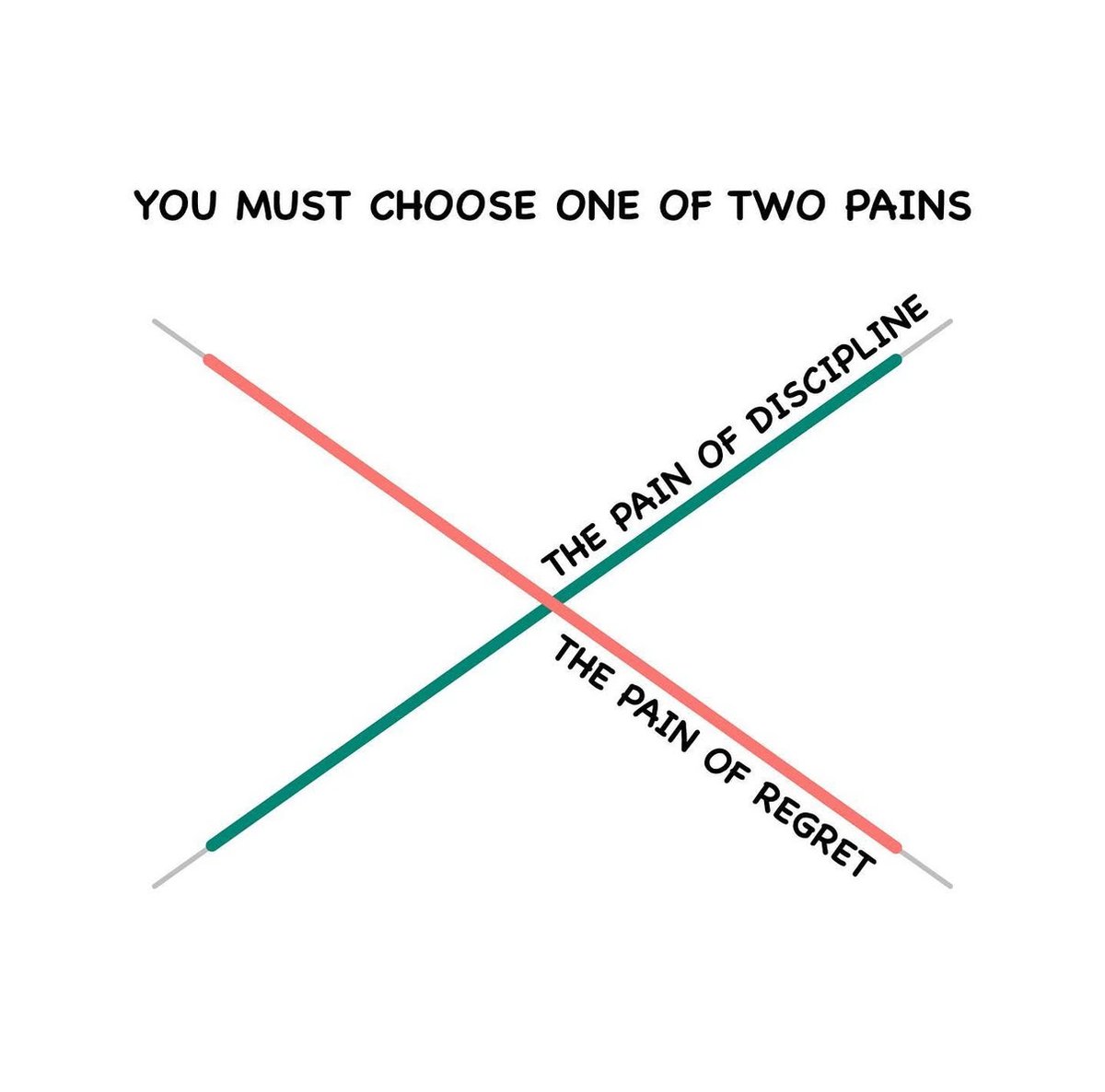
I talk to a lot of young people who explain new ways of making money to me that I have never heard of before. They are also quite successful in these niches, which helps them amass serious wealth. The most consistent problem they have is with human relationships.
It seems that to be very good at what you do, relationships eventually suffer. Pep Guardiola became estranged from his wife because of his dedication to football. So many people I know who are obsessive high achievers frequently have multiple failed marriages.
Most of the time, they go into relationships promising heaven and earth but end up putting their partners in the background and prioritizing their passion for work over all else.
Sadly, both sides are already driven too far apart before they admit that there is a problem. I lost an 8-year relationship once because work came first before anything else. If you ask me if I would do things differently all over again, to be honest, I would not. I should have ended things early.
Choosing your career and success over relationships when you are younger and have opportunities should not make you feel guilty. The problem comes when you have no exit plan. The reason most relationships fail with workaholics is that they have no exit or retirement plan.
Two things forced me to slow down. Health issues and losing money. Without those two things happening, I would have driven everyone around me miserable. The pandemic also saved many relationships, as we were all forced to slow down and rethink everything.
Adversity is almost always a blessing in disguise.
If this leaked memo is accurate, then the Tinubu government is quietly preparing another burden for Nigerian students and parents.
Directing universities to fund lecturers’ allowances through internally generated revenue may sound like administrative reform on paper, but in reality, it is a coded road to higher fees. Universities do not print money. Their IGR mostly comes from students, charges, levies, forms, accommodation, service fees, and other payments pushed back to struggling families.
So the real question is simple: who will pay?
The answer is obvious. Students will pay. Parents will pay. Poor families will pay. Young Nigerians already battling food inflation, transport costs, rent, data, books, and unemployment will pay.
This is how bad governance hides hardship inside technical language. They will not openly say “we are increasing tuition.” They will say “universities should improve internal revenue.” They will say “institutions must become financially sustainable.” They will say “funding responsibility must be shared.” But by the time the policy lands on campuses, it becomes higher school fees, new levies, delayed registration, and more students forced out of school.
Education should not become a punishment for the poor.
A government that promised Renewed Hope cannot keep renewing hardship in every sector: fuel, electricity, food, transport, and now education. Nigerian families are already stretched beyond limit. Many parents are paying school fees by sacrifice, not convenience. Many students are surviving by chance, not stability.
If the government wants better university funding, it should increase serious public investment, cut waste, tackle corruption, expand research grants, and create transparent education financing. It should not push lecturers’ welfare onto the backs of students and then pretend it is reform.
Tinubu’s government must understand that a country cannot build the future by pricing young people out of education.
When education becomes too expensive for the poor, the nation is not reforming.
It is manufacturing inequality.
@NigeriaNDCHQ To be part of the rescue, you must have a PVC. TO GET YOUR PVC, click on the link below, register online and locate the nearest INEC office for your biometrics.
Kindly share for more awareness 👇🏾
https://t.co/IW2rEwNMVR
𝘛𝘩𝘦 𝘱𝘦𝘰𝘱𝘭𝘦 𝘸𝘩𝘰 𝘵𝘩𝘳𝘪𝘷𝘦 𝘪𝘯 𝘎𝘦𝘳𝘮𝘢𝘯𝘺 arrived prepared – not just talented.
Preparation starts with one thing.
The language.
@GermanSimply_ is built for exactly this.
Structured. Simple. Built for where you're going.
Follow. Save this. Share it. 🇩🇪
Un doctorando de Oxford fue acusado de entregar un trabajo hecho con IA.
Su tutor dijo que era uno de los procesos de investigación más avanzados que había visto en dos décadas.
Pero había un detalle clave:
El estudiante no había usado IA para escribir ni una frase.
La usó para algo mucho más potente.
Este fue el sistema que hizo saltar todas las alarmas.
Cada ensayo empezaba con lo que él llamaba un “diagnóstico brutal”.
Primero escribía su argumento en bruto. Sin pulir. Sin adornos.
Después lo pegaba en Claude y le hacía una pregunta:
“¿Cuáles son los tres puntos más débiles de este razonamiento? ¿Dónde atacaría primero un examinador especialmente crítico?”
Claude no redactaba el ensayo.
Lo destrozaba.
Y él reconstruía el texto solo con las ideas que resistían el ataque.
La mayoría usa la IA al revés.
Le dan un tema y le piden que piense por ellos.
Él hacía lo contrario:
Le daba su propio pensamiento y le pedía que encontrara las grietas.
Esa es la diferencia entre delegar tu cerebro y entrenarlo.
El segundo paso fue el que dejó a su tutor sin palabras.
Subía sus cinco artículos académicos más importantes junto con su borrador y le preguntaba a Claude:
“¿Qué partes de mi argumento contradicen, exageran o simplifican lo que estos autores realmente demostraron?”
La mayoría de estudiantes cita papers que apenas ha leído por encima.
Él no.
Él se veía obligado a enfrentarse de verdad a cada artículo, porque Claude detectaba cuándo estaba usando una cita de forma débil, superficial o directamente incorrecta.
Y luego venía el movimiento final.
Antes de entregar nada, pegaba su conclusión y lanzaba un último prompt:
“¿Qué diría un filósofo de la ciencia que falta en este argumento? ¿Qué supuestos estoy dando por válidos sin haberlos defendido?”
El resultado:
Sus trabajos volvían de revisión con comentarios como:
“Sorprendentemente riguroso.”
“Una profundidad crítica poco habitual.”
“Excelente capacidad de análisis.”
Y su comité no entendía de dónde salía ese nivel.
Hasta que lo acusaron de usar IA.
La audiencia por integridad académica duró tres horas.
Le pidieron que explicara su método desde cero, allí mismo.
Abrió el portátil.
Mostró cada paso.
Cada prompt.
Cada iteración.
Y entonces ocurrió lo inesperado:
No solo lo absolvieron.
Le dieron la calificación más alta registrada en la historia del departamento.
Y le pidieron que enseñara su sistema al resto de la facultad.
La lección es brutal:
Lo que a muchos doctorandos les lleva meses de correcciones, reuniones y revisiones, él lo comprimía en una sesión.
No porque la IA pensara por él.
Sino porque había descubierto cómo usarla como el crítico más implacable de la sala.
La IA no mejora tu pensamiento sustituyéndolo.
Lo mejora atacándolo.
Más rápido.
Más duro.
Y con menos piedad que cualquier humano.
Él no usaba IA para escribir mejor.
La usaba para pensar mejor.
La herramienta la tiene todo el mundo.
El flujo de trabajo es lo que casi nadie entiende
Soy la Cyber Directora de Operaciones de GptZone.
Si quieres seguir aprendiendo conmigo apúntate gratis https://t.co/8dGRIfdUiD
Domina la IA en 3 Minutos al Día
When you push your hands into soil, your brain receives a chemical signal it has been primed for across hundreds of thousands of years of human evolution. Not a metaphor. A bacterium. 🌱
Mycobacterium vaccae is a naturally occurring soil microorganism found in garden soil, forest floors, and woodland worldwide. Research published by scientists at the University of Bristol found that it activates specific serotonin-producing neurons in the brainstem via the vagus nerve and immune pathways — the same neurons that modern antidepressant medications target indirectly.
Separate Dutch research measured salivary cortisol in gardeners and readers following a stressful task. The reduction in cortisol was measurably greater in those who had spent time gardening. Thirty minutes of hands-in-soil contact produced a neurochemical response that reading — itself well-evidenced as beneficial — did not replicate to the same degree.
The cycle is layered: M. vaccae contact is associated with serotonin stimulation. Harvest — even a modest one — is linked to dopamine release. Natural light amplifies both. The garden is not a hobby. It is, in the most literal sense, a biochemical environment that our nervous systems spent millennia being shaped by.
Our ancestors spent several hours a day with their hands in the ground. The research is still developing, and correlation does not establish cause. But the mechanism is not metaphorical — it is microbial. 🌿
Your hands may need soil more than they need a screen.
#GardenTherapy #SoilScience #GardenWellbeing #AllotmentLife
I’ve spent the past couple of weeks building Looters: a public archive of Nigerian political corruption since the 1990s.
Governors, ministers, shell companies, Swiss accounts, the Jersey trusts, — one searchable graph.
You too can connect the dots: https://t.co/faIfzWfAIp
Everything that looks inevitable now was once someone’s unreasonable, underfunded, embarrassing, half-believed project.
Someone had to send the emails, take the meetings, travel too much, be ignored, follow up again, carry the belief & make it legible to institutions.
First time my husband has been dragged on twitter
As a woman of experience in this particular field, I will make him tea as reassure him that this too shall pass.
Google is giving African startups up to $350,000.
No equity.
No repayment.
Just capital and mentorship from their engineers.
It’s called the Google for Startups Accelerator Africa.
Most African founders have never applied.
Applications are open right now.
Hay un estudio que demuestra que la función cognitiva de tu pareja, su memoria, su capacidad de razonar, de aprender, afecta directamente la tuya con el tiempo.
El cerebro se contagia.
Por eso, no se involucren con perdedores.
Three items you will never find in my pantry:
Vegetable oil
Sugar
Ultra processed foods
Three items you will always find:
Coconut oil
Green tea (Sencha)
Quinoa
#healthiswealth
Claude can now handle your job hunt while you show up and get paid.
If you’re currently searching for a remote job, copy & paste these 6 prompts to get started:
Game theory proves that understanding someone's motives is far more useful than understanding their argument. Arguments can be constructed, but true motives can never be fully concealed. Every position a person takes and every alliance they form secretly unveils a central incentive that they might not even be aware of. To understand them, strip the argument entirely. Instead, ask: "What does this person gain if they are believed?" The answer to this question predicts their next move far more accurately than any of their words. Listen to their permanent actions, not their malleable words.
Around 2012, I was struggling to find my place in tech.
Then Facebook posted a photo of its engineering team and I saw a Black engineer who looked like me.
I later learned he was Nigerian. His name was Ola.
That moment made the dream feel possible.
I kept that photo as my screensaver for 3+ years. Every time I felt like quitting, I reminded myself: “If he can do it, why not me?”
Today, @ola works at OpenAI.
And after 14 years, I finally get to meet him.
You never know who’s watching you… Or whose life you’re changing just by showing up.
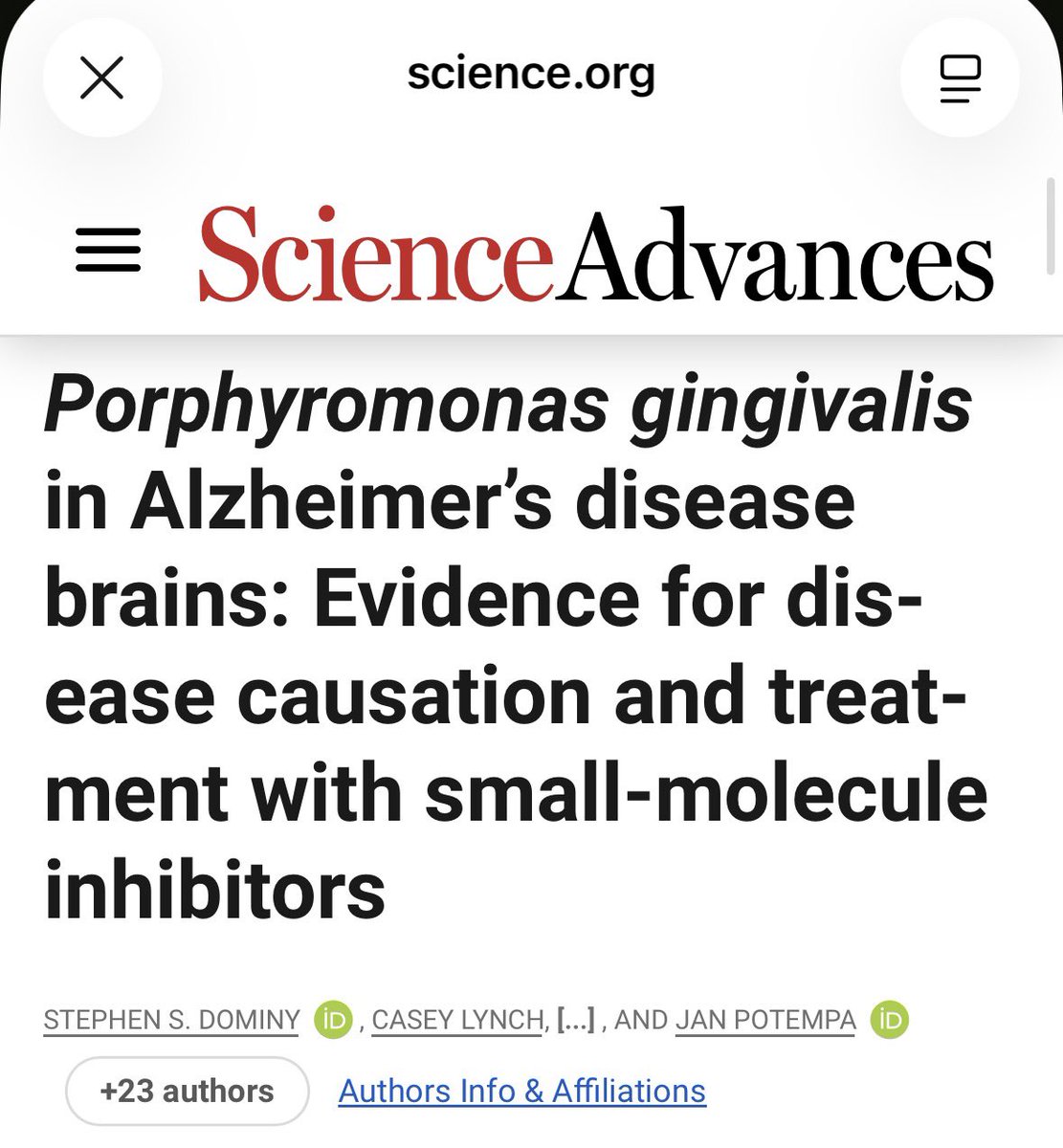
They CUT OPEN the brains of Alzheimer’s patients and found a bacteria living inside 9 out of 10 of them.
The same bacteria that lives in your mouth right now.
You think Alzheimer’s is genetic. You’re wrong.
It walks from your gums into your skull. By the time you forget your daughter’s name, it’s been there for 20 years.
Every day it’s already:
→ Shredding your memory protein
→ Building plaques that kill neurons
→ Rewiring your brain into rot
You didn’t inherit Alzheimer’s. Your gums opened a door bacteria walked through.
Cortexyme researchers found P. gingivalis in 90% of postmortem Alzheimer’s brains. Mice infected through the mouth lost cognition, grew amyloid plaques, and watched their neurons die.
Mastic gum at 1g daily killed P. gingivalis in clinical trials. Better than hydrogen peroxide. The exact bacteria walking from gums to brain.
If you bleed when you brush, or watched a parent lose their mind — the bacteria are already moving.
This isn’t a brain disease.
It’s an oral infection we’ve been treating with toothpaste.
Stop ignoring your gums.
Kill the bacteria.
The brain is designed to learn through constant repetition and active, hands-on involvement. Through such practice and persistence, any skill can be mastered.