OMF is fundraising to support open, collaborative research to find effective treatments and diagnostic markers for ME/CFS, Long COVID, and related diseases.
Join the Long COVID International Conference 2026 and be part of the conversation!
Attend in person in Nice, France, or join virtually from anywhere in the world.
👉 Register today: https://t.co/NcQCxUUyPH
#LongCOVIDIntl
@AcademicMedicalEducation
RECOVER-TLC’s third annual hybrid workshop is Nov. 4–5, 2026 — in person at The Bethesdan in Bethesda, MD, or virtually via Zoom.
🔗 Register (free): https://t.co/QQjwMBdscw
Dr. Danielle Meadows shares OMF’s CTN Lite survey results on post-exertional symptom worsening in ME/CFS and how patient feedback is shaping decentralized, precision-medicine, patient-centered clinical trials.
👉 Watch the webinar recordings: https://t.co/8vke6GHcBw
OMF Founder & CEO Linda Tannenbaum visited OMF’s ME/CFS Collaborative Research Center at Montreal earlier this month. Each member presented their work. “They are excited about their own research,” Linda said. That energy fuels everything we do. 💙
OMF's Collaborative Center at Montreal is trialing treatments that target specific biological differences found in #MECFS based on what we already know of a drug’s mechanism of action.
🔗 Read more about this project: https://t.co/ZRT3V3n8qS
A treatment's mechanism of action is the specific biological process by which it produces its effect in the body.
Understanding mechanism of action helps clinicians make smarter, more personalized treatment choices for people living with ME/CFS & Long COVID.
Why do people with Long COVID and ME/CFS wake up unrefreshed, even when a standard sleep study looks close to normal? A 2026 study in the journal SLEEP points to the fine-grained structure of sleep itself.
In this Journal Club, Dr. Danielle Meadows walks through "Facility-Measured Sleep Electroencephalographic Microstructures in Long COVID" (Sun et al., 2026), a paper from Dr. Janet Mullington's team in collaboration with OMF's Computational Research Center for Complex Diseases.
Today is DAF Day, a day dedicated to the power of Donor-Advised Funds to make a difference. You can multiply your impact by directing a grant from your DAF to OMF to fuel critical research into #MECFS and #LongCOVID.
👉 Recommend your grant for DAF Day: https://t.co/18qEUrUHMR
Multi-omics is a style of research that combines multiple layers of biological data—including genomics (genes), proteomics (proteins), and metabolomics (metabolites)---to build a complete picture of what is happening inside the body.
OMF’s Collaborative Center at Montreal is using this in their Multi-Omic Approaches to Solve Post-Acute COVID-19 (MOSAIC) project, which is trying to facilitate early detection of ME/CFS in people with #LongCOVID and better understand disease progression.
It's #Cartober! 🚗 Turn your unwanted vehicle into vital research funds for #MECFS & #LongCOVID. Your donation is simple, hassle-free, and 100% tax-deductible.
Get started👉 https://t.co/kkkme4QKeN
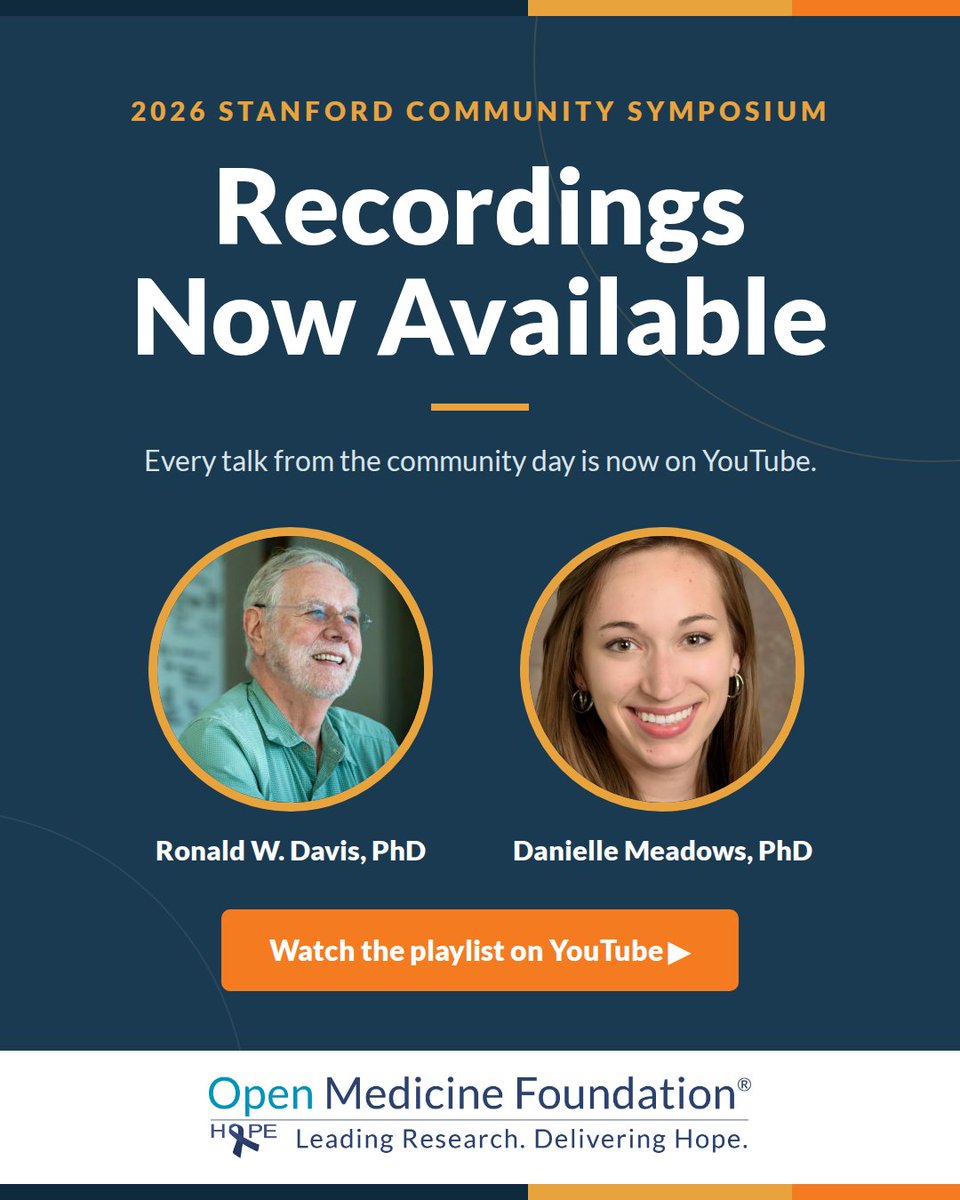
The 2026 Stanford Community Symposium recordings are now on YouTube.
Every talk is now online, including Danielle Meadows, PhD, OMF's VP of Research Programs and Operations, on the clinical trial landscape in ME/CFS and Long COVID.
▶️ https://t.co/sLNzeIFBFJ
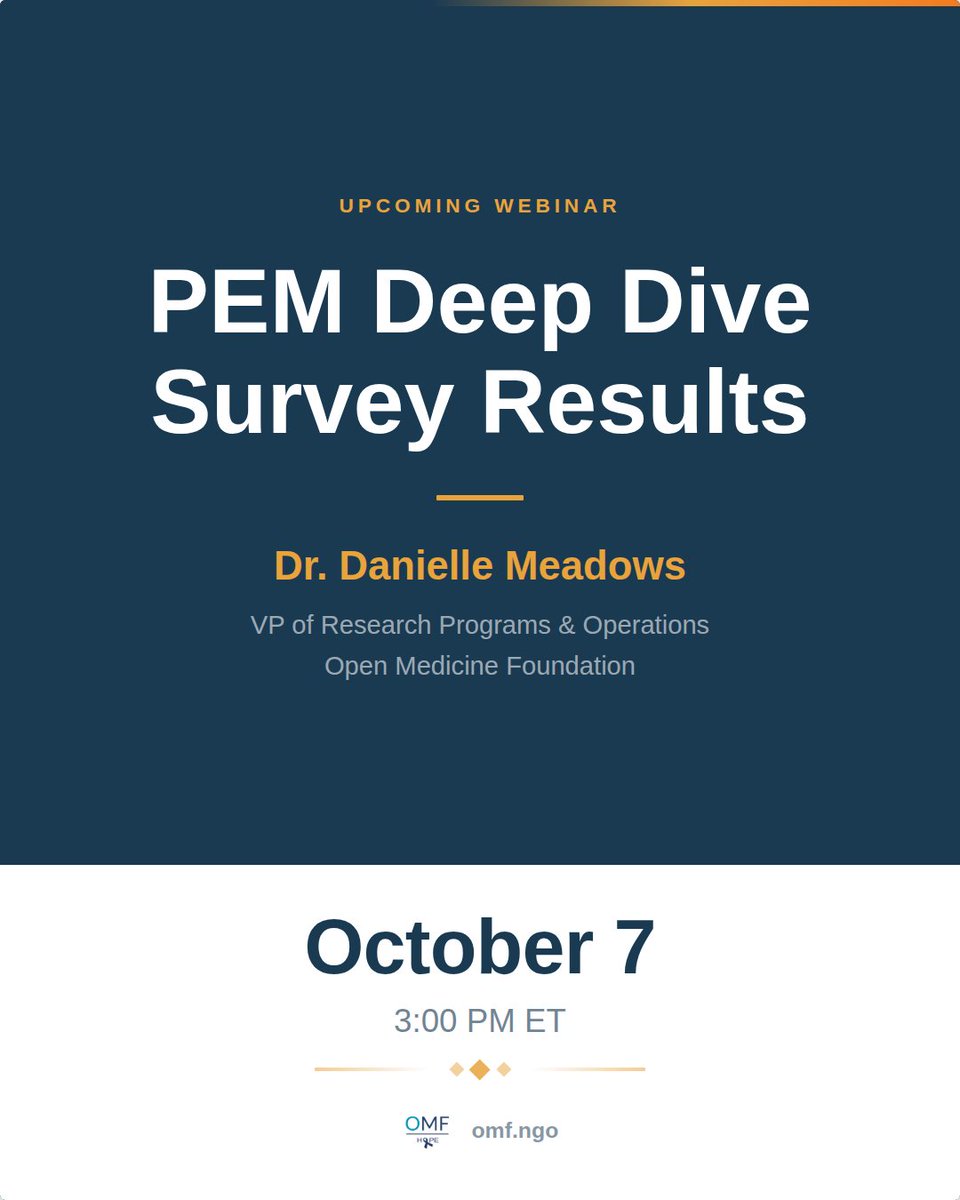
👉 Dr. Danielle Meadows, OMF's VP of Research Programs, will walk through the results in a live webinar on October 7 at 3 PM ET.
🔗 Register: https://t.co/5S0FqXEYNX
🔗 Learn more: https://t.co/yVEgxBheyd
A recording goes out to everyone who signs up!
across the full severity spectrum. Want to go deeper into the results? Join Dr. Danielle Meadows for a webinar on October 7 at 3 PM ET.
🔗 Learn more: https://t.co/XdE6Q96uxn
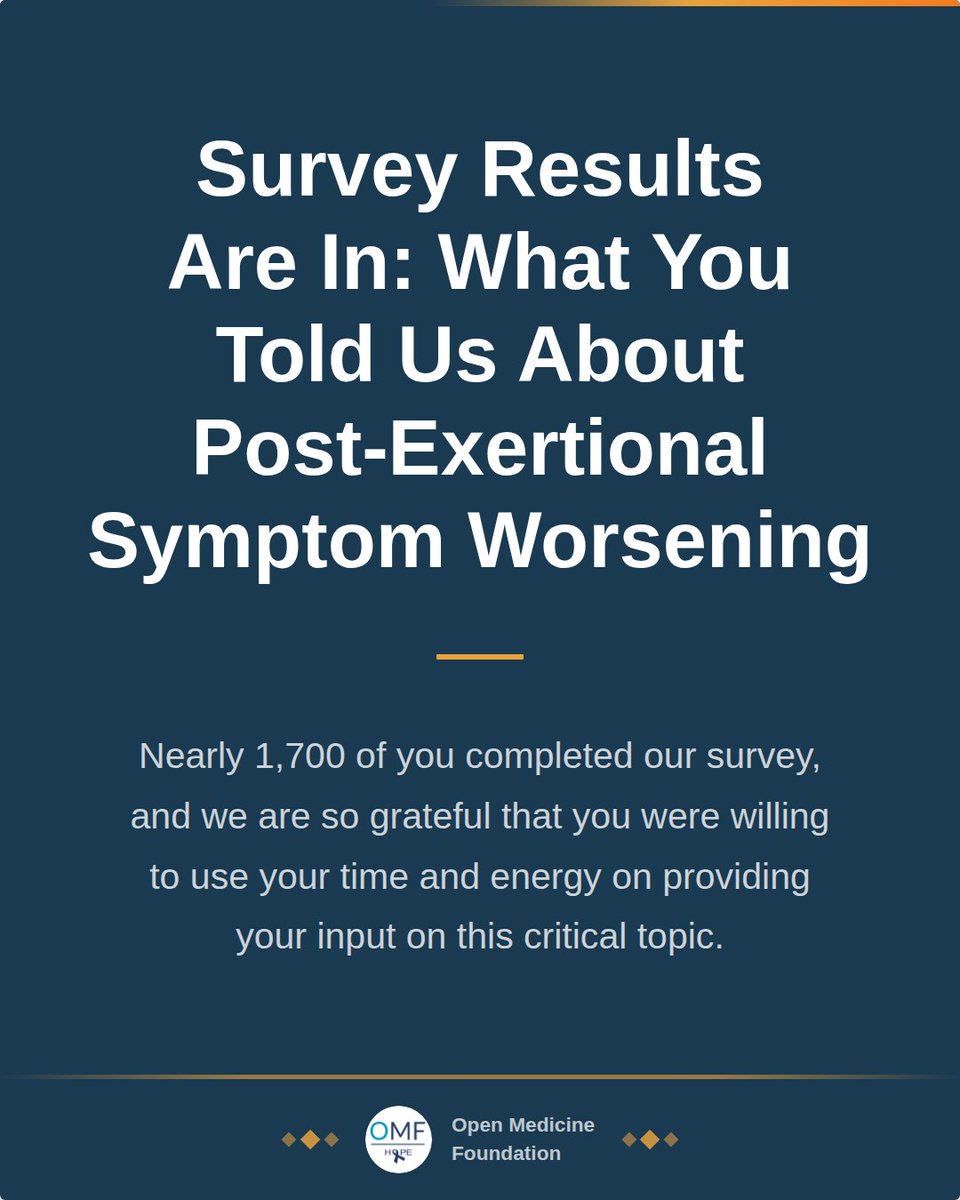
Nearly 1,700 of you completed our deep dive survey on post-exertional symptom worsening.
In the survey we presented two frameworks: a staged model of post-exertional worsening, and a proposed set of outcome measures for decentralized treatment trials.
These survey results go directly into CTN Lite trial design, and we continue to learn from patterns in your responses. They shape the outcome measures we select, the way we define and track PEM, and how we build trial protocols that can accommodate patients