We also had the chance to speak with @HannesWuensche from @rki_de at the Barcamp Open Science and discussed the session about the application of Github/GitLab for #OpenScience#oscibar#oscibar2023 https://t.co/TXoPKEt2tn
Here comes our very first episode of the Barcamp Open Science 2023 in which @tamaraheck and @Guido_Scherp give an overview of the event. We have recorded several episodes with summaries of sessions, which will follow soon. Stay tuned! #oscibar#oscibar2023 https://t.co/5EbY2u32Z7
Ever wondered how a federated research data infrastructure on a national level could look like? Look no further, @ysurevetter took some time to provide a great overview of @NFDI_de in our newest episode: https://t.co/n1Uq9FFnVa
#podcast#osr#NFDI#oneNFDI#ResearchData#RDM
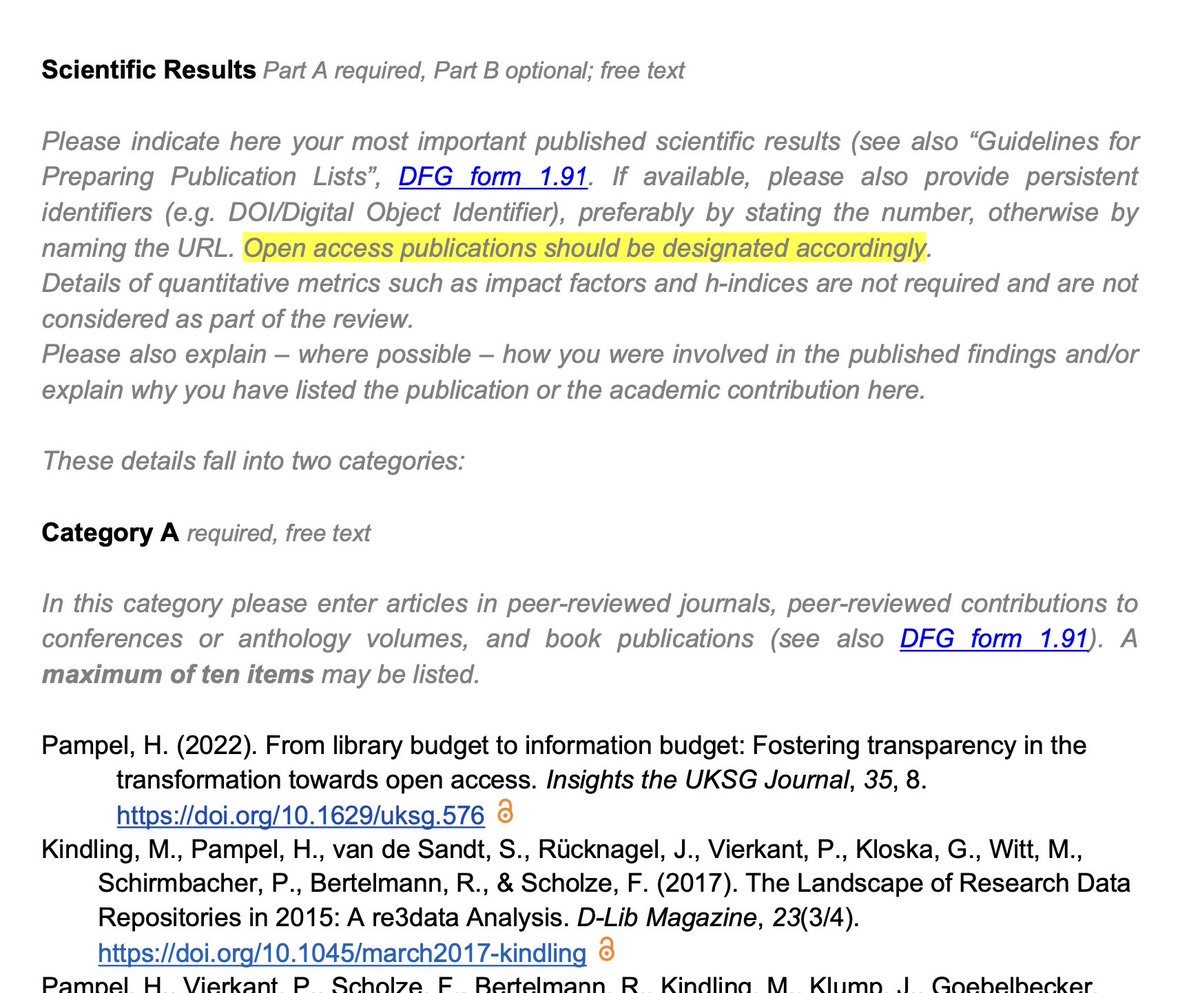
Ab dem 01.03.2023 müssen Lebensläufe für @dfg_public-Anträge nach einem neuen Schema formuliert werden.
Eine der Anforderungen: "Open-Access-Publikationen sollten entsprechend markiert sein."
Siehe: https://t.co/1jOreIkoVF
Falls jemand ein Logo sucht: https://t.co/6l8uEXgsK7
You can listen to the #OpenUpdate podcast either on Apple Podcasts
https://t.co/dHU2uRvnVy
Spotify
https://t.co/jqVqBhVkRw
or Anchor
https://t.co/LY4n4Wf4c8
@chartgerink great stuff, looking forward to season 3(?)! ;-)
How come I haven't shouted out the #OpenUpdate#podcast by @libscie. What @chartgerink started in 2021 as a weekly 5min news update, has developed into fully-fletched interviews, so far in season 2 focused on the UNESCO Recommendations of Open Science.
https://t.co/TUgeQv7Wu5
*M
How come I haven't shouted out the #OpenUpdate#podcast by @libscie. What @chartgerink started in 2021 as a weekly 5min news update, has developed into fully-fletched interviews, so far in season 2 focused on the UNESCO Recommendations of Open Science.
https://t.co/TUgeQv7Wu5
*M
And we have another short episode from last year's Barcamp Open Science, this time with @PeterKraker talking about the Custom Services that in the meantime are available for supporting members of the @OK_Maps #oscibar
https://t.co/PeS1sH8rwQ
As announced, we will successively publish a few more episodes that have accumulated over time. We start with this short interview with @a_succurro from last year's Barcamp Open Science. #oscibar
https://t.co/8JOFmz1XNB
Congrats! Wonderful to see how this project has evolved thanks to the dedication of everyone involved! And congrats @PeterKraker for having been able to gather a great team to give this the necessary drive!
[M]
Es hat eine Weile gedauert, aber wir sind wieder da und haben ein kleines Jubiläum mitgebracht: dies ist unsere 200. Episode. Tja, und wir haben auch in Zukunft noch einiges zu erzählen, also bleiben wir. Kommt mit uns auf eine Reise durch die ersten 200:
https://t.co/jyL37tOIK7
In der aktuellen Episode haben wir mit Dr. Uwe Konrad und @konradfoerstner über das #Positionspapier „Digitale Dienste für die Wissenschaft - wohin geht die Reise?“ gesprochen, das im Dezember von der Arbeitsgruppe #Forschungssoftware veröffentlicht wurde: https://t.co/XubDEvfDUw
@katharinapaulic@konradfoerstner Entschuldigung, glatt die Frage übersehen. Ja, der Podcast sollte bei allen Playern verfügbar sein, die sich aus dem iTunes Podcast Verzeichnis von Apple bedienen. Gegebenenfalls kommt etwas Verzögerung dazu, sollte aber spätestens nach ein paar Stunden da sein. *M
Kurz vor’m Jahreswechsel haben @konradfoerstner und ich noch einmal eine OSR-Klassik Episode aufgenommen und uns thematisch vor allem (neben ein paar News) der Wissenschaftlichen Literatur gewidmet - Lesen, Schreiben/Konzipieren, Finden, „Bewerten“.
https://t.co/xdwEQOCmBi