Science doesn’t sit still, and neither do we. 🏃♂️⚡
️
We strapped the research use only Open-Motion device on for a workout to test our open-source optical platform and see if it could be used for measuring local microvascular perfusion in the bicep.
The result? Clear deep-tissue hemodynamics.💪
Robust, deep-penetrating, and ready for research.
🔗 https://t.co/I3d4I3KlpY
#MedTech #OpenSource #Research
Check out the latest post by our Chief Scientist @Muhammad Zubair
In my previous post, I wrote about the importance of connecting therapeutic ultrasound simulation to measurable quantities.
A related point is that measurement itself is not a single question.
The same tools may appear across transducer characterization, acoustic dosimetry, safety assessment, and biological studies, but they are not always answering the same question.
Check out the latest post by our Chief Scientist, @Muhammad Zubair performance: focal location, beam shape, sidelobes, steering behavior, waveform quality, and output linearity.
But the same scan may not fully define the exposure experienced by a sample or tissue unless the actual exposure condition is also considered.
Radiation force balance can give a useful estimate of total acoustic power, but it does not describe how that power is distributed in space.
Thermal measurements can be closer to the expected biological or thermal consequence, but they depend strongly on exposure duration, phantom properties, boundary conditions, and sensor placement.
Electrical power is still useful to monitor, but mainly as a system input. It should not be treated as acoustic output unless loading, matching, and electroacoustic efficiency are understood.
So the important question is not only:
“What did we measure?”
It is also:
“What decision is this measurement supposed to support?”
For therapeutic ultrasound development, this distinction matters. The measurement needed to characterize a transducer may not be identical to the measurement needed to define exposure, assess safety margins, or interpret a biological outcome.
#TherapeuticUltrasound #FocusedUltrasound #AcousticDosimetry #Hydrophone #RadiationForceBalance #UltrasoundEngineering #MedicalDeviceDevelopment
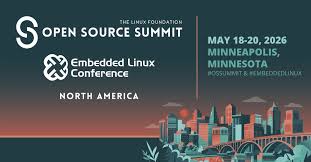
I'm leaving the Open Source Summit with a head cold and a full notebook, and honestly, I'll take that trade every time.
A good summit does two things at once: it gets real work shipped, and it reminds you why the work matters. This one did both. I came home with commits merged, repos clarified, and momentum on things that had been stuck, but the part I keep turning over on the flight home is the conversations.
A few people made this trip for me:
→ @Danica Fine at Snowflake made the case that open-source devrel isn't proprietary devrel with a different logo; the metrics that prove product adoption don't transfer. Her four engagement models (Adopter, Champion, Business, Founder) clarified that at Openwater, we're squarely the Founder, building a community from zero, and should stop borrowing other companies' scoreboards.
→ @Ethan Arrowood at Harper showed how you open-source a core product without gutting the business that funds the engineering, a clear line between the open core and the commercial operations customers pay for. How to commercialize your IP while embracing the open-source community. It was a blueprint.
→ @Brian Proffitt at Red Hat, who is thinking hard about the unglamorous infrastructure that keeps a community healthy long after the launch-day excitement fades.
The through-line: an open community doesn't happen because the code is open. It happens because someone tends to it deliberately, with the right model and honest boundaries. At Openwater, we're betting that an open platform software, hardware, and safety data builds better and more trustworthy medical technology than a closed one could. The summit reminded me that the community is its own discipline.
That's the job. Tending it.
Grateful to everyone who shared what's working and what isn't. The honesty about the hard parts is worth more than any keynote.
Now, to find some tea and sleep off this cold.
If you're building or funding open-source communities, especially where the stakes are high, what's the one thing that made yours sustainable?
—
Openwater's platform is exclusively intended for research purposes and is not cleared or approved by the FDA for clinical use.
I'm Dan Blizinski, Director of Open Source Business Strategy at Openwater, and this week I am at the Open Source Summit in Minneapolis. I want to test one argument on this crowd: the next great open-source transition isn't code or models - it's data.
Open source moves in roughly ten-year waves, and each one works the same way: a closed layer becomes shared once coordination beats control. The 90s closed Unix to Linux. The 2000s closed databases to PostgreSQL and MySQL. The 2010s closed cloud stacks to Kubernetes and the CNCF.
The next wave is data. And data has a property code, and models don't: it's already everywhere. Every company, every hospital, every research site owns some. The bottleneck has never been supply; it's coordination. What's missing is a community license for data, the role the GPL and Apache licenses played for code.
That's the problem Openwater works on in medicine. We build open blood volume imaging and neuromodulation hardware and software, but the real unlock is shared safety and efficacy data. Three companies control ~72% of the medical imaging market, and 3.5 billion people lack basic access. This is not a science problem. It's a coordination problem, the exact kind open source was built to solve, and the kind the data wave solves next.
At the Summit and want to have this conversation? Find me.
#OSSummit #OpenSource #MedTech
Big science needs flexible tools. The modularity and broad research applications of the Open-LIFU system make it a perfect fit for the Sharma Lab’s multidisciplinary neurological research at NC State and UNC. As a portable, noninvasive, open-source LIFU platform, Open-LIFU helps researchers explore targeted neuromodulation across conditions like spinal cord injury, transverse myelitis, and essential tremor—with more flexibility, more control, and a lot more room to discover.
https://t.co/oKE6g7xj7J #FocusedUltrasound #opensource #neurotech
Thank you, https://t.co/UmNMwzB6gl and @Stephnie Lieggi for the invitation to this years UC Open Summit held at UC Berkley. We love talking about our open-source medical device vision and how university systems like University of California OSPO departments help contribute to making technologies affordable and available to all.. Wonderful event.
I spent this past weekend in a room where the future was being assembled by hand.
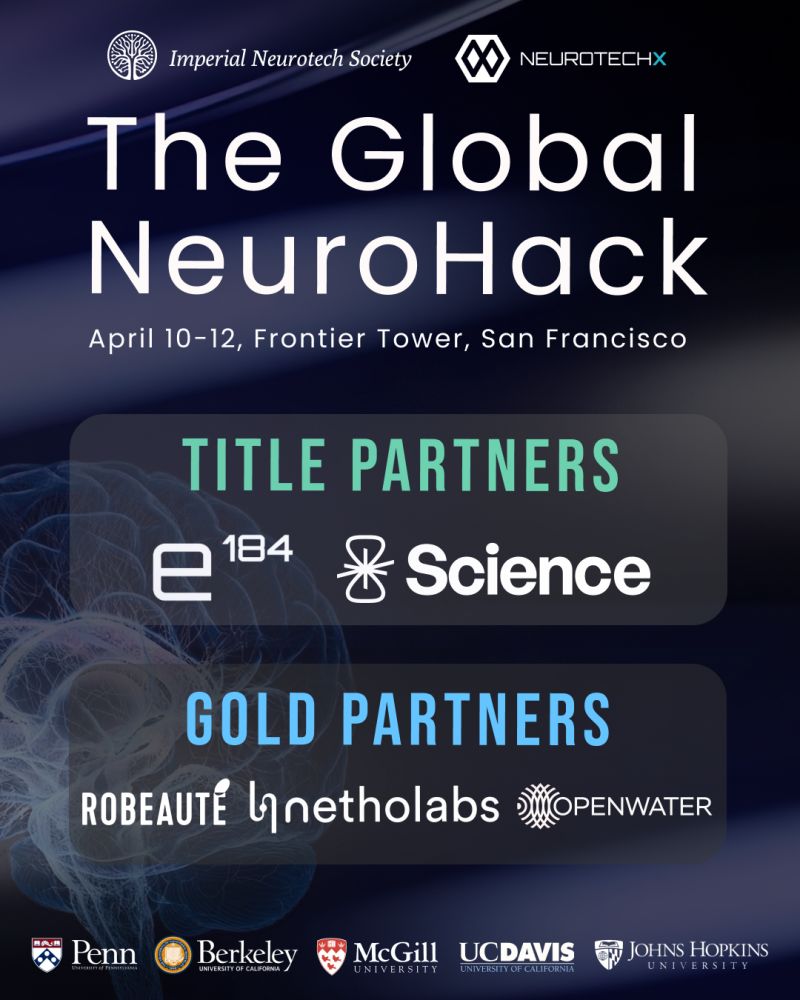
The Global NeuroHack, hosted by Imperial Neurotech Society and NeurotechX, gathered some of the sharpest minds I've encountered in a long time. Not in the polished, conference-badge sense. In the working late, whiteboard-covered, shipping a prototype before sunrise sense.
Students from Penn, Berkeley, McGill, UC Davis, UT Austin, Imperial College, and Johns Hopkins. The kind of minds that don't wait for permission to build.
Jack London once wrote about men who headed north because they had to know what was at the edge of the map. These students have that same pull, except their frontier is the human brain. And they are moving toward it with conviction.
What struck me most wasn't any single project. It was the quality of obsession in the room. It wasn't academic curiosity performing itself. This was a signal processing meeting, a neuroscience meeting, the genuine belief that the brain's mysteries are solvable and that they are the ones who will solve them.
The future of neurotech is accelerating faster than the press releases suggest. BCIs. Non-invasive diagnostics. Cognitive health tools that don't yet have names. The students building them this weekend will be the ones naming them in five years.
Seeing Openwater represented alongside the broader ecosystem builders, researchers, and operators reminded me of something worth saying plainly: the ecosystem is converging. The distance between curiosity and clinical impact has never been shorter.
Universities get criticized. Rightly, sometimes. But rooms like this remind me that scientific rigor and genuine hunger still live inside them, incubating, iterating, refusing to be theoretical when the real thing is within reach.
If this weekend is any indication, the next decade of neuroscience will reshape how we understand and improve what it means to be human.
If you're building in neurotech, let's connect.
If you're attending this weekend, come find us. I'd love to talk about what we're building, what we're opening up, and, honestly, what problems you're trying to solve. Some of the best contributors to open-source medical platforms have started exactly this way.
This weekend, Openwater is showing up as a Gold Partner at the Global NeuroHack, April 10-12, at Frontier Tower right here in San Francisco.eyond, this is exactly the kind of event we exist for.
A hackathon full of neuroscience-obsessed engineers and researchers? That's not just our target community. That's the community that builds the future we're working toward.
If you're attending this weekend, come find us. I'd love to talk about what we're building, what we're opening up, and honestly what problems you're trying to solve. Some of the best contributors to open-source medical platforms have started exactly this way.
See you there. 🧠
#NeuroHack #Neurotech #OpenSource #OpenLIFU #MedicalDevices #Openwater
A new technology may help primary care physicians meet the growing need for comprehensive foot exams for patients with diabetes https://t.co/zLb9g3iRgG #hemodynamics#medtech#diabetes
Six months ago, I wasn't sure this would work.
Building an open-source community around medical devices in a field dominated by proprietary platforms and $119M development cycles seemed like a long shot.
The skeptics raised valid concerns:
- "Open source doesn't work for hardware."
- "Researchers won't contribute, they're too busy."
- "No one will trust medical tools they didn't build themselves."
Our early traction tells a different story.
In the past week alone, we've heard from conference organizers, hackathon sponsors, UX designers offering to contribute, and a growing wave of neuroscience researchers who want to connect and learn more.
What's driving this?
People are ready for an alternative. They don't want another proprietary black box, and certainly not another vendor lock-in. They want tools they can inspect, modify, and improve technology that gets better because a community makes it better because they actually trust and use it.
At Openwater, we're a small team with a clear belief: medical technology should serve everyone, not just those who can afford it. We're building in public because we think that's how trust gets earned.
If you share this vision, we'd welcome the conversation:
→ Researchers looking for open infrastructure instead of starting from scratch
→ Engineers who want their work to have a meaningful impact
→ Clinicians who see access gaps and want to help close them
Get involved:
🔗 Join the community: https://t.co/Kmx4GQ5pNa
Want to connect directly?
📧 [email protected]
💬 DM me on LinkedIn: https://t.co/pnG0RiLMxa
The best is yet to come, and we're grateful for everyone joining us on this journey.
#OpenSource #MedTech #HealthcareInnovation #MedicalDevices #Neuromodulation #BuildInPublic #Community
Wearables as an on-ramp to Openwater's bigger vision.
The healthcare wearable market hit $117 billion this year. One in three Americans now wears a device that tracks their health. Every major tech company is racing to put more sensors on more wrists.
And almost none of it can actually diagnose or treat anything.
We're in a strange moment. Consumer wearables are getting more sophisticated, with ECG, SpO2, and continuous glucose monitoring, while these devices that can genuinely detect a stroke, modulate a neural circuit, or target a tumor remain locked behind proprietary walls, priced for institutions, and inaccessible to most of the world.
Here's what most people are missing: the hardware convergence isn't coming. It's already here. The camera sensors shipping in billions of smartphones now have pixel sizes on the order of the wavelength of near-infrared light, the same light used for medical imaging. The same semiconductor manufacturing lines that make your phone can make medical devices at smartphone-scale costs.
At Openwater, we started with two platforms: Open-LIFU for focused-ultrasound neuromodulation and Open-MOTION for optical blood-flow imaging. But our founder, Mary Lou Jepsen's vision was never two devices. It was and is a single open-source platform designed to span cancer, stroke, depression, autoimmune conditions, neurodegenerative disease, long COVID, consciousness research, and beyond. Light, sound, and electromagnetics. All are built on high-volume semiconductor manufacturing lines. All open source.
The bet is that the physics used in medicine for decades can do far more than current devices exploit. Thousands of peer-reviewed papers point to targeted photons and acoustic waves that can activate specific cell types, modulate neural circuits, detect hemodynamic dysfunction, and accelerate healing. The hardware to do this at scale has never existed. Until now.
The next wave of devices won't just monitor your body. They'll interact with it. Measuring blood flow AND delivering focused ultrasound. Diagnosing AND treating. Sensing AND intervening. One closed loop.
And who builds the platform layer for that future matters enormously. If it's proprietary, we get more of what we have. If it's open source, if the hardware designs, the software, and the safety data are shared, then every research team in the world can run trials in parallel. Every contribution strengthens the shared foundation. Every device deployed makes the platform smarter. It's the same engineering logic that put Linux under 90% of cloud infrastructure.
Right now, research labs from MIT to UCLA to ETH Zurich are already building on this foundation. Not apps. Not incremental improvements to heart rate monitors. Hard physics. Open source. In clinical research now. And every one of those platforms needs contributors, engineers, researchers, clinicians, and builders who want to help shape what comes next.
The future of healthcare wearables isn't a better smartwatch. It's a platform, and that is what Openwater is pioneering. Come join us.
Openwater's platforms are exclusively for research purposes and are not cleared by the FDA for clinical use.
#Openwater #OpenSource #MedicalDevices #Wearables #MedTech #HealthcareInnovation #OpenSourceHardware #DigitalHealth
Behind the scenes — volunteers, sunshine, and real hardware on a San Francisco rooftop
Sometimes the best work happens when you step outside.
We took our Open-Motion device up to the roof on one of those rare perfect San Francisco days — blue sky,
Transamerica Pyramid in the background, zero fog — and ran a live scan with three of our incredible volunteers.
That's David Paribello supervising on the left, Luca Gandrud bravely lying back as our test subject, and Mykhaylo Danikhno running the scan. No lab coats. No sterile fluorescent lighting. Just a rooftop, a laptop, and a piece of open-source medical imaging hardware doing exactly what it was designed to do.
This is what building in the open actually looks like. Real people, real hardware, real sunshine.
Grateful for volunteers like David, Luca, and Mykhaylo who show up and make this thing real — one scan at a time.
#Openwater #OpenSource #MedicalDevices #MedTech #OpenSourceHardware #BehindTheScenes #SanFrancisco
Scale23X conference experience — open-source energy meets Openwater's mission
Last week, I walked into SCaLE 23x in Pasadena and felt something I haven't felt at a healthcare conference in years:
Pure geek optimism without a sales pitch.
Open-source builders, kernel hackers, university researchers, and makers all sharing freely. No NDAs at the door. No walled-off demos. Just people showing their work and inviting others in.
A few sessions stuck with me.
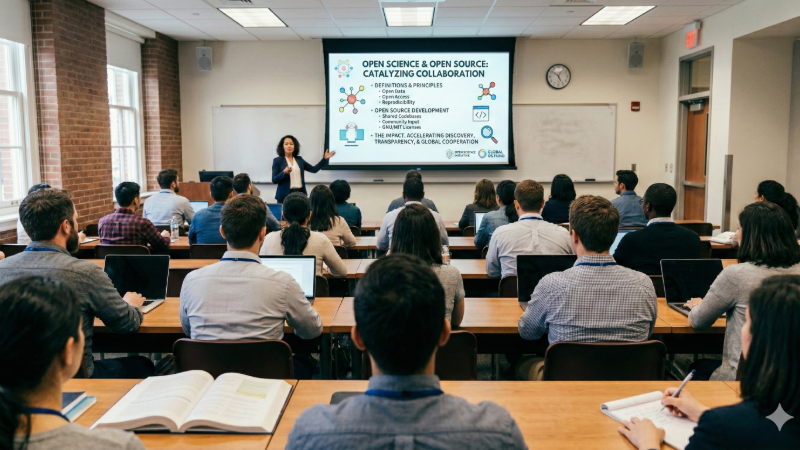
Stephanie Lieggi from UC Santa Cruz's OSPO and Cyril Oberlander from Cal Poly Humboldt made the case for California's public universities as coordinated open-source engines: 32 campuses, 750,000 students, and a track record that includes Jupyter, RISC-V, and Apache Spark. Their point: publicly funded research should be treated as public infrastructure. When universities build in the open instead of in silos, the impact compounds for everyone.
That's the exact thesis we're pursuing at Openwater.
Then Jowan Österlund from MYRA described building a self-powered biosensor that turns your body into a real-time health data stream owned by you, not a platform. Open-source principles applied to the most personal data we have.
And the AI sessions throughout the week were genuinely insightful. Talks on local models, agentic systems, and open AI tooling reinforced something I've been thinking about a lot: the people building these tools don't need a medical degree to transform healthcare. They need an open platform and a reason to care.
That's what we're building at Openwater, an open-source platform for medical imaging and neuromodulation. We're early in this journey, and we're actively inviting contributors to help shape it. The thing I want people to know is that you don't need medical training to make a meaningful contribution. If you write Python, improve documentation, build 3D tooling, or work on AI models, there's real work waiting for you that will directly impact patient care.
The energy at SCaLE reminded me that the open-source healthcare movement won't be built by medical device companies alone. It's going to be built by communities like this one.
If that sounds like something worth building, come join us. DM me Dan Blizinski or email me [email protected], let's talk.
🔗 Explore our repos: https://t.co/CvNKJfcQpL
🔗 Join the community: https://t.co/hn4pZBIgxa
#SCaLE23x #OpenSource #MedicalDevices #HealthcareInnovation #OpenSourceHardware #MedTech #AI #CommunityDriven
We are excited to announce the launch of our Lunch and Learn Colloquium Series! https://t.co/jh8axQ7tk5 The first talk will be by our own Reza Rasouli and titled: "Low-Intensity Focused Ultrasound as a Strategy for Microclot Lysis". Register here: https://t.co/dn8sdS33jV
Incentive design and network effects — the mechanics of how building open-source actually works
The Linux kernel has 20,000+ contributors.
No one owns it. No single company controls it. Yet it powers 90% of the world's cloud infrastructure, every Android phone, and most of the internet.
How?
Not charity. Not altruism. Coordination design.
Linux created a system where contributing was easier than not contributing. Where sharing code made your own work more valuable. Where the protocol rewarded participation.
Medical devices need the same design.
Right now, a neuroscience lab at UCLA develops a calibration tool. A team at Johns Hopkins builds something similar. Researchers in Singapore create their own version. None of them knows about each other's work.
We have already stated that this isn't a competition. It's a coordination failure.
Here's what a new coordination layer looks like, and how Openwater is revolutionizing this approach:
- Shared infrastructure — Foundational tools that every lab needs, built once, maintained by many. No one rebuilds treatment planning from scratch.
- Compounding safety data — When one institution validates a protocol, that validation strengthens every subsequent IRB submission. Network effects for regulatory confidence.
- Permissionless contribution — A grad student in Mumbai can improve an algorithm and have that improvement deployed at Stanford within weeks. No gatekeepers.
- Aligned incentives — Contributors get recognition, co-authorship, and access. The more you put in, the more you get out.
This is how every successful open-source ecosystem works or should.
Kubernetes. TensorFlow. PyTorch. They all follow the same pattern:
Make the cost of contribution low.
Make the value of participation high.
Let network effects do the rest.
Medical devices aren't special. They're just late.
🔗 Start contributing: https://t.co/tKzFVZ9cOw
🔗 Explore the platform: https://t.co/a571f8B4su
The companies that win the next decade won't be the ones with the best IP.
They'll be the ones that build the best ecosystems. We are in it to win it, together.
#OpenSource #NetworkEffects #Coordination #MedicalDevices #IncentiveDesign #Web3 #BuildInPublic