12x speedup on complex tasks. 9x on simple ones.
Anthropic analyzed millions of real Claude conversations. The harder the task, the bigger the AI productivity gain.
Every ops team running AI on the easy work first is leaving the largest gains on the table.
I broke down where to actually point AI in your workflows, where it makes your team actively worse, and how to split rules from judgment.
Claude Academy is now live.
Whether you're figuring out what AI is or already using Claude every day, there's a path that meets you where you are. The courses and tutorials are free and open to anyone at https://t.co/WRiSRAvK6l
A support team shipped AI-assisted ticket routing. Worked great for three weeks.
Then a billing policy changed. The AI kept routing tickets to the wrong queue. Support leads corrected the same misroute every day.
The reviewer caught it every time.
That was the problem.
Review was absorbing the failure. Nobody owned the fix.
12x speedup on complex tasks. 9x on simple ones.
Anthropic analyzed millions of real Claude conversations. The harder the task, the bigger the AI productivity gain.
Every ops team running AI on the easy work first is leaving the largest gains on the table.
I broke down where to actually point AI in your workflows, where it makes your team actively worse, and how to split rules from judgment.
For my first post, I’m sharing a letter @NVIDIA signed on why open models matter.
AI will transform every industry, power every company, and be built by every country.
Open models strengthen safety and cybersecurity, accelerate innovation and diffusion, and enable sovereignty.
The world needs both frontier closed models and frontier open models.
https://t.co/AUKzoQ5Ikb
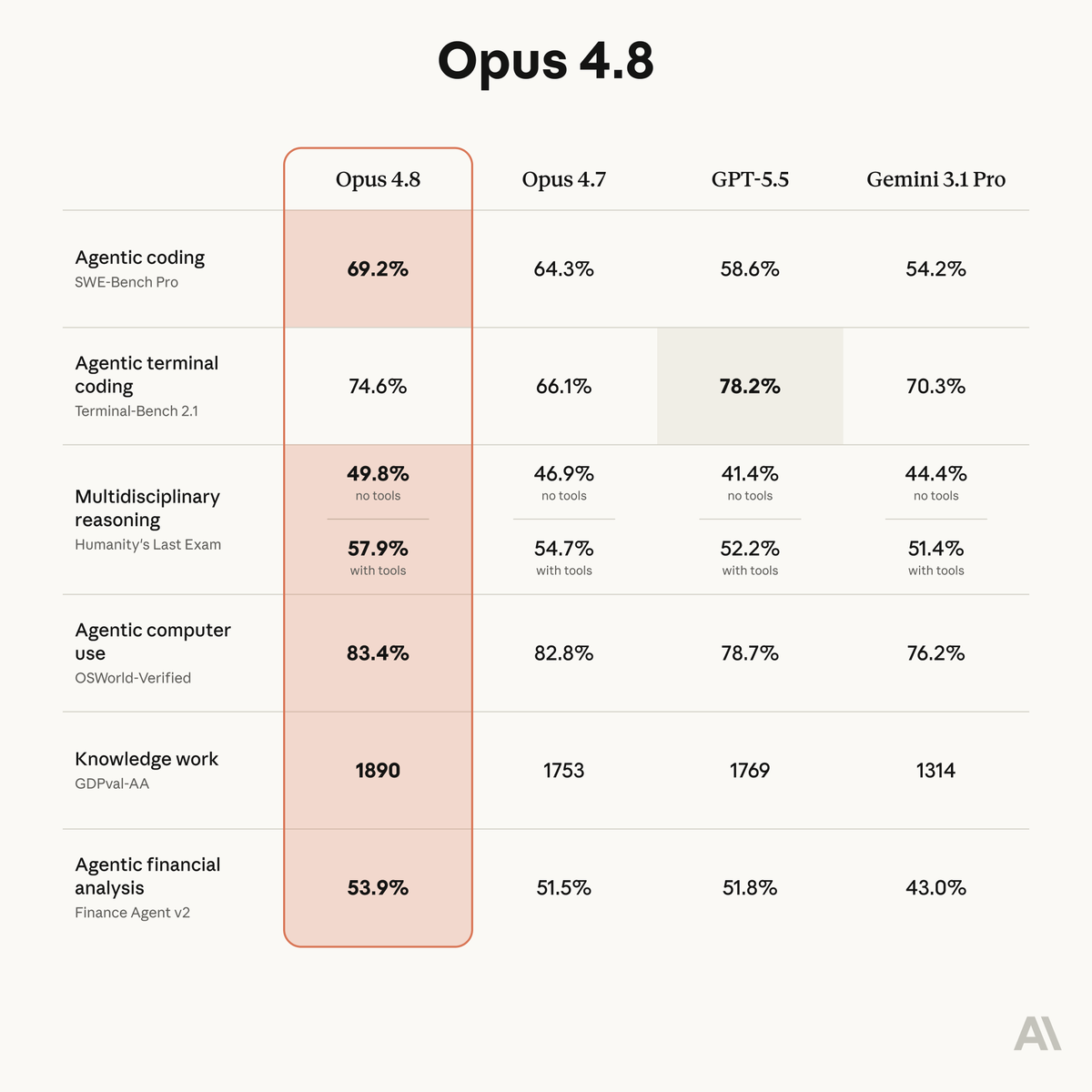
Introducing Claude Opus 4.8: it builds on Opus 4.7 with sharper judgment, more honesty about its own progress, and the ability to work independently for longer than its predecessors.
Available today at the same price.
AI workflows break differently than spreadsheets.
A spreadsheet throws an error. A formula goes blank. Someone notices within a day.
An AI workflow keeps running. The output still looks reasonable. But the source data changed two weeks ago and nobody updated the instructions.
The prompt still runs while the workflow stops being trustworthy.
AI review breaks two ways.
The reviewer redoes the whole task. The AI saved nothing.
Or the reviewer skims and approves. The AI just added a rubber stamp.
Four fields fix both: reviewer, check, decision, failure log.
New issue covers how to design the review step before the prompt.
A common AI review failure is defining a checkpoint without defining the review behavior.
The workflow says a human checks the output.
It does not say what the human checks.
Most teams build the wrong AI workflow first.
The flashy demo.
The loudest request.
The thing some manager keeps pushing.
Three weeks later, the output is shaky, the cleanup lands on someone else, and the team stops trusting it.
I wrote a five-question filter for spotting bad AI workflow bets before they ship.