Novo Nordisk spent $16.5 billion buying a contract manufacturer to fix its weight-loss drug supply problem. Then, in January 2026, it launched a pill that does not need any of that infrastructure.
This is one of the most expensive supply chain pivots in pharma history. And it tells you everything about how fast operations strategy has to move in 2026.
The story so far:
a) Wegovy and Ozempic injections need to be kept cold at every step from factory to patient. That means specialized cold-chain storage, sterile fill-and-finish lines, and refrigerated logistics.
b) Demand exploded. For two years, both Novo Nordisk and Eli Lilly were on the FDA shortage list.
c) Novo Nordisk bought CDMO Catalent for $16.5 billion to lock in fill-and-finish capacity. Eli Lilly poured $9 billion into a new Indiana manufacturing campus.
d) Then Novo launched the first oral GLP-1 pill for obesity (Rybelsus 25mg), with Lilly's orforglipron pill on the way.
The pill changes the supply chain math entirely. No refrigeration. No sterile injectables. No specialized cold-chain logistics. A normal pharmaceutical packaging line can produce it. And it can be shipped to remote areas, low-income markets, and rural pharmacies that cold-chain injections could never reach.
For Eli Lilly and Novo Nordisk, this opens up roughly 40% of the world's population (China, India, Brazil, Canada, Turkey), where patents are also nearing expiry.
Three takeaways for operations leaders:
1) Yesterday's bottleneck can become tomorrow's stranded asset. Cold-chain capacity was the right investment for the injection era. The pill era values different things.
2) Vertical integration is insurance, not a strategy. Novo's Catalent deal still made sense as a hedge. But owning capacity does not protect you from product-level innovation that changes what capacity you need.
3) The best supply chain decisions answer the next product, not the current one. Operations and R&D need to be in the same room far more often than they usually are.
If the next version of your product needed half the infrastructure you have built, would your supply chain be ready, or stranded?
#SupplyChain #Operations #Pharma #EliLilly #NovoNordisk #ColdChain #GLP1 #Manufacturing #VerticalIntegration #OperationsManagement #Industry40 #HealthcareSupplyChain #PharmaSupplyChain
BMW has 3D-printed over 1.6 million parts since 2020. That number stopped being a science experiment a while ago.
What caught my attention isn't the headline. It's the quieter line underneath: BMW plans to start series production using wire arc additive manufacturing from 2027. Series production. Not prototypes, not jigs, not one-off tooling, actual parts going into actual cars, at volume.
The first is BMW's IDAM project (Industrialization and Digitization of Additive Manufacturing), which successfully implemented a fully automated, digitally networked 3D printing production line for automotive series processes
Here's why that matters from an operations lens. For two decades, 3D printing's real job in automotive was speed: print a fixture overnight, test a concept by Friday. It lived next to the assembly line, not on it. Moving to series production means it now has to meet the part of manufacturing that's genuinely hard, repeatability. A printed bracket has to be identical the 50,000th time, certified, traceable, and costed against a stamping press that's been optimized for 60 years.
That's the problem most people skip past. The hard question in additive isn't "can we print it?" It's "can we qualify it?" Process variation in metal printing, thermal history, porosity, and residual stress is far messier to control than in a die that simply repeats its own geometry. The bottleneck has quietly shifted from the printer to the inspection and qualification pipeline behind it.
So the interesting race isn't who prints the most parts. It's who builds the quality-assurance and certification infrastructure to trust those parts at scale. BMW's Oberschleißheim campus is really a bet on that backend, not on the machines.
Which makes me wonder: in five years, will additive's competitive edge be the printers themselves, or the data and qualification systems nobody puts in the brochure?
#supplychain #operationsmanagement #industry40 #additivemanufacturing #3dprinting #manufacturing #automotive #digitalmanufacturing #BMW #operations
The owner of Oreo and Cadbury just said the quiet part out loud: it is bringing more manufacturing and packaging back in-house.
For decades, the rule was simple. Outsource what is not your core. Pay specialists to make it, package it, and ship it. Cheaper, faster, leaner.
This month, Mondelez International quietly broke that rule.
Speaking to investors, COO and CFO Luca Zaramella said the company plans to bring more manufacturing and packaging work back inside its own four walls. The reason he gave was direct: it will save quite a bit of money.
The deeper context is what makes this interesting:
A) Mondelez has been hit hard by cocoa price shocks, a major input it cannot fully control.
B) Iran war ripple effects continue to push up input and delivery costs across the industry.
C) The company is investing in cell-cultured and fermented cocoa as alternatives, an Industry 4.0 sustainability bet.
D) The same week, the company elevated Zaramella to a combined COO and CFO role, putting operations and finance under one decision-maker
This is not a one-company story. Across consumer goods, automotive, and electronics, the outsourcing pendulum is quietly swinging back. When external partners become a source of cost shocks rather than savings, owning the work starts to look cheaper again.
Three simple takeaways for operations leaders:
1) Outsourcing decisions made in calm times need to be re-tested in stormy ones. What was efficient at one price level can become fragile at another.
2) Vertical integration is a hedge, not a step backward. When supply, prices, or partners turn unstable, in-house capacity buys you control.
3) Operations and finance belong at the same table. Mondelez putting both under one leader is a signal of how strategic supply chain decisions have become.
Which parts of your operation are you outsourcing today that you would think twice about if you started over now?
Image credited to @MDLZ
#Mondelez #SupplyChain #Operations #VerticalIntegration #Manufacturing #ConsumerGoods #CocoaSupplyChain #Insourcing #OperationsManagement #Industry40 #BusinessStrategy #FMCG
Boeing keeps $14 billion in spare parts sitting in warehouses around the world.
Most of it doesn't move for years.
But the moment a plane is grounded, the clock starts. Every hour on the ground costs tens of thousands of dollars. So airlines stock more. Buffer everything. Hope the right part lands in the right place.
That approach is starting to break down.
Some manufacturers are now printing critical spare parts on demand using additive manufacturing right at the point of need. No giant warehouse. No cross-continental shipment. Just a certified digital file and a machine.
GE Aviation already has 3D-printed fuel nozzles flying on commercial aircraft. Airbus prints over 1,000 components per plane. The technology is no longer the bottleneck.
Here's what I keep coming back to as someone who researches this:
The real problem isn't whether additive manufacturing can produce the part. It can.
The question is which parts should you print, and when?
Not everything makes sense to manufacture on demand. Getting that decision right using failure probability, demand patterns, and lead time data is where the actual value is created. Get it wrong, and you've traded one inventory problem for a production planning problem.
That's the decision no one talks about. That's the problem worth solving.
Image credit to - The Wall Street Journal
#supplychain #additivemanufacturing #spareparts #manufacturing #operationsmanagement #3Dprinting #industry40 #aerospace #operations
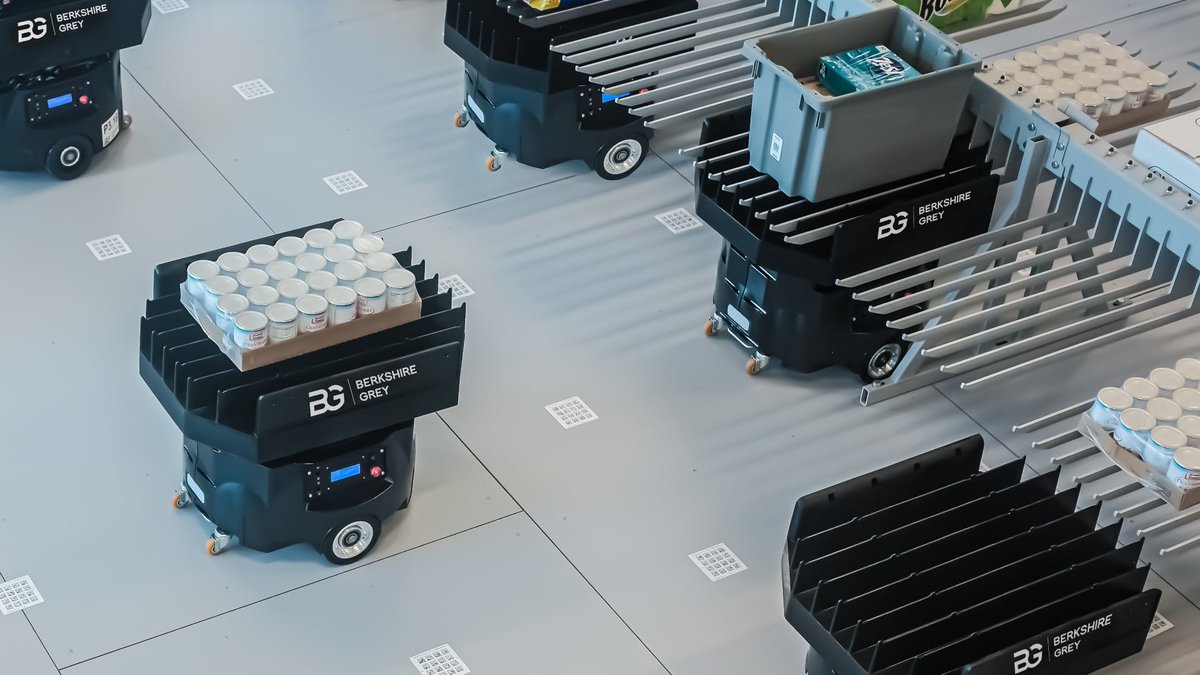
Maersk put robots into a UK warehouse and tripled its sorting speed. Here is the part most people miss.
Warehouses face a constant squeeze: more orders, more pressure to ship fast, and not enough hands to do it all. Sorting, the job of getting the right item to the right place, is often where everything slows down.
In the UK, Maersk partnered with a robotics company called Berkshire Grey to fix this. The result was not a small improvement. It was a big one.
The numbers:
A. Sorting speed tripled.
B. Inventory pickup rates improved by 33%.
C. Faster, more reliable order handling.
D. Less of the repetitive, tiring work that wears people down
But here is the part most people miss. The robots did not replace the warehouse team. They took over the fast, repetitive sorting so people could focus on the work that actually needs human judgment, like handling exceptions and solving problems.
This is the quiet truth about good automation. The best deployments do not aim for empty warehouses. They aim for people doing better work, supported by machines doing the boring, exhausting parts.
Three simple takeaways:
1. The slowest step in your process is usually where automation pays off most.
2. A tripling of speed is not just efficiency. It changes what the whole network can promise customers.
3. The smartest automation removes the worst tasks, not the people.
Where in your operation is the one bottleneck that, if it moved three times faster, would change everything downstream?
@APMollerBRK@Maersk@BerkshireGrey
image credit: @FreightWaves@Maersk@APMollerBRK
hashtag#SupplyChain hashtag#Maersk hashtag#Warehousing hashtag#Robotics hashtag#Automation hashtag#Logistics hashtag#Operations hashtag#Industry40 hashtag#OperationsManagement hashtag#FutureOfWork
What happens to a port when a sudden traffic jam or a worker strike hits? Maersk now tests it on a copy first.
Ports are some of the most stressful places in the global economy. One delay, one strike, one storm, and the ripple spreads across thousands of shipments. The hard part is you cannot exactly "experiment" on a live port handling millions of containers.
So Maersk built a workaround: digital twins of its ports.
Think of it as a practice version of a real terminal. It runs on live data from the actual port, so it behaves like the real thing. Port teams can then ask difficult "what if" questions and see what breaks, without anything breaking in reality.
What this makes possible:
(a)Testing sudden disruptions, like traffic jams or labor strikes, in a safe digital copy.
(b) Spotting delays before they spread across the network.
(c) Smarter rerouting of ships to dodge congested ports.
(d) Real-time visibility across terminals, ships, and warehouses
Maersk's data chief put it simply: they pull inputs from terminals, sensors, and data across the network, and let the copy do the worrying.
This is resilience by rehearsal. You prepare for the bad day before it arrives.
Three simple takeaways:
1. You cannot stress test reality, but you can stress test a copy of it.
2. The goal is not to predict the future perfectly. It is to be ready for several versions of it.
3. Visibility is only useful if it helps you act before the problem spreads.
If you could run a "practice version" of your operation and throw one disaster at it, what would you test first?
A.P. Moller - Maersk Maersk Line, Limited
hashtag#SupplyChain hashtag#Maersk hashtag#Logistics hashtag#DigitalTwin hashtag#PortOperations hashtag#SupplyChainResilience hashtag#Operations hashtag#Industry40 hashtag#OperationsManagement hashtag#Shipping
Siemens once faced a shortage of a highly specialized resin used in medical packaging. AI helped it find a new source fast.
Here is a problem that quietly terrifies operations leaders: a single, hard-to-replace material runs short, and there is no obvious backup. The production line is days away from stopping, and finding a new supplier the old way takes weeks of calls, emails, and vetting.
Siemens hit exactly this. It needed Surlyn, a specialized resin made by DuPont, used in packaging for medical diagnostic products. When supply tightened, the clock started ticking.
Instead of the slow manual hunt, Siemens used an AI supplier-discovery tool called Scoutbee. It scans the world for alternative sources, reads what companies actually make and who they serve, and surfaces options a keyword search would miss.
Why this matters for everyone running a supply chain:
(a) The hardest part of a shortage is not knowing who else can supply you.
(b) Finding, vetting, and onboarding a new supplier the traditional way is painfully slow.
(c) AI tools can shrink that search from weeks to days.
(d) Companies like Walmart, Tyson Foods, Koch Industries, Maersk, and Unilever are doing the same.
The clever move is doing this before a crisis, not during one. Many of these firms now pre-qualify backup suppliers in advance, so the answer is ready before the question becomes urgent.
Three simple takeaways:
1. Your biggest risk is often a single material with a single source.
2. Speed of finding a backup is now a real competitive edge.
3. The best time to find your plan B is before you need it.
Which single supplier, if they vanished tomorrow, would hurt your operation the most? And do you have a backup ready?
@Siemens@DuPont
#SupplyChain #Siemens #AI #Procurement #SupplyChainResilience #RiskManagement #Operations #Industry40 #OperationsManagement #SupplierManagement
A 1-degree rise in temperature can swing ice cream sales dramatically. Unilever is using AI to stay ahead of it.
Here is a problem that sounds simple but is brutally hard: how much ice cream should you make, and where should you send it?
Make too much, and it melts in storage, and you lose money. Make too little, the shelves go empty on the one hot weekend that mattered. And the thing that drives all of it, the weather, is the one thing nobody controls.
Unilever's ice cream division tackled this head-on. They built AI systems that read weather data and turn it into production and delivery plans.
The results so far:
A) Forecast accuracy improved by 10% in Sweden.
B) Better decisions on how much to sell, where, and even which freezer cabinet to stock.
C) Orders sent to the right places at the right time, with less waste
In the words of the division's head: "Using AI, we now understand where to sell, how much we are going to sell, in which cabinet we are going to sell, and when and where to send our orders."
That is, demand planning is getting genuinely smarter.
Three simple takeaways:
1) The biggest variable in your business might be something you cannot control. The edge comes from predicting it, not fighting it.
2) Small accuracy gains matter. A 10% better forecast means real money saved and less waste.
3) AI works best when pointed at one clear, painful problem, not sprinkled everywhere.
What is the one outside force that throws off your planning the most, and could you predict it better than you do today?
@Unilever
#SupplyChain #Unilever #AI #DemandForecasting #Operations #FMCG #FoodSupplyChain #Industry40 #OperationsManagement #Sustainability
PepsiCo found a way to catch 90% of factory problems before they ever happen on the floor.
No guesswork. No expensive surprises after the switch flips.
Here is how they are doing it 🧵👇#PepsiCo#Manufacturing#SupplyChain
image credit @PepsiCo
Three simple takeaways:
1. The cheapest mistake is a simulated one.
2. Testing before building is the norm now, not a luxury.
3. Simulate-first beats build-first on waste, every time.
#SmartManufacturing#Operations
For decades, "fast delivery" meant next-day.
In 2026, it means 30 minutes.
The new operations question isn't "how fast can you ship?"
It's "at what speed does your supply chain stop being competitive in 2027?"
#FutureOfRetail#Industry40#OpsWithSagar
30 minutes.
Same speed Blinkit offers in Bengaluru. Same speed Getir promised in London. Same speed Gorillas promised in Berlin.
Two of those four are out of business.
Amazon just entered.
A thread on the global quick-commerce reset 🧵👇
,
7/8
Three operations lessons:
1️⃣ Speed is becoming infrastructure, not a feature. 30-min becomes baseline.
2️⃣ Hybrid models beat pure-play. Layer fast on top of existing scale.
3️⃣ The next battle is profitability, not speed. Cost per order is the new KPI.
#OperationsStrategy #RetailTech #Logistics