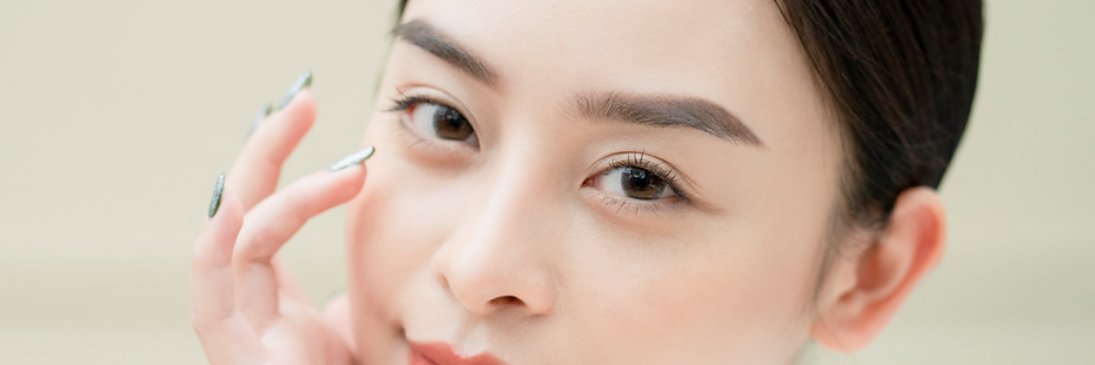
Create double eyelids or fix uneven eyelids without surgery. Optifold tapes are worn at night only and your beautiful double eyelids will last all day.
In 2020 Optifold was cut by hand: a 3-month supply for both eyes took about three full days to make. Thank you to the early customers who believed in it. Black Friday: 25% off everything with OPTIFOLD25 until Dec 5. https://t.co/19cJEkH1MI #BlackFriday
Hooded eyelids usually already have a crease, hidden under the skin. Optifold works with it: the F-tape sets where your lid folds, the N-tape holds that fold while you sleep. Start with the free eyelid check to pick the right line. https://t.co/NXVzckfYW1 #hoodedeyes
Most eyelid tape is open-and-stick. Optifold starts with your eyelid: how it folds, symmetry, skin and your goal. Take the free eyelid check, then send your eyelid videos for a size and placement guide. https://t.co/JWozns3uDX #doubleeyelid
Woke up puffy and your crease looks shallow? Overnight fluid can hide a fine fold for a while. Habits from our guide: go light on salt at dinner, don't rub your lids, and try a cool compress for 2 to 3 minutes in the morning. Results vary. https://t.co/pPibsID4KX #doubleeyelid
Cherry's uneven eyelids wouldn't stay consistent with regular tape or glue. After about 5 months of guided use and small placement tweaks, she reported creases holding 2–3 weeks on tape breaks. One customer's documented experience; results vary. https://t.co/pr5Jk5O1AV #monolid
Alycia saw different creases every morning. Her videos showed why: her crease target was too high, mainly at the tail. After lowering it, she reported her eyelids holding shape across days. One customer's documented experience; results vary. https://t.co/gKFPrtxOYV #doubleeyelid
Megan's photo diary: day one her crease lasted 8 hours. Then came weeks of 10–20 minute days while she worked out placement, gaze and routine. Her feedback helped shape today's F-tape. One customer's documented experience; results vary. https://t.co/4WBa1YRc0N #doubleeyelid
David wanted a crease he could rely on for the moments that mattered. His assessment showed his right eyelid had more competing folds than his left, so each eye got its own placement plan. One customer's documented experience; results vary. https://t.co/DijTYoxwvn #doubleeyelid
🏆 Optifold | HealthEDGE Challenge for Medical Devices Winner (2018)
What if double eyelid surgery could be a one-time procedure, with future cosmetic refinements possible without additional surgery?
That vision helped inspire Optifold...
Eyelid care Q&A | Part 2
Long-term care, maintenance & concerns about eyelid stretching—Ray answers a client’s questions. If she replies, Part 3 follows.
Watch & share.
Free assessment: https://t.co/JWozns42tv
#Optifold
Bedazzled eyes are having a moment ✨💎 but one of these eyelids is not like the other… 👀
She came in with uneven eyelids, so we gave the look a little Optifold twist. Same girl, same sparkle, just a more balanced crease.
Sometimes the smallest detail changes the whole look
Megan’s crease worked.
Then stopped.
Then occasionally came back on its own.
So the question changed from:
“Can it work?”
to:
“Why did it work before, then stop?”
Part 3 of Megan’s documented Optifold case study, presented by our CFO Heather (Hermandeep). 🔎
Real messages. Real troubleshooting. Real progress.
#Optifold #DoubleEyelids
Megan’s eyelid had already held the target crease for hours.
Then suddenly, some results lasted only minutes.
That inconsistency was frustrating, but useful.
It showed us the crease was possible, just not stable yet.
In Part 2, Heather walks through Megan’s actual Week 1 conversations and the clues we were using to figure out what made the crease stay or disappear.
Next: Why was it working before?
https://t.co/kNVRwJiHyU
https://t.co/5CLJEO98Mh
#Optifold #DoubleEyelids #ProductDevelopment #BeautyInnovation
TOP 5 reasons your surgeon says double-eyelid surgery is your “only option”:
1️⃣ Surgery is what they were trained to perform.
2️⃣ Surgery is what appears on their price sheet.
3️⃣ Their warnings about eyelid tape conveniently lead to an appointment form.
4️⃣ A cheaper solution that eliminates repeat purchases is great for patients and terrible for repeat revenue.
5️⃣ The people living with the problem have more motivation to invent another path than the people getting paid to operate.
The patient wants a result. The surgeon gets paid for a procedure. Somehow, we are supposed to pretend those are always the same goal.
Optifold did not come from a surgeon. It came from someone who lived with uneven eyelids and refused to accept surgery as the only possible answer.
#DoubleEyelidSurgery #AsianBlepharoplasty #EyelidTape #UnevenEyelids #Optifold
Daytime eyelid tape. Double-eyelid surgery. Or work on your crease while you sleep? 🌙
Our newest article looks at something beauty marketing rarely talks about: maintenance isn’t always a weakness. Sometimes having a way to maintain something is what gives you control over it.
We compare Optifold with daytime tape and surgery, and explain why technique, timing, and long-term maintenance all matter.
https://t.co/UupsWxlsqm
#Blepharoplasty #DoubleEyelidSurgery #UnevenEyelids #NaturalBeauty #CosmeticTricks #CosmeticSecrets #Optifold #BioTechnology #KoreanBeauty #UniversityOfToronto #MedicalDevice #Invention
What If the Best Way to Change Your Eyelids Is While You Sleep?
A different way to think about double-eyelid tape, maintenance, technique, and the idea that surgery is automatically the “one and done” option.
There is a curious double standard in the way we talk about beauty.
We happily accept that beautiful hair needs care, that clear skin takes consistency, that a sculpted body requires training, that a pristine car needs detailing, and that a beautiful garden exists because someone keeps tending to it.
Yet the moment a beauty method requires maintenance, we sometimes treat that maintenance as evidence of imperfection.
“You mean I have to keep doing this?”
But perhaps that is the wrong question.
Beauty is rarely the absence of maintenance. Quite often, beauty is the result of maintenance.
A beautiful lawn does not stay beautiful because nothing happens to it. It looks that way because somebody has figured out how to maintain it.
A fifteen-year-old car can still look astonishingly new because somebody washes it, protects it, polishes it, and takes care of the small things before they become large ones.
Maintenance is not necessarily the inconvenience standing between us and beauty.
Sometimes maintenance is the very mechanism that makes a desired condition possible.
The word “maintenance” deserves a makeover
There is another way to think about maintenance that is even more interesting.
When there is a reliable way to maintain or influence something, it means that we have acquired a certain amount of control over it.
Think about physical characteristics for which there is no credible everyday process that can meaningfully move them in the direction you want.
When there is no technique to learn, no product to use, no process to repeat, and no action that meaningfully changes the outcome, there is very little for a person to do except accept the characteristic or pursue a much more radical intervention.
The discovery that something can be influenced should therefore be exciting before it is inconvenient.
Instead of hearing, “You will need to maintain this,” and immediately thinking, “That sounds like work,” there is another possible reaction:
“Wait. You mean there is actually something I can do about it?”
That distinction matters because a maintainable process creates agency.
You have something you can practice. Something you can observe. Something you can adjust. Something you can repeat.
That does not mean the human body becomes infinitely changeable. Biology still sets limits, and individual results differ.
The point is simpler.
Once there is a repeatable way to influence a characteristic within a realistic range, the person has acquired an option she did not previously have.
Seen that way, maintenance is not necessarily the bad news.
The interesting news is that a practical method exists at all.
So what is Optifold actually trying to do?
Optifold is designed around a deceptively simple idea.
Rather than wearing conventional double-eyelid tape throughout the day, the system is applied primarily during sleep and removed afterward, with the goal of creating and maintaining the desired eyelid crease while leaving the eyelids tape-free during waking hours.
At first glance, this might sound like a small change in timing.
In practice, it changes the entire philosophy of the product.
Conventional double-eyelid tape is generally about what you want your eyelid to look like while the tape is attached.
Optifold asks what can happen after the tape comes off.
The underlying double-eyelid tape patent, WO2015016486A1, describes a multi-member tape system using crease-forming tape members together with n-shaped tape members, and describes use during sleep followed by removal in the morning.
Regular daytime tape solves a different problem
There is nothing mysterious about why conventional double-eyelid tape became popular.
It can be cheap, quick, and remarkably effective at producing an immediate cosmetic fold.
If someone wants a particular crease for an afternoon, a night out, a photograph, or simply because she prefers the appearance of a double eyelid, a small adhesive strip can provide an instant visual answer.
The important distinction is that instant appearance is normally the objective.
The user positions the tape, opens the eye, assesses the fold, and adjusts it until she likes what she sees.
If she wants a very high crease, she can often experiment with a very high crease. If she wants another shape tomorrow, she can move the tape tomorrow.
Optifold begins with a different question.
Instead of asking how to produce the most attractive fold while an adhesive is visible on the eyelid, it asks how the eyelid can be worked with during a private period so that the tape can later be removed.
And that leads to a surprisingly obvious question:
Why are we wearing the tape during the exact period when we actually want people to see the result?
Daytime eyelid tape asks you to wear the solution while you are at school, at work, applying makeup, taking photographs, socializing, or standing close enough to another person that they may notice the tape.
Optifold reverses that arrangement.
The maintenance is moved primarily into sleep so the tape can be removed for daytime.
Maintenance has not disappeared.
It has moved to a more private time.
For some people, that may be the entire point.
Why does Optifold use more tape?
This difference in objective also helps explain why Optifold can initially look more complicated than conventional eyelid tape.
There is more tape because the pieces are not all performing the same function.
The curved f-tape is positioned in relation to the desired crease and has more surface area than many small cosmetic crease strips.
Then there is the n-tape.
The n-tape adds another mechanical function. It is used to compress the crease area, draw skin across the crease, and help bring the eyelid toward a lower closing position.
This becomes particularly relevant because adding more structure around the eyelid can otherwise make full eyelid closure more difficult for some users.
The n-tape is therefore not there because somebody decided that more tape must automatically be better.
It has its own job within the system.
The point is not simply to put a stronger sticker on the eyelid.
The system is trying to manage several things happening to the eyelid at once.
Technique matters, and that is good news
Modern beauty culture understandably loves convenience.
A product that requires fewer steps is often more attractive than one that requires ten.
But convenience and mindlessness are not the same thing.
There are many things we value precisely because better technique produces a better result.
Nobody is surprised that hairstyling improves with skill.
Nobody decides that strength training is defective because form matters.
A violin is not badly designed because practice changes what comes out of it.
Makeup brushes do not fail because one person can use them more beautifully than another.
In each case, technique is not merely an obstacle.
Technique gives the person another variable she can control.
Optifold belongs closer to that world than to the world of disposable stickers.
Placement matters.
The target crease matters.
Height matters.
Angle matters.
Symmetry matters.
The relationship between the f-tape and n-tape matters.
The way an individual eyelid responds matters.
If technique affects the result, then getting better at the technique gives you more control.
This becomes particularly important when somebody asks how to get faster results.
The temptation is to search for a shortcut, more tape, more pressure, another product, or some dramatic new routine.
Sometimes the more useful answer is much less glamorous.
Better attention can produce better application.
But ideally, somebody should understand that before they become frustrated.
The goal should not be to wait until a user struggles and then tell her to pay more attention.
The better approach is to establish the expectation from the beginning that attention is part of the method.
You are not simply buying an adhesive shape.
You are learning how to work with the structure of your own eyelid.
That changes the psychology of the process.
If a random placement fails, the conclusion does not have to be:
“This product works or it doesn't.”
The question becomes:
“What happened here, and what can I change?”
There is agency in that question.
The sensation can become information
Conventional daytime tape can feel exactly like what it looks like: a small adhesive object holding skin in a particular relationship while it is worn.
Optifold can feel considerably more dynamic.
There can be compression, tension, redirection of the skin, and a noticeable interaction between the tape configuration and movement of the eyelid.
Over time, those sensations can become information.
The wearer starts noticing which application produced a stronger result, which placement produced a cleaner fold, and which configuration created a crease that appeared more harmonious with the way her own eyelid naturally moves.
The tension line being stimulated is related to where the eyelid skin actually folds when the eye opens.
Now placement stops feeling arbitrary.
The user may notice that one position produces one kind of fold while another produces something different.
She may also discover that a dramatic crease she can easily force with ordinary daytime tape is not necessarily the crease her eyelid responds to best after the tape is removed.
The question changes from:
“How high can I make this crease right now?”
to:
“What crease am I actually trying to establish?”
So how is Optifold different from regular daytime eyelid tape?
The simplest answer is that the two products are pursuing different goals.
Conventional daytime tape is primarily an immediate cosmetic product.
Put the tape on. Create the fold. Wear the tape while you want that fold.
Optifold is designed around nighttime crease maintenance and a tape-free daytime appearance.
With conventional tape, placement primarily determines what the eyelid looks like while the tape is present.
With Optifold, placement, target crease, angle, symmetry, and the relationship between the different tape members can all matter because the objective is different.
If you are perfectly happy wearing inexpensive conventional eyelid tape throughout the day and you only want an immediate cosmetic fold, ordinary eyelid tape may already do exactly what you need.
Optifold is for somebody asking a different question:
Can I work on the crease privately and then remove the tape for daytime?
Then there is surgery
Double-eyelid blepharoplasty occupies a special place in this conversation because it can sound like the ultimate escape from maintenance.
You undergo the procedure, heal, and have a crease.
Compared with repeatedly applying tape, the proposition can feel wonderfully final.
Surgery can indeed produce long-lasting results, and for someone who wants an anatomical surgical change and accepts the associated trade-offs, it may be the preferred option.
But “long-lasting” and “nothing about this will ever need attention again” are not the same promise.
The American Society of Plastic Surgeons describes eyelid-surgery results as long-lasting while also explaining that natural aging continues.
Revision blepharoplasty also exists because some patients later seek correction for issues such as asymmetry, crease height, weakened folds, or other unwanted outcomes.
This does not mean everybody who has double-eyelid surgery will eventually require another operation.
Many will not.
The important point is simply that:
“Surgery means I am guaranteed to never deal with this again”
is stronger than what the medical literature actually supports.
What if you knew that before surgery?
Imagine somebody choosing surgery because she believes it is automatically a one-time relationship with her eyelids.
Years later, if she wants or needs a revision, the news may feel completely different from what she believed she was signing up for.
Now imagine she knew from the beginning that surgery can be long-lasting while revision remains possible for some patients.
She may still choose surgery.
But she may also say:
“If there is a nonsurgical nighttime method I can try first, I would rather see what I can accomplish that way.”
That is a very different decision.
And that information matters much more before surgery than after it.
The recovery period is part of the beauty decision too
Surgery concentrates the transformation into a shorter period.
That concentration comes with recovery.
The American Academy of Ophthalmology says bruising and swelling after upper-eyelid blepharoplasty typically last around ten to fourteen days.
The American Society of Plastic Surgeons similarly describes swelling, bruising, irritation, dry eyes, and discomfort among experiences that may occur during initial healing.
Recognized surgical risks also include issues such as difficulty closing the eyes, scarring, infection, changes in sensation, dry eye, and the possible need for revision surgery.
That does not make surgery inherently bad.
It makes it surgery.
The relevant question is whether those trade-offs make sense for you when another type of approach exists.
Would you rather approach the result gradually or through an operation?
Surgery creates the anatomical change through a procedure.
Optifold approaches the goal gradually.
In Optifold's client experience, some users may see a crease remain for substantial periods very early in the process.
Others may initially see the result hold for a shorter period and then work toward greater stability through continued use and improved technique.
That creates a completely different experience.
A short result can become a longer result.
A longer result can become more consistent.
Technique becomes more repeatable.
The user becomes more familiar with what her own eyelid appears to support.
Gradual does not automatically mean worse.
Gradual can mean adjustable.
You may discover that the crease you thought you wanted is too high.
You may find that a lower crease looks more natural on your face.
You may realize that the dramatic shape you could force easily with ordinary daytime tape does not behave as naturally once the tape is removed.
With a nonsurgical method, you can adjust the target rather than immediately committing your eyelid to a surgical result.
A beautiful result is not simply “more crease.”
It is the relationship between the crease and the person wearing it.
Uneven eyelids make the choice especially interesting
Consider somebody who already likes one of her eyes.
One eyelid has a stable crease that suits her face.
The other is inconsistent, shallow, multiple, or effectively a monolid.
She is not trying to redesign her entire eye area.
She is trying to solve an asymmetry.
For that person, the existence of a nonsurgical approach has a different meaning than it does for someone who wants completely new creases on both eyes.
She already has a reference point sitting directly on her own face.
She knows what the good eye looks like.
The challenge is to bring the difficult eye closer to it.
Surgery can certainly be individualized to the patient.
At the same time, asymmetry is among the issues discussed in revision blepharoplasty literature.
For somebody whose original concern is simply one unreliable eyelid, that is worth understanding before deciding what order to try her options in.
Cost deserves the same lifetime perspective
The same mistake we make with maintenance can happen with money.
We compare the monthly or yearly cost of a maintenance product with the quoted price of one operation and assume the comparison is complete.
It may not be.
A surgical fee represents one episode of treatment.
If someone later chooses revision surgery or another eyelid procedure, that second intervention has its own financial and recovery costs.
This is not an argument that a maintenance product is automatically cheaper over every possible lifetime.
Someone could use a beauty product for decades.
The more useful principle is simply that both options should be compared on the same timeline.
The same applies to convenience.
If we count every evening spent applying Optifold, intellectual fairness requires us to also count surgical consultations, the procedure itself, the recovery period, and any future procedure if one occurs.
Once the comparison becomes symmetrical, people can make a more intelligent choice about which kind of involvement they would rather live with.
Maybe the real luxury is not permanence. Maybe it is control.
Beauty marketing has spent decades teaching us to romanticize permanence.
Permanent color.
Permanent correction.
Permanent solutions.
The word sounds effortless, final, and expensive in exactly the right way.
Yet permanence also means surrendering a degree of flexibility.
There is another kind of luxury in being able to observe something, understand it, influence it, and change your approach when your preferences change.
There is luxury in having options before undergoing an operation.
There is luxury in being able to pursue the way you want to look without displaying the mechanism throughout the day.
Optifold occupies that space.
It is not simply trying to be another piece of eyelid tape.
It is not trying to imitate surgery either.
It is proposing a third relationship with the eyelid, one in which the crease becomes something you work with rather than something you temporarily disguise or immediately alter through an operation.
The breakthrough is not always eliminating maintenance.
Sometimes the breakthrough is finally discovering how to maintain something.
Perhaps “permanent” was never the only question worth asking
A conventional daytime eyelid tape effectively says:
“Wear me when you want your double eyelid.”
Surgery says:
“Alter the eyelid.”
Optifold asks something different:
What if you could work on your double eyelid while you sleep, remove the tape in the morning, and keep the maintenance out of sight when you actually want to enjoy the result?
For some people, surgery will still be the answer.
For others, ordinary daytime tape already does exactly what they need.
But for anybody who has ever looked in the mirror at one stable eyelid and one that simply refuses to cooperate, the existence of another path may be worth knowing about.
Sources:
American Academy of Ophthalmology, “Upper Eyelid Blepharoplasty”
https://t.co/nVGdZ67iPK
American Society of Plastic Surgeons, “Eyelid Surgery Results”
https://t.co/MT8AxqqbwR
American Society of Plastic Surgeons, “Eyelid Surgery Risks and Safety”
https://t.co/BdpaPnM9YT
American Society of Plastic Surgeons, “Eyelid Surgery Recovery”
https://t.co/mFcCFhORm5
Raymond Tang, WO2015016486A1, “Tape for Forming Double Eyelid Crease”
https://t.co/egZS6E3291
Corrective Asian blepharoplasty literature
https://t.co/z7BvJuJgGH
Asian blepharoplasty complaints and asymmetry analysis
https://t.co/uTBGICsFMW
Asian upper blepharoplasty outcomes and revision study
https://t.co/ZWDgrWQ0td
A wedding means cameras from every angle. 📸
David used to worry about whether his eyelid crease would look uneven in photos.
But this time, after using Optifold, he could enjoy the wedding without constantly thinking about his eyes.
Optifold is for people who would rather maintain their eyelid crease with a simple non-surgical routine than permanently change their eyelids through surgery.
Use David’s code DAVID for 25% off:
https://t.co/V2yMorQu3H
#Optifold #UnevenEyelids #EyelidAsymmetry #EyelidTape #NonSurgical
Even a small difference in tape angle can change the final result.
David noticed that when he had a really good day, the key was not just the tape itself, but repeating the same placement and angle again. That is why paying attention to positioning matters so much.
🎁 Use David’s code: DAVID
https://t.co/wjjvG3dtwQ
#optifold #uneveneyelids #doubleeyelids #eyelidtape #beautycreator
𝗦𝗵𝗲 𝘀𝗮𝗶𝗱 𝘀𝗵𝗲 “𝘁𝗿𝗶𝗲𝗱 𝗲𝘃𝗲𝗿𝘆𝘁𝗵𝗶𝗻𝗴” 😶🌫️
But did Anna really try everything, or did she try every regular eyelid-tape method she knew about? 👀
Top: regular eyelid tape did not correct her uneven eyelids ❌ Bottom: an Optifold client used a different method and achieved visibly more symmetrical eyelids ✅
Regular eyelid tape failing does not prove that nothing works. It only proves that particular product and method did not work.
Same problem. Different method. Different result. ✨
Watch both halves carefully. Do you think “nothing works,” or was she simply using the wrong method? 👇
#UnevenEyelids #AsymmetricalEyes #EyelidTape #Optifold #BeautyTok