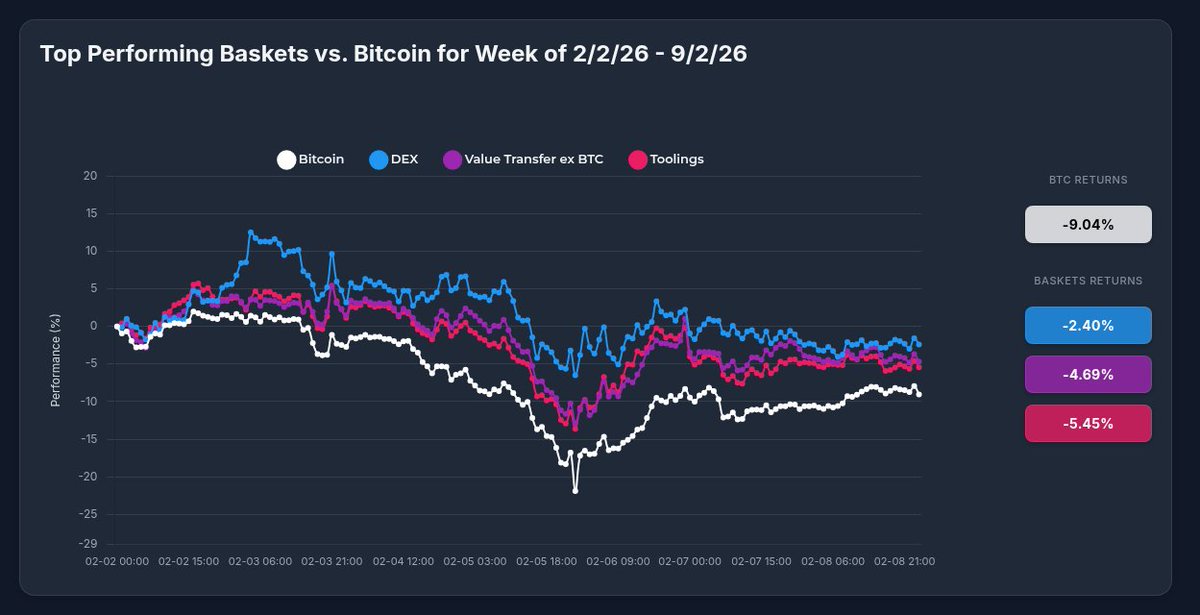
Risk-adjusted exposure—finally someone speaking sense in these trenches. The gap between retail and pros isn't just information, it's infrastructure. While you're manually hedging volatility, top 1% already have automated, tokenized strategies doing this for them. That's exactly what we built @Optima_Fi for: EU-regulated, automated strategies that handle risk like hedge funds do—but accessible to everyone. No more guessing if you're actually market neutral. Just proper exposure management, 24/7. 📊
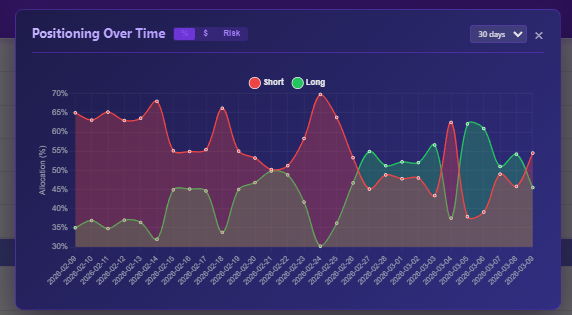
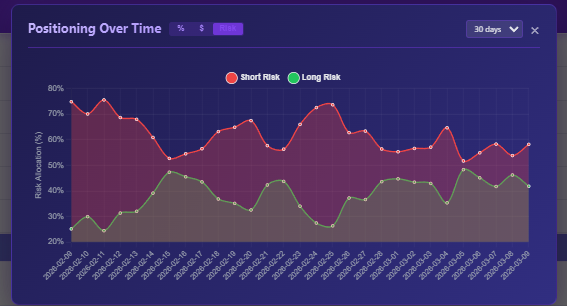
never confuse a notional (1) with risk-adjusted exposure (2). for example, I was net long (notional), crypto was up, and I was losing money. that's because assets carry different risk exposures. it ain't market neutral to be $10k short btc and $10k long shib. I've been risk-adjusted net short for a long time.
The asymmetry you're describing isn't just sentiment—it's structural. While retail chases 25x longs with zero edge, top 1% hedge funds use algo strategies, regulated structures, and actual risk management. That's exactly what we built Optima for: giving retail access to automated, tokenized, EU-regulated strategies that level the playing field. Because frankly, you shouldn't need insider access to avoid becoming exit liquidity. 🎯 https://t.co/K9dQlF3azw
When crypto drops 10%, everyone disappears.
When crypto rises 5%, we start getting screenshots of 25x longs.
It’s incredible how market sentiment works and how people become biased toward losing money.
The game was rigged until now. While 90% lose money playing casino, the top 1% had automated strategies, insider info & professional risk management. Optima changes that → Automated, tokenized, EU-regulated strategies. Finally, retail earns like institutions. 🎯
Now fast forward to crypto in 2025.
Every single day, billions of dollars flow across major blockchain networks.
New tokens launch almost every minute. Wallets are created by the millions. Everyone has the "alpha."
And yet 90% of retail participants are still losing money.
Why?
Why is Bitcoin holding $68K despite $3.74B in ETF outflows over 4 weeks?
Because crypto follows LIQUIDITY, not sentiment.
Key data from February 2026:
• US fiscal deficit: $1.9T projected (5.8% of GDP)
• Bank credit growth: 5.3% YoY, business loans strengthening
• Q1 FY2026 borrowing: $696B in 4 months
• Bitcoin: $68,096 (down 46% from Oct ATH, but stabilizing)
ETF outflows = capital rotation within the system
Fiscal deficits = net new money creation
The $1.9T deficit dwarfs $3.74B in ETF flows. Money supply expansion continues through fiscal channels while regulatory clarity (Clarity Act expected July) reduces institutional friction.
Global picture:
✓ US: Massively expansionary (deficit + credit)
✓ China: Weak private demand, but 9% M2 growth
✗ EU: Credit tightening (7% net, business loans)
Net liquidity: Bullish
Crypto doesn't care about ETF headlines. It cares about money supply.
And the money supply is expanding.
#Bitcoin #Crypto #MacroEconomics #Liquidity
Not a synthetic. Not a leveraged bet.
Optima Active Portfolios are real investment certificates — FMA-approved prospectus, ISIN, EU-passported.
Institutional-grade. Retail accessible. DeFi-composable.
TradFi credibility meets on-chain flexibility.
Built on @auroraisnear
Follow @Optima_Fi + comment for early access code👇
How Optima Active Portfolios work:
1️⃣ You buy the token
2️⃣ We manage the portfolio
3️⃣ You hold it, transfer it, or use it as DeFi collateral
That's it.
Institutional management. Self-custody. One token.
Built on @auroraisnear
Follow @Optima_Fi + comment for early access code 👇
Why are Bitcoin ETFs rebounding while the Fed holds rates?
Because liquidity comes from FISCAL policy, not monetary theater.
US deficit: $43.5B/week (Jan 2026)
China lending: $721B in January alone
BTC ETF inflows: $683M over 3 days (Feb 8-10)
Money supply expanding → Crypto follows.
Key insight: Banks created $13.43T in loans. Government spent $94B in January. That's spendable money hitting the economy—independent of what the Fed says.
QE/QT swaps assets. Deficit spending creates NET new financial assets in private hands.
Crypto doesn't care about rate expectations. It cares about liquidity flows. And those flows are accelerating.
Full analysis: [link]
#Bitcoin #Crypto #MacroEconomics #Liquidity #BTC
We graduated from @auroraisnear Incubator Cohort 1.
Today, we're launching what we built:
Optima Active Portfolios.
The first actively managed portfolio product on Aurora. Institutional-grade. Self-custodied. EU-compliant. Retail accessible.
This is what institutional adoption on NEAR looks like.
Follow @Optima_Fi 👇
This. Exactly this. The game was rigged from the start—retail always arrived late to the party, holding bags while the 1% cashed out. But here's the plot twist: @Optima_Fi just flipped the script. Automated, tokenized, EU-regulated strategies that give retail the same edge the top traders had. No more being exit liquidity. No more watching Wall Street eat first. Time to earn like the 1%, because why should they have all the fun? 🎯
I feel ya.
Listen, smart money flooded in last cycle and rugged us near the top.
Then the whole industry imploded during the bear with multiple hacks and bankruptcies.
That fcked crypto big time.
This cycle was front ran by smart money.
We were just the exit liquidity for Wall Street and OG whales.
Every pump was a fake out. Every dump reversed after everyone got rinsed.
It was the most manipulated market cycle I have ever seen.
You’re not alone bro. A lot of great traders got wiped out. Meanwhile trad markets keep putting in new highs. Gold doubled and tech stocks rip like alt coins. Fml
Why is Bitcoin at $76K despite $818M in ETF outflows?
Because ETF flows ≠ liquidity. Here's what actually matters: 🧵
📊 US bank lending: +4.3% YoY (accelerating from 3.7% in Dec)
🇨🇳 China: Pledged elevated deficits + record-low rates for 2026 stimulus
🇪🇺 Eurozone: Business lending hit record €5.324T (+3% YoY)
🏛️ US deficit: Still running $1.7T+ annualized (FY26 Q1: $601B)
ETF outflows = institutional repositioning (avg cost $90K, current $76K = 15% loss)
Credit expansion = NEW money entering the system
Crypto follows credit creation, not investor sentiment.
The gap between flows (negative) and fundamentals (positive) is the signal.
Regulatory tailwind: SEC's "Project Crypto" removes enforcement-first approach, clears path for institutions.
83% of institutional investors increasing crypto allocation in 2026. Infrastructure maturing despite short-term noise.
Bottom line: Watch credit growth and fiscal deficits, not ETF headlines. Liquidity drives crypto. Period.
#Bitcoin #Crypto #MacroEconomics #Liquidity












![Optima_Fi's tweet photo. Why are Bitcoin ETFs rebounding while the Fed holds rates?
Because liquidity comes from FISCAL policy, not monetary theater.
US deficit: $43.5B/week (Jan 2026)
China lending: $721B in January alone
BTC ETF inflows: $683M over 3 days (Feb 8-10)
Money supply expanding → Crypto follows.
Key insight: Banks created $13.43T in loans. Government spent $94B in January. That's spendable money hitting the economy—independent of what the Fed says.
QE/QT swaps assets. Deficit spending creates NET new financial assets in private hands.
Crypto doesn't care about rate expectations. It cares about liquidity flows. And those flows are accelerating.
Full analysis: [link]
#Bitcoin #Crypto #MacroEconomics #Liquidity #BTC](https://pbs.twimg.com/media/HA3MZKQW0AEoFmr.jpg)