I’ve spent time learning, building, and improving as a developer.
Now I’m becoming more intentional about sharing my journey here.
I’ll be posting about:
• Software development • Projects I build • Lessons from experience • Tech insights
Building in public 👨🏽💻🚀
One thing I’ve learned as a developer:
Writing code is only one part of the job.
The real skill is:
• Understanding problems
• Thinking clearly
• Debugging
• Creating solutions
Good developers don't just write code. They solve problems.
Assalamu alaikum,H.E the Sultan of Sokoto has declared tomorrow Monday 18th May as the first day of Dhul Hijjah.
The Sultanate Council will release an official statement shortly.
Having a good mentor is truly a blessing someone who helps structure your learning, guides your growth, and saves you from years of trial and error. This stack of books shows the journey, but the right mentor shows the direction. 📚🧭
May Allah continue to bless my Mentors.
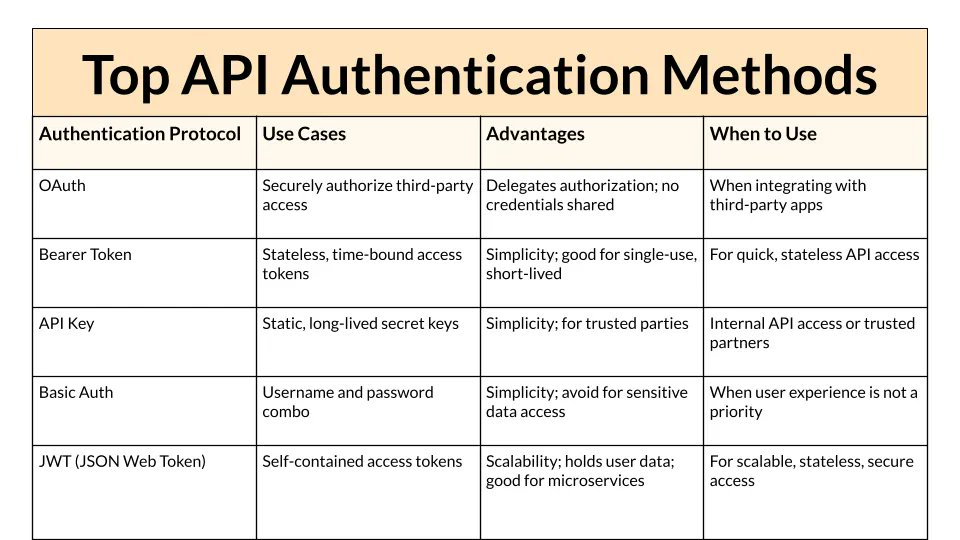
API Authentication Methods
1. API Key Authentication
→ Definition
✓ A simple token passed by the client to identify the calling application.
→ How It Works
✓ Client includes an API key in headers or query parameters.
✓ Server validates the key before processing the request.
→ Use Cases
✓ Public APIs
✓ Low-security integrations
→ Example
GET /users Header: X-API-Key: your-api-key
2. Basic Authentication
→ Definition
✓ Username and password encoded in Base64 and sent with each request.
→ How It Works
✓ Client sends credentials: Authorization: Basic <token>
✓ Server decodes and verifies them.
→ Use Cases
✓ Simple internal systems
✓ Development/testing environments
3. Token-Based Authentication
→ Definition
✓ Server issues a token (string) after login.
✓ Client uses token for subsequent requests.
→ How It Works
✓ Login → Receive token
✓ Token included in headers: Authorization: Bearer <token>
→ Use Cases
✓ Mobile apps
✓ Web apps
✓ Modern REST APIs
4. OAuth 2.0
→ Definition
✓ Industry-standard protocol for delegated authorization.
→ How It Works
✓ Third-party apps gain access without sharing user passwords.
✓ Uses access tokens and refresh tokens.
→ Use Cases
✓ Google login
✓ Facebook login
✓ Enterprise-level APIs
→ Common OAuth Flows
✓ Authorization Code Flow
✓ Client Credentials Flow
✓ Implicit Flow
5. JWT (JSON Web Tokens)
→ Definition
✓ Self-contained tokens carrying user identity and permissions.
→ How It Works
✓ User logs in → Server generates signed JWT
✓ Client sends JWT on each request
→ Advantages
✓ Stateless — server does not store sessions
✓ Works well with microservices
6. HMAC Authentication
→ Definition
✓ Authentication using a cryptographic signature generated from the request.
→ How It Works
✓ Client signs the request with a secret key
✓ Server replicates the operation to verify signature
→ Use Cases
✓ Payment APIs
✓ High-security systems
7. Mutual TLS (mTLS)
→ Definition
✓ Both client and server authenticate each other with digital certificates.
→ How It Works
✓ Client presents certificate → Server validates
✓ Server presents certificate → Client validates
→ Use Cases
✓ Banking APIs
✓ Government systems
✓ Zero-trust environments
8. Tip
✓ API authentication ensures only authorized clients can access protected endpoints.
✓ Choose the method based on sensitivity, scalability, and security needs.
✓ OAuth and JWT are the most common for modern applications.
→ Grab the API Mastery Ebook: https://t.co/NDhPt2nklK
🤖🤝 Humans x AI — The Future Is Collaborative!
AI isn't here to replace us, it’s here to amplify our creativity, boost productivity, and help us solve complex problems faster.
💬 What’s your take — is your workflow already evolving with AI?
#AI#TechCommunity#FutureOfWork
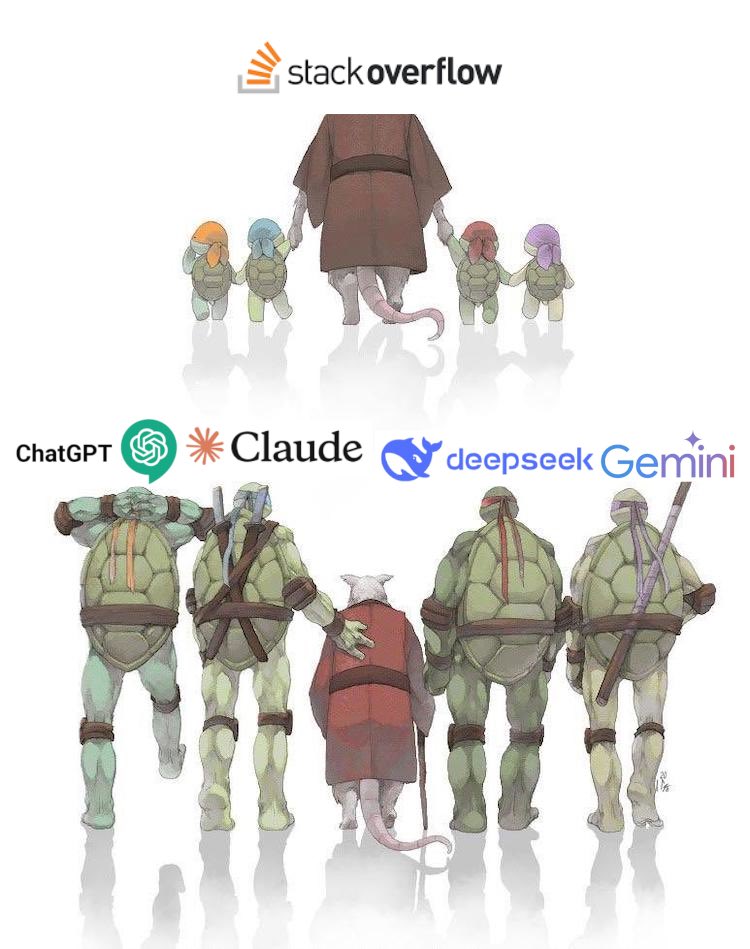
Today, cutting-edge AI tools like ChatGPT, Claude, Gemini, and DeepSeek offer real-time assistance, generate code on the fly, and are rapidly transforming how developers build and solve problems.
Yet, we must give credit where it’s due.
Stack Overflow walked, so AI could run.
*Full Circle in Tech 💻✨*
In the early days of the coding journey, *Stack Overflow* served as an essential guide, a reliable platform where developers sought solutions, learned through shared knowledge, and grew by trial and error.