Moneta is out today in paperback!
"Riveting ... An utterly original history of Rome that compels from start to finish. A wonderful read." ― Mail on Sunday
"An excellent 1,000 year history of Rome told in an engaging new way ... well worth a few denarii." ― The Times
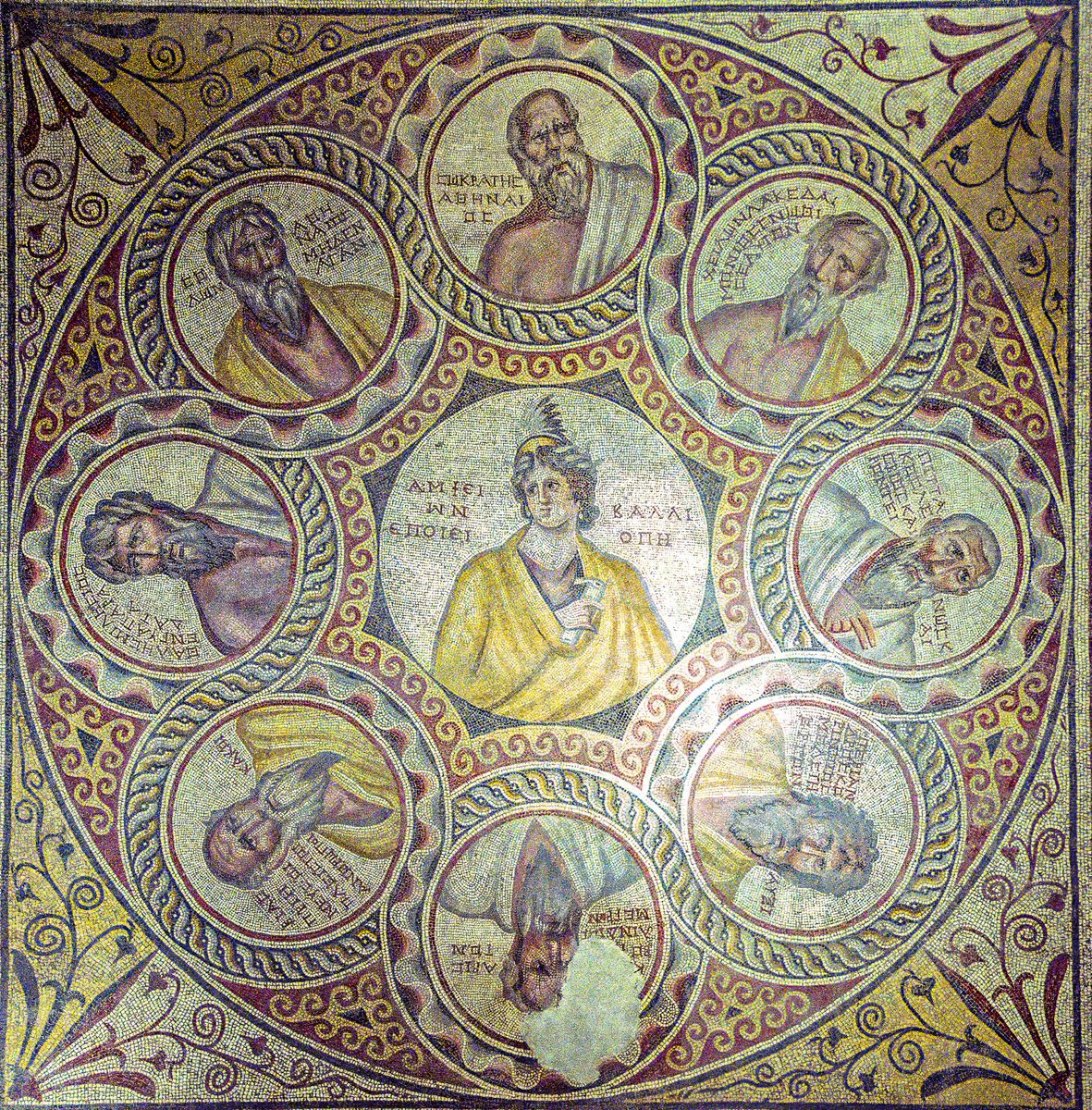
Roman mosaic showing the Seven Sages of ancient wisdom - seven of the most renowned Greek philosophers, statesmen, and law-givers; all surrounding a portrait of Calliope, the Muse of epic poetry. At the top, Socrates has been added as an honorary member, which also allows for an eighth roundel and improved symmetry in the composition - and then clockwise with an associated Greek maxim:
Chilon of Sparta 'Know thyself.'
Pittacus of Mytilene 'Know your opportunity.'
Periander of Corinth 'Practice makes perfect.'
Cleobulus of Lindos 'Moderation is best.'
Bias of Priene 'Too many workers spoil the work.'
Thales of Miletus 'A guarantor ruins himself.'
Solon of Athens 'Nothing in excess.'
Baalbek, 3rd century AD.
2) "You should then invoke Jupiter and Janus with an offering of wine. Then to Mars you speak these words: 'Father Mars, I pray you be kind to my new home and family. I have arranged this pig-sheep-bull procession so you may ward off disease, barrenness, disasters and storms'..
1) "To purify your new farmland you need to have a pig-sheep-bull procession. They must be led around the land as the following words are spoken: 'I call upon the benevolence of the gods, in the hope of good fortune I entrust to you this pig, sheep and bull led around my farm'..
The ancient physician Galen wrote in detail about treating mental health disorders as well as physical ailments. One patient of his believed he had grown a shell, and avoided all human contact for fear of breaking it. Another suffered from a debilitating anxiety, worrying obsessively that mythical Atlas might grow sick or tired and drop the sky, crushing the earth beneath it.
Galen, De Locis Affectis (On the Affected Parts), c.180 AD.
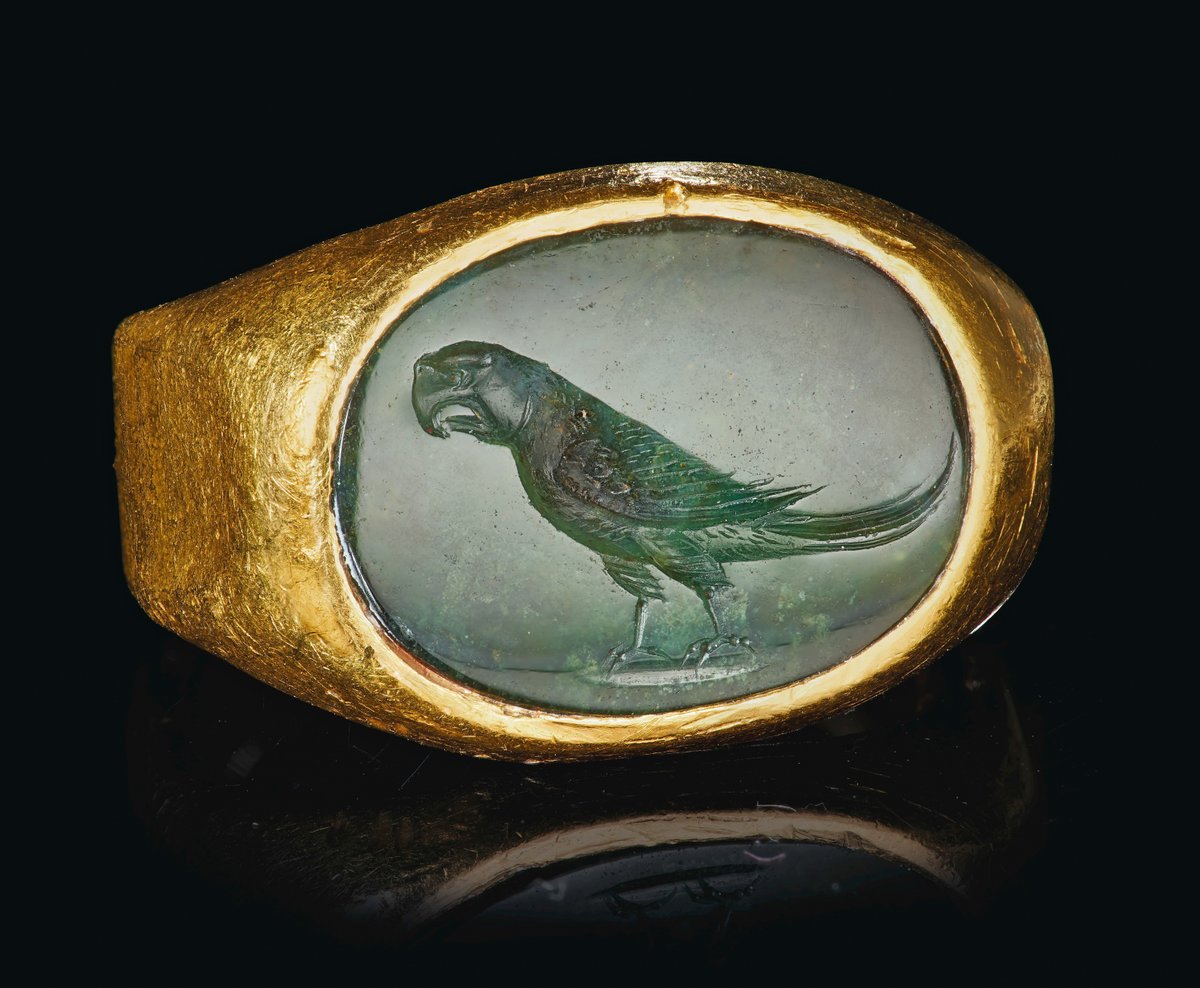
Roman gold and green chalcedony ring engraved with a parrot. The carving is so detailed, the parrot can be identified as an Indian Ringneck known for its bright green plumage. Such parrots surprised Alexander the Great’s entourage in India by talking like humans. 1st century AD
A marble sculpture fragment depicting the cuirass-clad torso of a Roman emperor hammered for $34.3 million at Sotheby’s on October 21, nearly three times its $12 million estimate and the highest amount ever fetched by a Roman antiquity at auction.
https://t.co/s5CU1VXjO3
It was a clash of the bidders in the #SothebysNewYork saleroom tonight. This Roman marble torso carved a new world record for an ancient classical sculpture sold at auction. After 14 minutes of fiery bidding, it triumphed to $34.3 million in the Magnum Opus Evening Auction.
This marble torso hails from the 1st century A.D., the earliest days of the Roman Empire. With its exceptional carvings and commanding scale, the torso would have projected the supremacy of Rome to all who encountered it 2,000 years ago.
The landmark evening auction saw white-glove results, with 100% of lots sold. The Magnum Opus sale series continues tomorrow with Act II: Figure & Form and Act III: Darkness & Light. Register to bid at the link in bio.
An exquisite blue glass bowl found intact in a Roman cemetery in Slovenia. The vessel's Greek inscription tells us: 'Drink and you will live for many years.' 4th century AD, City Museum of Ljubljana.
'Ultimately, we’re all dead men. Sadly, we cannot choose how. But, we can decide how we meet that end, in order that we are remembered as men.'
- Proximo
(Gladiator, 2000, David Franzoni, John Logan, and William Nicholson)
Scott cast three veteran British and Irish actors known as much for their hellraising as their acting talent; Richard Harris, Oliver Reed and David Hemmings, expressing regret at not finding a role for Peter O'Toole and completing the "Four Horsemen of the Apocalypse." #Gladiator
Magna set up this gravestone for Tiberius Claudius Epitropus, her ‘most sweet son’ who lived 7 years, 4 months and 17 days.
1st-3rd century AD, Cortona, Museo dell'Accademia Etrusca
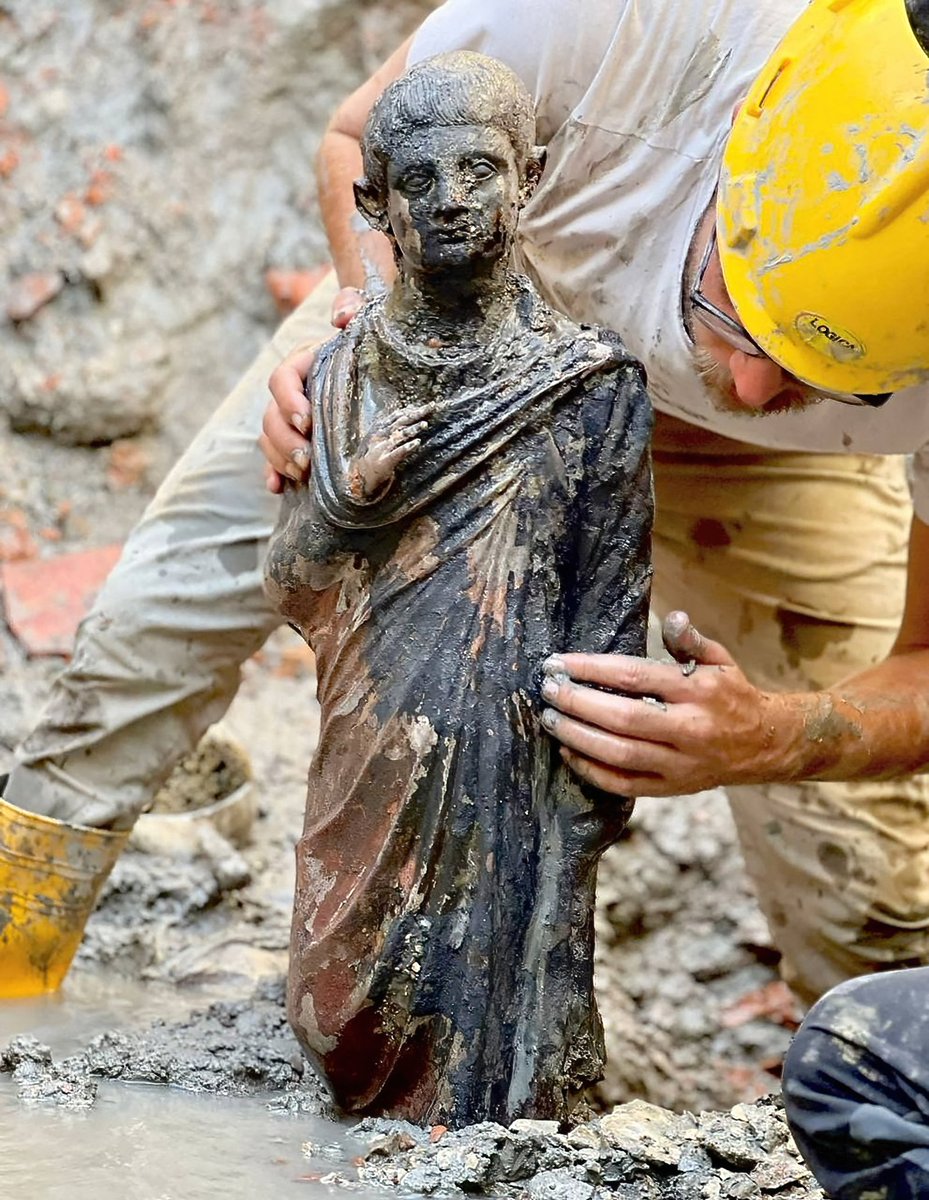
An archaeologist cleans the mud from the newly discovered bronze statue of a Roman boy - one of 24 bronzes discovered in the remains of ancient thermal baths in San Casciano dei Bagni, near Siena in 2022.
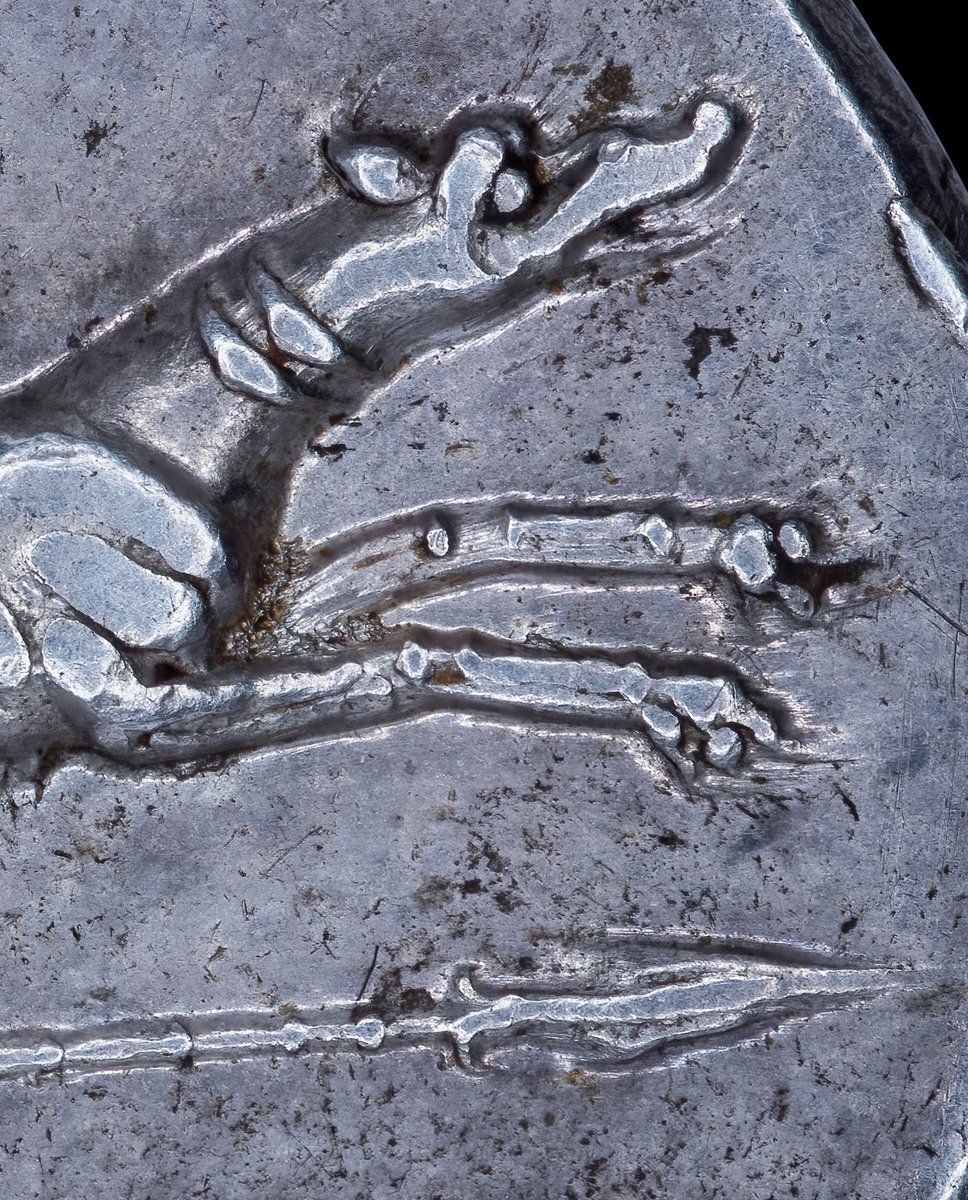
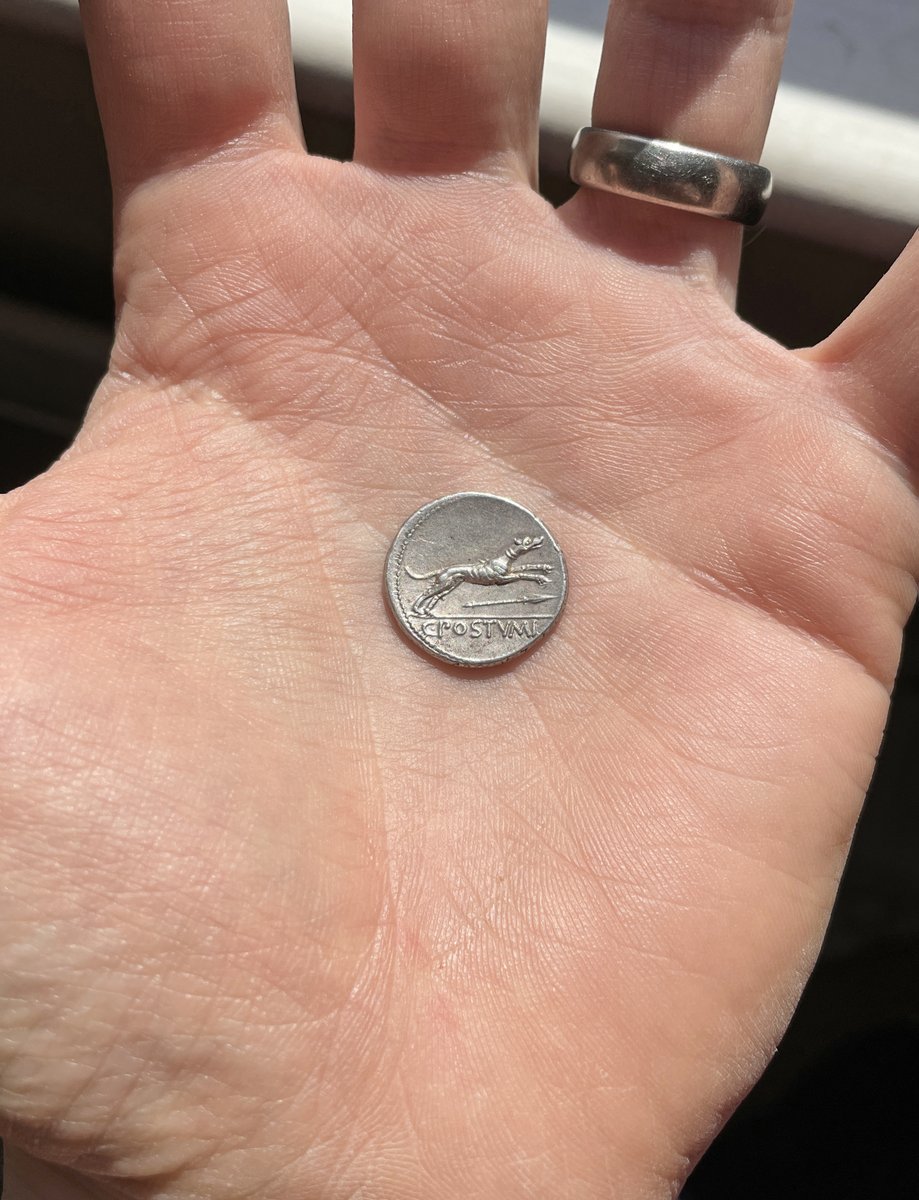
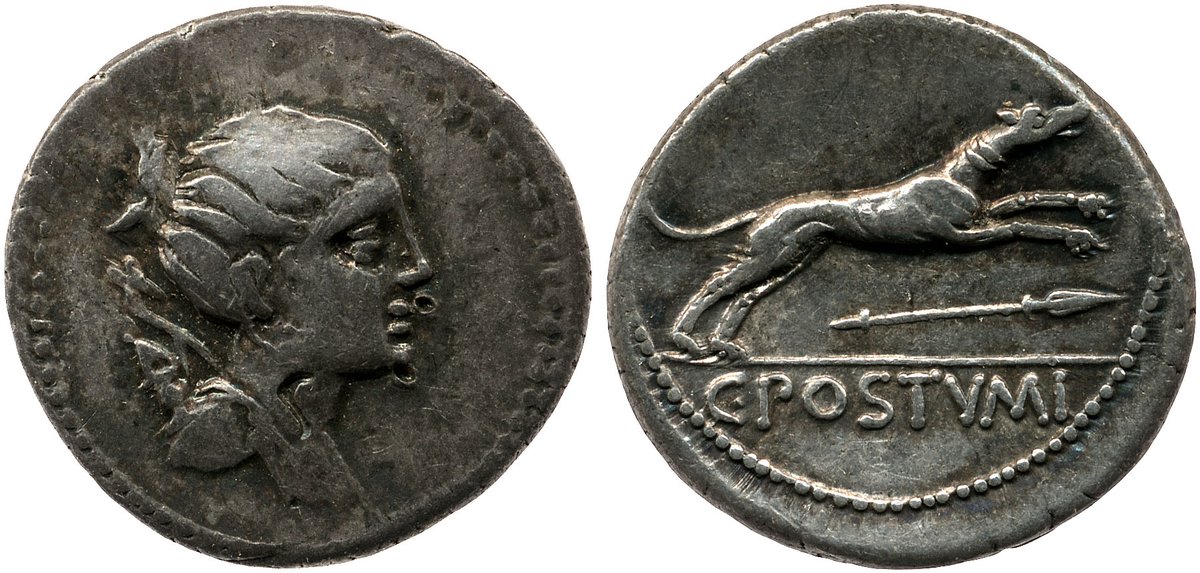
The coin in hand. As this denarius was being minted in 74 BC, a 25-year-old Julius Caesar had been captured and held hostage by Cilician pirates and a Thracian gladiator named Spartacus was preparing to break out of his training school in Capua. 🤯 {END}
Interestingly, the British Museum's example of this coin uses both the same (more worn) obverse and reverse dies, a 'double die-match'. We might therefore assume it was minted later the very same day by the very same men.
When the winged dolphin-headed man flies away with your tuna fish.
This early electrum stater from Cyzicus presents a puzzle, with no such hybrids known in Greek myth – though the coin may represent Apollo Delphinios, 'the Dolphin', who first led sailors to what became Delphi.