Long time Tesla investor since 2017. I am losing faith in the stock. FSD unsupervised and Robotaxi need a launch before the end of the year or I may not continue to hold.
Time for caution is over.
Everyone wants to fight about the smartest president, but honestly the best answer got handed down by another president. In 1962 John F. Kennedy hosted a room full of Nobel Prize winners at the White House and told them, "I think this is the most extraordinary collection of talent, of human knowledge, that has ever been gathered together at the White House, with the possible exception of when Thomas Jefferson dined alone." The whole room laughed because they knew he was barely joking.
Because Jefferson was a genuine freak of nature. He wrote the Declaration of Independence at 33, in about two weeks, and it still reads like scripture. He taught himself to read in something like half a dozen languages. He designed his own home at Monticello and then designed an entire university, buildings, curriculum, and layout, from scratch. He obsessed over science, farming, wine, food, and gadgets, and JFK described him that night as a man who could "calculate an eclipse, survey an estate, tie an artery, plan an edifice, try a cause, break a horse, and dance the minuet."
And here is the part people forget. When the British burned Washington in 1814 and torched the Library of Congress, Jefferson sold the country his personal library to rebuild it, close to 6,500 books covering basically every subject a human being can study. His private collection literally became the foundation of the national library. Who owns 6,500 books in 1815? A maniac. A brilliant one.
Purely on raw wattage, the man was operating on a different frequency than the rest of the list. Two hundred years later we are still living inside sentences he wrote alone at a desk.
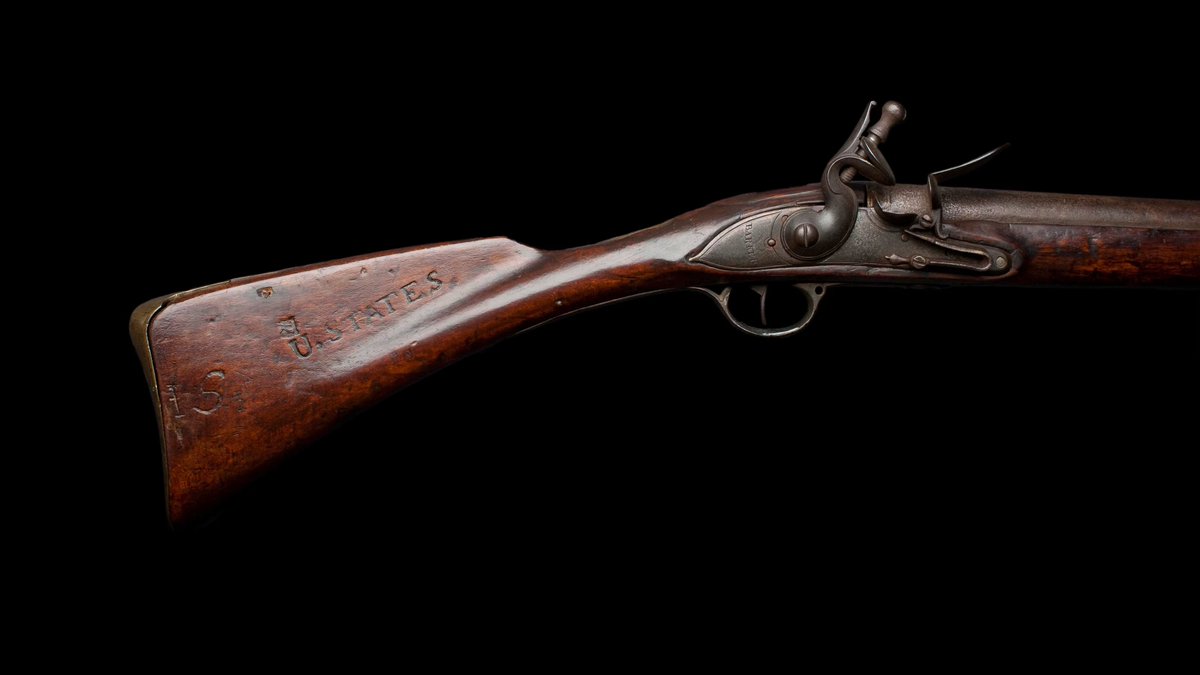
In 1776, the average colonist owned a firearm functionally identical to the standard infantry weapon of the British Army.
Civilian and military parity wasn't a loophole. It was the whole damn point.
Hello again.
We’re currently in Clemson, South Carolina. I’ve decided to come back here to document the final part of our road trip.
The main reason I deactivated my account two weeks ago was that things became increasingly toxic. For some people, it’s unfortunately unfathomable that a good story can exist without some kind of hidden agenda behind it. There was even a Reddit group going through my entire account trying to find anything they could use to reveal my identity.
I know this was only a small percentage of people, but after a while it became exhausting. During the last two weeks, I received so many kind messages on Instagram, and they really made me realize how many people genuinely enjoyed following the trip. Some people even told me that their grandparents regularly ask them, “What are the Germans up to today?” I think that’s really cool.
I decided to continue because I realized that the overwhelming majority of people loved following along. A small group of very loud people shouldn’t be able to ruin something that brought so many others joy.
I also want to clear something up, as people who follow me on Instagram already know.
I’ve been to the United States before. This is not my first visit, and I’ve never claimed that it was. The last time I was here was in January 2022, when I visited New York and Philadelphia.
A lot of people shared my Raising Cane’s post from November 2025 to make it look like I was secretly American. That post wasn’t from the United States, it was from my trip to Saudi Arabia.
This is my first time back in the U.S. in more than four years, and apart from Boston, I’d never visited any of the places we’ve been to on this trip before. That’s probably why many people assumed it was our first time in America, because for all of these places, it actually was.
And let me tell you, Ohio and Alabama are very different from New York City or Los Angeles.
If you have any questions, feel free to ask.
Thanks for reading.
«I believe that scientific knowledge has fractal properties, that no matter how much we learn, whatever is left, however small it may seem, is just as infinitely complex as the whole was to start with»
— Isaac Asimov (I Asimov, 1995)
For over a thousand years, historians thought the Viking "sunstone" was nothing more than a myth, until the ocean gave up its secret...
The Norse sagas repeatedly referenced a mysterious object called a "sólarsteinn" or sunstone, a navigational tool so powerful that Viking sailors could locate the exact position of the sun even on the most overcast and cloudy days. For centuries, scholars debated whether this was real technology or simply folklore embellished over generations of retelling. Most assumed it was legend. They were wrong.
In 2013, marine archaeologists excavating a British warship that sank near the Channel Islands in 1592 made a stunning discovery buried among the wreckage. Alongside navigational instruments including a pair of dividers and a slate, they found a rectangular chunk of translucent crystal. Testing confirmed it was Iceland spar, a remarkably pure form of calcite with extraordinary optical properties. The fact that it was found stored alongside other precision navigation tools was not a coincidence.
Iceland spar possesses a property called birefringence, meaning it splits a single beam of light entering the crystal into two separate beams. When you hold the crystal up toward the sky and slowly rotate it, the two beams will vary in brightness independently until, at one specific angle of rotation, they become perfectly equal in intensity. That precise angle points directly toward the sun, regardless of whether the sun is visible to the naked eye. Cloud cover, fog, and even twilight conditions cannot defeat it.
Researchers from the University of Rennes in France conducted extensive testing and published their findings in the Proceedings of the Royal Society A. Their experiments demonstrated that Iceland spar could locate the sun's position with an accuracy of within one degree, even under completely overcast skies. For Viking navigators crossing the North Atlantic toward Iceland, Greenland, and eventually North America, this accuracy would have meant the difference between a successful voyage and sailing hopelessly off course into open ocean.
The Viking Age spanned roughly 793 to 1066 AD, and during this period Norse sailors were completing oceanic crossings that would not be replicated by other European cultures for another 400 years. Historians had long puzzled over how they achieved such consistent navigational precision without magnetic compasses, which did not reach Europe until the 12th century. The sunstone appears to be a significant part of that answer.
What makes the Channel Islands find especially compelling is that the 1592 shipwreck is far outside the traditional Viking era, suggesting that knowledge of this navigational technique survived and was still being used by European sailors centuries after the Viking Age officially ended. The crystal was not a relic or a curiosity on that ship. It was working equipment.
The sagas specifically describe King Olaf consulting a sunstone on a cloudy day to verify the position of the sun, with a separate observation then confirming the stone's accuracy. For generations this was dismissed as poetic invention. Science has now confirmed that every element of that description is physically possible and practically achievable with a simple piece of Icelandic calcite.
The Vikings were not lucky explorers stumbling across new lands by accident. They were sophisticated navigators armed with technology so elegant and effective that it required no moving parts, no maintenance, and no power source beyond the sky itself.
📷 : the original calcite crystal alongside Elizabethan navigation dividers next to a cannon
Alderney Museum
#archaeohistories
America is the most powerful empire. Yet, it has not annexed another sovereign country since 1898. It’s arguably the most morally constrained in history. No previous hegemonic power with military superiority exercised so little direct annexation during its period of dominance.