See my latest piece for @IDD_ADA journal titled "Armenia’s Critical Economic Reliance on Russia: Can the West Eliminate It?"
#Armenia#Russia#EuropeanUnion
https://t.co/vO4PiQZvAW
The hidden and open mutual claims of Azerbaijan and Armenia
The issue of guarantees holds significant importance in discussions on the peace treaty between Azerbaijan and Armenia. The parties declare that steps must be taken to make a new war impossible. In Armenia, it is proposed to create an institution of guarantors for this purpose, while Azerbaijan points out current problems in Armenia's legal framework.
After the Iranian Foreign Minister's visit to Armenia, Pashinyan's government has been less vocal about the guarantors of the peace agreement, as the continuation of this topic leads to increased activity in Iran and Russia. Both Iran and Russia see this mechanism as an opportunity to intervene in the negotiation format. On the other hand, Armenia has already received security guarantees from Iran, the EU, France, and to some extent from the United States. Russia remains an actual ally of Armenia. In such circumstances, the issue of a guarantor may further aggravate the situation among Armenia's patrons.
Guarantees for Azerbaijan are related to various documents adopted in Armenia over time concerning Karabakh: the Declaration of Independence of Armenia, references to it in the Constitution, amendments to the Declaration of Alma-Ata, the decision of the Supreme Council of Armenia dated July 8, 1992, letters from the permanent representative of Armenia to the UN Secretary, and international court claims. Some of these documents emerged during the period when Pashinyan reaffirmed recognition of Azerbaijan's territorial integrity. For this reason, Azerbaijan does not trust the statements of the Armenian Prime Minister and hints at starting the process of revising these documents.
After President Ilham Aliyev's interview, Pashinyan stated that the rhetoric should match the negotiation process. While this is true, Azerbaijan has also presented a number of documents and statements issued by Armenian diplomacy to international organizations through the media in recent months. In essence, while Azerbaijan's assertions may be seen as mere rhetoric, Armenia's claims are backed by a series of official documents that foresee the possibility of future conflict.
According to Pashinyan, the negotiation process is ongoing between the administrations of the Prime Minister of Armenia and the President of Azerbaijan. Either the Armenian Ministry of Foreign Affairs is unaware of this process, or they have not been instructed accordingly by the Prime Minister. It's possible that Armenian diplomats hired under Vardan Oskanian are sabotaging the negotiation process, but this is ultimately Pashinyan's problem.
Throughout the recent period, Armenia has laid many “mines” that hinder the prospects of peace in the region. Crucially, the removal and neutralization of these "mines" are important to prevent potential detonation in the future.
For example, Pashinyan talks about "Azerbaijan's secret territorial claims"... Where is it secret? There is no mention of West Azerbaijan in the Constitution of Azerbaijan, the Act of Independence, the laws of the Republic of Azerbaijan, or the in decrees of the President. There is no amendment to the Alma-Ata Declaration in Azerbaijan.
But territorial claims in Armenia are not hidden; they are evident!
If Armenia expects a change in rhetoric from Azerbaijan, then it should start by recalling the letters and claims given to international bodies, reminding of the "Artsakhs" and "NKRs". Then, at the parliamentary level, it is possible to cancel the decision of the Supreme Council in 1992 and withdraw the amendments made to the Alma-Ata Declaration.
The peace agreement is only the beginning of the process. After that, normalization will begin, frameworks of interaction and possible future cooperation will be determined.
The Prime Minister of Armenia’s statements regarding the amendment of the Constitution have also raised expectations in Azerbaijan. It's worth recalling the unsuccessful attempt at a similar initiative in 2021. However, Pashinyan's precise objectives for amending the Constitution remain uncertain.
Consequently, as of September, tensions along the conventional border have subsided, marked by the adoption of a joint statement and anticipation of upcoming bilateral meetings. Positive dynamics remain, and this should be further developed and become the norm. Hence, it is essential for both sides to listen to and comprehend each other's expectations moving forward.
Is the "tension" between Russia and Armenia diminishing?
The verbal confrontations between Armenia and Russia, characterized as a "duel of words," have markedly decreased in the past few weeks. The sharp criticisms directed by Yerevan officials towards the Kremlin, which were noticeable up until December 2023, have now become notably subdued. Contrary to earlier tensions, there has been substantial positive development in bilateral relations during this period. This shift challenges the narrative in certain circles that portrayed Armenian Prime Minister Pashinyan as a democrat who initiated a war against the authoritarian Putin.
Weapon deliveries have been restored
Recent dissatisfaction between Armenia and Russia stemmed from disruptions in the supply of arms. Traditionally, Armenia bolstered its defense capabilities through Moscow, which historically provided weapons and military equipment on favorable terms and at low costs. However, interruptions in this supply chain resulted in significant discontent between them.
Despite signing contracts and making payments, Yerevan expressed frustration over the prolonged delay in receiving agreed-upon weapons from Moscow. The Russian side initially cited heightened demand for weapons and equipment due to military operations in Ukraine as a reason for not fulfilling its obligations to Armenia. However, the issues related to arms supply are gradually being resolved, with some of the military goods that Moscow was obligated to send having already reached Yerevan.
Pashinyan retained his power
In 2023, the Kremlin's endeavors to oust Pashinyan from power in Armenia proved unsuccessful. Despite Moscow's attempts, it was unable to mobilize pro-Russian forces in the country, underscoring the limitations of Russia's political influence within Armenia. Pashinyan, in contrast, secured another political victory by winning the Yerevan mayoral elections and maintaining control in the capital with support from other pro-Western parties.
Despite engaging in anti-Russian rhetoric at the political level, Pashinyan managed to foster significant economic development in the relations between Russia and Armenia. Economic ties have now become a pivotal aspect of the relationship between the two countries.
Azerbaijan’s role in weakening Russia's influence in Armenia
For decades, Russia gained influence in Armenia by positioning itself as a guarantor of Yerevan's independence and supporting its occupation policies. However, Azerbaijan strategically contributed to undermining Russia's standing in Armenia by taking actions in those two key directions.
Amid military operations in Karabakh, the Armenian population in the region voluntarily left, and successful operations near the conditional border posed a security threat to Armenia itself. The actions taken by Azerbaijan laid the groundwork for diminishing Russia's influence in Armenia.
Also, Russia was unable to secure Azerbaijan's involvement in its efforts to overthrow Pashinyan; instead, Azerbaijan's activities weakened Russia's position in Armenian public opinion.
Armenia reached its limits
Pashinyan seems to have reached the maximum attainable for Armenia in its relations with both Russia and the West. While he does not participate in the meetings of the CSTO, he remains unable to exit the organization. Pashinyan actively engages in the operations of the Eurasian Economic Union and has even accepted the chairmanship of the organization.
Concerning closer ties with the West, Pashinyan recognizes that the current level of support from capitals such as Washington, Paris, and Brussels may not increase further at the moment. Therefore, Armenia is at the limit of what is possible for this period in the mentioned directions.
Presently, Yerevan's primary focus in its relations with the West is linked to the upcoming presidential elections in the United States. The potential return of Trump to the White House could potentially reshape the dynamics established by Pashinyan. Given this consideration, it is anticipated that Armenia will maintain its traditional relations with Russia, at least throughout the current year. It is expected that Yerevan will refrain from harsh rhetoric and any practical steps that could lead to tangible tension with Moscow.
"#Armenia remains heavily reliant on #Russia economically. This reality will hurt #Yerevan’s ability to reorient its foreign policy in a more westward direction."
@OrkahnB for @EDMJamestown on Armenian struggles for #Westernintegration.
https://t.co/2u14Xuheux
"Armenia is integrating into the west" is one of the most popular titles in the media today. But economic data tells totally diffetent story.
For exp: Russia contributies to 70% of electricity production, 88% of natural gas imports of Armenia
See my brief analysis below
Armenia's critical economic dependence on Russia: Can the West reduce this dependence?
The primary concern surrounding Armenia is related to its ability to successfully integrate with the West while facing significant economic reliance on Russia. Exploring to which extent Armenia can achieve this integration amidst its critical economic dependence on Russia is a key goal of this brief analysis.
Foreign trade
Russia is the main trade partner of Armenia. In the first 8 months of 2023, exports from Armenia to Russia increased 2.1 times to $2.3 billion, and imports increased by 16% to $1.9 billion. Russia's share in exports was 51%, and its share in imports was 25%.
If we compare to 2021, Russia's share in Armenia's exports has increased from 28.2% to 51%, while in imports it has decreased from 37.3% to 25%. On the other hand, the share of the European Union (EU) in exports decreased from 21.8% to 11.2%, while its share in imports did not change. In 2021, Russia had a larger share in imports and the EU in exports, but this reversed in 2023.
This reversal in trade dynamics is related to Armenia's active involvement in re-export of sanctioned products to Russia, due to the Russian-Ukrainian war. Thus, in the first half of 2023, exports from Armenia to Russia increased by 215%, of which 187% was re-exported products.
Import of strategic products
In 2022, a significant portion of Armenia's energy imports was dominated by Russia, as evidenced by Russia's contribution to 70% of electricity production, 88% of natural gas imports, and 90% of liquid gas imports. Notably, the import volume of liquefied gas from Russia saw a remarkable 4.1-fold increase, accompanied by a 3.3-fold rise in its share.
The Metsamor NPP, which supplies 40% of Armenia's electricity, is operated by Russia's Rosatom, further solidifying Russia's influence in Armenia's energy sector. It is worth to mention that the substantial financial support of $300 million allocated by Russia in 2016 for renovation works at the Metsamor NPP.
In addition, in 2022, almost all of Armenia's wheat imports (99.9%), a significant portion of corn imports (98.8%), and substantial shares of pasta imports (82.2%), margarine imports (72%), and flour product imports (66.6%) were sourced from Russia.
Money transfers and investments
Between 2021 and 2022, there was a notable increase in Russia's contribution to remittances, foreign investments, and foreign direct investments (FDI) in Armenia. The proportion of remittances from Russia to Armenia surged from 55% to 70% during this period. In 2022, remittances from Russia alone experienced a substantial fourfold increase, reaching $3.6 billion.
Moreover, in 2022, Russia's share in overall foreign investments in Armenia soared to 80%, marking a fivefold increase. Similarly, in terms of foreign direct investments (FDI), Russia's share climbed to 60%, reflecting a threefold increase compared to the previous year.
Conclusion
Armenia is heavily dependent on Russia in trade, energy sector, and food security, and this dependence has increased after the start of the Russia-Ukraine war. Armenia’s current political opposition to Russia, is not mirrored in economic relations.
For Armenia redirecting exports, particularly in the agricultural and food sectors, from Russia to the West proves challenging due to non-compliance with European standards. It could potentially result in decreased production levels and increased unemployment. Because Armenia exports 61% of its agricultural and food products to Russia.
Given that Russia is Armenia's primary gas supplier, replacing Russia entirely with Iran is physically impossible, and political complexities surround this alternative. Azerbaijan emerges as an only the substitute in this regard. Also, the Metsamor station remains under Russian control, and the EU advocates for its suspension until 2026 for security reasons.
It is also difficult for Armenian migrants in Russia to find work in the West. They do not meet the requirements of the Western labor market.
The continuation of profitable exports to Russia amid ongoing sanctions contributes significantly to Armenia's income, making their termination a potential economic setback.
For Armenia to fully integrate into the West, institutional changes in relations with Russia must also take place. However, Armenia is still a member of the CSTO, CIS and Eurasian Economic Union (EEU). It should be also considered that departing from the CSTO would politically preclude continued membership of Armenia in EEU.
Complete disengagement from Russia's influence necessitates political, military, and economic shifts, posing multifaceted challenges for Armenia in its pursuit of Western integration.
@cssc_cqtm
For more information: https://t.co/sqA4ocHiBV
Later today, IDD Director for Policy Research, Analysis & Publications Prof. Damjan Krnjević will speak at the Third Geopolitical Summit organized by @InstituteDanube and @Heritage on the topic "Geopolitics of Energy in the Silk Road Region and its Implications for Europe."
#geopolitics
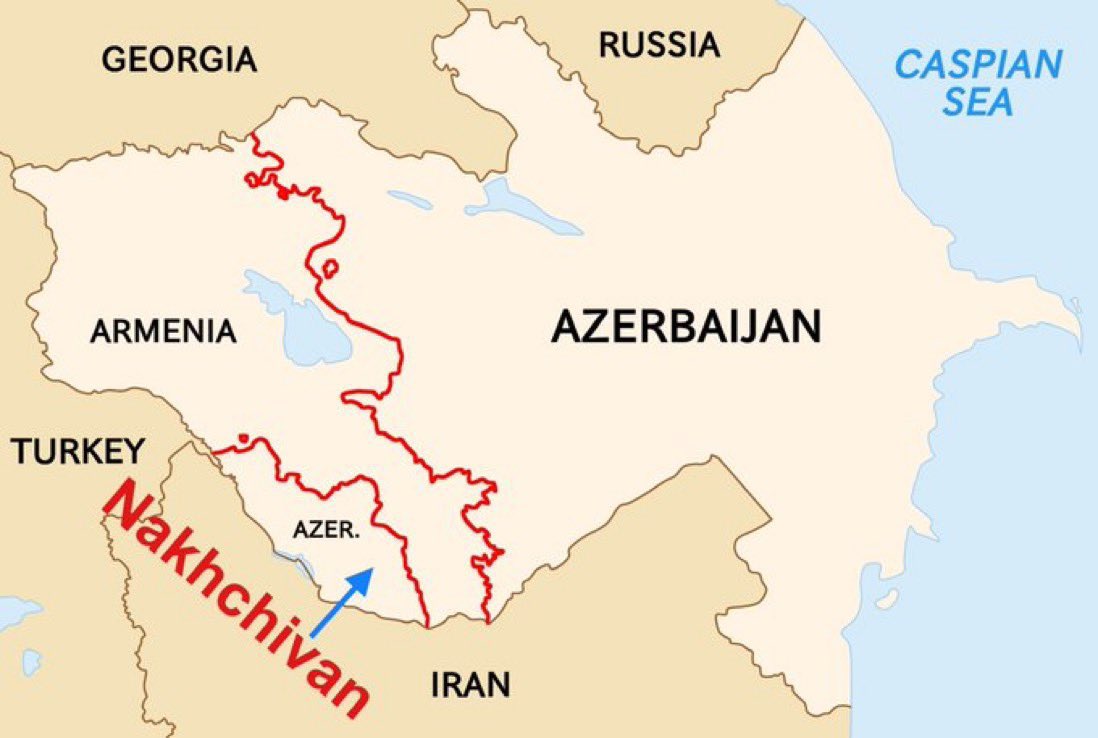
With a population of 400,000 Nakhchivan has been cut off from mainland #Azerbaijan for the last 30+ years. Armenia continues to block Azerbaijan’s access to Nakhchivan.
𝐓𝐡𝐞 𝐏𝐚𝐬𝐡𝐢𝐧𝐲𝐚𝐧 𝐫𝐞𝐠𝐢𝐦𝐞 𝐢𝐬 𝐚 𝐭𝐡𝐫𝐞𝐚𝐭 𝐭𝐨 𝐭𝐡𝐞 𝐫𝐢𝐠𝐡𝐭𝐬 𝐚𝐧𝐝 𝐬𝐞𝐜𝐮𝐫𝐢𝐭𝐲 𝐨𝐟 𝐖𝐞𝐬𝐭𝐞𝐫𝐧 𝐀𝐳𝐞𝐫𝐛𝐚𝐢𝐣𝐚𝐧𝐢𝐬
During the shift from a semi-presidential system to a parliamentary one in 2018, Nikol Pashinyan vocally advocated for the elimination of the "super prime ministerial system." Nonetheless, once he assumed authority, this stance appeared contradictory. Despite Pashinyan's efforts to project a democratic facade, his actions revealed a different story. He maintained the very system he had previously criticized and proceeded to appoint his loyalists to key roles within that framework.
𝐂𝐨𝐧𝐬𝐭𝐮𝐭𝐢𝐭𝐢𝐨𝐧
As Prime Minister, Pashinyan frequently talks about the constitutional reforms, aiming to bolster his personal authority. Consequently, he introduces reform proposals when he deems them necessary. For instance, in 2018, Pashinyan's desire to secure an upper hand in the parliament prompted him to advocate for constitutional amendments, allowing for early parliamentary elections even during the parliament's dissolution. Subsequently, following the release of former President R. Kocharyan through a court decision, Pashinyan argued that constitutional revisions are necessary to establish independent judiciary system in Armenia. After the pandemics this proposed constitutional reforms were approved in the parliament, yet exclusively through the involvement of ruling party deputies. According to this amendment, individuals who had served at the constitutional court for over 12 years were fired paving the way for the election of new members who have close relations with Pashinyan.
𝐏𝐨𝐥𝐢𝐜𝐞
Despite accusing Serzh Sargsyan of exploiting the police for personal gains, Pashinyan failed to implement reforms in this direction over the last four years. In contrary, the police is maintained under his direct authority and assisted Pashinyan during the challenging moments. Simultaneously, he appointed his long-time friend Vahe Ghazaryan as a head of the police service. Only in 2022, Pashinyan established the Ministry of Internal Affairs and again he appointed Ghazaryan as the minister.
𝐍𝐚𝐭𝐢𝐨𝐧𝐚𝐥 𝐒𝐞𝐜𝐮𝐫𝐢𝐭𝐲 𝐒𝐞𝐫𝐯𝐢𝐜𝐞 (𝐍𝐒𝐒)
When it comes to the National Security Service (NSS), Pashinyan was not so lucky. He appointed Agrishti Keremyan, a close associate, as the head of the NSS in 2020. Appointment of the 29 years old Keremyan to this position resulted in resignation of many long-serving security agency employees. Unfortunately, this appointment proved unsuccessful, leading to Keremyan's dismissal during the 44-Day War period. Armen Abazyan holds the position of NSS's head since 2020. However, Pashinyan does not have complete confidence in him.
𝐏𝐫𝐨𝐬𝐞𝐜𝐮𝐭𝐨𝐫'𝐬 𝐨𝐟𝐟𝐢𝐜𝐞
Following the end of the Prosecutor General Artur Davtyan's tenure in 2022, Pashinyan seized the opportunity to appoint Anna Vardapetyan as the Prosecutor General who is lacking the experience in this area. Her selection was made through a parliamentary vote involving solely deputies from the ruling party. Notably, Vardapetyan had previously served as Pashinyan's legal advisor.
𝐏𝐞𝐫𝐬𝐨𝐧𝐚𝐥 𝐈𝐧𝐟𝐥𝐮𝐞𝐧𝐜𝐞 𝐢𝐧 𝐭𝐡𝐞 𝐑𝐮𝐥𝐢𝐧𝐠 𝐏𝐚𝐫𝐭𝐲
In 2013, Pashinyan founded the Civic Agreement party and in 2022, during the party's gathering, he undertook the position of party chairman for the first time. This strategic move enabled Pashinyan to expand his influence also within the party.
𝐂𝐨𝐧𝐜𝐥𝐮𝐬𝐢𝐨𝐧
By establishing total control in all strategic areas, Nikol Pashinyan controls the country based on his own preferences. This situation raises concerns regarding the safeguarding of the rights and security of Western Azerbaijanis upon their return to Armenia. A regime perceiving Western Azerbaijanis as a potential threat not only wil fail to ensure their rights and safety, but will also put serious pressures on them.
The reintegration of Karabakh Armenians into the Azerbaijani society
The President of Azerbaijan, referring to the Karabakh Armenians, has repeatedly stated that no one is above the law, “no one has a special status, no privileges.” According to the Constitution of Azerbaijan, the state regardless of their ethnic and religious background establishes and guarantees equality for all.
Political rights:
- Being a citizen of Azerbaijan implies the right to participate in the political life of the country, to establish political parties and NGOs and get funds from the government. Although there is not a separate district as Karabakh in the electoral system of Azerbaijan, such regions as Aghdam, Terter, Lachin, Shusha, Khojaly, Khojavend, Kelbajar, etc. electoral constituencies cover the area.
- The Constitution gives the right to apply to higher courts to review the decision of lower courts. Decisions of the European Court of Human Rights in relation to Azerbaijan are binding on state bodies and courts.
- In areas where Armenians are densely populated, local municipal administrations will be naturally organized by Armenians. In Azerbaijan, municipal institutions have broad powers in the socio-economic and socio-cultural spheres. In Azerbaijan, cemetries are regulated and protected by municipalities which are one of the concerning issues for Armenians.
Civil society, language, religion, education:
- According to the Constitution, everyone has the right to use native language and receive education in their native language. At present, Baku State University and Azerbaijan University of Languages have specialties in the Armenian language and Armenian studies (Caucasian studies). Students of this specialty, along with the Armenian language, also study Armenian literature, history, culture and art.
- There are all legal and practical conditions (subject to learning the Azerbaijani language) for Armenians to use their native language and receive education as citizens of Azerbaijan. Ethnic minorites use textbooks in their native language schools after the expertise and approval of the Ministry of Science and Education.
- It is possible to organize an international expert commission for preventing fraud and to determine the ownership of historical monuments of different centuries. When it is talked about the protection of the Armenian historical heritage in Karabakh, it should be taken into account the religious monuments that the Armenians claim to be theirs from the first half of the 19th century, that is, after the abolition of the Caucasian Albanian Apostolic Church by the Russian Tsar.
- Although the religious liberties of the Karabakh Armenians is inviolable, as long as the Armenian Apostolic Church continues to support separatism, its activities in the territory of Azerbaijan will be restricted. The activity of the Armenian Apostolic Church in the terriory of Azerbaijan will be one of the most problematic issue given the radical position and preaches of this religious institution about the conflict and the territorial claims.
Conclusion:
In short, there are already legal grounds and mechanisms for the reintegration of Karabakh Armenians into the Azerbaijani society. There are also successful experience dealing with different ethnic and religious minitories as a multicultural state in Azerbaijan. In some cases, taking into account the current realities, some temporary decisions and adjustment to facilitate the reintegration process are also not excluded. As part of the reintegration process, Karabakh Armenians will be able to express their concern and dissatisfaction with the institution of the Ombudsman and the judicial system of Azerbaijan. In case of disagreement with the decision, they will be able to apply to the European Court of Human Rights and other international structures with which Azerbaijan cooperates.
The full version can be read here (Google translate will help you):
https://t.co/xm5HnldM0o
Wrote for The @JamestownTweets's Eurasia Daily Monitor (EDM) journal about 𝐀𝐫𝐦𝐞𝐧𝐢𝐚’𝐬 𝐑𝐨𝐥𝐞 𝐢𝐧 𝐇𝐞𝐥𝐩𝐢𝐧𝐠 𝐑𝐮𝐬𝐬𝐢𝐚 𝐂𝐢𝐫𝐜𝐮𝐦𝐯𝐞𝐧𝐭 𝐒𝐚𝐧𝐜𝐭𝐢𝐨𝐧𝐬.
#Armenia#Russia#Sanctions
For more info: https://t.co/PqFDABsPY9
𝐏𝐚𝐬𝐡𝐢𝐧𝐲𝐚𝐧 𝐢𝐧 𝐝𝐢𝐟𝐟𝐞𝐫𝐞𝐧𝐭 𝐟𝐨𝐫𝐦𝐚𝐭𝐬…
The source of Armenia’s dependence on Russia since the mid-90s is Armenia's voluntary renunciation of its sovereignty in favor of Russia in return of supporting the aggressive and occupation policy towards Azerbaijan.
The dynamics of the negotiations brings “hour X” - the moment of making a decision − closer. 𝐓𝐡𝐞𝐫𝐞𝐟𝐨𝐫𝐞, 𝐬𝐨 𝐟𝐚𝐫 𝐏𝐚𝐬𝐡𝐢𝐧𝐲𝐚𝐧'𝐬 𝐬𝐭𝐫𝐚𝐭𝐞𝐠𝐲 𝐡𝐚𝐬 𝐛𝐞𝐞𝐧:
𝟏. Bringing negotiations to a standstill, postponing the moment of making a decision for an indefinite period and involving more mediators in the process.
��. make some decisions, but leave an element of ambiguity on key topics, and during this time enlist the support of countries, using the contradictions of these countries with Azerbaijan and Turkey.
Pashinyan's main hope is that Erdogan loses elections. As payment for this strategy, Armenia has lost strategic heights on the provisory border, the role in Karabakh has decreased, Armenia's security is on standby.
If in December Mirzoyan refused to go to Moscow for a one-day meeting because of the eco-action on the Lachin road, in May he came to Washington for negotiations for four whole days after the installation of a checkpoint on the conditional border!
The actions taken by the Azerbaijani side made senseless the “Vardanyan project”, all sorts of illegal initiatives like the “Russian Community of Nagorno-Karabakh” and even the presence of a colonel general at the head of the RPC!
The talks in the U.S. gave a clear vision on what themes there are disagreements. 𝐅𝐨𝐫 𝐫𝐞𝐬𝐨𝐥𝐮𝐭𝐢𝐨𝐧 𝐭𝐡𝐫𝐞𝐞 𝐨𝐩𝐭𝐢𝐨𝐧𝐬 𝐦𝐢𝐠𝐡𝐭 𝐛𝐞 𝐮𝐬𝐞𝐝:
1. mutual compromises
2. pressure on the parties
3. leave sensitive topics for the future and agree on topics that do not cause problems.
An attempt of all three options will be made, but Azerbaijan is not going to make compromises on the topic of Karabakh, and on the topic of enclaves, the leadership of Armenia will resist to the end.
Baku has the opportunity to disagree with what is against its national interests, while Armenia has to dodge, because in both formats, security guarantors of Armenia make real (Russia) and virtual (the West) pressure.
The West made it clear to the Armenia that it is not going to replace Russia in the context of supporting the aggressive policy of Armenia towards Azerbaijan. This is the biggest difference between the West and Russia, and it was Azerbaijan that led to this.
𝐏𝐚𝐬𝐡𝐢𝐧𝐲𝐚𝐧’𝐬 𝐭𝐡𝐫𝐨𝐰𝐢𝐧𝐠 𝐛𝐞𝐭𝐰𝐞𝐞𝐧 𝐟𝐨𝐫𝐦𝐚𝐭𝐬 𝐚𝐧𝐝 𝐚𝐧𝐨𝐭𝐡𝐞𝐫 𝐚𝐭𝐭𝐞𝐦𝐩𝐭 𝐭𝐨 𝐛𝐫𝐢𝐧𝐠𝐢𝐧𝐠 𝐧𝐞𝐠𝐨𝐭𝐢𝐚𝐭𝐢𝐨𝐧𝐬 𝐭𝐨 𝐚 𝐬𝐭𝐚𝐧𝐝𝐬𝐭𝐢𝐥𝐥 𝐞𝐧𝐝 𝐰𝐢𝐥𝐥 𝐜𝐨𝐬𝐭 𝐏𝐚𝐬𝐡𝐢𝐧𝐲𝐚𝐧 𝐚 𝐜𝐨𝐦𝐩𝐥𝐞𝐭𝐞 𝐥𝐨𝐬𝐬 𝐨𝐟 𝐜𝐨𝐧𝐟𝐢𝐝𝐞𝐧𝐜𝐞 𝐨𝐟 𝐭𝐡𝐞 𝐧𝐞𝐠𝐨𝐭𝐢𝐚𝐭𝐨𝐫𝐬 𝐚𝐧𝐝 𝐀𝐳𝐞𝐫𝐛𝐚𝐢𝐣𝐚𝐧’𝐬 𝐚𝐜𝐭𝐢𝐨𝐧𝐬 “𝐨𝐧 𝐭𝐡𝐞 𝐠𝐫𝐨𝐮𝐧𝐝”, 𝐰𝐡𝐢𝐜𝐡 𝐰𝐢𝐥𝐥 𝐟𝐮𝐫𝐭𝐡𝐞𝐫 𝐚𝐠𝐠𝐫𝐚𝐯𝐚𝐭𝐞 𝐀𝐫𝐦𝐞𝐧𝐢𝐚’𝐬 𝐩𝐨𝐬𝐢𝐭𝐢𝐨𝐧.
Installation of the checkpoint on the Lachin road by 🇦🇿: what's next?
🇷🇺was taking advantage of the ambiguity in reading the articles of the tripartite statement, each time interpreting them in its own way. Now, it is not possible to make any manipulations along the Lachin road.
Wrote for @JamestownTweets's EDM about the Azerbaijan-EU cooperation in green energy.
"Baku plans to produce 3 GW of wind and 1 GW of solar energy by 2027, 80 percent of which will be exported"
For more info: https://t.co/l2kqxMmmDr
#Azerbaijan#GreenEnergy#EuropeanUnion
Decision making chain from Khankendi to Irevan
The decision of Cassation Court of 🇦🇲 in 2003 (about Kocharyan) reaffirmed that the internal legislation of🇦🇲considers Karabakh as an integral part of🇦🇲, and illegal armed groups in Karabakh are part of the Armenian Armed Forces.
The year 2022 was marked by major clashes between the 🇷🇺-🇺🇦/Western and 🇦🇲-🇦🇿. The indirect relationship between the processes cannot be denied, but the direct relationship requires clarification. We can highlight 5 main points:
@USAmbOSCE Mr. Ambassador,
Some clarifications:
1. Lachin wasnt closed by the official gov. of Aze, but Rus peacekeepers, so adress your call to them only,
2. AZE NGO activists are just protesting there, not blocking anyone, please contact directly them and listen their position also.