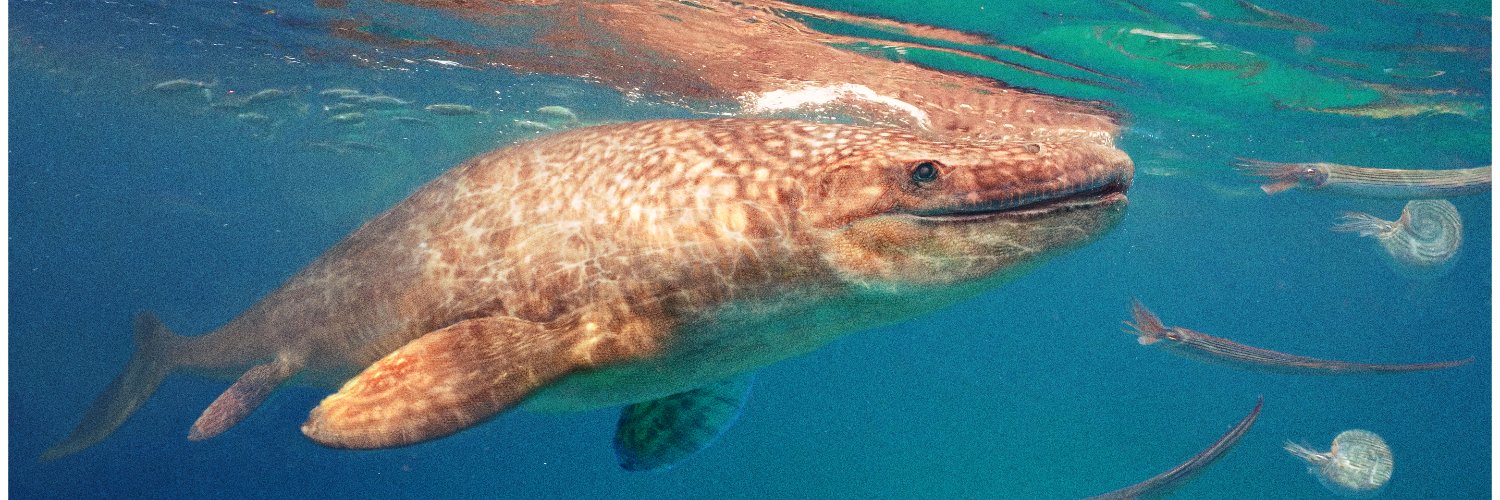
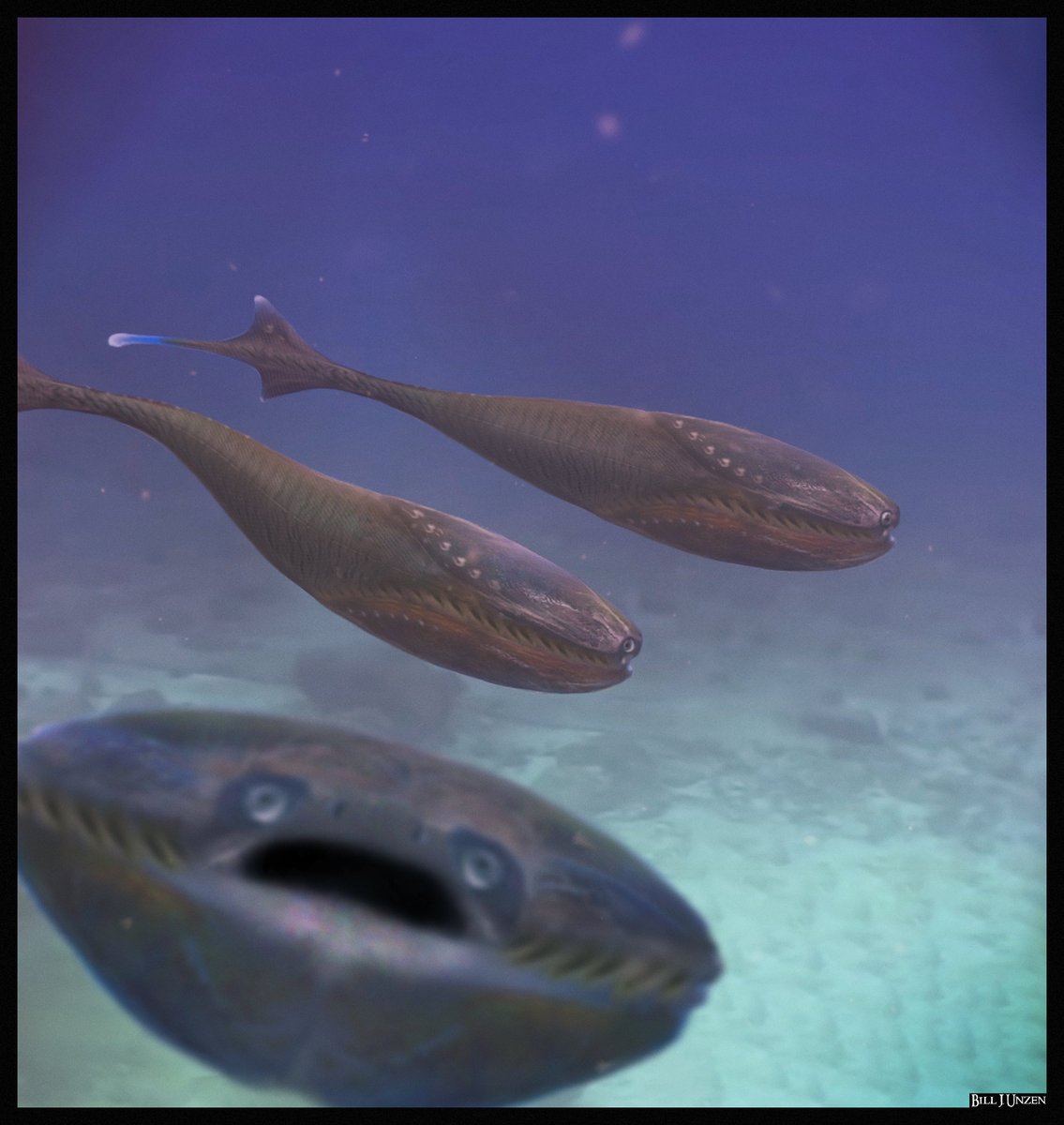
In my interpretation I pair the octopus with the giant ammonite Parapuzosia, these animals aren't known from the same localities but their time ranges overlap which makes it plausible to me that these guys, or close relatives, could have met.
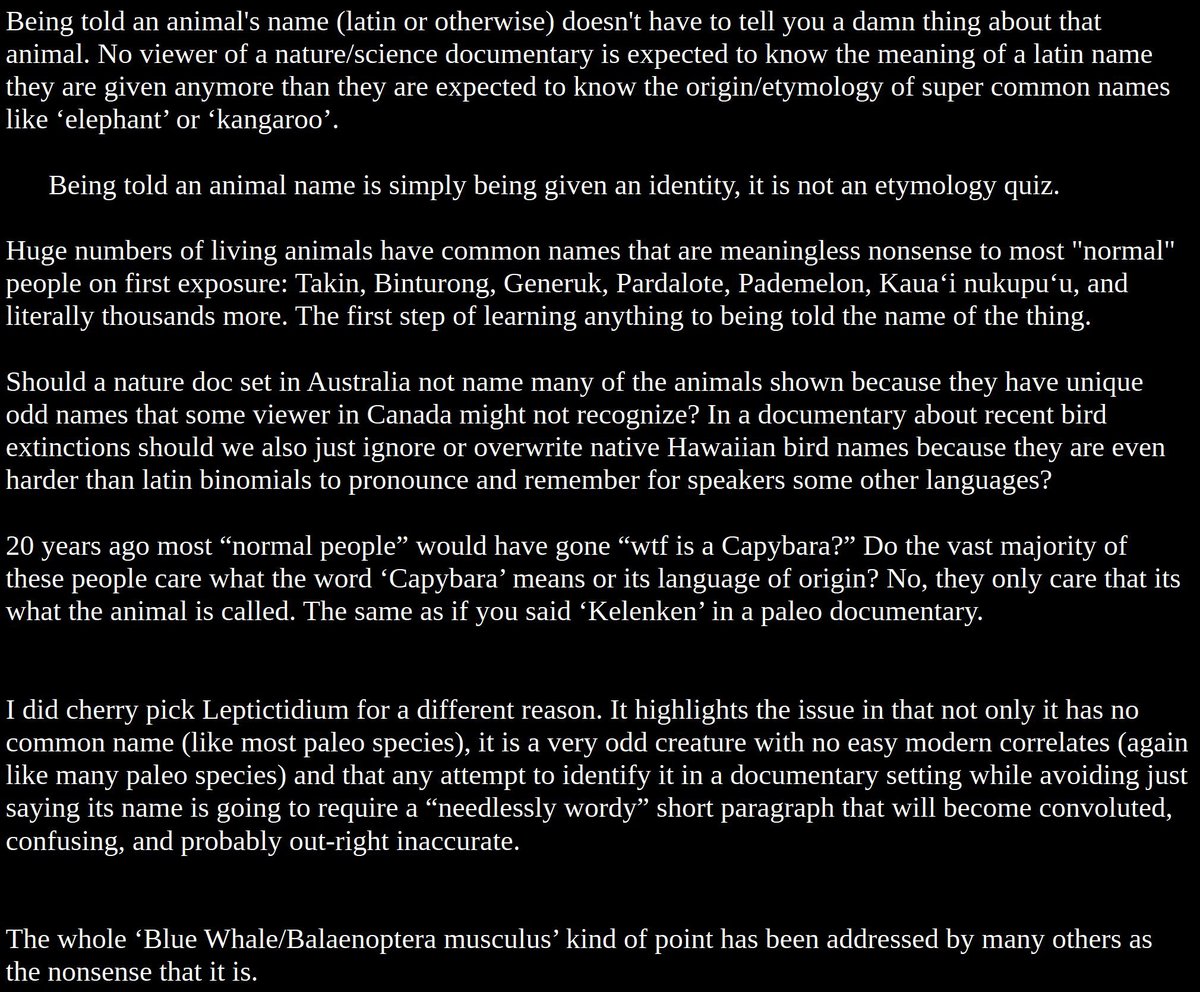
@Orribec You cherry picked an example where it’s a single word short name.
While ignoring that the name doesn’t tell us anything unless you speak Latin.
“Blue Whale” can be remembered by a normal person, they ain’t gonna remember “Balaenoptera musculus”
100% the right call. Scientific names really should only be used in academic settings, as they're needlessly wordy and subject to change as scientists debate and reassign taxonomic placements. They're also just not how people talk about extant animals. Imagine a documentary about Costa Rica's jungles being like "and here we have Dendrobates auratus" instead of "poison dart frog".
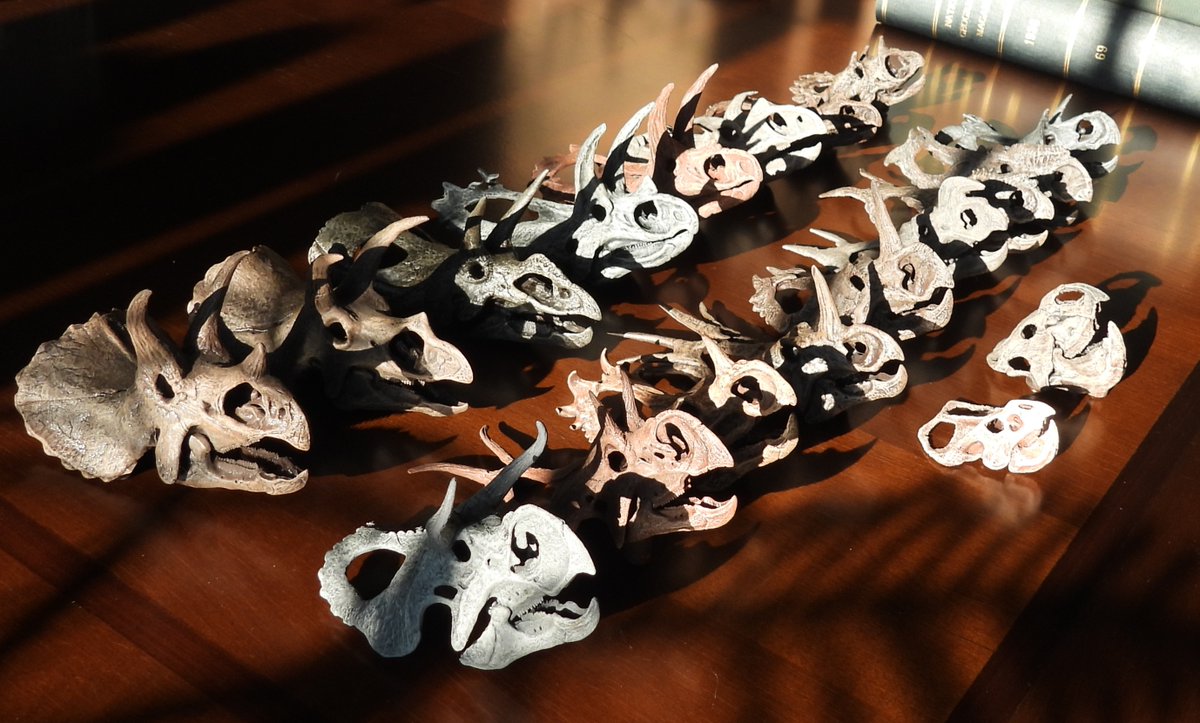
Our 25 contributing artists have started to receive their personal copies of #MesozoicArtII, the huge and spectacular new #palaeoart-themed @BloomsburyBooks book by myself and @sharkbitesteve. Truly the ultimate must-have if you're interested in representations of ancient life :)
@astrapionte Just a note on the storks: Wood Stork (Mycteria americana) likely didn't enter North America until after the Pleistocene. However, the extinct Mycteria wetmorei did and would be a suitable replacement here. It just has a straighter beak than modern Wood Stork.
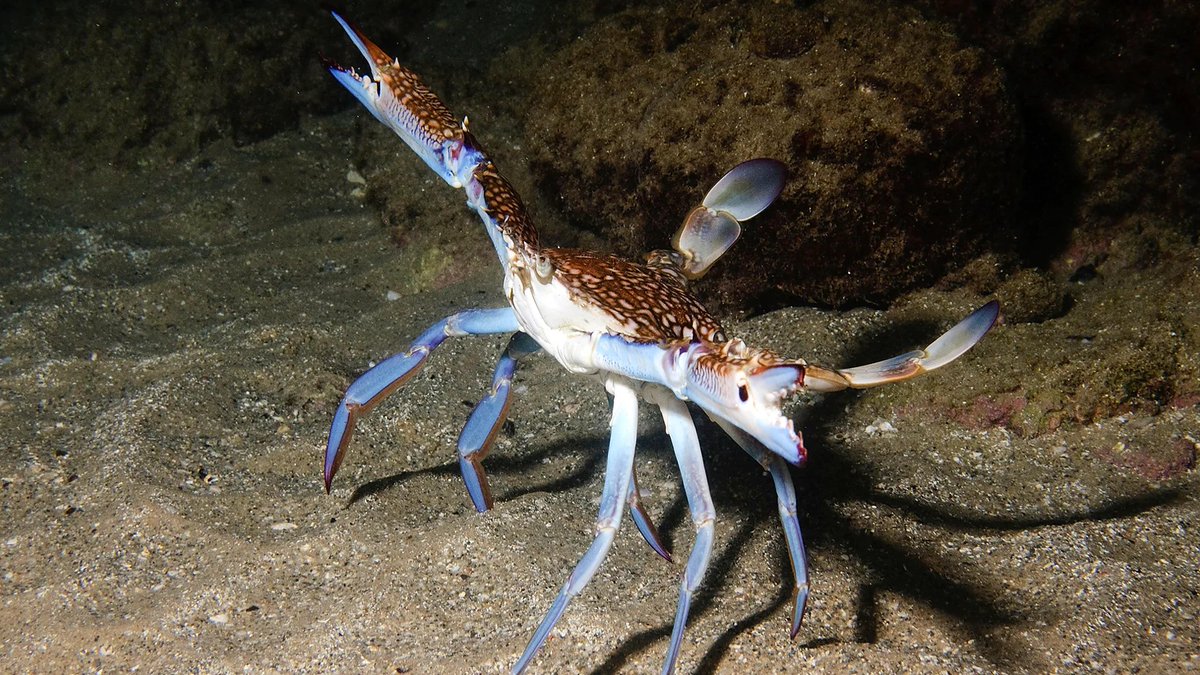
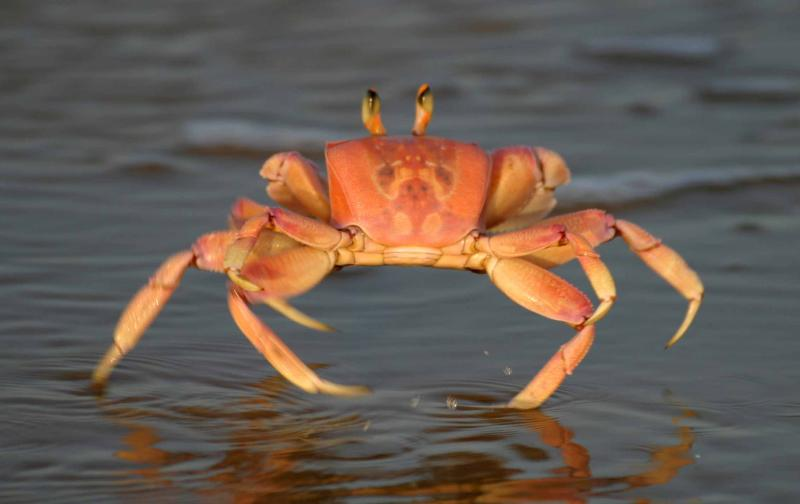
@DanPalaeon1 There are numerous crab species that routinely walk and/or run on 6 legs. The paper does mention crabs with raised paddle-shaped rear legs and the similarity of their tracks with these fossil tracks, but then seemingly glosses over this most likely (imo) track-maker.
@Riamus01@ausar_the Hall Train continued to do some great stop-motion into the late 90's. I had for a long time assumed it was 'go-motion', but it was not. Instead it incorporated a motion-smoothing software they developed (screenshot of a Hall Train youtube comment below).
@Emily_Art I just skimmed through the original script for the film and it is notably different to the final film as it only features Allosaurus ("the most vicious animal of the ancient world"). Also no Agathaumas and the Triceratops loses to the Allosaurus.
@Emily_Art ...arrives and kills Agathaumas and a Pteranodon, another ALLOSAURUS knocked Bronto off the cliff, and lastly T rex attacks a BRACHIOSAURUS during the volcanic eruption scene. Also only Allosaurus is actually named in the film's intertitles.
@Emily_Art I justed skimmed the movie (full thing is on yt) and paid attention to the details of which models are actually being shown doing what. Allo and Rex fights in order: Allosaurus kills Trachodon, Allo fights Triceratops and it driven off, Allo is killed by Agathaumas, T rex ....