When I was a young photographer I took pictures of scenery and architecture. I tried to avoid getting people into the picture.
Now, in my 70s, the only things I care about in old photos are the people.
On the heels of a wonderful release month for MASTER ALVIN, I’m happy to announce that book #4 of the series, HEARTFIRE, has joined TOR’s lovely reissue of the first six Alvin Maker books in trade paper -- with several of the novels including additional short stories. Now all the Alvin Maker stories are collected together for the first time. You can take a look here: https://t.co/5llEthsKHo
On criticism: Richard Geis taught me years ago that the harshest review is silence. A scathing review merely makes the title of your work sound familiar to a book buyer browsing. And in my experience, only a positive review is worth writing, because it may introduce readers to good books they might not otherwise have found.
We made books built to outlast us.
Cloth bound with smyth-sewn bindings, printed in the United States. Twelve children's classics across four box sets, Æsop to Shakespeare.
Chapter House is open for pre-order. Our first limited print run will ship in June.
https://t.co/WmjEZju9nH
Orson Scott Card said American fantasy readers have lost knowledge of their own history — and he's right.
I interviewed him today. He also had things to say about Tolkien's shadow, Martin, Sanderson, and finishing the Alvin Maker saga after 39 years.
This man was cancelled by DC Comics and mainstream publishing for being a Christian. Ender's Game outlasted all of them.
Interview up on Fandom Pulse. Link in the replies.
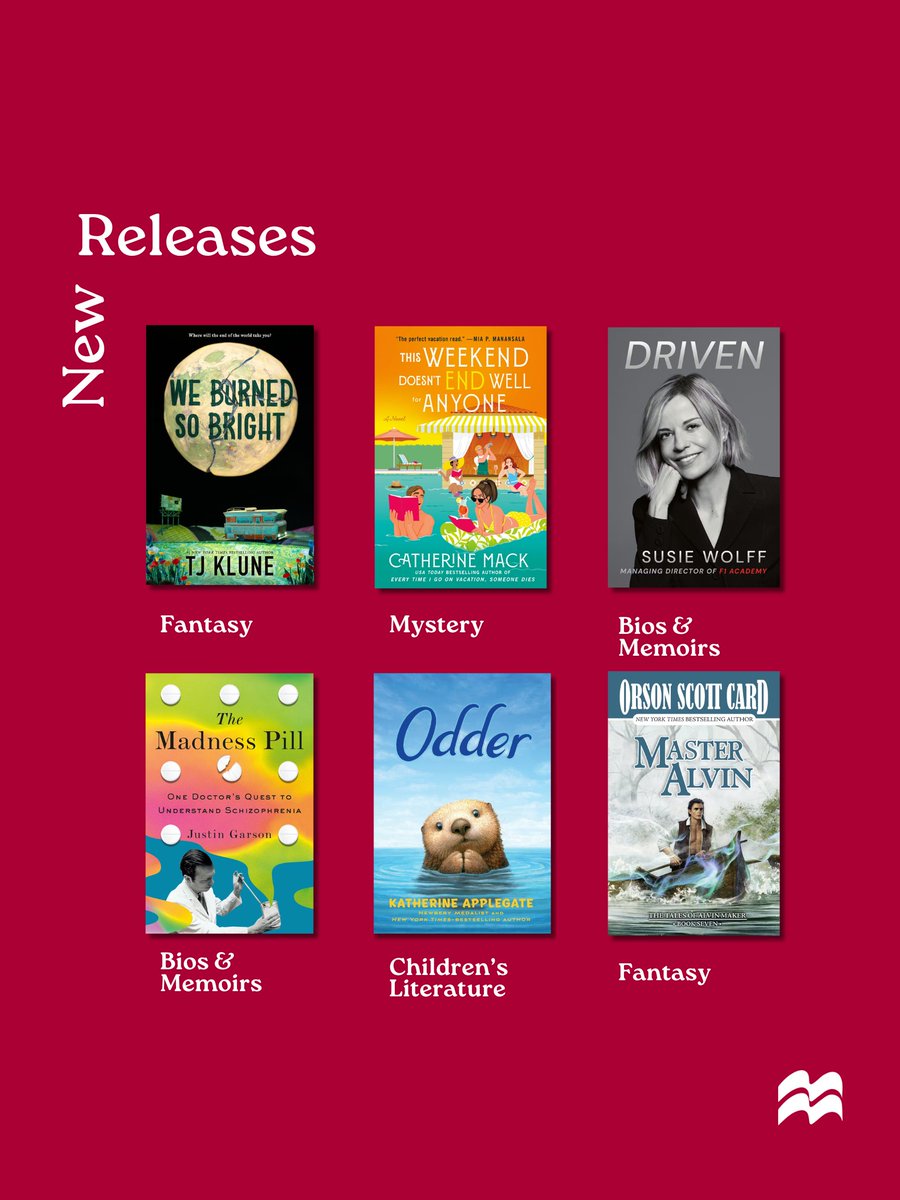
MASTER ALVIN is the finale to a series that truly began forty-five years ago, in 1981, with a poem.
This last & seventh volume contains “Prentice Alvin and the No-Good Plow” in its entirety (as well as the story of how it came to be).
For fun, here’s the opening stanza:
“Alvin, he was a blacksmith’s
prentice boy,
He pumped the bellows and he ground the knives,
He chipped the nails, he het the
charcoal fire,
Nothing remarkable about the lad,
Except for this: He saw the world askew,
He saw the edge of light, the frozen liar
There in the trees with a black smile
shinin cold,
Shiverin the corners of his eyes.
Oh, he was wise.”
https://t.co/R02FzRLdWW
MASTER ALVIN #audiobook OUT NOW! In the thrilling finale to @orsonscottcard's Alvin Maker series, Alvin must use his extraordinary powers to keep the people of Crystal City safe from darkness
Full cast ft. @StefansEcho, @GiftoGab & more! @MacmillanAudio
https://t.co/LVhGCLhGQi
By sheer chance, Master Alvin (the Tales of Alvin Maker finale) and Writers of the Future volume 42 (with a new story by OSC) both launch today, 4/28.
Writers of the Future 42 will, like its predecessors, be the best anthology of new fiction of its year. WoF is where the careers of great new SF and Fantasy writers begin, as the field of speculative fiction continues to reinvent itself.
You can order the anthology here: https://t.co/fPneenNKm7
Shirley MacLaine should be on every list of the great film actors. She has triumphed in every genre she’s tried, and as an accomplished dancer, she was just as deft with a laugh line and as delicate with heartache as she’d be with any choreography. And she’s still here! But are there any screenwriters creating Shirley MacLaine-worthy roles anymore? Please, get to work.
For completists (and those thinking of starting the series for the first time):
MASTER ALVIN’s publication will be accompanied by a re-release, in trade paperback ONLY, of the earlier volumes in the series — and several will now incorporate the standalone Alvin Maker short stories that were published throughout the years.
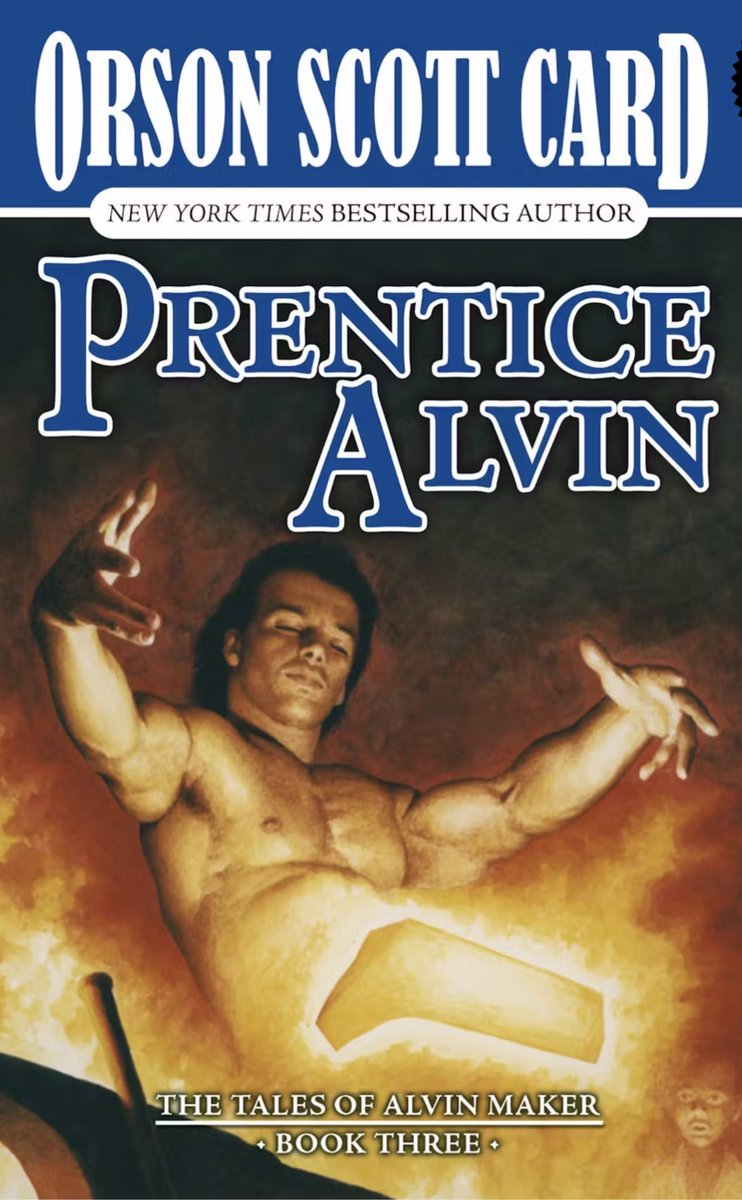
The bonus material will be included in Books 3-6 (Prentice Alvin, Alvin Journeyman, Heartfire, and Crystal City) and will appear in each book approximately where they occurred in the timeline of events in the saga.
Below are the links which will take you to their Tor (Macmillan) pages, where you’ll find links to all booksellers where the reissued trade paperbacks (5” x 8” size) will be sold. (Heartfire is not quite ready to ship, but will be soon).
https://t.co/rM1zWXvnL8
https://t.co/q0rto5t6Dv
https://t.co/Aem5d1XsIb
https://t.co/1e2QlrLseL
https://t.co/Q2OXKkJS5m
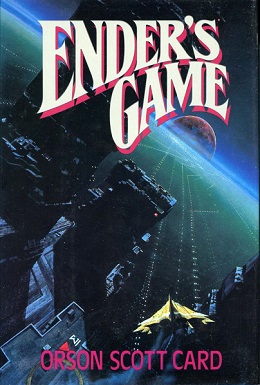
Ender’s Game is what I’m known for, and gratefully so. But it may be The Tales of Alvin Maker through which, if you tell me you’ve read them, I feel most known.
Master Alvin, the final book of the series, will be out this Tuesday, April 28.
Thank you to those who’ve patiently waited, and those who have eagerly prodded… and all who’ve taken these stories to heart and made them finer for being there.
Preorder on Amazon: https://t.co/6QnJg2wSTl
Preorder on Barnes and Noble: https://t.co/WWH4WdSHSa
Preorder on IndieBound (https://t.co/2HlYaBqQYB):
https://t.co/lh6VgytHvb
You don't need advice from editors on rejected manuscripts.
My short story “Ender's Game” was rejected by Ben Bova at Analog back when that was the top market for a sci-fi story. Ben gave me feedback. He thought the title should be “Professional Soldier” and he said to “cut it in half.”
But I knew he was wrong on both points and submitted it to Jim Baen at Galaxy. He sat on it for a year, and responded to my query with a rejection. There was some kind of explanation, but I don't remember what it was. I concluded at the time that Baen's comments showed that he had barely glanced at the story.
So … I got feedback both times, but it was not helpful. I looked at Ben's rejection again. What was it about the story that made him think it should, let alone COULD, be cut in half?
Apparently it FELT long. What made it feel long? Now, post-Harry Potter, I would call it the quidditch problem. I had too many battles in which the details became tedious. So I cut two battles entirely, merely reporting the outcomes, and shortened another. In retyping the whole manuscript (pre-word-processor, that was the only way to get a clean manuscript), I added new point-of-view material to the point that I had cut only one page in length. So much for “in half.”
But I already knew that my manuscripts did not need cutting — if it wasn't needed, it wouldn't be there in the first place. Even the battles were still there, but instead of showing them, I merely told what happened (so much for the usually asinine advice “show don't tell”), which kept the pace going.
Those changes made, I sent it to Ben again. I did not remind him of what he had advised me to do. I merely told him I liked my title, and said, “I have addressed your other concerns,” which was true. I figured he wouldn't remember what his exact words had been. My answer was a check. That revised story was the basis for my winning the Campbell Award for best new writer.
Did Ben's feedback help? Yes — but his specific advice was not right, and I knew it. On my next two submissions, Ben hated my endings, and I revised as suggested. The fourth submission he rejected outright, and the fifth, and I thought, Am I a one-story writer? I went back to Ender's Game and tried to analyze why it worked. Then, deliberately imitating myself, I wrote “Mikal's Songbird.” Ben bought it, and it received favorable mentions. I was afraid then that I had consigned myself to writing stories about children in jeopardy. But in fact I was writing character stories rather than idea stories. And THAT was how I built a career, not by self-imitation, and not by following editorial suggestions.
I did get wise counsel from David Hartwell on my novel Wyrms, but that was on a book that was already under contract, and it was story feedback, not style. I got wise counsel from Beth Meacham, too, on various books over the years — but again, only on books that were under contract. I also received appallingly stupid advice from the editor of my novel Saints, which temporarily destroyed the book's marketability; after that, I was allowed to go back to my original structure and save the book — now it's one of my best.
Editors don't know more than you about your story. They especially don't know why they decide to accept or reject stories. YOU have to know what your story needs to be, and take only advice that you believe in.
Your best counselor on a story nobody bought is TIME. Let some time pass and then reread the story. Don't even think about why it Didn't Work. Instead, think about what DOES work, and then write it again, a complete rewrite, keeping nothing from the previous draft. Find the right protagonist and begin at the beginning — the point where the protagonist first gets involved with the events of the story. Be inventive — the failed first draft no longer exists, so you're not bound by any of your earlier decisions. THAT is how you resurrect a good idea you did not succeed with on your first try.