Sure, but the problem was that you had the sons of poor Russian priests trying to take seminary classes in Latin, which they didn't understand, and then go and be pastors in Russian peasant village churches. They weren't actually learning, because they couldn't understand it, and it wasn't really effective if the goal was to train them to be good priests in their village churches.
On the question of "Latin captivity" of Orthodox theology in the era from ~1453 to the 20th century: I am far from an expert, but my sense is that this reality is more complex than either the pro or con sides would say. It's blindingly obvious that Orthodox writers adopted Western terminology and methods of argumentation during this period. Often, this was reactive, such as using Roman Catholic arguments against Protestants. The fact that an Orthodox writer's language matches Roman Catholic terminology doesn't automatically mean that the writer intended to adopt the entire substance of what that term means within Roman Catholicism. This is a broader reading problem that affects debates about "atonement" but I'm not going to go into that right now. We in the West are particularly at risk of misreading our forbears in this regard, because we often unknowingly hold to heterodox presuppositions about what a term means, and we can then impose that presupposition onto Orthodox texts. It's really dangerous, and we need to approach these things with circumspection.
That said, of course, not all Orthodox writers are identical. Some, like Eustratius Argenti, were pretty obviously using Western terms and arguments for polemical reasons without intending to embrace all the underlying Western concepts. Others may have really held to erroneous Western theological ideas.
The fact that Orthodox seminarians in Russia were forced to learn theology in Latin should be an obvious indicator that something was off-base, as St Philaret of Moscow said below. Saying that there were real problems in Russian theological education during that era shouldn't be controversial; after all, the most famous product of a prerevolutionary Russian Orthodox seminary was Joseph Stalin, and the seminaries were known hotbeds of revolutionary activity for decades. Obviously, the seminaries were not doing a generally excellent job of training up godly men.
The use of Latin in Russian seminaries was such a crazy thing. I wrote about this a few years ago.
Metropolitan Philaret of Kiev argued that Latin was necessary to study the Church Fathers. His Moscow counterpart, St Philaret, countered that if we want to teach students theology, we must do so in a language they can actually understand. St Philaret added, “Besides, the fact that Orthodox theology is dominated by Latin, once pagan but now papist and protestant, is not a phenomenon fully consistent with the spirit and goal of ecclesiastical schools of the Eastern Church.”
https://t.co/IjU2ZZixh8
The use of Latin in Russian seminaries was such a crazy thing. I wrote about this a few years ago.
Metropolitan Philaret of Kiev argued that Latin was necessary to study the Church Fathers. His Moscow counterpart, St Philaret, countered that if we want to teach students theology, we must do so in a language they can actually understand. St Philaret added, “Besides, the fact that Orthodox theology is dominated by Latin, once pagan but now papist and protestant, is not a phenomenon fully consistent with the spirit and goal of ecclesiastical schools of the Eastern Church.”
https://t.co/IjU2ZZixh8
“He could recite Latin poetry from memory, but had hardly heard of St. Gregory Palamas!”
Dimitry Pospielovsky describing the typical 17th century graduate of the Kiev Academy
The Orthodox Church in the History of Russia, p. 99
It's all bound up together. You had Russian seminaries copied from Western models, teaching students in Latin (which they didn't understand) to become priests for Russian peasants who didn't know Latin and also couldn't understand Church Slavonic. The whole thing was a mess. At the same time St Philaret was advocating for seminary instruction in Russian, he was spearheading the translation of the Bible into modern Russian, which was extremely controversial and seen by critics as a kind of Protestantization of Orthodoxy (even though he didn't suggest using modern Russian liturgically).
The broader problem is that a lot of the institutional structures of Russian Orthodoxy in that period were not serving the pastoral needs of the faithful. That's what underlies all of this.
I don't think St Philaret was anti-Latin language altogether. He was saying, we should teach students in a language they understand. And when Philaret of Kiev responded with "well how else will they read the Fathers, if not in Latin??" then Philaret of Moscow countered with "why are we relying on Latin to teach the Orthodox Fathers?"
The job of Russian seminaries was to train young men to serve as (mostly) village priests for Russian peasants. And the young men themselves were mostly the sons of poor priests. Teaching them in Latin, rather than in a language they actually understood, was not conducive to producing the kind of graduates the seminaries were ostensibly intending to produce.
@maksimologija I think part of the problem is that you had a bunch of peasant sons of priests going to seminary and trying to learn in Latin, which they could not understand. These young men were being trained to be village priests, not academics.
On the question of "Latin captivity" of Orthodox theology in the era from ~1453 to the 20th century: I am far from an expert, but my sense is that this reality is more complex than either the pro or con sides would say. It's blindingly obvious that Orthodox writers adopted Western terminology and methods of argumentation during this period. Often, this was reactive, such as using Roman Catholic arguments against Protestants. The fact that an Orthodox writer's language matches Roman Catholic terminology doesn't automatically mean that the writer intended to adopt the entire substance of what that term means within Roman Catholicism. This is a broader reading problem that affects debates about "atonement" but I'm not going to go into that right now. We in the West are particularly at risk of misreading our forbears in this regard, because we often unknowingly hold to heterodox presuppositions about what a term means, and we can then impose that presupposition onto Orthodox texts. It's really dangerous, and we need to approach these things with circumspection.
That said, of course, not all Orthodox writers are identical. Some, like Eustratius Argenti, were pretty obviously using Western terms and arguments for polemical reasons without intending to embrace all the underlying Western concepts. Others may have really held to erroneous Western theological ideas.
The fact that Orthodox seminarians in Russia were forced to learn theology in Latin should be an obvious indicator that something was off-base, as St Philaret of Moscow said below. Saying that there were real problems in Russian theological education during that era shouldn't be controversial; after all, the most famous product of a prerevolutionary Russian Orthodox seminary was Joseph Stalin, and the seminaries were known hotbeds of revolutionary activity for decades. Obviously, the seminaries were not doing a generally excellent job of training up godly men.
Glory to God! The Holy Synod of the Romanian Orthodox Church has decided to include Saint Gabriel Urgebadze the Fool for Christ in its church calendar being celebrated on November 2, starting next year.
I am happy and honoured that the Holy Synod approved the request I submitted following the visit to Tbilisi for Patriarch Ilia II’s funeral. The request was a normal act of reciprocity since the Georgian Orthodox Church had earlier included several Romanian saints into its calendar.
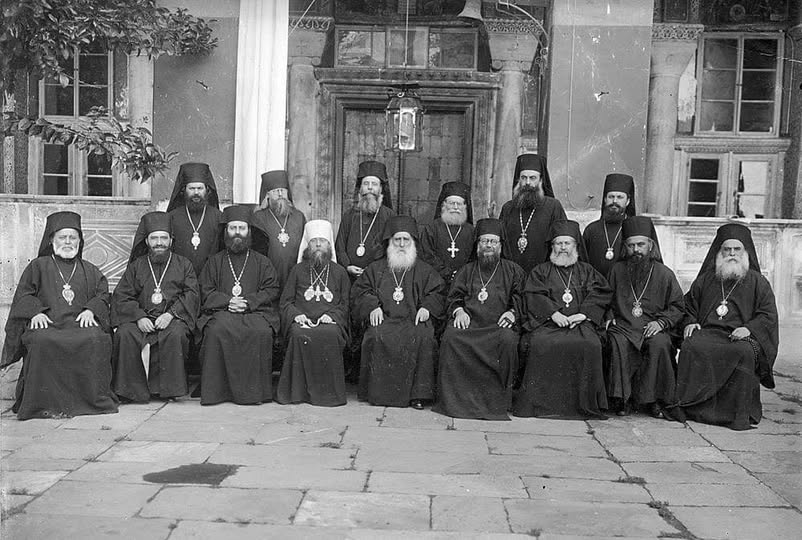
Свети владика Николај Српски у посети Светој Гори 1930. године.
Фотографија је настала у светогорском манастиру Ватопеду. Свети Николај седи други с десне стране. ✍️✍️✍️
So either (a) all the Fathers closest in time to the Apostles were wrong, and the correct teaching only appeared in the 3rd century, or (b) the earlier and later Fathers actually were both right.
There’s certainly nothing in the later Fathers that would suggest that a demon-possessed human couldn’t mate and produce offspring. And there’s nothing in the earlier Fathers that would suggest that the manner in which the fallen angels took human form was via possession of a human being. If, as Fr Stephen has posited, this is what happened in Genesis 6 and afterward, or means that there’s no contradiction between the earlier and later Fathers, and no need to declare all those earlier Fathers to be in error.
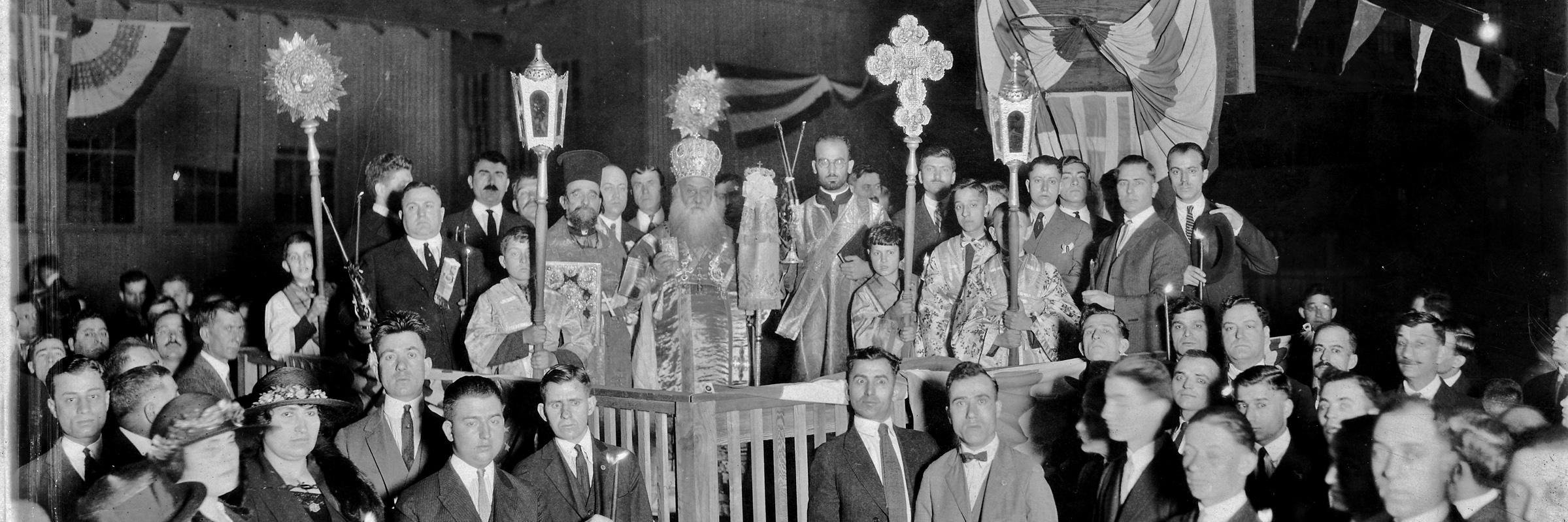
This is accurate, but we have to understand it in context: at that time, the best way for Orthodox priests to be taken seriously by Americans was to dress like heterodox clergy, who, back then, were respected leaders in society. We live in a completely different context and I’m confident that St Raphael would, today, have the same approach that Metropolitan Saba does — clergy should generally have nice beards and wear cassocks, but he’s not rigid and allows the clerical suit (which I personally dislike) if the priest considers it better for his ministry.
"Bishop Raphael [St Raphael of Brooklyn] preferred that his priests dress like the pastors of other denominations so that they were easily recognizable as Christian clergymen."
Apostle to the Plains: The Life of Father Nicola Yanney p.189
@desertcynic If you actually listen to LoS you know that they always bring the topic back to personal repentance and one’s relationship with Christ and our neighbor.
If you haven’t actually read or listened to what Fr Stephen has said on this matter, you should do that before offering a critique. As I’ve said to you already, Fr Stephen has said that demon-possessed humans mated with other humans to produce offspring that were biologically human just like us.
The real issue is that fallen angels — the same fallen angels — have been conspiring against humans for millennia, and they’re actively trying to destroy each one of us at this very moment. We are at war, but Christ has already defeated them and by uniting ourselves to him we can be saved.
@ravensonthewall@seraphim199@FrLillie It’s pretty clear from Scripture that spirits do not have flesh and bones (as Christ says), and that when they appear to be physical, it’s just illusory (cf. Raphael in Tobit).
The real issue is that fallen angels — the same fallen angels — have been conspiring against humans for millennia, and they’re actively trying to destroy each one of us at this very moment. We are at war, but Christ has already defeated them and by uniting ourselves to him we can be saved.


![alexei_karamazo's tweet photo. "Bishop Raphael [St Raphael of Brooklyn] preferred that his priests dress like the pastors of other denominations so that they were easily recognizable as Christian clergymen."
Apostle to the Plains: The Life of Father Nicola Yanney p.189 https://t.co/qCAY0WbHqk](https://pbs.twimg.com/media/HJnlPbYWoAMUoU2.jpg)







![alexei_karamazo's tweet photo. "Bishop Raphael [St Raphael of Brooklyn] preferred that his priests dress like the pastors of other denominations so that they were easily recognizable as Christian clergymen."
Apostle to the Plains: The Life of Father Nicola Yanney p.189 https://t.co/qCAY0WbHqk](https://pbs.twimg.com/media/HJnlbbdWoAwxjIP.jpg)


