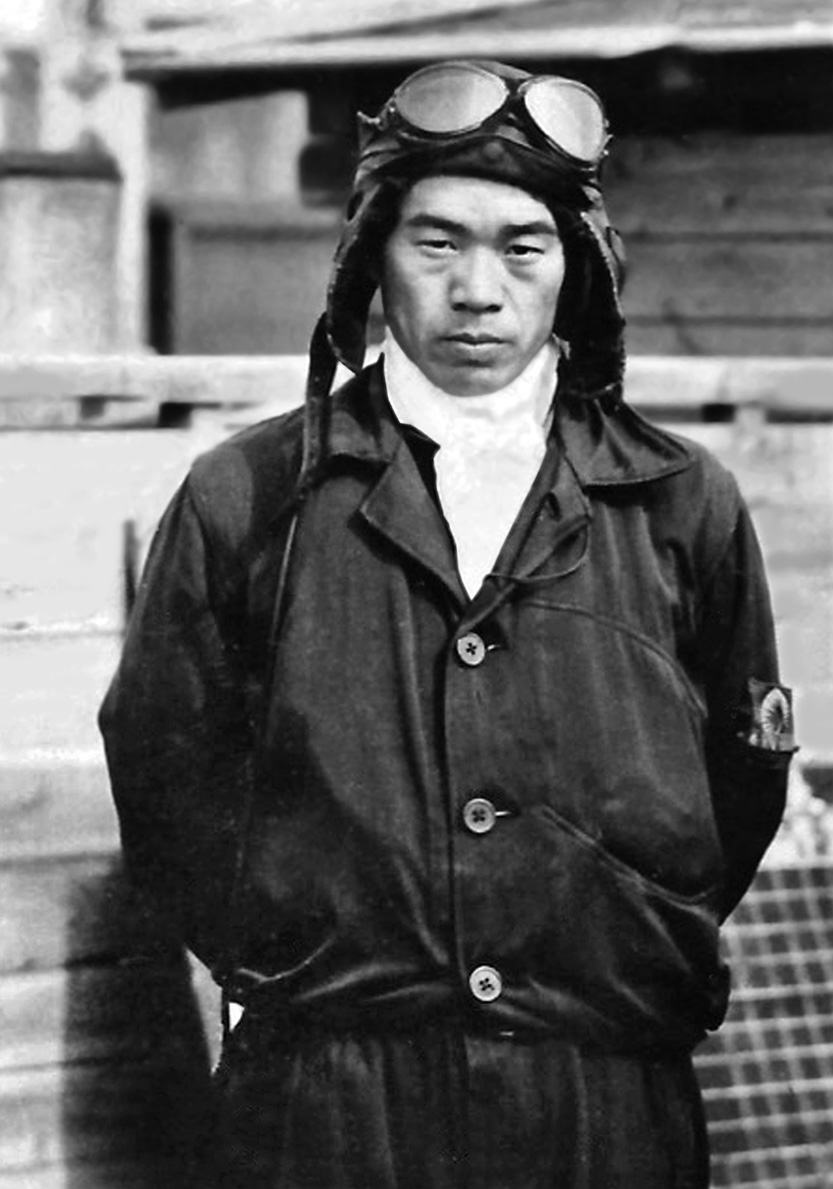
Saburo Sakai was the greatest Japanese fighter ace to survive the war. Sixty-four confirmed kills. Flew the Zero against the P-40, the P-38, the Hellcat, and the Corsair.
Over Java, in early 1942, he caught a lone American DC-3 transport plane in his gunsight. An easy kill. Standard target. He closed to point-blank range.
Then he looked into the cockpit.
The cockpit was full of women and children, Dutch civilian refugees trying to get out of the East Indies ahead of the Japanese advance. One of the women, holding a baby, looked out the side window straight into Sakai's canopy.
Sakai did not fire.
He broke off, saluted the woman, and let the DC-3 fly west into the sun.
Years later, in American interviews, he explained himself plainly.
"I am a samurai. My father's father was a samurai. We do not shoot women and babies. If my ancestors saw me fire into that cockpit, I would not be able to meet them when I died."
Five months later, over Guadalcanal, Sakai took a .50 caliber round through the canopy of his Zero. The bullet went through his head. It blinded his right eye and tore open his skull.
By every medical reasonable expectation he should have gone down.
He flew his damaged Zero four hours and 650 miles over the Pacific, bleeding into his flight suit, half-blind, repeatedly losing consciousness. He landed it, intact, on Rabaul.
He survived the war with one eye.
After the war, Saburo Sakai did not hate Americans. He became a Buddhist. He said in interviews that he had killed too many men already and would not do it again, not even in his own thoughts. He corresponded for years with former American Navy pilots who had been his opponents.
When American pilots began visiting Yasukuni Shrine in Tokyo to pay respects to Japanese pilots they had shot down, it was Saburo Sakai who met them at the gate and walked them in. Enemy pilot. Enemy pilot. Both with white hair. Side by side, bowing at the memorial of men they had tried to kill.
"We were warriors," Sakai told one American interviewer. "Now we are old. Only the young should hate. The old should remember."
Japan had Zamperini forgiveness. Japan had Fuchida reconciliation. Japan also had Saburo Sakai, who refused to fire at women, took a bullet through the head, and spent his old age walking American pilots into Yasukuni.
Warriors recognize warriors.
Even after the war is gone.