Jaindi Kisero
I have come across a letter from the National Treasury directing the state department of roads to immediately cancel all project-related commitments; including contracts procurement processes; consulting arrangements; and any other obligations on the multi billion Japanese funded Likoni Bridge project.
This development is a statement of the increasing political influence of Chinese contractors and the strong links with incumbent elites.
It is a big anti climax. First, the project has been running since 2019. Secondly- designs were done and consultants are already in place. The first tranche of the loan was disbursed. Advance payments flowed to consultants. A procurement competition was run to its conclusion. A winner emerged. And then — nothing. For nearly two years.
I am inclined to agree with a cynical opinion of an insider who has been following the shenanigans around the Likoni Bridge project for a long time who says ‘when they are unable to get a good cut or backhander on a project, they turn to the Chinese”.
For sometime now and to set the stage for cancellation of the deal with the Japanese; a new narrative was floated within government circles: that the project is too expensive and the financing model should be rethought. That Kenya could instead mobilise domestic resources—pension funds and institutional investors—through an infrastructure fund model. That a securitisation structure, possibly involving a Chinese contractor, could deliver the same project more cheaply.
Each argument is very controversial. Pension fund money carries market return expectations — a far higher cost of capital than 0.1 percent interest, the 12-year grace period, a 30-year repayment window, and an outright grant element worth Sh 6 billion which the Japanese had committed.
Yes, a securitisation transaction with a Chinese contractor may be an option. But it embeds financing costs inside the construction price, making it opaque and almost always more expensive in aggregate. Do we really want to hand back the Sh 6 billion grant element on the Japanese loan?
Then there is the diplomatic cost, which is being ignored. Whem the Jpanase foreign Affairs Minister, Mr Toshimitsu Mogei visited Kewnya in May,the Likoni brifdge wasa top agenda item. Japan helped author the Mombasa master plan. Japan is funding the ongoing rehabilitation of Mombasa Port. Japan designed the Dongo Kundu Special Economic Zone as the flagship of Kenya's entire SEZ programme — the first domino in a sequence intended to include Naivasha and Kisumu.
Cancel this credit, pivot to a Chinese deal, and we must look Tokyo in the eye and explain ourselves. We must be prepared for the consequences at the port, at Dongo Kundu, and in every future ODA conversation with an ally cultivated over decades — all to spare someone the inconvenience of a transparent procurement outcome they did not control.
Grand corruption does not always arrive with a smoking gun. Sometimes it arrives as a memo recommending delay. Sometimes it wears the language of fiscal prudence and alternative financing mechanisms. Sometimes it sits in a procurement committee and does absolutely nothing.
Kenya is reportedly moving to cancel the Japanese-funded Likoni Bridge project despite years of preparation, completed designs and an already concluded procurement process.
The shift could mean losing a Sh6 billion grant and cheap Japanese financing in favour of a potentially more expensive Chinese deal.
We will never forget! No amounts of bribery, intimidations, abductions, killings na kijipiga kifua can stop this movement!the wicked deserve no mercy at all
#RutoMustGo
I wish, as 2025 draws to a close, to honour @OkiyaOmtatah for his prolific and indefatigable PUBLIC INTEREST LITIGATION initiatives on behalf of Kenyans. This is valued service to his country. His contribution deserves a doctoral thesis. https://t.co/f439BuJ5ZO
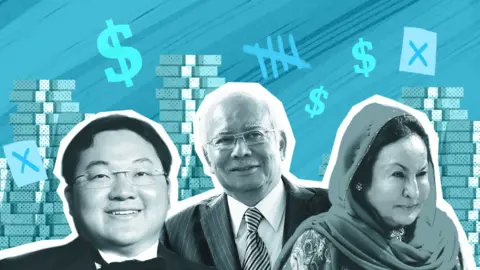
One morning in 2009, Malaysian officials decided they could outplay their constitution.
They set up a fund called 1MDB, sold to the public as a “strategic development vehicle” to accelerate infrastructure and national growth. Instead of keeping it tightly inside normal budget controls, they placed it in corporate structures, special-purpose entities, and government-linked companies that looked commercial but carried sovereign backing.
That single design choice broke the firewall.
Once money started moving outside Parliament, outside routine audits, and outside transparent procurement, oversight collapsed. Billions were borrowed in the name of development. Officials and politically connected insiders signed opaque deals, shifted funds through shell companies, and routed money across borders.
By the time the dust settled, over USD 4.5 billion had been stolen or misappropriated. Some of it funded luxury real estate, private jets, jewellery, yachts, and even Hollywood movies. Malaysia’s taxpayers were left with the debt. Senior officials went to prison. The country’s reputation was shredded.
Here’s the lesson that matters for Kenya.
1MDB did not fail because development funds are bad. It failed because public money was deliberately pushed outside constitutional budget discipline and rebranded as “investment capital.” Once that happened, theft was no longer an accident but systematic. Any chokoraa can withdraw the money as they want.
That is why our Katiba is uncompromising on this by the way. Public money belongs in the Consolidated Fund. Spending authority belongs to Parliament. Withdrawals require the Controller of Budget. Audits belong to the Auditor-General. Cabinet has no constitutional role in creating or controlling money vehicles. This must be understood well by the idiots trying to justify this.
So when Kenyans hear about a National Infrastructure Fund structured as a limited liability company and announced by Cabinet nod, history should ring loudly.
1MDB is not ancient history but a clear signal of what that awaits Kenya.
Kenya's National Women's Volleyball Team The Makia Strikers are at the World Championships in Thailand. They play Germany tomorrow in their opening game.
They are however crying out for Government promised allowances that were due weeks ago. They even met the CS Mvurya who said allowances would be paid "tomorrow" (weeks ago)
They say even money given to their Federation by their Betting partner; has been used in part for kit and some costs; but the promised allowances... 🤷♀️
Imagine being out there representing the Nation on the WORLD stage; and worrying about what your family will eat. Rent. School fees.
These girls; who have brought so much pride to Kenya in the past; just want their dues so they can focus on the games.
This video they sent me is a bit long (full 12 min video on my fb) but they need our voices to help get this message out.
And Dear Mr President; Malkia Strikers are Kenyans too.
In other words: "Why are you guys so angry about me stealing, when all these others have stolen before me, yet you didn't make this much noise? It's so unfair, guys. Mnanionea. Wacheni mimi pia niibe vile nataka."
We need your assistance in identifying these individuals. They were part of a state-hired militia that attacked people at the KHRC office yesterday during a press conference held by Kenyan mothers. The mothers were calling for an end to arbitrary arrests, enforced disappearances, and extrajudicial killings that occur during protests. You can watch the CCTV footage here and assist in identifying others:
https://t.co/NjECw1YU6N
1/2