It was great opportunity to exhibit during CNOOC Enterprise Development Program @HoimaCity @buffalohotel @CNOOCUgandaLtd@StrategicEngage . Present is His Lordship Mayor of Hoima City and Mathew, National Content Manager of CNOOC Uganda
We are honoured to host the 9th AFREhealth Annual Conference, bringing together health professionals, researchers, policymakers, and industry leaders from across Africa to foster knowledge exchange, explore innovative solutions.
#VisitMunyonyo#AFREhealth_2
Miria Obote (born 16 July 1936) is a prominent Ugandan politician and the widow of former President Milton Obote. She is notably the first woman to lead a major political party in Uganda.
She served as First Lady during both of her husband's presidential terms: from 1966 to 1971 and again from 1980 to 1985.
Following Milton Obote's death in October 2005, she returned from exile and was elected president of the Uganda People's Congress (UPC) in November 2005.She is credited with sustaining the UPC during periods of internal division and for normalising women's participation in high-level leadership contests. Recent reports from April 2026 indicate she continues to be a respected elder figure, participating in family and national commemorative events
She contested the 2006 general election as the UPC flag bearer, becoming the first woman to ever enter the race for the Ugandan presidency. She finished fifth, receiving approximately 0.8% of the total vote.
Her primary residence is a home on Impala Avenue in Kololo, Kampala, which was notably renovated by the Ugandan government in 2012 after President Museveni found it in a state of disrepair. The government also reconstructed Obote’s country residence in Akokoro, Apac District.
As a former leader of the Uganda People's Congress (UPC), she has been involved in legal battles to protect party assets held by the Milton Obote Foundation (MOF), most notably Uganda House on Kampala Road.
In 2009, she was sued over a bounced cheque of Sh102 million (approx. £21,000) related to business dealings with a private investment firm.
In 2006, some of her property was attached by court bailiffs due to an alleged Sh200 million debt.
She lost a legal battle over a plot of land in Makerere that was reclaimed by Makerere University in 2006.
Obote is frequently described by political observers and family friends as someone who did not "amass wealth" during her time as First Lady (1966–1971 and 1980–1985).
She was born Miria Kalule in Kawempe, Kampala, to Blasio and Malita Kalule.
She attended Gayaza High School and later Makerere University for intermediary studies before training as a secretary.
She married Milton Obote on 11 November 1963.The couple had four children:
Jimmy Akena: Currently a Member of Parliament and President of the Uganda People's Congress (UPC).
Tony Akaki: Identified as the eldest son and heir.
Edward Stanley Engena Maitum.
Ben Obote (also referred to as Opeto Ben).
Lucy Akaki.
Her son, James Akena, followed her into politics and currently leads a faction of the UPC.Her daughter-in-law (wife of Jimmy Akena), who is a prominent politician serving as a Member of Parliament and Cabinet Minister.
Miria Obote is now so old and keeping a low profile. Museveni respects her so much and he has never troubled the Obote family.
@Afsafrica Thanks for the great innovations in agriculture and market access for youth and women. We are committed to be part of your innovations and champion agroecology in Africa
The Alliance for Food Sovereignty in Africa (AFSA) invites applications from qualified and experienced facilitators to support the delivery of a Training of Trainers (ToT) on Integrating Agroecology and Sustainable Food Systems into African Territorial Markets, scheduled for 18th–20th February 2026 in Entebbe, Uganda.
This Training of Trainers is part of AFSA’s African Agroecological Entrepreneurship (AAE) initiative and aims to strengthen the capacity of national partners and territorial market actors to advance agroecology-driven, inclusive, and resilient territorial market systems across Africa.
AFSA is seeking facilitators with strong experience in agroecology, sustainable food systems, territorial markets, participatory training, and adult learning methodologies. Applicants may apply to facilitate one or more sessions and must clearly indicate the specific session(s) of interest by title, demonstrating relevant prior experience aligned to those sessions.
Application Requirements
Interested applicants should submit:
A signed cover letter indicating the session(s) of interest;
A brief technical proposal (maximum 2 pages) outlining relevant experience and proposed facilitation approach;
A Curriculum Vitae (CV);
Two samples of relevant facilitation or training work (where applicable);
A financial proposal indicating facilitation fees (USD), inclusive of all costs.
Submission Details
Applications should be submitted by email to [email protected] no later than 6th February 2026 (5:00 pm EAT).
Email subject line: Facilitator Application – Training of Trainers (ToT) on Integrating Agroecology and Sustainable Food Systems into African Territorial Markets
For detailed information on the scope of work, session descriptions, and qualifications, applicants are encouraged to consult the full Terms of Reference.
Download Terms of Reference Here
https://t.co/ePXTEE6rxl
Legal alert 🔔
The _Occupational Safety and Health (Amendment) Act,_ 2025 amends Uganda’s occupational safety and health law.
It renders the law applicable to all workplaces and introduces new regulatory compliances, including submitting a health surveillance plan, putting in place occupational health services (e.g., wellness programs) and carrying out annual safety and health audits of workplaces.
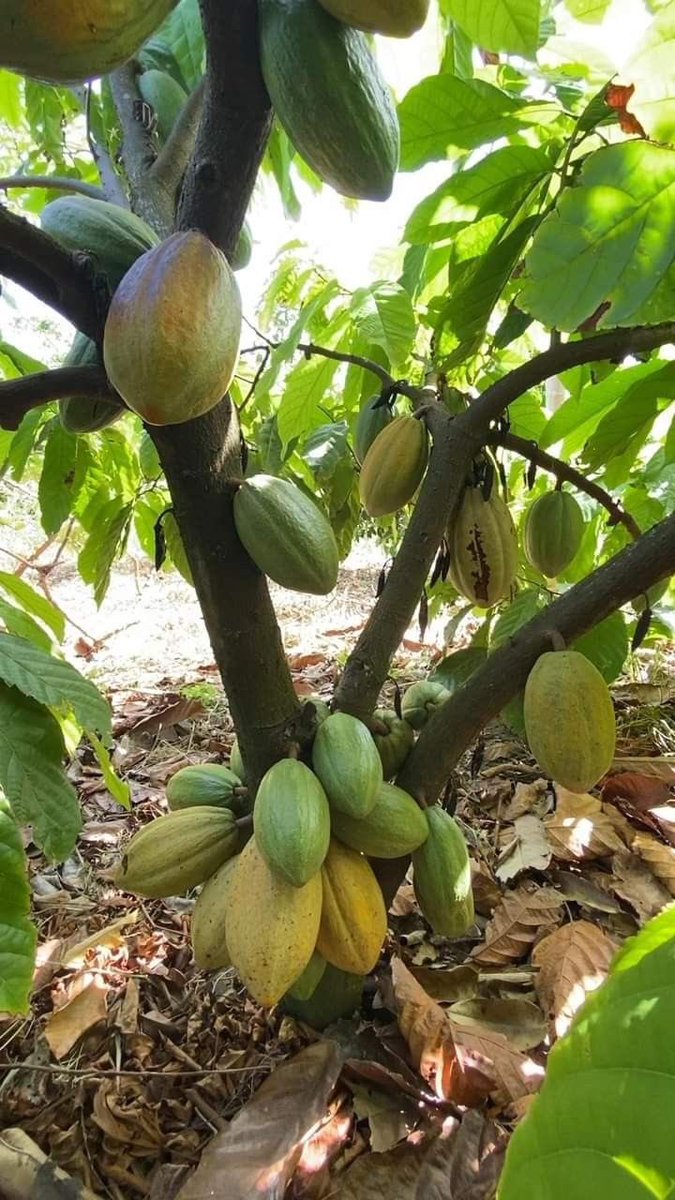
Let’s compare Coffee and cocoa today
Many people in Uganda have been reaching out to me with the same question:
“If I’m starting today, should I invest in coffee or cocoa?”
Let’s me be very honest and practical.
Coffee attracts most investors because it promises faster cash. And that part is true but only under strict management. In Uganda, a well-managed coffee garden can start giving meaningful harvests between 18 and 24 months.
On average, a serious farmer can hit between 1 to 2tns/Ha.
When harvesting is done properly and coffee is well dried and clean, farm-gate prices can range between UGX 10k and 15k per kilogram.
But here’s the reality most people ignore: the same coffee handled badly, immediately drops to the lowest price. Coffee does not forgive poor agronomic practices , weak feeding, careless harvesting or bad drying. One mistake in a season can wipe out expected profits.
Cocoa is different. It is slower and demands patience. Most cocoa farms in Uganda begin to harvest after 2.5 to 3years .
At maturity, yields often range between 800 and 1,500 kilograms per hectare. Cocoa doesn’t shout when it’s being mismanaged it punishes you quietly.
Pests, black pod disease and poor fermentation slowly eat into your income until you realize the business is no longer making sense.
However, when cocoa is managed properly, it offers something many investors want: stability. Demand remains strong and once you understand fermentation and processing, margins improve significantly through value addition.
What I’ve learned on the ground is this: people lose money not because they chose the wrong crop but because they invested without understanding what the crop demands from them every season.
Coffee works best for people who have reliable labor, strong supervision and tight post-harvest control while Cocoa works best for those thinking long-term, willing to wait and interested in building a stable system with processing potential.
Both crops are worthy investments in Uganda. The real danger is treating either of them casually.
So the question shouldn’t be “Which one makes more money?”
The real question is “Which one can I manage properly, year after year?”
Because in agriculture, the system makes the money not the crop.
If you’re thinking of investing in coffee or cocoa, let’s talk for a more detailed explanation about the two crops
For God and my Country
@JaneRuth_Aceng I join you Hon. Minister Ruth in the prayer. Lira City makes my daily life and lives of many other business men and women. I think by virtue of the city being a commercial and industrial city, a lot is needed and this shall require leaders of your calibre. Your Proud Supporter
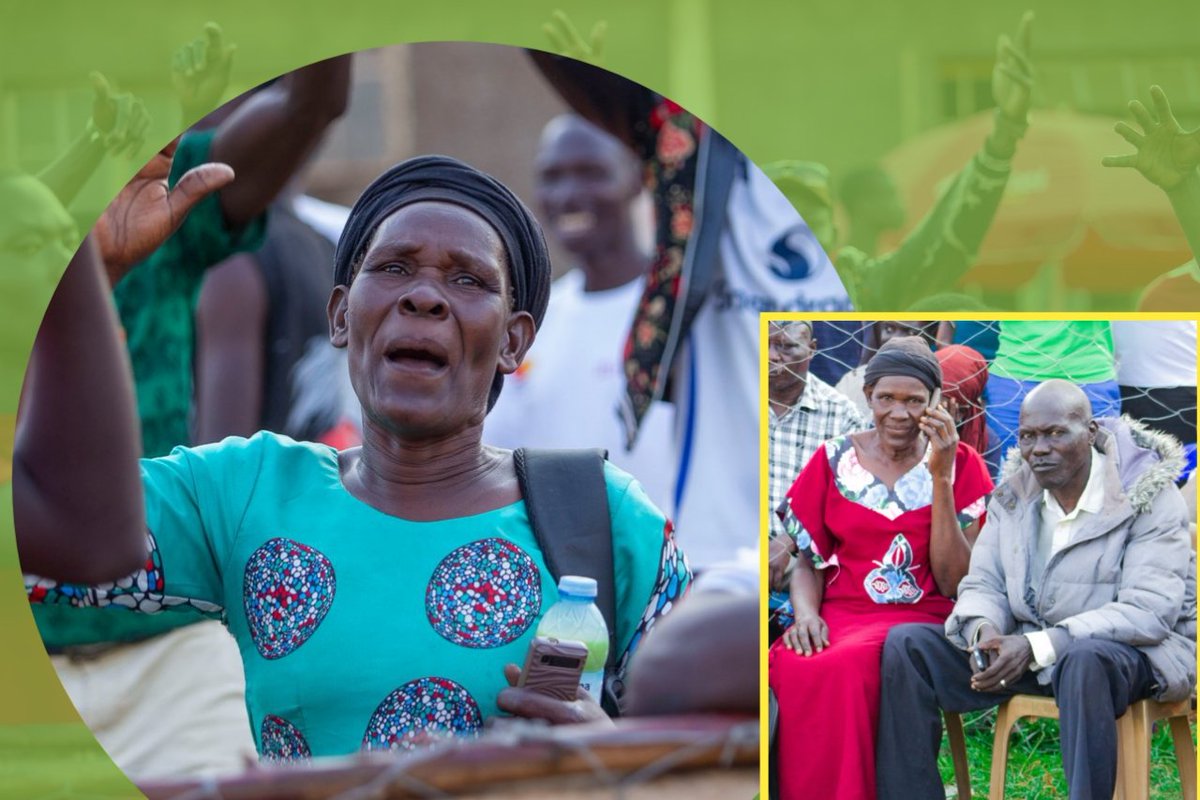
Dedication personified: Imat Lucy, mother of two Erute North players, hasn't missed a match at UTC Lira. Her unwavering support for Okello Paul (#24) and Ogwal Alex (#23) is a testament to the power of family in sports.
#DwogPacuCup2025 | #KeepLangoGreen | #AtekaEnNga
Inspiring sports spirit knows no age!
Elderly Imat Lucy from Erute North stole hearts with her passion at the Dwog Pacu Cup quarterfinals. Her enthusiasm earned her and the husband a VIP treatment for the semis vs Lira City West.
Football unite us all.
Why are young women being left behind in finance?
FSD Uganda has launched a 3-year research initiative to uncover the barriers — and solutions — to improving financial inclusion for young Ugandan women aged 15–24.
Learn more: https://t.co/m1sKr166Vy
To collaborate contact us or @AntheaPaelo and @okidigo
#FinancialInclusion #GenderGap #YoungWFI
The "Integrated and Sustainable Production for Inclusive Resilient Economies in Busoga and Lango Sub-regions (INSPIRE)" project has been signed by our Embassy!
Aim is to tackle root causes of food insecurity & poverty through a participatory and household/community-led approach.
In our 2024 annual report, we highlight our key achievements in shaping the finance sector to benefit Ugandans. We also look ahead to 2025 as we approach the end of our current strategic period.
Authored by @okidigo and @jlutwama, this policy paper https://t.co/EeIjMriQau studies 3 blended finance funds (MSE Recovery Fund, ACF & SBRF) and shows they can boost access to finance—but sustainability is a challenge. To drive long-term impact, we need blended finance + technical support to tackle both market and structural barriers. #FinancialInclusion
Authored by @jlutwama, this technical brief https://t.co/JElsB4gQZw discusses and analyses the impact of blended finance facilities like the @MastercardFdn's Micro and Small Enterprise Recovery Fund on agricultural financing in #Uganda. The Fund has reached 82K+ MSEs, preserved 190K+ jobs & disbursed UGX 142B.
Our biggest challenge isn’t a lack of innovation—it’s dysfunctional markets.
We operate informally. Even those with cutting-edge technology often lack the basics: contracts, bank accounts, formal structures.
If we want to unlock real value, we must first fix the markets and make them work - @jlutwama #NationalICTSummit | #NationalICTSummit2025
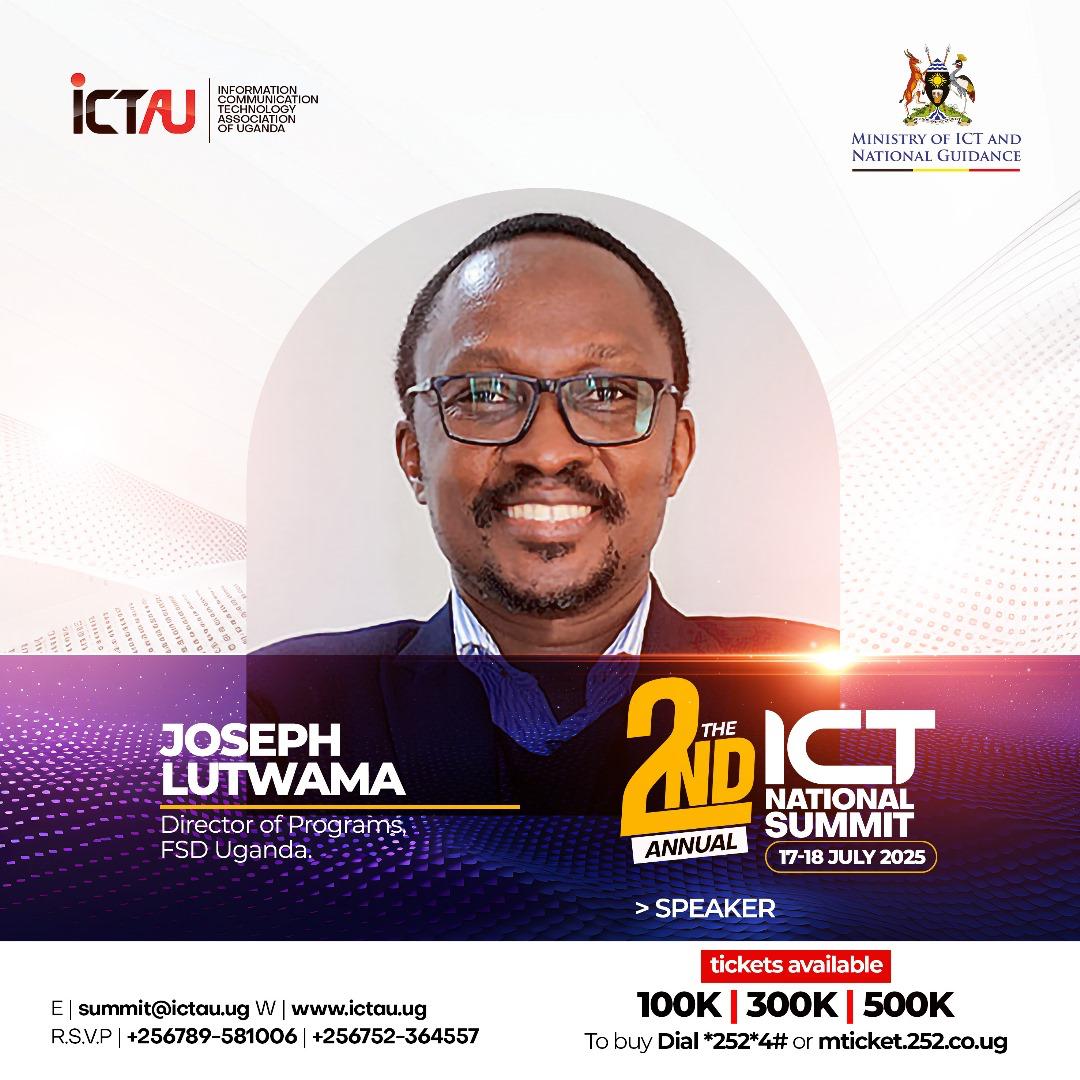
Our Director of Programs @jlutwama is a keynote speaker at the #NationalICTSummit | #NationalICTSummit2025! He will share insights that could shape our digital future! 💻🌍. His speech is titled: “Unlocking the Digital Divide: A Holistic Approach to Harnessing the Value of ICT.”
@fsduganda@jlutwama Spot on. There is growing need to digitalize the agri SME sector. This can unlock the finance for the excluded smallholder farmers. The needs are real
In his keynote speech at the #NationalICTSummit | #NationalICTSummit2025, @jlutwama mentioned the following as the things that need to be done to harness the value of innovations:
1.Digitise the actors – equip them with digital IDs, wallets/accounts, and access to digital money.
2.Digitise the markets – ensure that operations, transactions, and payments are conducted digitally.
3.Invest in digital infrastructure – including internet, telecommunications, and digital platforms to support seamless activity.
4.Provide appropriate digital tools and devices – tailored to the needs of different actors within the digital market.
@ICTAUg