@MatthewWielicki A reminder https://t.co/JdTggKG7P6
Because of the sudden absence of traditional enemies, new enemies must be identified. In searching for a new enemy to unite us, we came up with the idea that pollution, the threat of global warming, water shortages, famine would fit the bill
@jonkay@HadleyFreeman@thetimes "The purpose of propaganda is not to persuade but rather break down a person's ability to see things clearly by ritualistically humiliating him with information he knows not to be true but with which he is not permitted to disagree"
Theodore Dalrymple
@ImtiazMadmood To begin to fix this mess let's Repeal. All. Hate. Crime. Legislation.
Civilization did fine 'til late C20th without it. Arson is arson, if you are firebombing a church or scamming insurance. Assault is assault. Theft is theft, large and small. Back to basics.
🇬🇧 Today is the 82nd Anniversary of the D-Day Normandy Landings 🇬🇧
Nothing makes me sicker than seeing the Liberal bourgeoisie tarnish the memory of D-Day by falsifying it as some sort of victory for globalism.
Our grandfathers and great grandfathers fought for a nation. More importantly, they fought for a people.
They fought for Britain and the national autonomy of our European brothers and sisters.
They despised globalism and they would despise the current regime that inflicts cultural attacks and mass replacement against the native populace in favour of anarchy.
As Winston Churchill said in his victory speech in Holland, 1946:
"Where nationalism means the lust for pride and power, the craze for supreme domination by weight or force, it is a danger and a vice."
"Where it means love of country and readiness to die for country; where it means love of tradition and culture and the gradual building up across the centuries of a social entity dignified by nationhood, then it is the first of virtues."
"Some of our shallow thinkers and false guides—and there are many today—do not distinguish between these two separate and opposing conceptions. They mix them together and use all arguments according as their fancy or their interest prompts them."
"They condemn nationalism as an old-world obsession and seek to reduce us all, both countries and individuals to one uniform pattern with nothing but material satisfactions as our goal."
Rest in Peace to our heroes. Their sacrifice may feel in vain today. But the current order WILL soon fall and the country you fought for WILL be achieved.
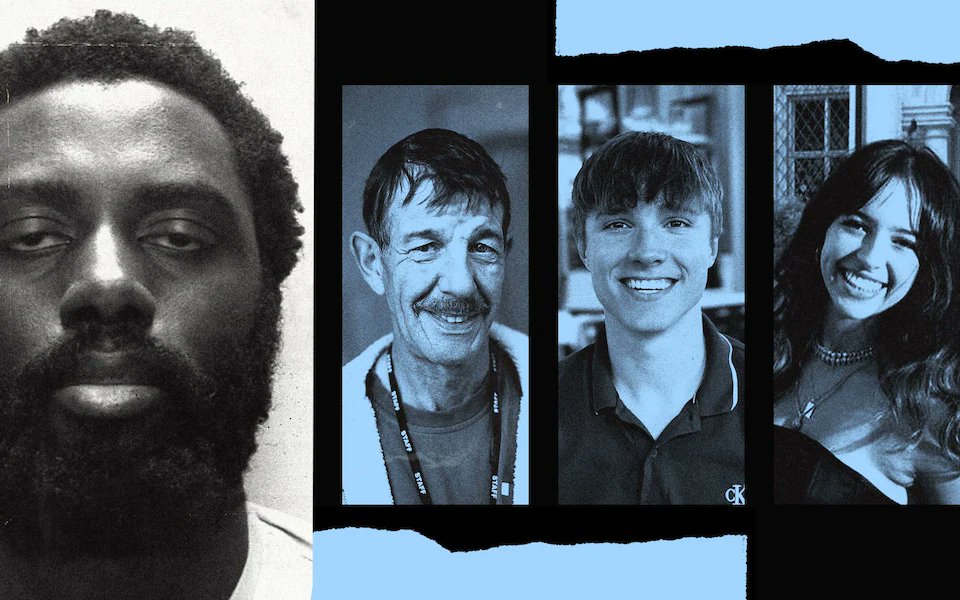
🚨 BREAKING: Multiple NHS services have been told to not detain psychotic African and Caribbean people to lower their "over representation."
Valdo Calocane was one of these psychotic Africans who staff refused to detain because of his race. He went on to murder Barnaby Webber, Grace O'Malley-Kumar and Ian Coates in Nottingham.
@M121Why@ArchRose90@ZiaYusufUK@bbclaurak More evidence, available before your interview. Transcript of 999 call. Did Henry stand a chance with the stage set like this?
https://t.co/uhEQHPIYji
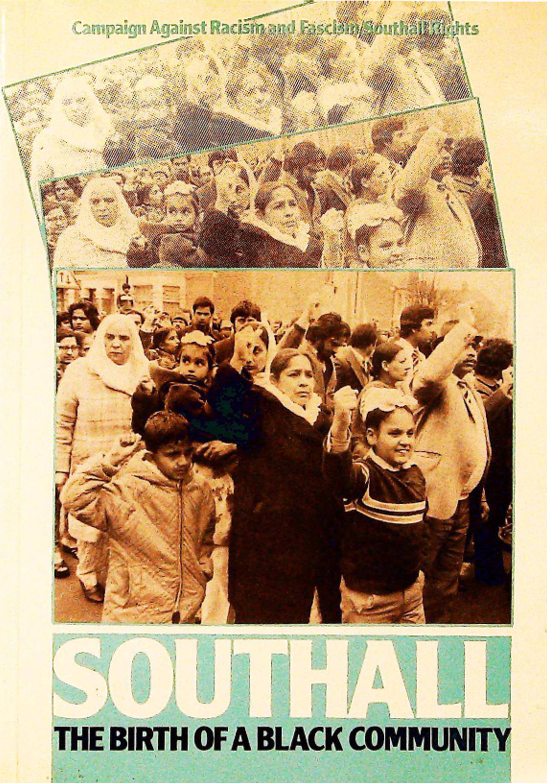
I've had this little booklet kicking around for a while from the Campaign Against Racism and Fascism. It's about the rioting in the 70s as post-war Punjabi immigration took over Southall in London.🧵
@BritIndianVoice If anybody is interested, I'm going through a sociology book written by an Indian about how Sikhs illegally emigrated to Britain after the war and used, clannishness, bribery and nepotism to displace natives that later turned into violence with Sikh youth.
https://t.co/YzDmZzbbix
@BananaEcho2@herandrews Everyone reproduces for selfish reasons - want the joy of raising a child, seeing them learn, make friends, become independent, have their own family.
Children start out existing precisely to make the lives of their families better. Crushing when it does not happen.
@hightreebud All girls should use the special toilet all the time as a workaround - not that they should have to. Chaps can use the open observation (!) toilets.
@georgebell@SwanBoatSteve@TransitNews1 30 years ago there was an idea to add pictures at stations, beginning & ending with a dragon at St George. $8m to retrofit entire system was too expensive. Went with numbers in coloured circles instead to improve wayfinding.
https://t.co/hl923r9vTX
@gohstofcoals@jeftovic 💯Political Entrepreneurialism
...businessmen may work within the regulatory regime, eking out whatever living they can under the arbitrary decrees of the state. To do so they must obtain influence over the state functionaries to survive unmolested.
https://t.co/2tQZwThkbG
They Knew Mass Migration Would Break Britain. They Did It Anyway.
Prof Alan Manning, the former head of the government's own Migration Advisory Committee, was speaking publicly about Britain's immigration record when he said the quiet part out loud: mass migration was used to paper over economic failure, and it is now storing up serious long-term problems. Not warned about. Not predicted. Stored up. Deliberately.
That admission matters because it comes from the heart of the system that designed and defended the policy. Manning was not criticising from the outside. He was explaining how the state learned to substitute migration for reform. When austerity hollowed out public services and ministers refused to fix pay, productivity or training, immigration became the workaround. It was easier to import people than to repair the model.
For a time, this sleight of hand worked. Wage restraint in the NHS became "international recruitment". Universities starved of funding were turned into visa factories. A broken social care system was propped up with low-paid migrant labour instead of being rebuilt. Each failure was masked by the same answer: bring people in, keep the system moving, and push the costs into the future.
Manning now concedes what voters were told was heresy. The fiscal benefits of this approach were always short-term. The costs were always long-term. And those costs are not abstract. They show up in overcrowded housing markets, longer NHS waiting lists, classrooms stretched beyond capacity, stagnant wages at the bottom end of the labour market, and a welfare state carrying obligations it was never designed to absorb at this scale.
The OBR's figures remove the last layer of comfort. The average low-earning migrant, over a lifetime, costs the state more than they contribute. Again, this is not a moral judgement on individuals. It is a devastating judgement on a policy that knowingly brought people into a system that could not support them without degrading conditions for everyone else.
Manning's most revealing comparison is to public borrowing. Immigration, he says, was treated like debt: more money today, less tomorrow. That is exactly right. Governments spent social cohesion, infrastructure capacity and public consent to buy short-term stability and political quiet. The bill was deferred, not avoided.
And now the bill is arriving. Population growth has outpaced housing. Demand has outstripped services. Pay has been held down by design. Communities feel transformed without consent. Trust in institutions has collapsed. Even as net migration falls, the accumulated pressure remains. You do not undo a population surge of millions by announcing lower numbers and moving on.
What makes this scandalous is not that mistakes were made. It is that this was a conscious strategy. Migration was not a by-product of policy failure; it was the tool used to manage it. Instead of governing honestly, the state imported labour and called it compassion. Instead of reforming broken systems, it fed them new bodies and hoped they would cope.
Now the architects are retreating into the language of inevitability. "Long-run problems." "Unintended consequences." But there was nothing unintended about this. The trade-off was known. The warnings were issued. The decision was taken anyway.
This is why public anger does not subside when ministers say numbers are down. People understand, even if politicians pretend not to, that the damage was cumulative. You cannot stretch a country for a decade and then declare the crisis over because the inflow slows.
And the final indictment is this: a state that uses people to mask its failures is not humane. It is dishonest. And a political class that admits this only once the costs are locked in is not brave. It is exposed.
"The OBR's figures remove the last layer of comfort. The average low-earning migrant, over a lifetime, costs the state more than they contribute."
@dexter_doggie@tracyurq Consider LTC outside of where they live if waitlist is shorter. Be prepared to drive for visits!
Started in Toronto on a 1003-day waitlist, moved to list for homes in Kitchener-Waterloo. BAM! Got a spot in 30 days.
@FoodProfessor Thanks for this article. Just learned about the fund to off-set effects of trans-national partnerships & 'assist existing processors in the supply-managed sectors to increase their competitiveness and resilience in the face of evolving markets.' 🧐
https://t.co/WOaUccd1LU
They Knew Mass Migration Would Break Britain. They Did It Anyway.
Prof Alan Manning, the former head of the government's own Migration Advisory Committee, was speaking publicly about Britain's immigration record when he said the quiet part out loud: mass migration was used to paper over economic failure, and it is now storing up serious long-term problems. Not warned about. Not predicted. Stored up. Deliberately.
That admission matters because it comes from the heart of the system that designed and defended the policy. Manning was not criticising from the outside. He was explaining how the state learned to substitute migration for reform. When austerity hollowed out public services and ministers refused to fix pay, productivity or training, immigration became the workaround. It was easier to import people than to repair the model.
For a time, this sleight of hand worked. Wage restraint in the NHS became "international recruitment". Universities starved of funding were turned into visa factories. A broken social care system was propped up with low-paid migrant labour instead of being rebuilt. Each failure was masked by the same answer: bring people in, keep the system moving, and push the costs into the future.
Manning now concedes what voters were told was heresy. The fiscal benefits of this approach were always short-term. The costs were always long-term. And those costs are not abstract. They show up in overcrowded housing markets, longer NHS waiting lists, classrooms stretched beyond capacity, stagnant wages at the bottom end of the labour market, and a welfare state carrying obligations it was never designed to absorb at this scale.
The OBR's figures remove the last layer of comfort. The average low-earning migrant, over a lifetime, costs the state more than they contribute. Again, this is not a moral judgement on individuals. It is a devastating judgement on a policy that knowingly brought people into a system that could not support them without degrading conditions for everyone else.
Manning's most revealing comparison is to public borrowing. Immigration, he says, was treated like debt: more money today, less tomorrow. That is exactly right. Governments spent social cohesion, infrastructure capacity and public consent to buy short-term stability and political quiet. The bill was deferred, not avoided.
And now the bill is arriving. Population growth has outpaced housing. Demand has outstripped services. Pay has been held down by design. Communities feel transformed without consent. Trust in institutions has collapsed. Even as net migration falls, the accumulated pressure remains. You do not undo a population surge of millions by announcing lower numbers and moving on.
What makes this scandalous is not that mistakes were made. It is that this was a conscious strategy. Migration was not a by-product of policy failure; it was the tool used to manage it. Instead of governing honestly, the state imported labour and called it compassion. Instead of reforming broken systems, it fed them new bodies and hoped they would cope.
Now the architects are retreating into the language of inevitability. "Long-run problems." "Unintended consequences." But there was nothing unintended about this. The trade-off was known. The warnings were issued. The decision was taken anyway.
This is why public anger does not subside when ministers say numbers are down. People understand, even if politicians pretend not to, that the damage was cumulative. You cannot stretch a country for a decade and then declare the crisis over because the inflow slows.
And the final indictment is this: a state that uses people to mask its failures is not humane. It is dishonest. And a political class that admits this only once the costs are locked in is not brave. It is exposed.
"The OBR's figures remove the last layer of comfort. The average low-earning migrant, over a lifetime, costs the state more than they contribute."
They Knew Mass Migration Would Break Britain. They Did It Anyway.
Prof Alan Manning, the former head of the government's own Migration Advisory Committee, was speaking publicly about Britain's immigration record when he said the quiet part out loud: mass migration was used to paper over economic failure, and it is now storing up serious long-term problems. Not warned about. Not predicted. Stored up. Deliberately.
That admission matters because it comes from the heart of the system that designed and defended the policy. Manning was not criticising from the outside. He was explaining how the state learned to substitute migration for reform. When austerity hollowed out public services and ministers refused to fix pay, productivity or training, immigration became the workaround. It was easier to import people than to repair the model.
For a time, this sleight of hand worked. Wage restraint in the NHS became "international recruitment". Universities starved of funding were turned into visa factories. A broken social care system was propped up with low-paid migrant labour instead of being rebuilt. Each failure was masked by the same answer: bring people in, keep the system moving, and push the costs into the future.
Manning now concedes what voters were told was heresy. The fiscal benefits of this approach were always short-term. The costs were always long-term. And those costs are not abstract. They show up in overcrowded housing markets, longer NHS waiting lists, classrooms stretched beyond capacity, stagnant wages at the bottom end of the labour market, and a welfare state carrying obligations it was never designed to absorb at this scale.
The OBR's figures remove the last layer of comfort. The average low-earning migrant, over a lifetime, costs the state more than they contribute. Again, this is not a moral judgement on individuals. It is a devastating judgement on a policy that knowingly brought people into a system that could not support them without degrading conditions for everyone else.
Manning's most revealing comparison is to public borrowing. Immigration, he says, was treated like debt: more money today, less tomorrow. That is exactly right. Governments spent social cohesion, infrastructure capacity and public consent to buy short-term stability and political quiet. The bill was deferred, not avoided.
And now the bill is arriving. Population growth has outpaced housing. Demand has outstripped services. Pay has been held down by design. Communities feel transformed without consent. Trust in institutions has collapsed. Even as net migration falls, the accumulated pressure remains. You do not undo a population surge of millions by announcing lower numbers and moving on.
What makes this scandalous is not that mistakes were made. It is that this was a conscious strategy. Migration was not a by-product of policy failure; it was the tool used to manage it. Instead of governing honestly, the state imported labour and called it compassion. Instead of reforming broken systems, it fed them new bodies and hoped they would cope.
Now the architects are retreating into the language of inevitability. "Long-run problems." "Unintended consequences." But there was nothing unintended about this. The trade-off was known. The warnings were issued. The decision was taken anyway.
This is why public anger does not subside when ministers say numbers are down. People understand, even if politicians pretend not to, that the damage was cumulative. You cannot stretch a country for a decade and then declare the crisis over because the inflow slows.
And the final indictment is this: a state that uses people to mask its failures is not humane. It is dishonest. And a political class that admits this only once the costs are locked in is not brave. It is exposed.
"The OBR's figures remove the last layer of comfort. The average low-earning migrant, over a lifetime, costs the state more than they contribute."