If you earn between N$5,500 and N$15,000 a month, I want to have an honest conversation with you. Not just about your income, but about the stage of life you’re in, what’s working, what’s not, and what needs to change.
Being in this income bracket means you are in a very sensitive phase of life. You are not poor, but you are not financially free either. You are in the middle. And the middle is where many people get stuck for years without knowing it.
This is the stage where money can quietly pass through your hands and leave you with nothing to show for it. So, you must become intentional.
The first thing is to stabilise your life. Make sure your rent, food, transportation, and basic bills are under control. If your rent is swallowing three to six months of your salary, you are living above your means. Reduce the pressure, because peace of mind is wealth at this point.
Next, become allergic to lifestyle traps. This is not the time to compete with anybody. Avoid impulsive spending, designer addictions, partying every weekend, or buying everything you see online. At this income level, discipline determines your future.
Now, make savings automatic. Treat saving like a bill. Once your salary drops, a part of it should leave your account immediately. Not when you feel like it. Not when you remember. It should be automatic, even if it is 20% to 30%, because that consistency will grow you.
But saving alone is not the goal. The real goal is to build assets and skills. Start investing small but steadily. Ask about mutual funds, treasury bills, reliable fintech savings plans, index funds, land contributions, or a side business you understand. The amount is not the magic. The habit is.
Then upgrade your brain. This is the stage to register for courses, attend trainings, watch free tutorials, and improve your earning power. Data analytics, tech, product, cybersecurity, marketing, design, sales, certifications… anything that makes you more valuable. The easiest way to escape this income bracket is not by saving alone. It is by becoming too skilled to be paid small.
Keep your circle healthy. Spend time with people talking about growth, not gossip. One good connection can change your career. Network intentionally, not desperately.
Also, take care of your health. Do your checkups, eat better, sleep, and exercise. Because money means nothing if your body breaks down.
And please, help your family if you can, but do not destroy your future trying to look like a hero. Set boundaries. You cannot rescue others by drowning yourself.
Finally, avoid pressure. Some people earned N$4,000 for years before rising. Someone else got to N$20,000 monthly by 27. Life is not a race. Focus on direction, not speed.
If you stay disciplined, keep learning, keep investing, and avoid lifestyle traps, this income level will only be a phase, not your final destination.
Build quietly, and your future self will thank you.
@FootyNamibia Such players should the team be built and always starting, maara ou Collin with his high football knowledge is always trying to experiment funny things 😄
@Ou_Lupe@Hamnjela You didn't ask me, but I researched some options a while ago and I found Allan Gray to have been the best suited for me at the time. And I have been investing with them for about 5 years now and I'm very happy. Is there specifics that you're looking for or experience?
@mutangenii@Hamnjela How's their 5-10 years investing to you? Are they convenient to work with? Do I just go to their office and sort out every there or is there something i need to know befire going there? Good or bad? I'll appreciate it.
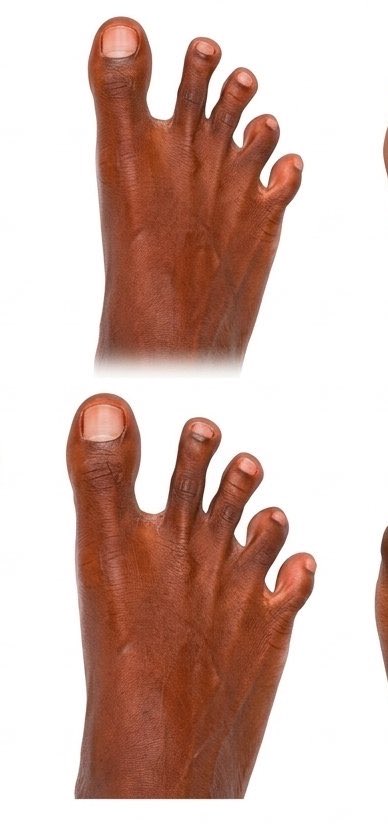
I remember writing a thread about things elders look at when their son wants to marry. This right here is one of them,people with this type of feet walk in a weird way 🌚can't explain it. But it is believed that they destroy wealth 🌚🌚you marry her,next thing you cattle's are dying and everything is just going south.
Ano ha ya shinuna omaliko 😭because ominwe odha halakana.
@FootyNamibia This is how they ruin/delay other people's dreams... That could've been someone's step up in life, mahn! Take the money and let the player thrive up!
Greetings to all Namibian Goverment Employees, the Unions, and the Government of The Republic of Namibia (GRN)
Subject: The GRN Employee Housing Scheme (GRN Subsidy): Is It Truly Beneficial to the Employee and Sustainable to the GRN?
I trust all is well with you.
In reference to the interview between the Rt Hon Prime Minister and Nampa on Friday, it was noted that the GRN subsidizes housing for its employees by 66%. If the maximum value of the house is N$792,000.00, the GRN pays N$522,720.00, and the employee pays N$269,280.00 over a purchase period of roughly 20 years (240 months). This scheme has proven to be costly and unsustainable for the GRN.
This issue also stems from the relationship between our financial institutions, particularly the commercial banks, and the GRN. Let's consider the following scenario:
I, (GRN employee), qualify for a housing subsidy of N$690,000.00. The GRN (Employer)will cover N$455,400.00 (66%), and I will cover the remaining N$234,600.00 (34%). When I apply for a loan against my housing subsidy with my bank (Middleman), Bank Windhoek, charges an 11.5% interest rate compounded annually for 20 years (240 months). This translates into the following over this period:
1. Monthly mortgage payment:N$7,358.36
2. Interest paid over the lifetime of the loan: N$1,076,007.47
3. Total repayments over the lifetime of the loan: N$1,766,007.47
It's important to note that, in actual terms, we cannot say the GRN contributes 66% of this amount, because the subsidy is taxed and the employee ends up contributing more to cover the difference. Keep this in mind!
Let's break this down. For a monthly payment of N$7,358.36, the GRN contributes (66%) N$4,856.52, and I, the GRN employee, contribute (34%) N$2,501.84.
Here lies the problem. If I take my monthly contribution of N$2,501.84 and multiply it by 240, it totals N$600,441.60. This amount, which goes straight to the bank, is almost equal to the principal amount of N$690,000.00, translating to approximately 87%.
Now, if we consider the GRN's contribution of N$4,856.52 x 240, it totals N$1,165,564.80.
This means N$1,165,564.80 goes straight to the bank from the GRN, and it mostly excludes the principal, as I would have almost covered it (+/- 87%) with my contributions. To make matters worse, this amount is almost double the principal amount. In summary, the bank receives the principal back from my contributions and gains double this amount extra from the GRN.
Hence, from a loan of N$690,000.00, the bank ends up receiving a total of N$1,766,007.47, which is almost triple the principal amount, translating to 2.6% times the initial value.
Questions to Ponder around:
1. Is this sustainable for the GRN?
2. What is the benefit for the GRN employee in the above scenario, as he/she would have almost covered the principal amount over 240 months?
3. Is the government's contribution only designed to cover the bank's interest over the purchase period?
4. Is there a better way to address this issue, or can we come up with sustainable alternatives to consider?
5. Should we perhaps eliminate the involvement of commercial banks (Middleman) and deal directly with the employee, or improve First Capital to address this issue?
6. Why is the housing subsidy taxed?
7. Is this a subsidy or loan Loan from the Employer to the Employee?
8. How much does the Employer collects in this transaction as dividends from the Employee through the Middleman?
Article by:
MR Taljaard Uaputauka
085 532 5324
TEACHER, GOBABIS Project School