Today’s animal is the axolotl.
This Mexican salamander normally keeps its feathery gills into adulthood. It can also regrow lost limbs.
Growing up is optional. Repairs are included.
Photo: LoKiLeCh · CC BY-SA 3.0
https://t.co/yluEbVyHJd
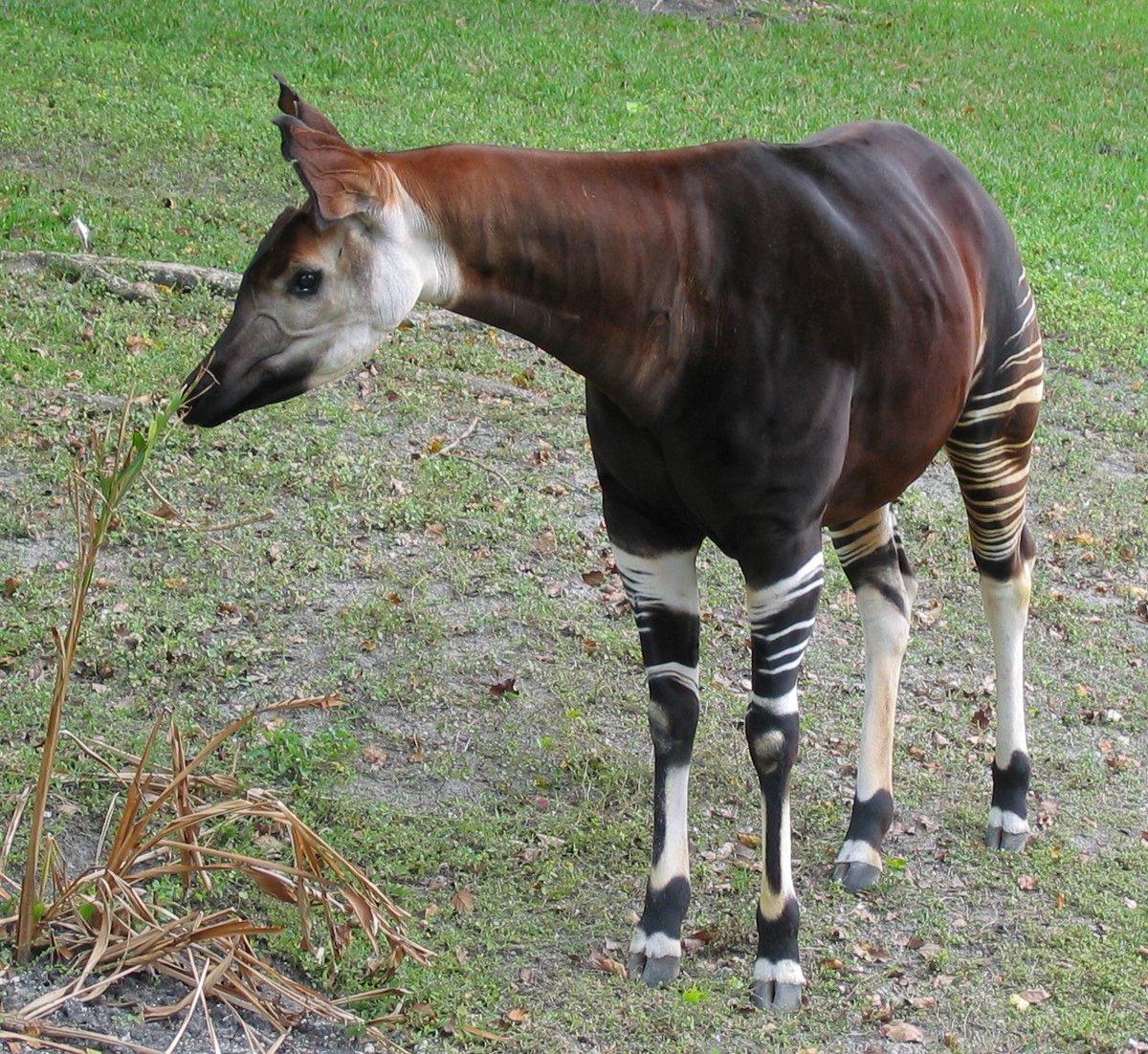
Today’s animal is the okapi.
Despite the zebra-striped legs, its closest living relatives are giraffes. Its long tongue plucks leaves from forest plants.
Business upstairs. Zebra downstairs.
Photo: Eugenia & Julian · CC BY-SA 2.0
https://t.co/bkKeEmsOLe
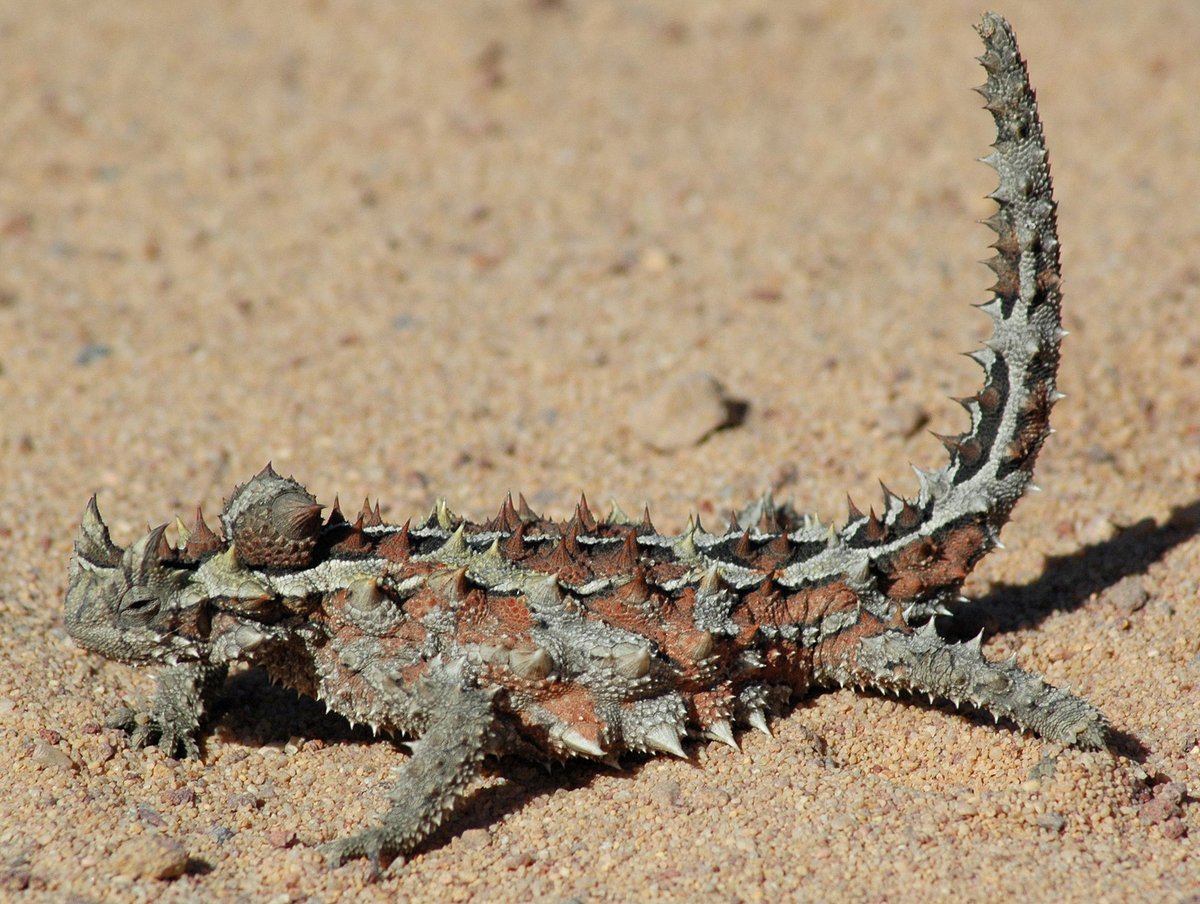
Today’s animal is the thorny devil.
This Australian lizard eats ants and channels water along tiny grooves between its scales towards its mouth.
A cactus with plumbing.
Photo: KeresH · CC BY-SA 4.0
https://t.co/rEmufNnx3C
Today’s animal is the saiga.
Its oversized nose helps filter dust from the air as it crosses the open steppe.
An antelope with the hoover attachment fitted.
Photo: Andrey Giljov · CC BY-SA 4.0
https://t.co/yeS9kT0SE9
Today’s animal is the giraffe weevil.
This beetle lives in Madagascar. Males use their extraordinary necks to fight rivals.
An adjustable desk lamp with somewhere to be.
Photo: Frank Vassen · CC BY 2.0
https://t.co/4lTQz6Q1gi
Today’s animal is the aye-aye.
It taps on wood to find hidden grubs, then fishes them out with a long middle finger.
A lemur with a built-in cutlery drawer.
Photo: nomis-simon · CC BY 2.0
https://t.co/3UHRMxpd73
Today’s animal is the binturong.
It isn’t a bear or a cat, despite being called a bearcat. It has a prehensile tail, lives in the treetops and smells like hot buttered popcorn.
An excellent and confusing mammal.
Photo: Pailoolom · CC BY-SA 4.0
https://t.co/WXD3ewkRCN
Today’s animal is the Sunda pangolin.
Pangolins are the only mammals covered in scales. The Sunda is one of eight species. It has no teeth, a long tongue, and curls into a ball when frightened.
A pine cone with legs.