Afternoon crashes gone, sleeping through the night, and food tolerance returning, all in just over 2 months working with us.
Here’s EXACTLY how we helped this client get his life back:
This individual came in:
➣ Afternoon crashes so severe he couldn’t stay awake at work
➣ Belching and bloating within minutes of every meal, with upper abdominal pain
➣ Reacting to “literally all food,” with alternating diarrhea and constipation
➣ ALT at 95 (more than 3x our optimal range)
➣ Waking at 3 to 3:30 AM with a racing heart and an adrenaline rush
➣ Brain fog and morning temperatures averaging 96.5°F
➣ Foamy urine
➣ Facial redness and puffiness
➣ Too drained to exercise
➣ Vitamin D deficient at 24
➣ Palpitations and anxiety when he tried thyroid medication
10 symptoms, traced back to 4 primary root causes:
1. A congested, fatty liver. ALT 95, AST 35 and uric acid 7.4, on a diet that was mostly takeout and seed oils. When he increased choline, which the liver needs to export fat, facial redness he’d had his whole adult life began to clear and his brain fog lifted.
→ The liver stores sugar to carry you through the night. When it can’t, blood sugar dips around 3 AM and adrenaline fires to rescue it. That’s the 3 AM wake.
→ The liver converts thyroid hormone (T4) into its active form (T3). When it’s struggling, you get low temperatures and brain fog.
2. Low stomach acid and upper gut overgrowth (suspected H. pylori and SIBO). Belching rated 5 out of 5, symptoms within minutes of eating, and a heavily coated tongue.
→ Without enough stomach acid, bacteria move up and ferment food before he can digest it. The result is gas, belching, bloating and reacting to everything.
3. Gut endotoxin after meals. His fasting glucose (80) and A1c (5.3%) were normal, which made us think of causes other than blood sugar as the main cause of the crash.
→ The overgrowth releases endotoxin that crosses the gut wall after meals. The inflammation it triggers shuts down energy production for hours. That’s the afternoon crash.
→ That same endotoxin drains straight to the liver, adding to the liver stress in #1. Each problem feeds the other.
4. Poor thyroid conversion and low energy reserves. This follows from #1 and #3, plus low vitamin D, low minerals and low fluid intake.
→ It explains the palpitations on thyroid medication. Adding hormone to a body already running on stress hormones overloaded it.
→ Low fluid intake concentrated his urine, adding to the foam.
A mess on the surface, but fixable once you understand the correct sequence.
Here’s exactly what we did.
STEP 1: Stop feeding the problem (diet)
Interventions:
➣ 60 days of home-cooked, single-ingredient meals with takeout and seed oils removed → takes the fat and seed oil load off the liver (#1)
➣ Temporary low FODMAP diet → starves the overgrowth of the carbs it ferments (#2)
➣ Fat kept moderate at 70 g with carbs at 250 g → gives the liver room to clear its backlog and enough glucose to refill its overnight reserve (#1, 3 AM wakes)
➣ Eggs daily and beef liver weekly for choline → helps the liver export fat (#1)
➣ Bone broth and collagen cuts for glycine → supports liver detox and the gut lining (#1, #2)
➣ Raw honey with a pinch of salt at the 3 AM wake → refills blood sugar so adrenaline doesn’t have to, as a bridge while the liver heals
Outcome:
➣ Sleeping through the night consistently
➣ Facial redness around his eyebrows and eyelids nearly healed
➣ Facial puffiness visibly down compared to photos from a year ago
STEP 2: Restore digestion and clear the overgrowth
Interventions:
➣ Betaine HCl with meals → rebuilds stomach acid, the first line of defense against overgrowth (#2)
➣ Digestive enzymes (MassZymes) → break food down before bacteria can ferment it, meaning less gas and less endotoxin (#2, #3)
➣ Zinc carnosine → repairs the stomach lining and works directly against H. pylori (#2)
➣ Allicin from garlic for weeks 1 to 3, then pau d’arco and caprylic acid for weeks 4 to 8 → clears bacterial and fungal overgrowth in sequence (#2)
➣ Mastic gum daily → works inside the stomach itself against H. pylori (#2), enhances gastric motility
Outcome:
➣ Reintroduced wheat for two weeks with no stomach issues, after coming in reacting to nearly every food
STEP 3: Seal the gut and keep the overgrowth from returning
Interventions:
➣ Ginger extract twice daily and artichoke leaf → restore the gut’s cleaning wave that sweeps bacteria out between meals, so SIBO doesn’t come back (#2)
➣ Artichoke leaf, taurine and glycine → improve bile flow and support the liver (#1)
➣ Sodium butyrate daily → tightens the gut barrier so less endotoxin reaches the liver and bloodstream (#3)
Outcome:
➣ No more afternoon slump
➣ Brain fog noticeably lower
STEP 4: Rebuild energy and thyroid function without forcing it
Interventions:
➣ No thyroid hormone added back. His palpitations showed his stress load couldn’t handle it yet (#4)
➣ Trace minerals (selenium, zinc, iodine) → raw materials for converting T4 to active T3 (#4)
➣ Vitamin D3, since his level was 24 (#4)
➣ Thiamine split three times a day through the crash window → helps turn glucose into usable energy (#3)
➣ Potassium-forward electrolytes → better hydration and less concentrated urine (#4)
➣ Morning sun, no blue light after dark and walks after work → lower cortisol, which blocks thyroid conversion (#4)
Outcome:
➣ Urine foam down significantly
➣ Walking and stationary biking with no problem
➣ No muscle weakness
Just over 2 months in:
➣ Sleeping through the night consistently
➣ No afternoon slump
➣ Brain fog lower
➣ Eating wheat again with no stomach issues
➣ Urine foam down significantly
➣ Facial redness nearly healed and puffiness visibly down
➣ Back to regular walking and cycling
In his words: “Life feels a lot more normal these days.”
We help people like this every single day over at Prism. Just book a free call with us below!
We offer the most value you're going to find if you want to improve your health.
✓ 1+ hr consult/mo
✓ Comprehensive report
✓$150 in free labs at 6 months
✓ Health intake survey
✓Dedicated advisor
✓ 24/7 messaging
✓ 4-advisor review
✓ Secure portal
With the deep, systemic approach to health you see here on X, just personalized to you.
Book a call with us below, it's free. We can get you https://t.co/2ZEUah639W
Studies
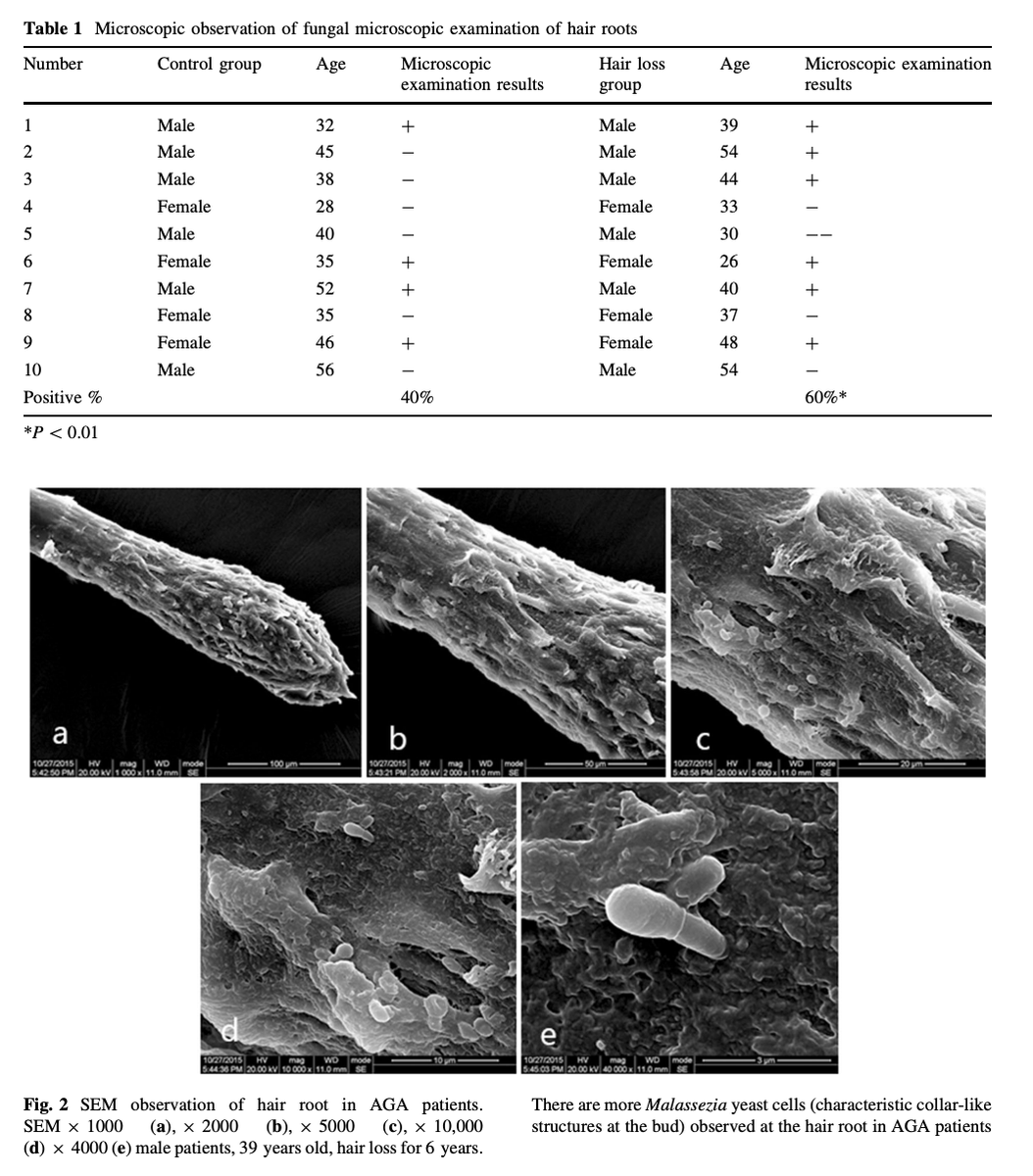
hair shedding https://t.co/JhHR6t4kxU
main one, higher mala in AGA https://t.co/Ejgp7Pcx3w
another https://t.co/dpl0JyijKj
keto review https://t.co/Z4Il5ZyRzi
keto trial https://t.co/HPToYTP0yO
zinc pyrithionine help https://t.co/CDSP3gU6uh
Hair loss (male pattern baldness) is highly misunderstood - and DHT is NOT the primary driver.
This is EXACTLY how hair loss develops, why you shouldn't focus on DHT, and what to do instead (🧵1/10)
I've discussed exactly how hormones, scalp inflammation, lipid metabolism and fungal colonization interact with respect to dandruff here.
Long story short, inflammation is the real signal that stops production of hair, and fungi can cause it. https://t.co/kIhBP5qYb3
DANDRUFF - An inflammatory / fungal sign your underlying health is deteriorating.
Let's go through exactly how it develops, what it means for your health, and some ways to help. (🧵1/13)
Vitamin C completely prevents rise in cortisol in stress study.
More evidence for the anti-cortisol / anti-stress properties of high doses of vitamin C.
Animals given a 500-700 mg human equivalent of C had no elevation in cortisol in response to stress.
The adrenals concentrate vitamin C more than just about any other tissue, and appear to use it to regulate cortisol synthesis.
PARASITES 101 - the hidden infections that can disrupt your gut, brain & immune system:
From bloating and fatigue to nutrient deficiencies and brain fog - here's what you need to know about parasites.
SIGNS OF PARASITES:
◈ Bloating, gas & digestive problems
◈ Constipation or diarrhea
◈ Undigested food in stool
◈ Brain fog, anxiety & irritability
◈ Fatigue & iron-deficiency anemia
◈ Unexplained weight loss
◈ Nutrient deficiencies despite eating well
◈ Food sensitivities or histamine-related symptoms
◈ Skin rashes, itching or muscle pain
◈ Frequent infections
These symptoms are nonspecific and can have many causes. But, they are common symptoms of having a parasite.
More suggestive clues include anal itching, visible worms, or symptoms after travel or exposure to contaminated food or water.
HOW YOU GET EXPOSED:
◈ Contaminated water
◈ Food contaminated with feces
◈ Unwashed produce
◈ Soil exposure
◈ Undercooked meat or seafood
◈ Contact with infected animals or contaminated environments
Parasites include two major groups:
◈ Helminths - parasitic worms, including roundworms, whipworms and hookworms
◈ Protozoa - microscopic parasites, including Giardia and Entamoeba
HOW THEY AFFECT YOUR HEALTH:
◈ Disrupt the gut microbiome
◈ Trigger intestinal inflammation
◈ Damage the gut lining in certain infections
◈ Interfere with nutrient absorption
◈ Contribute to iron deficiency and anemia
◈ Trigger immune responses that can affect other tissues
Some infections can also cause systemic symptoms, depending on the organism and where it spreads.
The question is, what makes one person susceptible to actually getting infected?
One of the most important things is ensuring your physical barriers are set up for success, mainly your:
➠ Gut
➠ Skin
➠ Urethral / vaginal
If these are impaired, parasites have free reign to enter your body and cause issues.
Some important factors for maintaining it:
◈ Zinc, vitamins A & D - support normal immune function and epithelial integrity
◈ Vitamin C - supports collagen synthesis
◈ Butyrate - helps maintain intestinal barrier function
◈ Adequate protein and amino acids - support tissue maintenance
◈ Healthy gut microbes - contribute to colonization resistance
IMMUNE FUNCTION:
◈ Adequate nutrition supports normal immune defenses
◈ Thyroid hormones influence multiple aspects of immune function
◈ Chronic illness and immune suppression can increase susceptibility to certain infections
CIRCADIAN RHYTHM:
◈ Maintain consistent sleep and wake times
◈ Get bright outdoor light in the morning
◈ Keep meal timing relatively consistent
◈ Prioritize adequate sleep
Immune activity varies throughout the day, but circadian disruption alone does not establish that someone has a parasitic infection.
TESTING FOR PARASITES:
◈ Ova & parasite testing - gold standard, examines stool for parasite eggs and organisms
◈ Antigen testing - detects proteins from specific parasites
◈ PCR testing - identifies parasite genetic material
◈ Blood tests - eosinophils may be elevated
While panels of multiple exist, each type of parasite has a test that identifies it best.
Natural tools:
◈ Wormwood ➞ Roundworms, flukes
◈ Garlic (allicin) ➞ Giardia, Trichomonas
◈ Coconut oil ➞ Suffocates lice and mites
◈ Oregano oil ➞ Giardia, Cryptosporidium
◈ Neem ➞ Plasmodium, Giardia
◈ Artemisinin ➞ Malaria, Babesia
◈ Clove ➞ Entamoeba, Trichomonas
◈ Curcumin ➞ Plasmodium, Leishmania
◈ Berberine ➞ Giardia, Entamoeba, Plasmodium
◈ Olive leaf ➞ Giardia, general protozoa
◈ Black walnut hull ➞ Tapeworms, nematodes
◈ Clove (egg stage) ➞ Broad antiparasitic
◈ Pumpkin seeds ➞ Tapeworms, roundworms
◈ Papaya seeds ➞ Roundworms, hookworms
◈ Thyme / Thymol ➞ Nematodes
◈ Myrrh ➞ Schistosoma, Fasciola
◈ Neem oil ➞ Lice, mites, fleas
◈ Tea tree oil ➞ Lice, scabies, mites
◈ Lavender oil ➞ Lice, fleas
◈ Clove oil ➞ Lice, scabies
Pharma:
◈ Albendazole ➞ Roundworms, tapeworms (Echinococcus), flukes, some microsporidia
◈ Mebendazole ➞ Roundworms, pinworms, hookworms
◈ Ivermectin ➞ Strongyloides, roundworms, scabies, lice
◈ Pyrantel pamoate ➞ Pinworms, roundworms
◈ Praziquantel ➞ Tapeworms, most flukes, Schistosoma
◈ Niclosamide ➞ Tapeworms
◈ Triclabendazole ➞ Fasciola liver flukes
◈ Metronidazole ➞ Giardia, Entamoeba
◈ Nitazoxanide ➞ Giardia, Cryptosporidium
◈ Paromomycin ➞ Intestinal Entamoeba
◈ Pyrimethamine + sulfadiazine ➞ Toxoplasma
◈ Liposomal amphotericin B ➞ Leishmania
◈ Nifurtimox ➞ Trypanosoma
◈ Benznidazole ➞ Trypanosoma cruzi
◈ Melarsoprol ➞ Late-stage Trypanosoma brucei
◈ Artemisinin ➞ Malaria
◈ Chloroquine ➞ Malaria (susceptible strains)
◈ Atovaquone ➞ Malaria, Babesia
◈ Doxycycline ➞ Malaria (combination regimens), some Babesia regimens
◈ Mefloquine ➞ Malaria
◈ Quinine ➞ Malaria, Babesia (combination therapy)
◈ Azithromycin + atovaquone ➞ Babesia
◈ Albendazole ➞ Most microsporidia
◈ Permethrin ➞ Scabies, lice
◈ Malathion ➞ Lice
◈ Benzyl benzoate ➞ Scabies
These are the basics, but if you want to get a personalized approach from a team with experience, just click the link in my bio, we can get you set up.
I just cannot imagine having this mindset.
Think about doing this outside of nutrition.
Friendships are not essential for survival.
Neither is having a romantic life.
Movies, sports, reading, exercise, traveling. All nonessential.
In fact, having fun at all is not essential.
Best to keep our lives to just water, fat, protein, vitamins, and minimal shelter. Nothing else is essential.
There are essential fatty acids and essential amino acids. There is no essential carbohydrate.
The body does need some glucose, mainly for red blood cells, which have no mitochondria. But the liver and kidneys can make all of it through gluconeogenesis, typically around 100 to 150 grams a day in adults, using lactate, glycerol from fat, and a small amount of amino acids.
Carb tolerance still varies a lot from person to person, and my new book, The Carb Crisis, explains why. The evidence is clear: carbs are optional, not required. Preorder link in the first reply.
My weight is dropping like an absolute rock after implementing PSMF + refeeds.
Like it's insane. It's not often you see weight loss accelerate at the end.
There were points earlier this year where I barely moved over a month. I had to get crazy to start seeing great results.
Literally been doing <10g carb and <20g fat for the last 2 months, losing >2lb/week.
Once every 5 days I'll have a refeed meal, higher in carbs and fat, to support the ol' metabolism.
Not healthy in the long run, but it's a short term thing.
Having no desire to feel the pleasure of eating good food and sugar is not a sign of good health.
It is the exact opposite, a sign that emerges more as you get old.
I've been trying Retatrutide for 3 weeks.
It is insane.
I experience zero "food noise" during the day. No desire to eat sugar or drink alcohol. Just don't want it.
Food is just fuel. That is the extent of it.
My mental clarity is v high. I already hit my target BMI. I sleep better.
My new POV is everyone should be taking some kind/amount of GLP-1.
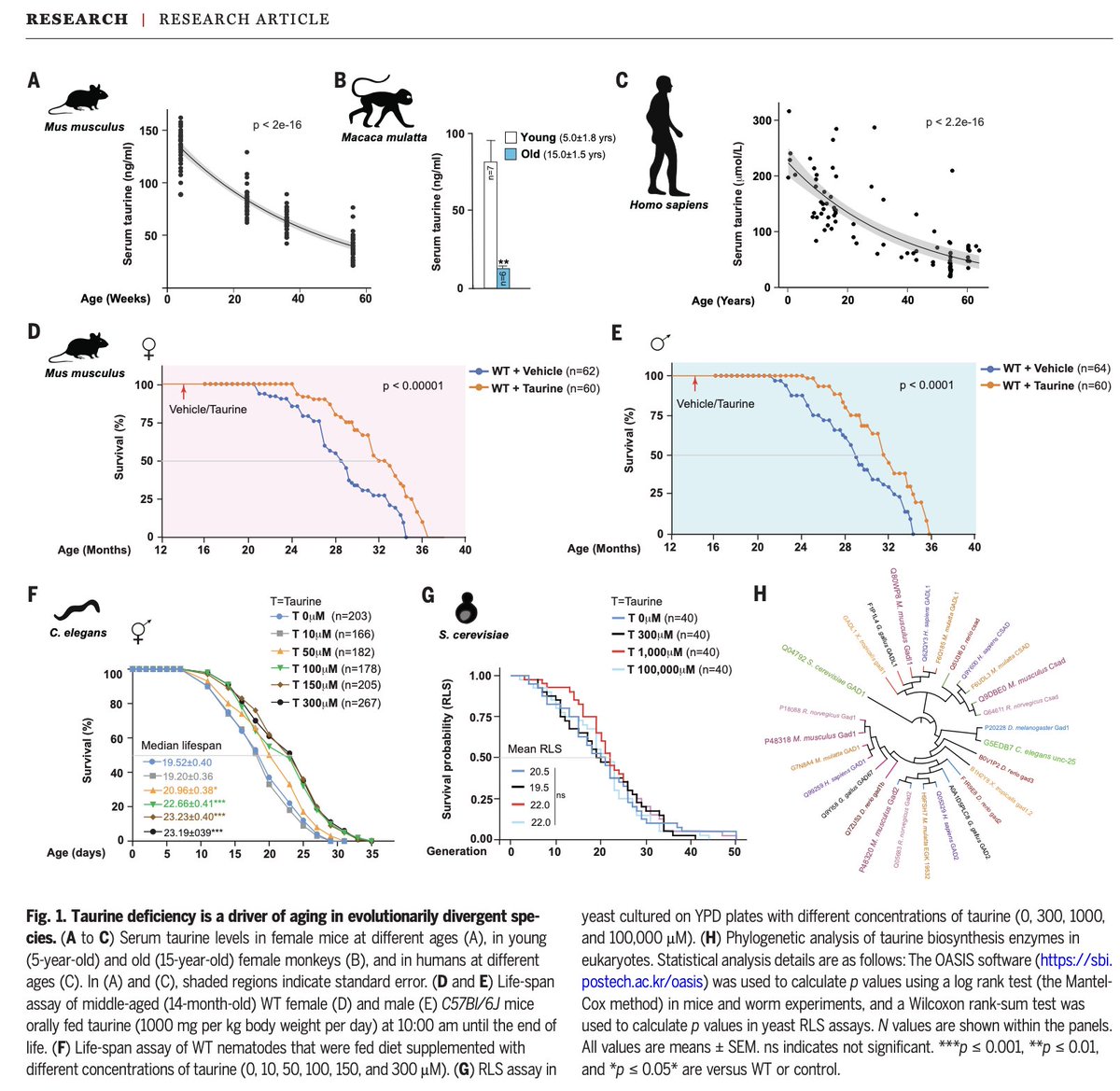
Taurine is a longevity nutrient - extending lifespan when supplemented in a fascinating study.
They examined both levels of taurine in various animals (including humans) as well as the impact of supplementing taurine on lifespan and biomarkers of aging.
Human equivalent dosing put taurine at roughly 3-6g, which is in line with supplementation.
The first major finding was that serum taurine levels decreased with age.
Since this article was published, other researchers disputed the idea that taurine was a biomarker of aging.
However it really comes down to how it's measured.
This study looked at SERUM taurine, which is one compartment of the blood.
Follow up studies showing taurine levels did not decline measured in PLASMA, a separate compartment.
Older animal data reveals that taurine levels within tissues also tend to decrease with age.
Taurine extended lifespan in all species investigated.
Most notably, in mice, in both males and females:
"The median life span of taurine-treated mice increased by 10 to 12%, and life expectancy at 28 months increased by about 18 to 25%"
The higher the dose of taurine, the greater improvement in a massive amount of health markers were seen, too.
➜ Reduced fat gain
➜ More robust skeletal structure
➜ Better coordination
➜ Higher grip strength
➜ Lower anxiety
➜ Improved memory
➜ Better insulin sensitivity
➜ Improved immune profile
An area of interest here was senescence, which is the literal cellular aging process.
Essentially, cells go through senescence when they have replicated a certain number of times and can no longer reproduce. At this point, they lose function and become inflammatory.
Thus, reducing senescence is a huge player in overall disease and aging.
The blue stain here, SA-β-Gal, is a common marker of senescence.
They saw LOWER levels of senescence in the tissues of animals with taurine supplementation.
Notably, the addition of supplements that inhibit the senescence process (senolytics) could partially restore lifespan in animals with dysfunctional taurine transporters.
Otherwise, those animals got their lifespans cut in half.
They also had worse aging markers across the board.
Impaired taurine transporters can lead to all sorts of health issues in humans for this reason.
It was found that people with higher levels of taurine in the blood tended to have better outcomes:
◈ Higher taurine metabolites → lower BMI, waist-to-hip ratio, and abdominal obesity.
◈ Higher taurine metabolites → lower type 2 diabetes prevalence and glucose.
◈ Taurine & hypotaurine → lower CRP (inflammation).
◈ Taurine → higher AST and cholesterol; hypotaurine → lower levels.
◈ Taurine metabolites → higher hemoglobin, platelets, and WBCs.
As stated earlier, doses of taurine in this study were ~3-6g human equivalent.
Foods high in taurine include scallops, other fish and white meat.
@MarkNelson107 i know cortisol to dhea ratio uncontroversially rises with age, if cortisol drops it's likely because of chronic stress suppressing HPA axis output, i would absolutely never take cortisol as an anti aging thing lol