✨ Space fact
BepiColombo's 2025 Venus flyby will dip just 310 km above its clouds—its closest ever—to tweak the orbit for Mercury arrival. This "gravity brake" saves massive fuel.
#Space#Astronomy#Science
✨ Space fact
The Event Horizon Telescope detected swirling magnetic fields around Sagittarius A* in 2022—bright, thread-like structures spiraling in its accretion disk at near-light speed. These reveal how the black hole launches jets.
#Space#Astronomy#Science
✨ Space fact
In 2017, Cassini's instruments detected ring rain—icy particles from Saturn's rings raining into its atmosphere at 20,000 liters per second before the probe's fiery dive. This revealed rings are eroding faster than expected.
#Space#Astronomy#Science
✨ Space fact
🌌 The cosmic microwave background is the faint glow from the Big Bang, cooled to just 2.7 Kelvin today. It fills the entire universe, a snapshot of its infancy 380,000 years old.
#Space#Astronomy#Science#CoolFacts#NightSky#LearnOnX
☄️ Asteroids nearby (NASA NeoWs)
📅 Close approaches · 2026-05-09
① (2018 JN1) — 27.1M km flyby · ~92–206 m
② (2018 EW1) — 63.2M km flyby · ~15–33 m
③ (2004 XA45) — 68.8M km flyby · ~168–375 m
#Asteroid#NASA#Space#NearEarth#Science
🌠 Astronomy Picture of the Day
🛰️ Source · NASA APOD
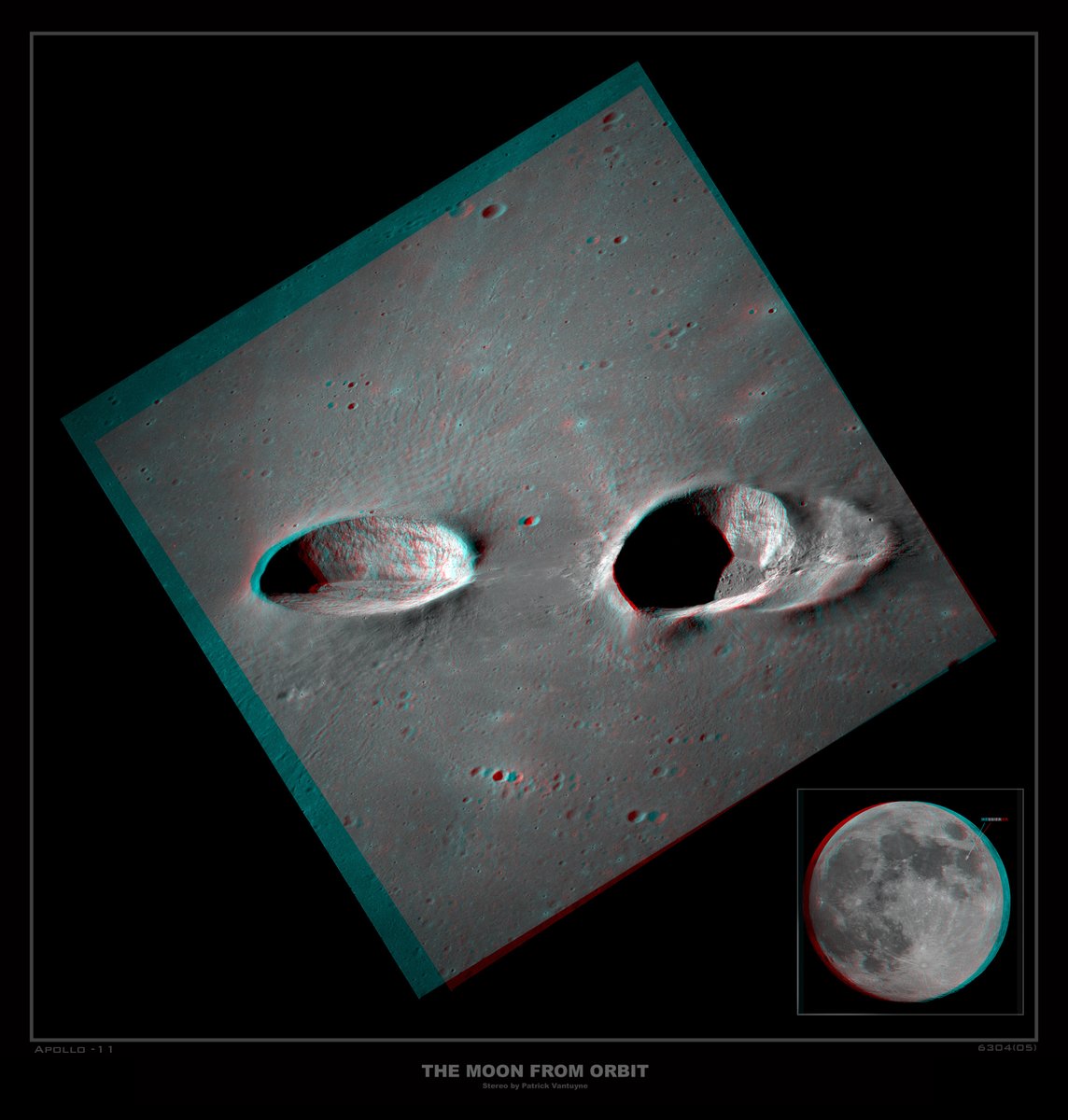
📌 Messier Craters in Stereo
Many bright nebulae and star clusters in planet Earth's sky are associated with the name of astronomer Charles Messier from his famous 18th century catalog. His name is also given to these two large …
#APOD #NASA #Space #Astronomy #Cosmos #LookUp
✨ Space fact
🌌 In the first 3 minutes after the Big Bang, the universe was hot enough to forge light elements like helium and deuterium through Big Bang nucleosynthesis. Heavier elements formed later in stars.
#Space#Astronomy#Science#CoolFacts#NightSky#LearnOnX
✨ Space fact
Neutron stars pack the mass of our Sun into a sphere just 12 miles wide, making them denser than anything imaginable. Their surfaces endure gravity over a billion times Earth's.
#Space#Astronomy#Science#CoolFacts#NightSky#LearnOnX
✨ Space fact
🌌 In the first three minutes after the Big Bang, the universe was hot enough to fuse protons into helium, creating 25% of all helium atoms we see today. This primordial nucleosynthesis set the stage for stars and galaxies.
#Space#Astronomy#Science#CoolFacts #NightSky #LearnOnX
🔴 Postcard from Mars
🛰️ Mars · NASA image archive
🪐 Archive view · 🌍 Earth date 2011-04-06
The rover for NASA Mars Science Laboratory mission, named Curiosity, is about 3 meters 10 feet long, not counting the ad…
#Mars#NASA#RedPlanet#Space#Rover#Explore
✨ Space fact
Neutron stars pack the Sun's mass into a sphere just 12 miles wide, so a sugar cube of their material would weigh as much as Mount Everest. Their gravity crushes atoms into a soup of neutrons.
#Space#Astronomy#Science#CoolFacts#NightSky#LearnOnX
✨ Space fact
Astronomers use radio telescopes to "see" through cosmic dust clouds that block visible light, revealing hidden star-forming regions like the Orion Nebula's core. This infrared and radio trick uncovers secrets optical telescopes miss.
#Space#Astronomy#Science #CoolFacts #NightSky #LearnOnX
☄️ Asteroids nearby (NASA NeoWs)
📅 Close approaches · 2026-05-08
① (2015 KB57) — 21.2M km flyby · ~92–206 m
② (2013 VL) — 53.0M km flyby · ~8–17 m
#Asteroid#NASA#Space#NearEarth#Science
✨ Space fact
Neutron stars are the ultra-dense corpses of massive stars that exploded as supernovae. A single teaspoon of their matter would weigh as much as Mount Everest on Earth.
#Space#Astronomy#Science#CoolFacts#NightSky#LearnOnX
✨ Space fact
Voyager 1, launched in 1977, became the first human-made object to enter interstellar space in 2012, now over 15 billion miles from Earth. It still beams data back daily.
#Space#Astronomy#Science#CoolFacts#NightSky#LearnOnX
✨ Space fact
Neutron stars spin up to 700 times per second, packing a Sun's mass into a 12-mile-wide ball so dense a teaspoon weighs as much as Mount Everest.
#Space#Astronomy#Science#CoolFacts#NightSky#LearnOnX
🔴 Postcard from Mars
🛰️ Mars · NASA image archive
🪐 Archive view · 🌍 Earth date 2023-03-01
One of the Navcam imagers aboard NASA's Perseverance Mars rover captured the Ingenuity Mars Helicopter on Feb. 26, 2023,…
#Mars#NASA#RedPlanet#Space#Rover#Explore