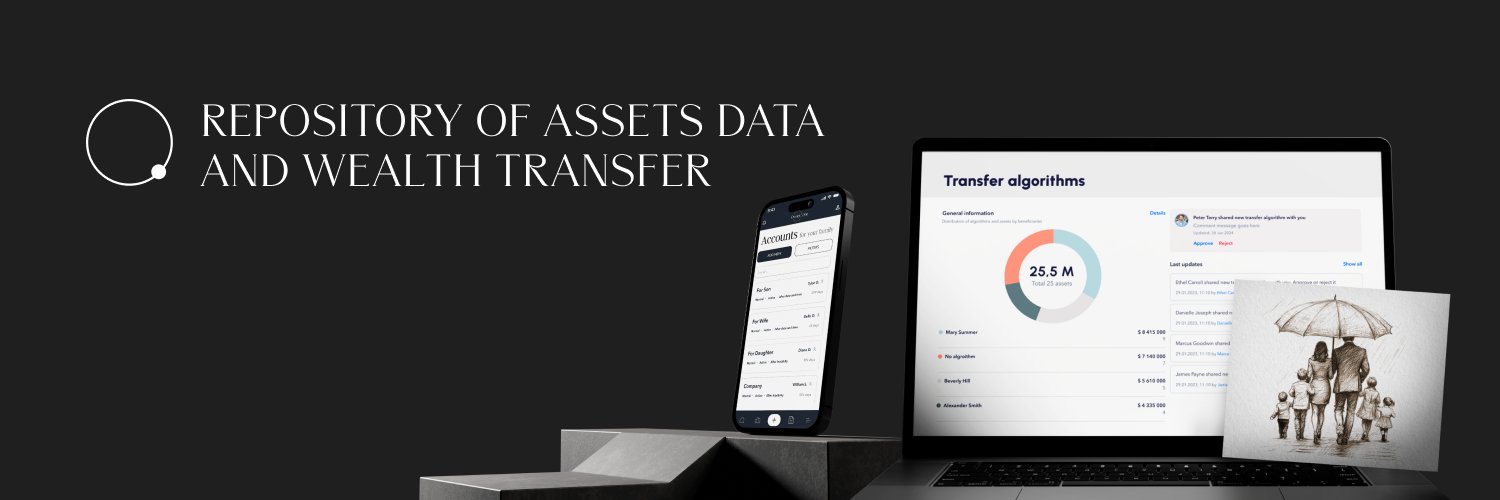
Algorithmic transfer of assets data from a capital founder to family members. Wealth transfer self-acting algorithms will work just-in-time. No 3rd parties.
The Rothschild family preserved wealth across 200 years. The method was not secrecy — it was structure.
The Rothschild family is the most studied example of multigenerational wealth preservation in modern history. Their fifth-generation patriarch Mayer Amschel Rothschild's last will explicitly forbade external marriage, required family partnership in all business decisions, and mandated that family meetings govern major capital moves.
The instrument was not a trust. It was a system — a set of rules, roles, and information protocols that operated independent of any single person's judgment or availability.
Most wealthy families today do the opposite: the founder centralizes all knowledge, makes all decisions, and creates a structure where continuity depends entirely on their continued presence.
The lesson from 200 years of Rothschild history is not "be a Rothschild." It is this: capital survives generations when the rules of its management are written down, agreed upon, and structurally enforced — not when they exist in one person's memory.
The founder's mind is not infrastructure. The system they build is.
🔗 https://t.co/ybt5IrbPH5
#WealthHistory #FamilyWealth #WealthGovernance #IntergenerationalWealth #FamilyOffice #WealthContinuity #CapitalPreservation #OwnerOne
✨ https://t.co/HBHzLmvZSr Feature Series: Available Now — Capital Surveys
Most families don't know where their gaps are until a transfer event forces them to find out.
https://t.co/HBHzLmvZSr's Capital Surveys are designed to make that discovery before pressure does.
The surveys evaluate three dimensions of readiness:
Data readiness — Is your asset information complete, current, and structured in a way that others can act on without you present?
Logic readiness — Are your transfer rules, recipients, and trigger conditions actually defined — or still living in your head?
Execution readiness — Would your personal infrastructure — advisors, lawyers, family members — be able to act without bottlenecks if something happened today?
Most families that complete the survey discover that two of the three are at least partially unaddressed. The survey doesn't solve the problem. But it names it precisely — which is where every useful process starts.
No commitment required. The diagnostic is available now.
🔗 https://t.co/OPoMrnF0O2
#CapitalSurveys #WealthReadiness #OwnerOneFeatures #FamilyWealth #WealthTransfer #EstatePlanning #OwnerOne #SuccessionPlanning
93.7% of wealthy families use inadequate methods to store and update their wealth data. Most don't know it.
Ask a capital founder how their asset information is stored, and the answer is usually confident: "My lawyer has it." "It's in a folder." "My assistant manages that."
Ask who updates it when something changes — a new account, a restructured entity, a sold property — and the confidence fades.
Penguin Analytics found that 93.7% of wealthy families use inadequate methods for storing and updating wealth data. Not because they are careless, but because no purpose-built system for this existed until recently.
The results are predictable:
→ 87.1% maintain poor or barely adequate records of personal and family wealth
→ 82.5% are concerned about whether their asset data is current
→ Only 11% understand that in today's world, data on assets takes precedence over physical document copies
A will means little without the data to execute it. An advisor means little if they're working from records that are two years out of date.
The most dangerous gap in wealth planning is not the absence of a will. It is the absence of a living, structured, and current record of what exists.
📊 Penguin Analytics — 13,500 respondents, 18 countries
🔗 https://t.co/bdAT2TwUqO
#AssetData #WealthRecords #PenguinAnalytics #WealthTransfer #FamilyOffice #WealthPreservation #CapitalFounders #OwnerOne
The transfer procedures families face are 1,400% more complex than they were eight years ago.
FATF. AML. KYT. KYC. Transparency registries. Source of Wealth verification. Cross-border inheritance rules. Tax reporting for multi-jurisdictional estates.
Penguin Analytics documented it: the procedural complexity of wealth transfer has increased by 1,400% over the last eight years. A family that navigated inheritance relatively smoothly in 2016 would face a fundamentally different landscape today.
This complexity now touches 97.5% of wealthy families — not just the ultra-high-net-worth. The regulatory infrastructure that grew up around money laundering prevention, sanctions enforcement, and tax transparency applies to families at $5M just as it applies at $500M.
Most families are not prepared for this. Not because they are careless — but because the environment changed around them while they were building wealth, not preparing to transfer it.
The answer is not more lawyers. It is structured data that anticipates the questions before they are asked.
🔗 https://t.co/29azWx8CBc
#WealthComplexity #FATF #AML #WealthTransfer #FamilyOffice #RegulatoryRisk #PenguinAnalytics #OwnerOne
Children believe they're inheriting a clean slate. Regulators disagree.
There is a common belief among successors: when they receive the inheritance, their compliance story starts fresh. A new generation, a new slate.
Regulators and bank compliance teams operate from a different assumption entirely.
When a successor receives assets or capital — through gift, inheritance, or transfer — those assets carry the full compliance history of their origin. Source of Wealth, KYC trails, transaction patterns, beneficial ownership structures: all inherited alongside the assets themselves.
Penguin Analytics found that 22% of successors understand that gifts and inheritance are treated by compliance officers almost like a lottery win — an unexpected, difficult-to-explain inflow that triggers immediate scrutiny.
Only 4.5% of capital founders understand that their inaction today is transferring compliance problems to their children tomorrow.
The successor who cannot explain the origin of what they received will be asked to prove it. That preparation cannot begin the day the transfer happens.
🔗 https://t.co/qfnU7ukhbH
#KYC #SourceOfWealth #WealthTransfer #Compliance #FamilyWealth #PenguinAnalytics #InheritanceCompliance #OwnerOne
✨ https://t.co/HBHzLmvZSr Feature Series: Available Now — Virtual Family Office
Every capital founder already has a family office. It's just not organized as one.
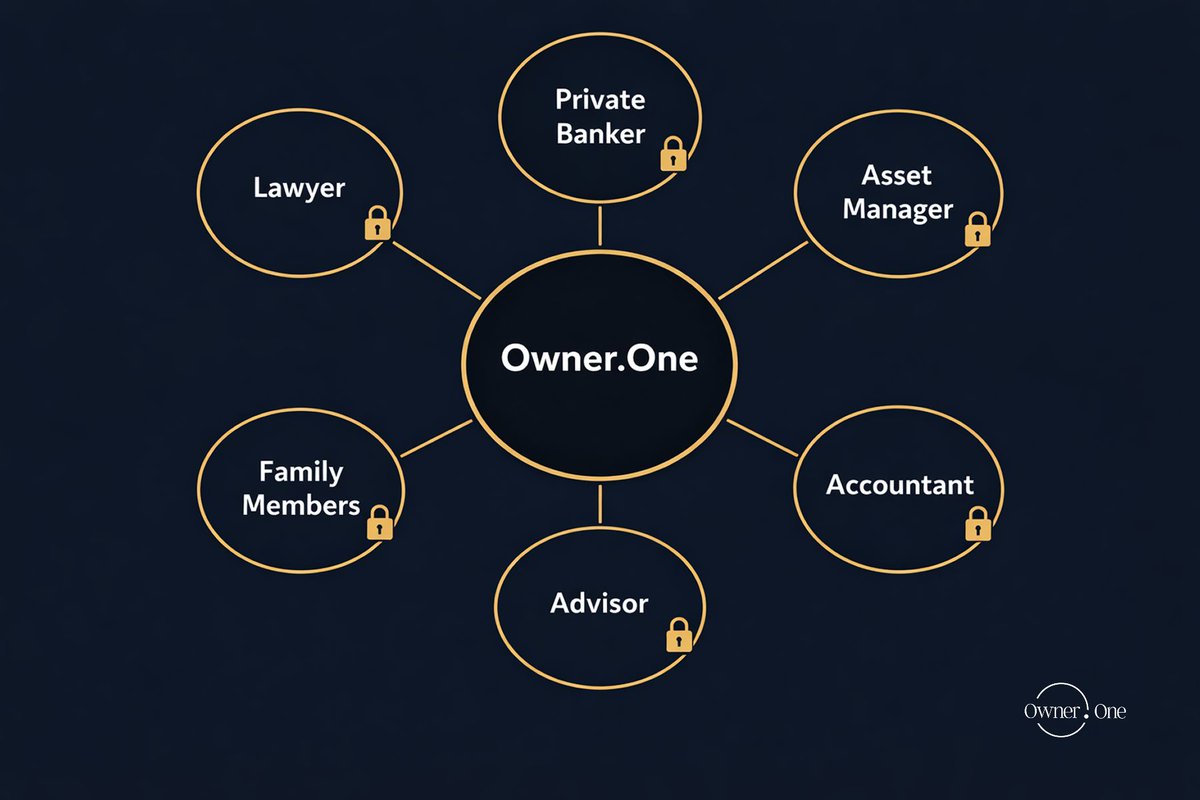
There's the lawyer in one country. The private banker in another. The asset manager who handles the portfolio. The accountant who prepares the filings. The advisor who knows about the real estate.
Each one has a fragment of the picture. No one has the whole view. And the founder — the only person who holds all the threads — is also the person who should not be the single point of coordination.
https://t.co/HBHzLmvZSr's Virtual Family Office lets you build that coordination structure digitally: advisors, managers, bankers, and lawyers in a single secure space, each with defined visibility and access. Documents, data, tasks, and delegations — all under your control.
Not a replacement for professionals. An architecture for managing them, securely, without relying on your personal availability to keep everything connected.
✅ Available now.
🔗 https://t.co/AqLIX3v6QS
#VirtualFamilyOffice #FamilyOffice #OwnerOneFeatures #WealthGovernance #WealthManagement #OwnerOne #UHNW #PrivateWealth
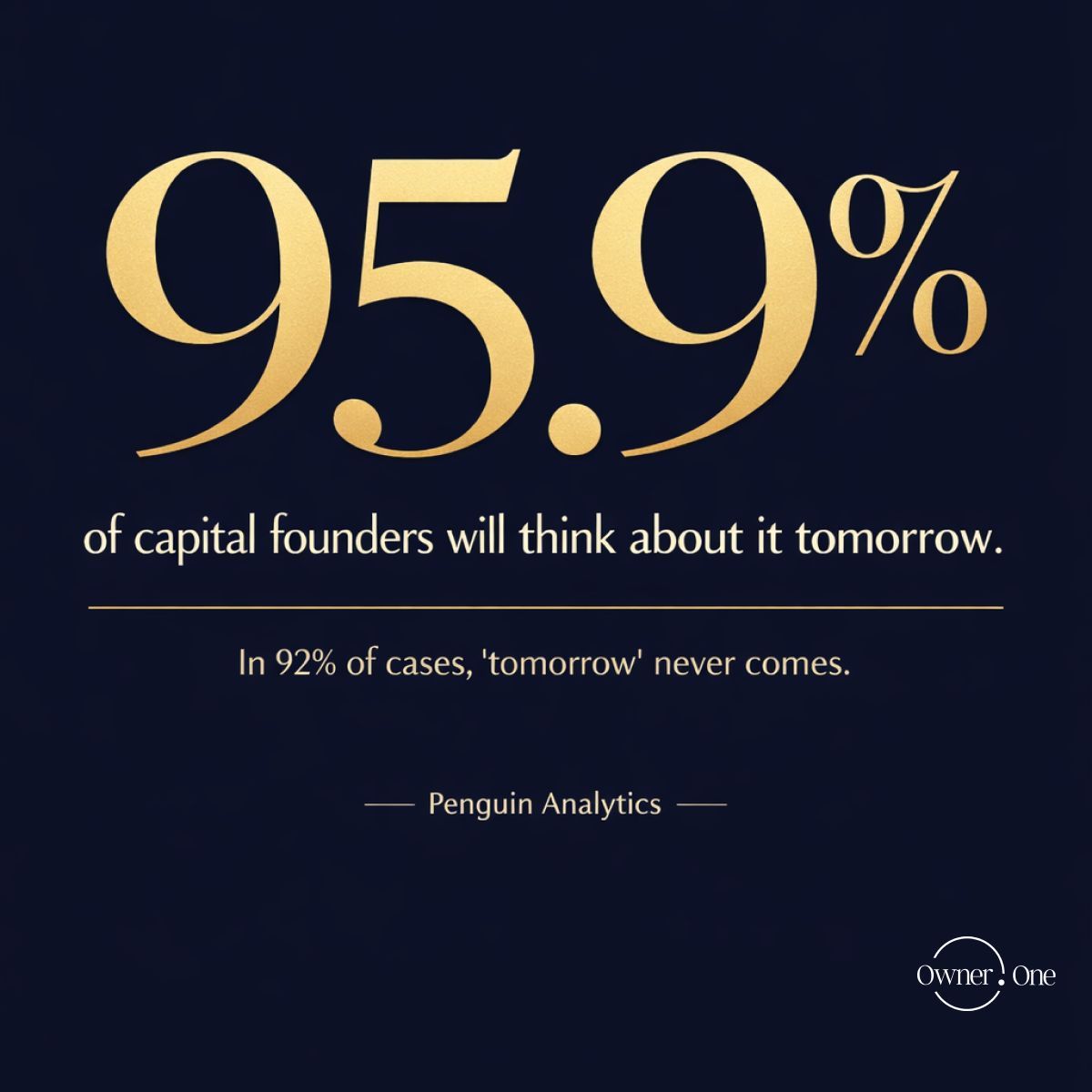
95.9% of capital founders exhibit the Scarlett O'Hara syndrome. "I'll think about it tomorrow."
Penguin Analytics found it consistently across 18 countries, in families with $5M to $120M in capital.
95.9% of capital founders exhibit what the research calls "Scarlett O'Hara syndrome": the deliberate, repeated postponement of transfer preparation because it feels uncomfortable today — and survivable tomorrow.
This is not negligence. It is a predictable psychological response to a task that is emotionally heavy, logistically complex, and seemingly non-urgent.
But the data on what postponement actually costs is unambiguous:
→ In 92% of cases, "temporary" postponement becomes permanent
→ Capital transfer cannot be corrected mid-process — there are no drafts
→ The average transfer window is 6–18 months; reconstruction during that window fails most of the time
The transfer will happen regardless of readiness. The founder's preparation is the only variable.
📊 Penguin Analytics — 13,500 respondents, 18 countries
🔗 https://t.co/qfnU7ukhbH
#WealthBehavior #SuccessionPlanning #PenguinAnalytics #FamilyWealth #WealthTransfer #CapitalFounders #BehavioralFinance #OwnerOne
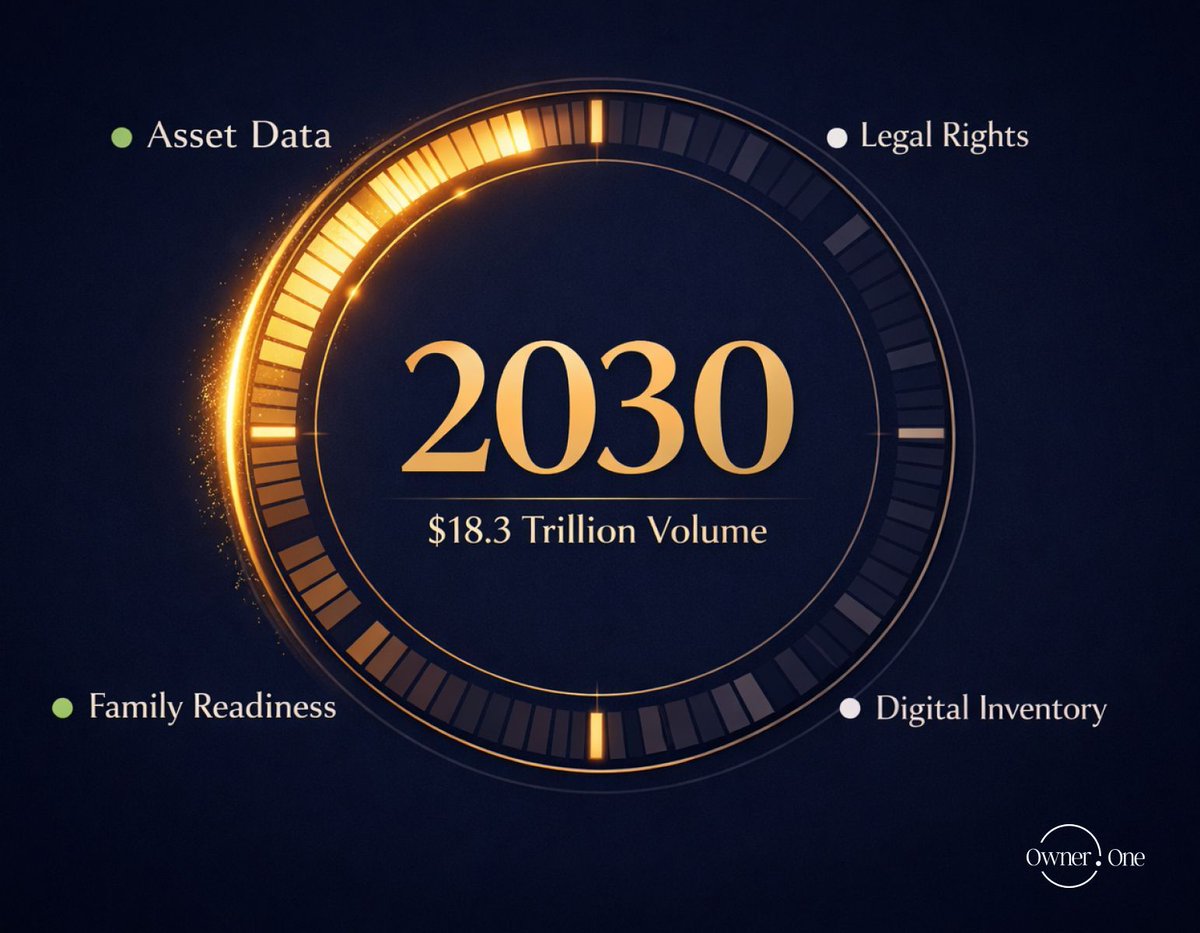
Before 2030, $18.3 trillion will transfer within families. Most of it has never been digitally inventoried.
The Great Wealth Transfer is not a future event. It is happening now.
$18.3 trillion in capital will move within wealthy families before 2030. That is five years away. Not a planning horizon — an active countdown.
The families already inside that transfer window face a practical problem, not a philosophical one: they need to move asset data and legal rights to the right people, in the right format, at the right moment.
Most families in this bracket ($5M–$150M) have not inventoried their assets digitally. They rely on personal infrastructure — lawyers, advisors, family office staff — who know partial information and serve today, not the day the founder is gone.
The difference between a smooth transfer and a chaotic one is not the amount of capital. It is whether structured, complete, and current asset data exists — and whether it can activate without the founder present.
The window is not theoretical. It is timed.
🔗 https://t.co/bdAT2TwUqO
#GreatWealthTransfer #WealthPlanning #FamilyOffice #AssetInventory #WealthContinuity #OwnerOne #IntergenerationalWealth #DigitalLegacy
Liabilities don't wait for the funeral to arrive.
Capital founders tend to think about what they will leave behind in terms of assets. Accounts, properties, companies, portfolios.
What they rarely document is the other side of the ledger.
Guarantees given to business partners. Shareholder agreements with buyback clauses. Options that trigger on death or incapacity. Loans with covenants tied to the founder's personal involvement.
These are not uncommon. They are standard elements of any active business life. But the family rarely knows they exist — let alone how to respond when the lender or counterparty arrives with a claim.
Penguin Analytics found that only 5.6% of heirs understand that inheritance is rarely partial: you inherit the liabilities alongside the assets. And in 61% of cases, debts only surface 12–18 months after the transfer — by which time distributions are locked and portfolios already restructured.
The founder holds the map of the liabilities, too. The question is whether it will transfer.
🔗 https://t.co/tH9y5NBTaH
#YansNotes #WealthTransfer #InheritanceRisk #FamilyWealth #Liabilities #CapitalFounders #PenguinAnalytics #OwnerOne
19% of wealthy families will lose more than 71% of their capital in the transfer. Here is why.
Penguin Analytics surveyed 13,500 families across 18 countries. One finding is still startling to read plainly:
19% of wealthy families will lose more than 71% of their capital during the transfer process.
Not after. Not due to market crashes. During transfer — in the 6–18 month window that begins when a founder becomes unavailable.
The root cause, in nearly all cases, is managerial rather than economic:
→ Missing or inaccessible asset data
→ Personal infrastructure that fails when the founder is absent
→ Family members who cannot navigate what they've inherited
→ Wills that exist on paper but cannot be executed across borders
The transfer moment is the single highest-risk period in a family's capital history. It happens exactly once. There are no drafts.
📊 Penguin Analytics — 13,500 respondents, 18 countries
🔗 https://t.co/qfnU7ukhbH
#WealthTransfer #CapitalLoss #PenguinAnalytics #FamilyOffice #HNW #WealthPreservation #EstatePlanning #OwnerOne
Wealth transfer is one of the largest markets in the world. And one of the most analog.
Think about how wealthy families live today: digital banking, digital securities, digital business operations, digital communications.
Then think about how they transfer wealth: paper wills drafted once and never updated. Lawyers who know part of the picture. Assistants who know another part. Folders in three offices. Memory as the primary storage system.
The 2025–2045 Great Wealth Transfer is not just a financial event. It is a structural mismatch: modern assets attempting to move through pre-digital channels.
The families that lose the most aren't the ones with the least wealth. They're the ones with the most complex, multi-jurisdictional, multi-asset structures — and no digital layer connecting them.
More than 1,000 digital fintech solutions will be needed globally to serve this transition. Today, only a few dozen exist.
That gap is where capital disappears.
🔗 https://t.co/29azWx8CBc
#GreatWealthTransfer #WealthTech #FamilyOffice #DigitalInheritance #WealthManagement #OwnerOne #HNWI #LegacyPlanning
$35.8T is about to move between generations.
Yet 70% of families face transfer blocks.
Not because of poor planning —
but because wealth is:
• Spread across jurisdictions
• Tied to service providers
• Missing a single source of truth
That’s the real risk behind the Great Wealth Transfer.
What’s changing?
Leading families are shifting from dependency → private infrastructure
to control their asset data, access, and transfer.
https://t.co/8GNerCGAPe
✨ https://t.co/HBHzLmvZSr Feature Series: Available Now — Triggers & Algorithms
The riskiest moment in wealth management isn't a market crash.
It's the hour after something unexpected happens to the founder — when family members need to act, don't know where to start, and every hour of delay compounds the exposure.
https://t.co/HBHzLmvZSr's Triggers & Algorithms module lets you define the exact conditions under which each family member receives each category of information. Hospitalization. Death. Prolonged absence. Unusual geolocation. Reaching a milestone age. Any event you define.
When the trigger activates, the algorithm executes. No human intermediary. No delay. No one deciding whether now is "the right time."
You don't organize the transfer when it starts. You design it in advance. Then it happens exactly as you planned — not improvised under pressure.
✅ Available now.
👉 https://t.co/LypaLnUvJT
#OwnerOneFeatures #WealthContinuity #AlgorithmicTransfer #FamilyOffice #WealthTransfer #OwnerOne #EstatePlanning
The founder knows. The family doesn't. That gap is where fortunes disappear.
There's a well-documented pattern in wealthy families: the founder accumulates a complete mental map of every asset, account, entity, and relationship. The family holds a fraction of that map — often less than 20%.
This isn't secrecy. It's structure. The founder earns while managing. The family receives while unprepared.
When transfer begins — planned or forced — the family must reconstruct what the founder never documented. Banks wait. Deadlines pass. Assets go unclaimed.
Penguin Analytics found that 79.4% of capital founders believe their family would be unable to understand or navigate information about their assets and capital. Yet 81.6% take no action to reduce that gap.
The problem is not intent. It is the absence of a system that preserves the map — not in a person's memory, but in an owner-controlled structure that activates when needed.
🔗 https://t.co/bdAT2TwUqO
#InformationAsymmetry #WealthTransfer #FamilyWealth #CapitalPreservation #PenguinAnalytics #OwnerOne #HNW
$84 trillion is moving. Most families have no infrastructure to receive it.
According to Vanguard, BlackRock, HSBC, and Citi, the 2025–2045 Great Wealth Transfer will move $84.4 trillion between generations — $35.8 trillion within wealthy families alone.
That is the largest intergenerational capital movement in recorded history.
And yet, the market that should serve it — digital, algorithmic, cross-border transfer infrastructure — has fewer than a few dozen solutions globally. Against a need for over 1,000.
The gap is not theoretical. It shows up inside families: disorganized records, uninformed heirs, outdated wills, and personal infrastructure that founders themselves doubt will perform.
The transfer window is open. The question is whether your family's structure is ready to receive what you built.
🔗 https://t.co/qfnU7ukhbH
#GreatWealthTransfer #WealthContinuity #FamilyOffice #PenguinAnalytics #WealthTransfer #OwnerOne #HNW #IntergenerationalWealth
Most capital founders think their children inherit assets.
What they actually inherit is their parents' KYC history or the absence of it.
When a child receives inheritance, banks and compliance officers don't just ask about the child. They trace every asset back to its origin: where the money came from, how entities were structured, who held power of attorney and when.
Only 11.9% of capital founders understand that their children will be required to complete KYC both for themselves and on behalf of their parents.
Only 4.5% understand that by doing nothing today, they are transferring their own compliance problems — unresolved, undocumented — directly to their family.
A Source of Wealth Essay isn't bureaucracy. For the next generation, it's protection.
Source: Penguin Analytics
→ https://t.co/qfnU7ukhbH
#WealthPlanning #KYC #FamilyWealth #SuccessionPlanning #ComplianceRisk #HNWI #FamilyOffice #WealthManagement
Two families. Same event. Completely different outcomes.
Family A relies on advisors, paper documents, and a will stored with a notary. Average time for heirs to receive complete asset information: up to 180 days. In that window, accounts freeze, businesses stall, assets disappear from view.
Family B uses a digital Repository. Transfer time: 67 seconds. No intermediaries. No human error. No waiting.
The difference isn't wealth — it's infrastructure.
The 6–18 months after a trigger event are when most family capital is lost. Speed of information delivery is the single variable that changes the outcome.
Source: https://t.co/HBHzLmvZSr Repository Efficiency data
→ https://t.co/29azWx8CBc
#WealthManagement #FamilyOffice #PrivateWealth #DigitalInheritance #WealthTransfer #FinTech #SuccessionPlanning
In 2022, the co-founder of https://t.co/HBHzLmvZSr was in intensive care in Lisbon. Anaphylaxis. His phone was locked away in hospital storage.
His wife Lou hadn't thought much about the Repository he'd set up for the family. But suddenly her phone vibrated.
What appeared: detailed information about accounts and businesses across four countries. Companies. A copy of the international will. The location of the original. Instructions.
The system had detected the crisis and acted on its own — without any human involvement, without Yan's phone, without anyone being asked.
"It felt as thrilling as a movie about the future," Lou said.
Yan survived. https://t.co/HBHzLmvZSr was already serving clients before that day — but that moment confirmed what it was actually for.
This is not a product built by engineers for a theoretical problem. It was built by a family, for families.
→ Read the full story: https://t.co/zdUJUCbZzq
#WealthTransfer #FamilyWealth #FinTech #PrivateWealth #WealthPlanning #FamilyOffice #DigitalInheritance
Inheritance is usually treated as a legal event.
In reality, it is an operational transition.
The law may be clear.
But execution depends on:
– structured data
– defined authority
– precise timing
– aligned jurisdictions
Most failures happen after the legal documents are signed — not before.
If your transfer plan exists only on paper, it’s incomplete.
https://t.co/ybt5IrbPH5
#WealthContinuity #FamilyOffice #DigitalInfrastructure #OwnerOne
Delegation is unavoidable in HNW and UHNW families.
Assistants, lawyers, bankers, advisors — all play a role.
The real question is not whether you delegate.
It’s whether you can delegate without exposing the entire system.
Structured contribution, limited visibility, predefined authority — that’s how delegation scales without multiplying risk.
https://t.co/29azWx8CBc
#FamilyOffice #WealthGovernance #Delegation #OwnerOne