I'm very excited to announce: @edge_delta Named a Leader in the @Gartner_inc® Magic Quadrant™ for Observability Pipelines. This took a tremendous amount of effort over the years. A big thank you to all of our team members that have helped us build and support the service, and an even bigger thank you to our customers who continue to trust us to process their data and enable all of their AI initiatives now and in the future!
Eight years ago we bet that telemetry should start to be processed where it is created, long before anything gets indexed much further downstream in a centralized tier. This is the story of how we got here and what we think it means for the people who run prod.
https://t.co/qeETmu1PtI
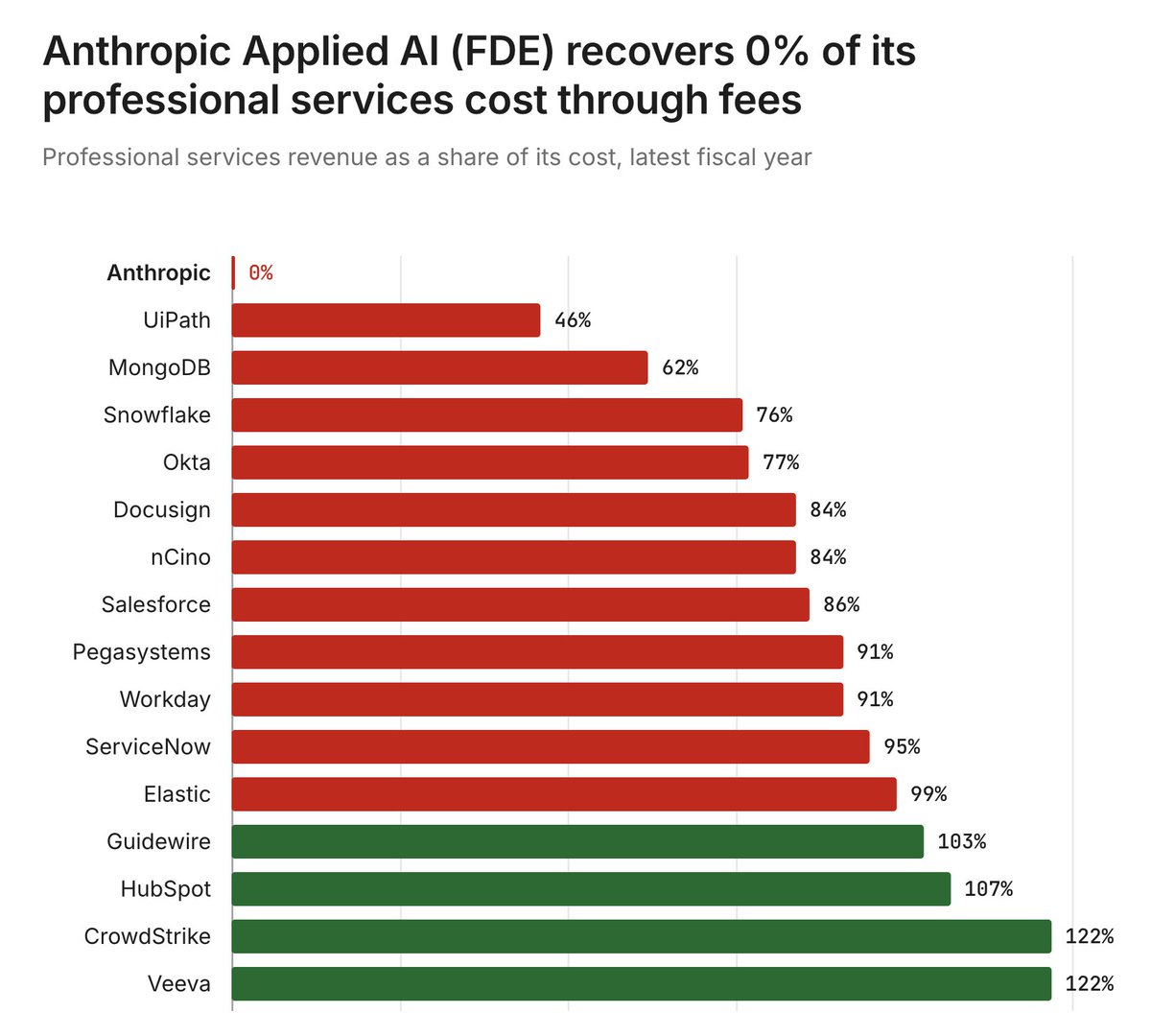
Getting AI into production still requires substantial engineering. @AnthropicAI embeds engineers to build applications inside customers’ systems, integrate workflows, and establish reliable operation. They appear willing to subsidize that work to unlock adoption. As we're going through a big shift in the way things are done, it makes sense at their scale.
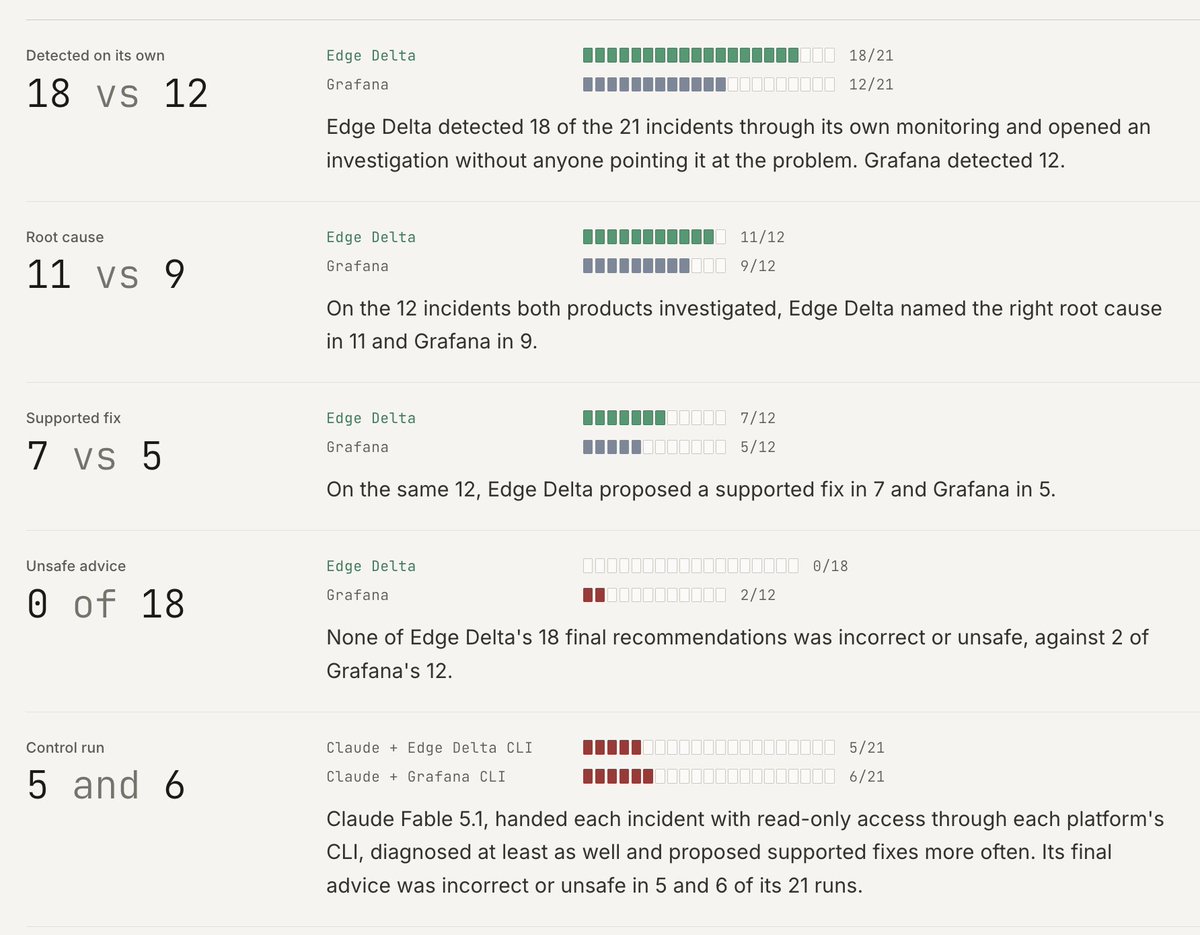
Last I checked we're not yet at the T mark (yet), so we're attacking this in a more automated way. We attempt to reduce the human effort needed to deploy AI, verify its behavior in production, and keep it delivering measurable value.
The value/safety/risk ratio needs to hit the mark.
Claude Ship just released, it's a great concept by @AnthropicAI, but feels a little boring, what a lot of the industry was already doing for six months.
It gets a lot more exciting when you connect it to prod. When review and approval take less time, changes reach production faster. Automatically connecting each deployment to changes in errors, latency, resource usage, and customer experience allows engineers to quickly establish whether a release is healthy. Telemetry should be a real time input to AI decisions, an opportunity to connect agent activity, software changes, and production health in one operational view. When we say prod immune system, that's what we mean.
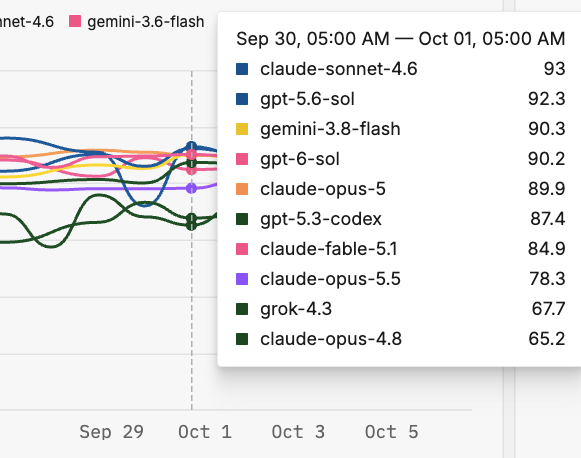
Ever wonder which models perform best in in real world prod for SRE and Observability use cases? Given the same harness, set of data, and context, here are the top 10:
@anishgiri Astra = Stars. Sol = Our star.
It's like collective intelligence of all Super-GMs vs "Magnus" as he gets older. This is simple logic Anish...
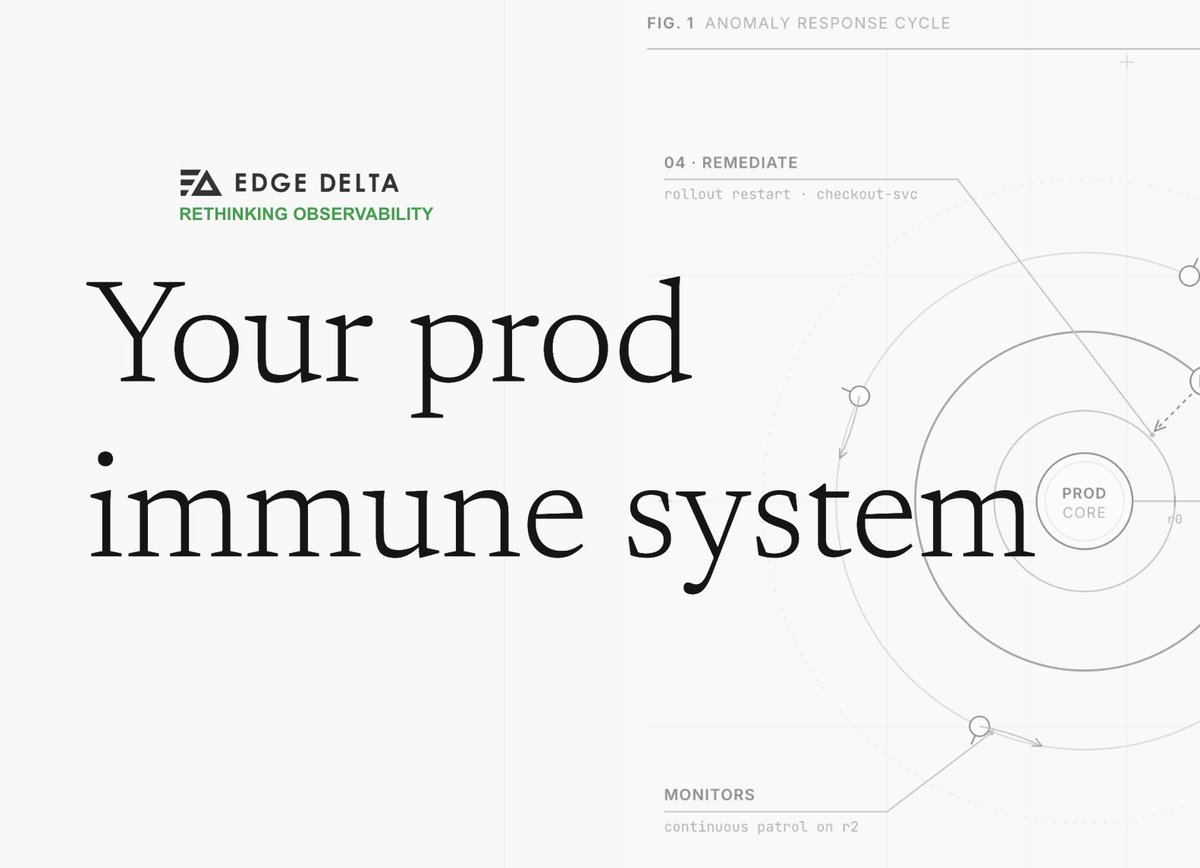
Today, we released our new website, with what we believe to be the most clear and concise way to sum up what we're building: "your prod immune system"
AI has accelerated the SDLC which is causing the largest shift in prod ops I've ever seen in my lifetime. More code, PRs, merges, deployments than ever before, and this pace is well beyond the pace of which humans can surpass. We saw this over a decade ago with computers/AI in chess, and today not even the best player in the world has any hope of a chess engine. They lose 1000 times out of 1000. It may not feel like it yet, but prod ops is getting there at this very moment. When most engineers see the knowledge graph of their prod environment, there is immediately an aha moment. The graph is ridiculous, it's overwhelming, it's cluttered, for even tiny prod environments there are thousands of relationships, it's nearly entirely useless to the best engineers in the world. That's the point. It's not meant to be used by engineers.
Running prod from this point forward requires stochastic software (AI), deterministic software (guardrails) and humans making informed critical decisions (guardians). I do not believe we are anywhere close to RSI for this reason, without a deterministic harness around AI, it goes off the rails pretty quickly. Can that mean amazing magical things at times? Yes. Can it also carry massive levels of risk no serious business would ever internalize? Also yes.
We have intelligent data pipelines which optimize data (for agents, not necessarily for humans anymore) into indexes, we have a harness that is the most safe, open, and flexible harness in the world for prod ops, and we have a very robust set of things (top frontier and open models, customizable agents, knowledge graphs, shared context and memory, loops, real time perf evals, etc) that bring it all together.
We need autonomy for prod, but it must be earned. @edge_delta
♟️👑♟️ Those who know me know that I'm a chess enthusiast. I play speed chess every day. It's easy to fit in a bullet or blitz game when you have a few minutes to kill waiting for your latte etc. One thing I don't do? Take time to analyze my games. This means my improvement will be delayed. For that reason, I created Evaluchess. It prioritizes real-time feedback while you're playing, and it's already improved my game. Despite playing for many years, it just taught me that I routinely miss the opportunity for a central pawn push or pawn break.
I hope you find it useful, let me know your feedback.
Where tf are all the AI automated tasks? RSI? Give me a break. Let's settle for safe, repeatable value with an acceptable level of risk. The range of the most magical potential to the most dogsh*t output even with the same model in the same harness is the problem.
AI + deterministic traditional software will be a combo that will never go away.