Fisherman literally RIDES GIANT WHALE'S BACK as he risks his life to free it from fishing net
Jonathan Quispe says he acted after hearing whale's 'distressed cries', fearing it could die if left trapped
He performed the daring rescue off Peru's coast with nothing but a knife
Psychotria elata is a tropical tree found in the rain forests of Central and South America.
The plant has become internet-famous because of its flowers or rather the shape of the red bracts (modified leaves) before the flowers mature.
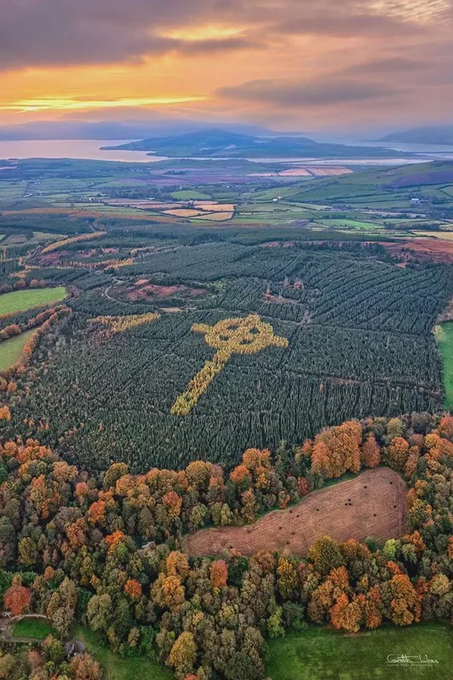
Every autumn, a huge golden cross appears in the forests of County Donegal, Ireland.
3000 Japanese larch trees were planted among pine trees, creating a cross pattern when the larch trees turn yellow.
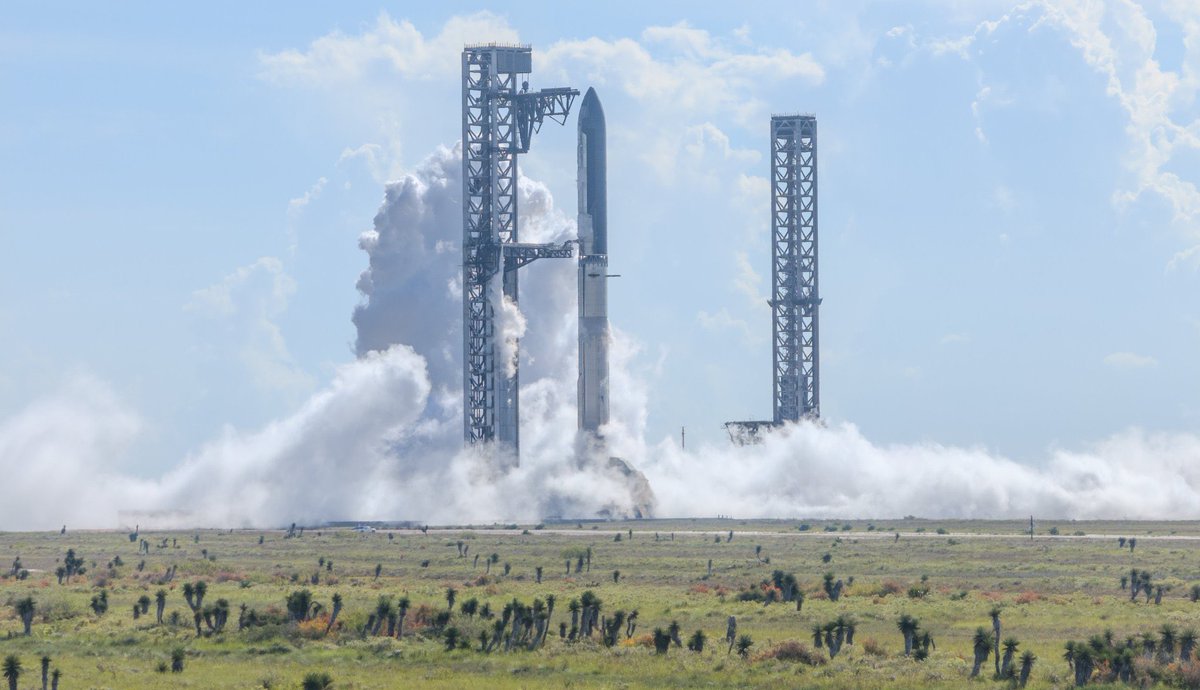
This is the vehicle that's supposed to carry humans to Mars — and it just casually demonstrated more precision than most people show backing into a driveway.
A few years ago this was science fiction. Now it's a Tuesday.
The most insane part isn't that it works. It's that we're already getting used to it.
The guy who created Fortnite, Tim Sweeney, has been quietly buying up U.S. forests to save them from developers.
He has spent over $200M to buy 50,000+ acres of wilderness in North Carolina, using permanent legal protections to block any future logging or building.
Jolene Goes Looking for Her Calf: When a Mother Cow Calls “Dad the Human” for Help 💖
Jolene is a rescued Longhorn cow who now lives with the herd at an animal sanctuary founded by Lester and his family after Hurricane Harvey. Here, the cows are cared for for life. They are not sold or sent to slaughter, but are allowed to live together in a safe environment.
Sir Scotty is Jolene’s calf, a little Longhorn boy given a name with the air of a knight. The two live together at the sanctuary, where the young calf can grow up beside his mother.
That morning, Jolene and the herd were let out into the pasture. The calf was still small and had fallen asleep in the tall grass, so his mother could not see him.
Jolene immediately became distressed.
She bellowed, running all over the pasture, looking first one way and then another. The longer she could not find her calf, the more restless she became, looking so troubled that anyone watching could tell how worried she was.
After searching on her own for a while, the mother cow turned to “Dad the human”, the carer who regularly looked after the herd. She bellowed and looked at him with an almost reproachful expression, as if asking: “Where is Sir Scotty? Did you take my baby?”
The way the mother cow went from searching for her calf herself to turning to “Dad the human” makes the scene feel like a very clear request for help: “I can’t find my baby. Dad, please help me look.”
What is fascinating is that cows are far more complex than they may appear. Mother and calf can recognise one another through their individual calls. Studies have found that mothers respond more strongly to the calls of their own calves than to those of other calves, while calves can also recognise their mothers’ calls.
Cows can also remember people they regularly interact with and respond differently depending on how they are treated. Gentle interactions, such as speaking softly or stroking a cow when it is comfortable, can help build a more friendly relationship between cows and people.
That is why there is something particularly special about the mother cow turning to “Dad the human”. She is not only looking for her calf. She is also turning to someone she knows, as though she understands that he may be able to help her find the little one who has gone missing.
Then the calf was found.
The mother cow calmed down as soon as she saw him. Her restlessness disappeared, and mother and calf were together again in the pasture.
Anyone who has spent time around cows may not be surprised by a story like this. Some cows enjoy being stroked, some like staying close to their carers, some remember the people who regularly call their names, and each has its own way of showing trust.
When cows are given a safe place to live and cared for gently, their endearing personalities also have a chance to emerge. Some enjoy being stroked, some like staying close to people, while others remember their carers and turn to them when they need help.
Perhaps that is one of the most meaningful things about animal rescue. When a cow is given the chance to live in a peaceful home, people can see that there is more to her than an animal raised for meat.
She can be a devoted mother searching for her calf, a cow who knows to turn to “Dad the human” when she needs help, and a four-legged friend who simply enjoys being loved.
And it all begins with something very simple: giving her a place to live.
A single bird has just accomplished one of the most extraordinary feats in the animal kingdom — flying nearly one-third of the way around the Earth without stopping to eat, drink, or rest.
The record-breaker is a five-month-old Bar-tailed Godwit that flew nonstop from Alaska to Tasmania, Australia. Covering 8,425 miles in just over 11 days, it set a new record for the longest nonstop flight ever documented in any bird.
What makes this journey even more astonishing is that it was the young godwit’s very first migration. The entire route took place over the open Pacific Ocean, with no chance to land. Despite that, the bird navigated thousands of miles of featureless water with pinpoint accuracy.
This incredible endurance is made possible by remarkable physiological adaptations. Before takeoff, the godwit packs on enormous fat reserves — nearly half its body weight — to fuel the flight. At the same time, many of its internal organs, including parts of the digestive system, temporarily shrink to lighten the load and maximize energy efficiency.
Unlike many seabirds that depend heavily on gliding, this godwit flapped continuously for the entire journey, battling shifting winds and weather systems the whole way.
Researchers at the Pūkōroro Auckland Shorebird Centre say discoveries like this are transforming our understanding of migratory birds. Their astonishing endurance, navigation skills, and energy management demonstrate biological capabilities that can match — and in some ways surpass — even the most advanced human engineering.
More than 3,500 years ago, the ancient Minoans of Crete created what is believed to be one of the world's oldest depictions of a swing.
Known as “The Swinging Goddess,” this remarkable terracotta figure was discovered at Hagia Triada in southern Crete and dates to around 1500–1450 BC, during the height of the Minoan civilization.
The figure shows a female suspended between two columns topped with birds, symbols often associated with divine presence in Minoan religion. Many archaeologists believe the scene represents the descent or appearance of a goddess from the heavens to the earthly world, a sacred moment known as an epiphany.
Today, this extraordinary artifact is preserved in the Archaeological Museum of Heraklion, offering a rare glimpse into the spiritual beliefs and artistic achievements of Bronze Age Crete.
More than three and a half millennia later, the Swinging Goddess remains one of the most fascinating and unique treasures of ancient Greece.
#archaeohistories