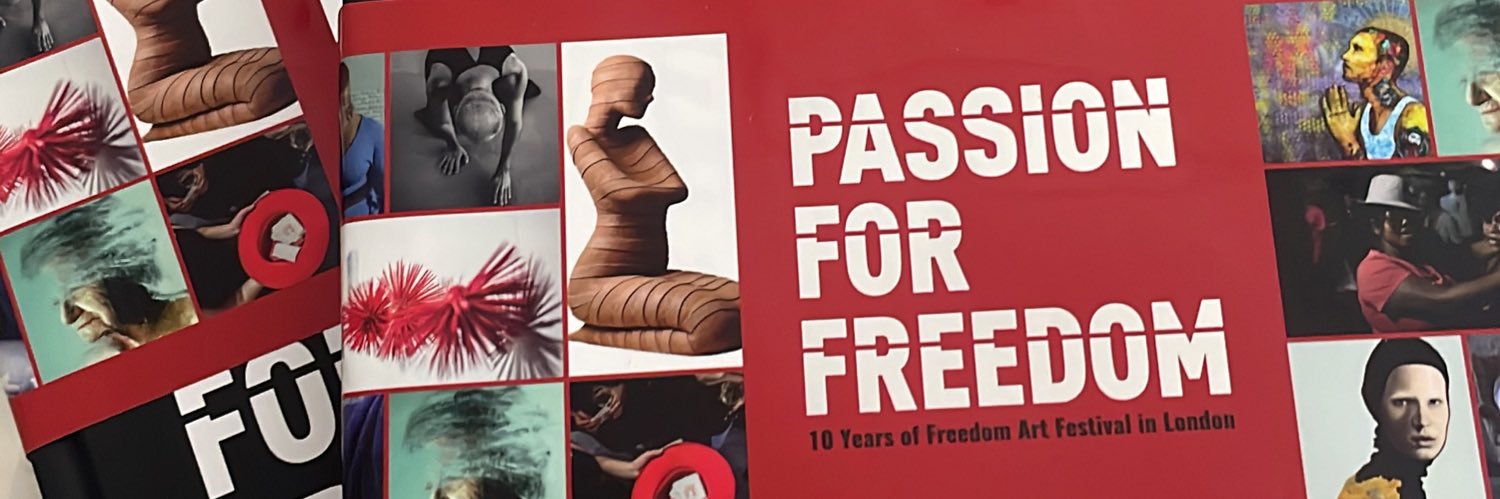
Art | Freedom | Expression ~ Founded in 2007, we celebrate free expression & believe in the power of art to inspire, awaken & shake the world. #P4Freedom
Can satire truly remain free if some subjects become untouchable?
For centuries, satire has played a unique role. It does not have to be polite. It does not have to spare anyone. Its purpose is to ask difficult questions, expose absurdities,
Freedom of speech is not about protecting opinions we all agree with. Its true value becomes clear when ideas provoke disagreement, debate, or discomfort.
This interview invites us to reflect on exactly that.
At Passion for Freedom, we believe that art does not have to be comfortable. It does not have to confirm our existing beliefs. It should, however, retain the freedom to provoke, challenge, and open space for discussion.
History shows that satire is often one of the first areas to reflect changes in the public sphere. When artists begin asking not "Is this joke any good?" but "Am I still allowed to make it?", it is worth asking what this says about the state of free expression.
You do not have to agree with every opinion expressed in the interview to recognise that it raises an important question for every democratic society.
What happens to freedom of speech when satire begins to avoid certain subjects?
and the growing sense that the limits of expression are increasingly defined not only by the law, but also by public acceptance—or the lack of it. In his view, satirists who challenge dominant narratives often face professional consequences and attempts to silence or exclude them
and challenge ideas that are treated as untouchable.
In an interview with The European Conservative, German cartoonist and satirist Bernd Zeller reflects on how the space for satire has changed in recent years. He speaks about social pressure, the impact of cancel culture,
What are your thoughts?
Do you see differences in the way freedom of speech is understood across Europe? Where do you believe the line should be drawn between protecting society and restricting freedom of expression?
Does freedom of speech look the same on both sides of the border?
In this conversation, Krzysztof Barański reflects on his experience of living and working in both Poland and Germany.
Democracy depends on responsibility—but it also depends on the courage to ask difficult questions and to express opinions, including those we may not share.
That is why we give artists, writers, and thinkers a platform. Not to end the conversation, but to keep it alive.
At Passion for Freedom, we continue to ask one fundamental question:
How do we protect freedom of speech without compromising responsibility for our words?
This is about more than legislation. It is about how much space we are willing to leave for disagreement, criticism, debate
Critics, however, contend that the line between addressing harmful speech and restricting freedom of expression is becoming increasingly blurred. Debates have emerged around legal action taken against individuals for comments about politicians on social media.
For years, Germany has introduced laws aimed at combating hate speech, defamation, and incitement to violence, including online. Supporters argue that these measures help protect democracy and public safety.
From his perspective, the difference is clear: he believes that in Germany there is less room for openly expressing opinions, particularly on political issues, than there is in Poland.
His view reflects a broader public debate.
Do you believe it is becoming more difficult to exercise freedom of speech today? Where should the line be drawn between responsibility and restricting free expression?
Follow us and be part of the freedom.
Does artistic freedom also mean freedom of speech?
In this next reflection, Krzysztof Barański makes an important distinction. In his view, art still enjoys a great deal of creative freedom. Freedom of speech, however, is becoming far more complex.
Freedom of speech is not truly tested when everyone agrees. Its real value becomes clear when we encounter ideas that challenge us, provoke debate, or make us uncomfortable.
What do you think?
How can we protect society from misinformation without undermining the fundamental right to free expression? Where is the line between responsibility for our words and control over them?
These are not questions with simple answers. That is why they deserve open discussion.
In such an environment, the temptation to exercise greater control over what can be said - and how it can be said - continues to grow.
For Passion for Freedom, this is one of the defining questions of our time.
He points to something many of us witness every day: information spreads at extraordinary speed, while the line between fact, opinion, and manipulation is becoming increasingly difficult to define.