(1/5) Where will the money for health actually come from?
DAC funding fell >23% in 2025 - health funding potentially down 40%+.
Governments are now scoping blended funds, debt swaps, and development bank balance sheets to reimagine health financing.
(5/5)
These instruments have proven themselves in climate finance. The opportunity now is to put them to work for health.
Read Part 2C → https://t.co/I7aBCgKK0g
#BillionsToBalanceSheets#HealthFinancing#UHC
(1/5)
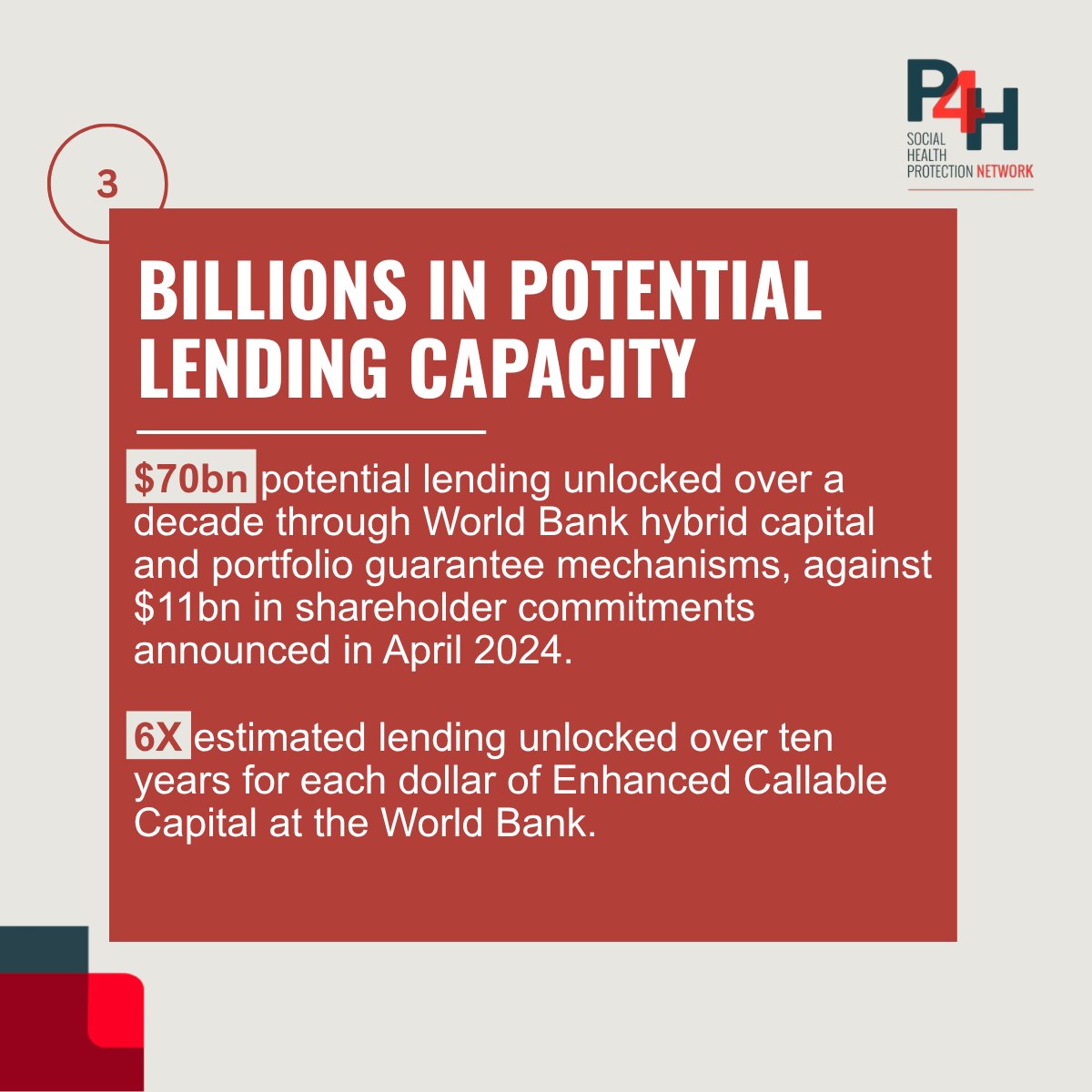
Three routes are open to development banks that want to lend more for health: hybrid capital, unused Special Drawing Rights, and better use of capital shareholders have already committed.
Part 2C concludes Part 2 of our series on financing health systems in the age of the aid retreat. 🧵
(4/5)
Risk Control’s analysis for the @RockefellerFdn puts the headroom at $162 billion of additional World Bank lending over a decade, from capital that already exists.
1/7
Development banks have freed up billions in new lending capacity in recent years.
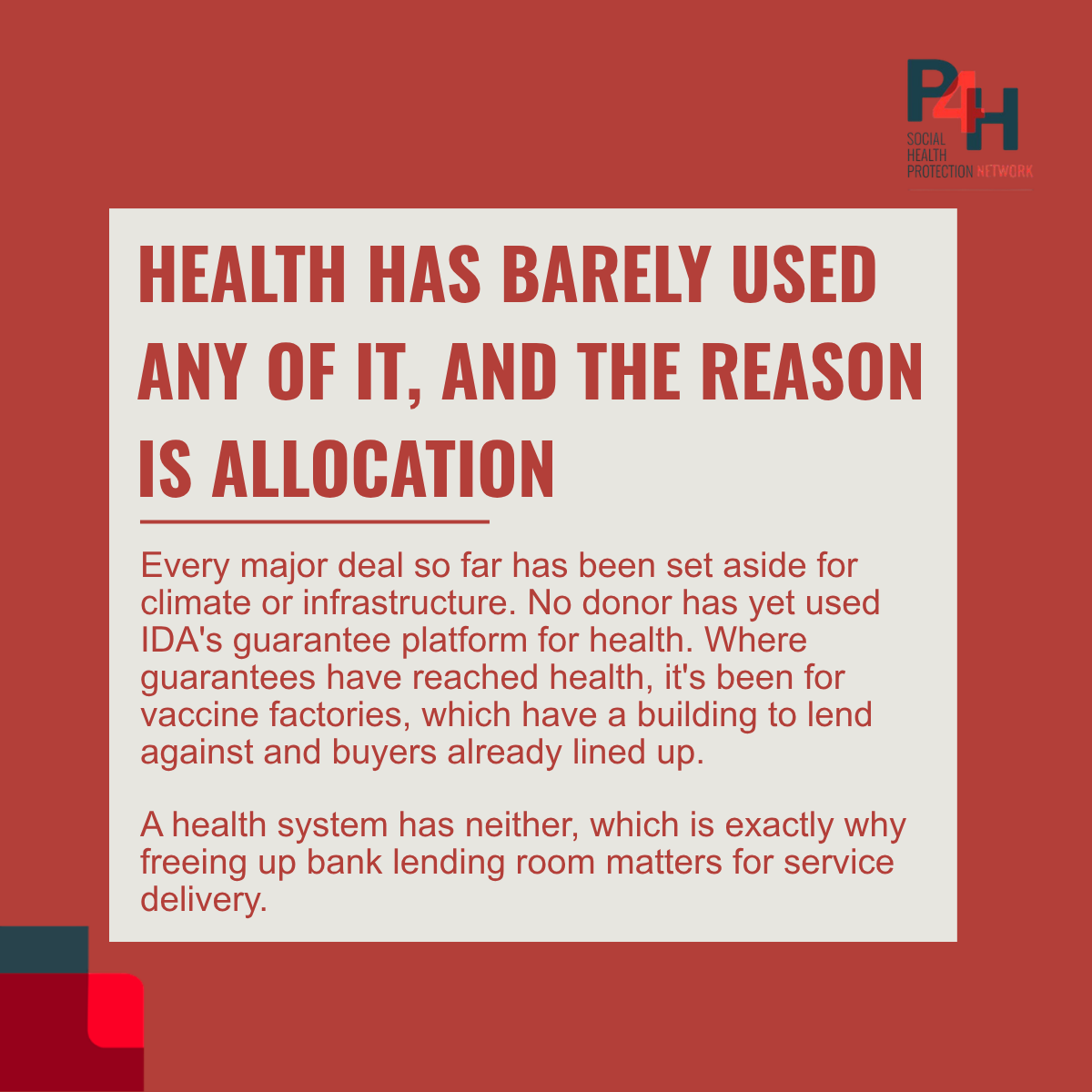
Almost none of it has gone to health.
Part 2B of the P4H series on financing health systems in the age of the aid retreat.
🧵
6/7
The blog works through how each mechanism functions, why health has been left out, and what it would take to change that.
📖 Read it: https://t.co/PfncT60Mf3
📚 Glossary: https://t.co/Rldm2SqQLL
(5/5)
Which brings us to development banks — next up in the series. Watch this space.
📖 Read the blog: https://t.co/ztgCxAnOBg
📚 Glossary of terms: https://t.co/Rldm2SqiWd
Stay tuned for the next in the series!
#BillionsToBalanceSheets#HealthFinancing#UHC
(1/5)
Africa's institutional capital is routinely cited at $2 trillion.
The figure within reach of the countries that need it most is closer to $250 billion.
P4H's series on financing health in the age of the aid retreat asks where the money actually sits and who's best placed to move it.
🧵
(4/5)
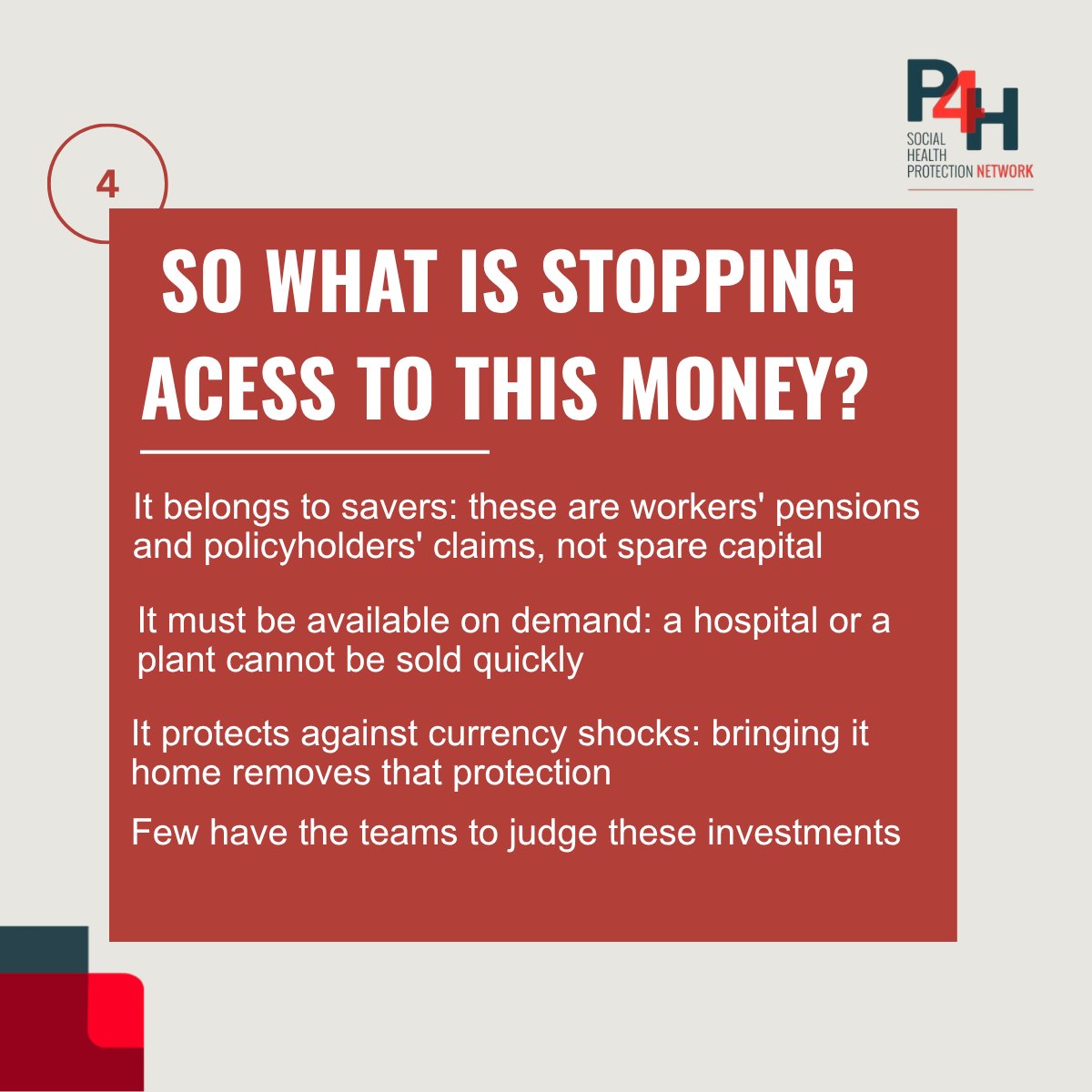
The obstacles aren't legal — they're practical: whose money it is, how fast it must be available, what it protects against, who has the expertise to judge the risk.
Remittances add ~$56bn/year to sub-Saharan Africa — but that's household transfers, not an investable instrument.
(7/7) Blended finance has a mixed record on scale, targeting and additionality, which is why transparency and alignment with equitable UHC principles matter.
Read the full piece 🔗 https://t.co/r3PTBO3qcO
Follow along for more in this series.
#BillionsToBalanceSheets
(1/7) Five steps to designing a blended finance fund for health.
Part 1 of P4H's series on financing health systems in the age of the aid retreat.
AfDB-Gates Africa Medicines Facility, the Africa Health Sovereignty Fund, Brazil's debt-to-health swaps -blended finance is being scoped across global health.
@kchalkidou
(6/7) Step 5: Deal with risk from the start.
Credit risk for start-up manufacturing in developing markets is genuinely hard to assess. Guarantees, first-loss facilities and transparent governance separate a fund that closes from a concept note that circulates for years.