We're extremely proud to announce #PAIN's 2025 supplemental issue: Advancing Pain Research and Management for the Next 50 Years. The entire issue is free to read on our website! https://t.co/sONPcSViZW
In this week’s #PAIN Featured Image, @ciampi_de_andrade et al. depict a multidisciplinary framework for addressing pain and disability in leprosy, highlighting the need to address the broader health care needs of affected populations. Learn more at https://t.co/lsqXNj5Mgu
Su et al. find that tonic pain shifts brain networks from functional segregation to integration, with a prominent role of the somato-motor network. Global network inferences effectively classify pain states. Learn more in #PAIN https://t.co/hHeTFgDg4x
@JemmaLTodd et al. find that pain-related mental imagery characteristics and psychological constructs predicted momentary and subsequent pain outcomes in young adults with chronic pain, identifying potential mechanisms and treatment targets #PAIN https://t.co/AXRlecWGjr
Skin-to-skin contact for procedural pain may feel more daunting for parents of very preterm infants. @Haleh1999 et al. find that increased support and education for families and clinicians could enhance its uptake and efficacy. Learn more in #PAIN https://t.co/p2tdR7Ht2s
@RobinsonPapp et al. suggest that that platform trials in chronic pain should seek disease- and platform-specific expertise, reduce complexity by beginning with a narrow focus, streamline all procedures, and ensure long-term funding #PAIN https://t.co/JNQxi9egv0
In this week’s #PAIN Featured Image, @camille_fauchon et al. depict how baby cries encode graded pain signals through acoustic features like pitch and vocal roughness, which listeners decoded to assess infant pain severity. Learn more at https://t.co/PtdVjXWJ3e
Ferrari et al.’s study confirms the salt-sensitive rat fibromyalgia model predictive validity by accurately predicting responses to standard and investigational therapies using the Fibromyalgia Analog Model index. Learn more in #PAIN https://t.co/IgFJzslyFW
@PIDDSIG_IASP et al. demonstrated the feasibility of modeling sensory response profiles of behavioral reactivity to a modified quantitative sensory test in cerebral palsy. Learn more in #PAIN https://t.co/KXpX45NWq9
Miller et al.’s meta-analysis of 13 enriched enrollment randomized withdrawal trials found that the overall efficacy of opioids for chronic pain was not mediated by withdrawal symptoms. Learn more in #PAIN https://t.co/cgDLj6SRzC
@netphys1 et al. argue that AI and machine learning could transform chronic pain care by identifying objective biomarkers and patient subtypes, though rigorous validation and clinical integration remain essential. Learn more in #PAIN https://t.co/ULIU3w2wFN
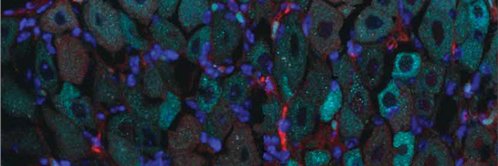
In this week’s #PAIN Featured Image, Eldesouky et al. depict the progressive decline of C-fiber nociceptive structure and function across sensory phenotypes in diabetic neuropathy, from normal sensory responses to hyperalgesia and sensory loss https://t.co/JtiqhAICcj
Do et al. assert that implementation of evidence-based pain management guidelines in the neonatal intensive care unit reduces cumulative opioid exposure in postoperative and mechanically ventilated neonates by 55%. Learn more in #PAIN https://t.co/hV2SQOUoAA
Richter et al. find that subanesthetic ketamine dissociates pain components in a cold allodynia mouse model, revealing heritable traits, sexual dimorphisms, and offering a translational framework for multidimensional pain analysis. Learn more in #PAIN https://t.co/EBQhLjuTV4
In a prospectively-enrolled 18-center US cohort study, @JohnKYueMD et al. find that mild traumatic brain injury was associated with elevated pain intensity and interference with daily function across 12 months post-injury. Learn more in #PAIN https://t.co/0TW4AZMUVT
@caitlinbmurray et al. argue that improving engagement is key to realizing the potential of digital chronic pain interventions, with adaptive designs, personalization, and user-centered development likely to enhance outcomes. Learn more in #PAIN https://t.co/SjGtevXSfN
In this week’s #PAIN Featured Image, Pogatzki-Zahn et al. depict bio-psycho-social risk factors and stepwise development of prediction models for postsurgical pain and pain-related trajectories in endometriosis. Learn more at https://t.co/3AFSrjZoZV
Mariscal et al. find that chronic pain, with sex-specific emotional consequences, triggers sex-specific changes in the locus coeruleus, highlighting distinct neural responses and the need for personalized treatments. Learn more in #PAIN https://t.co/ZagfZakg5u
@JemmaLTodd et al. developed a new pelvic pain specific interpretation bias assessment tool that distinguishes those with pelvic pain conditions from controls and demonstrates excellent validity and reliability. Learn more in #PAIN https://t.co/dR1zbrfPhR
@helenahhartmann et al. find that pain modulation can alter social emotions and empathy, though effects are generally small and inconsistent. Placebo analgesia showed the clearest effect, reducing empathy for others’ pain. Learn more in #PAIN https://t.co/YAKjxfKu5o
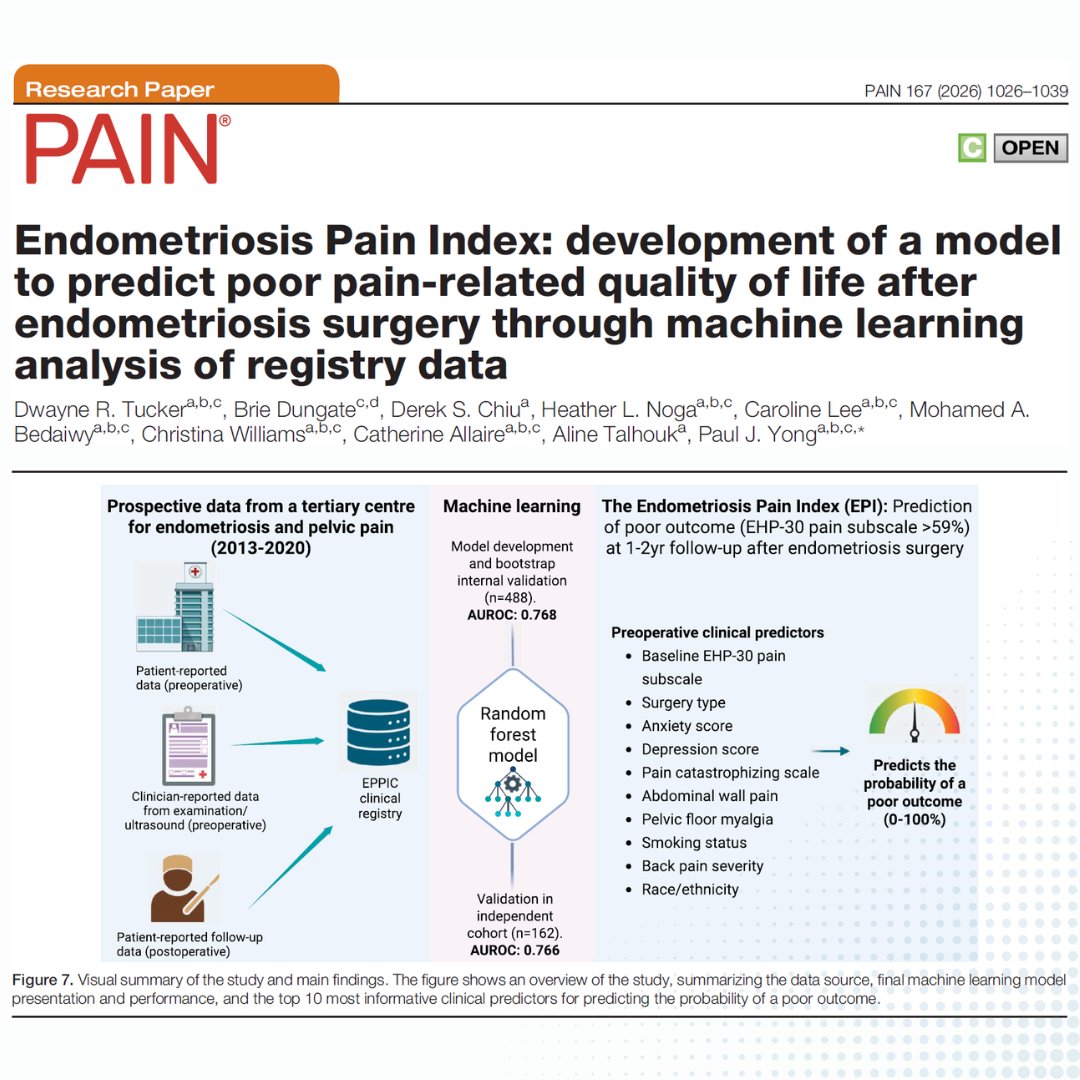
@d_toquor@PelvicPainEndo et al. present the Endometriosis Pain Index. Using machine learning to predict poor pain-related quality of life after endometriosis surgery, this tool could support presurgical counselling and decision-making #PAIN https://t.co/UOkAHbievW