Dedicated to advancing the policies and vision of PBAT’s administration, with unwavering commitment to supporting his leadership and 2027 reelection bid.
Nigeria Set to Build Africa’s First Underwater Tunnel
President Bola Ahmed Tinubu continues to redefine Nigeria’s infrastructure landscape with another bold and historic initiative, the construction of Africa’s first underwater tunnel.
This groundbreaking project, announced by the Federal Ministry of Works under Engr. David Umahi will connect Ahmadu Bello Way on Victoria Island through Snake Island to the Badagry corridor. The tunnel, estimated at 2.9 to 3.5 kilometres in length, represents a major leap in engineering innovation and urban connectivity, a feat never before attempted on the continent.
The proposed tunnel is more than a piece of infrastructure; it is a symbol of President Tinubu’s unwavering commitment to modernization and national transformation. Just as he turned Lagos into West Africa’s economic hub during his time as governor, PBAT is now extending that same visionary leadership to the entire nation.
By linking the Lagos–Calabar Coastal Highway with the Sokoto–Badagry Superhighway, this project will not only ease transportation but also connect northern and southern Nigeria in ways that will supercharge trade, tourism, and industrial growth.
This initiative perfectly aligns with the President’s Renewed Hope Agenda, a roadmap for prosperity anchored on innovation, infrastructure, and inclusive economic growth.
With this project, PBAT is proving that Nigeria can dream big and execute world-class developments. The tunnel will decongest Lagos traffic, boost marine and logistics efficiency, and improve access to key economic zones like the Lekki Deep Sea Port, Snake Island, and the Badagry Free Trade Area. Each of these nodes will drive investment, create jobs, and position Nigeria as a leading player in Africa’s blue economy.
Critics often talk, but PBAT acts. While others debate or recycle slogans, this administration is turning ambitious ideas into tangible realities from roads, rails, ports, and now, an underwater tunnel. It’s a clear testament that leadership is not about noise but about results.
This project stands as another reminder that under PBAT, Nigeria is no longer waiting for the world to bring development; Nigeria is building it with its own hands, technology, and courage.
In every sense, the proposed underwater tunnel is a legacy in motion, one that will outlive this administration and transform Nigeria’s infrastructural identity. From Lagos to Badagry, from north to south, President Tinubu’s Renewed Hope is no longer a slogan; it’s a visible revolution taking shape under the ground and across the nation.
With bold projects like this, PBAT is not just connecting roads, he’s connecting dreams, people, and the promise of a stronger, more united Nigeria.
The IMF, World Bank, and several independent analysts have consistently maintained that Nigeria’s previous economic model was fiscally unsustainable. While inflation remains a challenge, experts believe that the reforms are positioning the country for stronger long-term growth, increased competitiveness, and greater resilience against external shocks.
The Tinubu administration has also accelerated digital identity and technology-driven governance initiatives aimed at improving service delivery and economic inclusion.
Through the NINAuth platform, Nigerians can securely verify and authenticate their National Identification Number (NIN) for access to government and private-sector services, reducing identity fraud and strengthening confidence in digital transactions.
The initiative is expected to deepen financial inclusion, streamline public services, and support the growth of Nigeria’s digital economy.
In addition, the administration’s Presidential Compressed Natural Gas (PCNG) initiative has been introduced to provide more affordable and cleaner energy alternatives for transportation.
By supporting the conversion of vehicles to compressed natural gas, expanding refueling infrastructure, and encouraging private-sector investment in the gas value chain, the program seeks to lower transportation costs, reduce dependence on petrol, create jobs, and leverage Nigeria’s abundant natural gas resources for sustainable economic development.
These initiatives complement broader economic reforms by promoting innovation, efficiency, and long-term national competitiveness.
The administration has also introduced measures to cushion the impact of reforms on vulnerable Nigerians. Interventions in agriculture, food distribution, wage support, student loans, and infrastructure financing are part of broader efforts to ease economic pressure while reforms take effect.
Government officials maintain that the objective is not merely short-term relief but the creation of a more productive economy capable of generating employment opportunities and reducing poverty over time.
International observers have acknowledged that maintaining reform momentum while expanding social support will be critical to sustaining progress.
As Nigeria moves deeper into the reform era, the Tinubu administration continues to emphasize fiscal discipline, infrastructure expansion, and private-sector-driven growth. Despite economic challenges inherited from previous years, current indicators suggest that the country is beginning to witness the early benefits of structural reforms.
With improving GDP growth, rising revenues, expanding infrastructure projects, and renewed investor confidence, President Bola Ahmed Tinubu’s policies are increasingly being viewed as a decisive effort to reposition Nigeria for long-term economic transformation and greater national prosperity.
Micheal Akanji @mickiebrownkie
Correspondent - Podium Reporters
https://t.co/5fvUyMVjeO
Nigeria’s energy sector is witnessing a renewed wave of investor confidence, driven by the bold reforms and decisive policy direction of President Bola Ahmed Tinubu’s administration.
In a recent interview with BusinessDay, Jagir Baxi, Chairman and Managing Director of Esso Exploration and Production Nigeria Ltd, an ExxonMobil affiliate, acknowledged the growing impact of the administration’s reforms on Nigeria’s competitiveness in the global investment landscape.
According to Baxi: "The incentive structure that has been codified has made Nigeria more globally competitive as an investment destination."
https://t.co/fwGEpz32Yh
Accelerating Nigeria’s Energy Transformation Under the Tinubu Administration
Yesterday’s announcement marked a decisive new phase in Nigeria’s ongoing energy reforms, reinforcing the administration’s commitment to building a more reliable, investment-ready power sector.
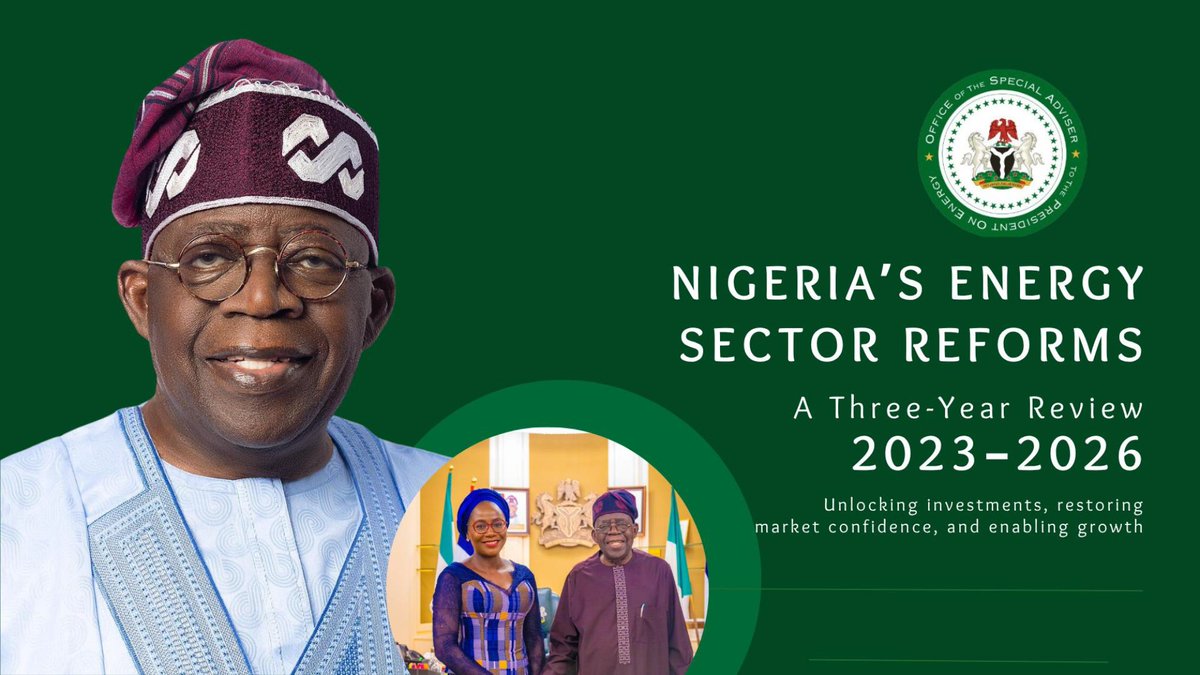
Under the leadership of Bola Ahmed Tinubu, the past three years have delivered measurable progress, restoring credibility to the sector, unlocking critical investments, and laying a solid foundation for sustained growth.
These reforms are steadily repositioning Nigeria’s energy landscape as a driver of economic expansion and national development.
The appointment of Joseph O. Tegbe as Minister of Power, alongside Rilwan Lanre Babalola as Special Adviser on Power and Chairman of the Presidential Taskforce on Power Sector Reset, showcases a renewed push for accelerated delivery.
This strategic leadership alignment reflects the administration’s focus on execution, ensuring that policy reforms translate into tangible improvements in electricity supply, infrastructure, and service delivery for Nigerians.
As the nation marked Workers’ Day, the contributions of the dedicated teams driving these reforms were rightly recognized.
Their discipline, resilience, and commitment have been instrumental in advancing the administration’s Renewed Hope agenda within the energy sector.
While significant milestones have been achieved, the work continues with greater urgency, aimed at delivering a stable, efficient, and inclusive power sector that meets the needs of citizens and supports Nigeria’s long-term prosperity.
The Honourable Minister of Works, David Umahi, briefed the press on the progress of major road and bridge projects nationwide following the Federal Executive Council meeting at the Presidential Villa in Abuja.
Tinubu Breaks Decades-Long Deadlock on OPL 245, Ignites Path to Historic Investment Milestone
The resolution of the long-standing OPL 245 dispute marks a defining moment for Nigeria’s energy sector under the Tinubu administration.
For decades, the offshore block remained trapped in legal and political uncertainty, stalling billions of dollars in potential investment and slowing national economic growth.
With this breakthrough, the administration has not only cleared a major obstacle but also sent a strong signal to global investors that Nigeria is ready to do business with clarity and stability.
Stakeholders have openly expressed their appreciation to the President for decisively addressing the issue, recognizing the move as both strategic and transformative.
The settlement has unlocked the pathway toward the long-awaited Final Investment Decision (FID), a critical step that could usher in large-scale development of one of Nigeria’s most valuable offshore assets.
This progress underscores a broader commitment to reform, transparency, and efficiency in the management of the nation’s natural resources.
Beyond its immediate impact, the resolution carries far-reaching implications for economic recovery and energy security.
Advancing toward FID means job creation, increased government revenue, and strengthened confidence in Nigeria’s oil and gas sector.
It also reinforces the administration’s agenda of removing bottlenecks that have historically hindered growth, positioning the country to better compete in a rapidly evolving global energy landscape.
There is a growing sense of optimism as industry players and observers look ahead to the successful delivery of upcoming milestones.
The anticipation surrounding a timely FID reflects renewed faith in Nigeria’s capacity to execute complex, high-value projects.
This momentum will mark the beginning of a new era, one defined by decisive leadership, investor confidence, and tangible economic progress.
Exclusive on the North West Climate Investment Briefing
The North West Climate Investment Summit represents a pivotal moment in Nigeria’s evolving approach to climate action and economic development, showcasing a decisive shift from policy dialogue to investment-driven implementation.
Speaking exclusively at the briefing, Hon. Abdullahi Tanko Yakasai, Senior Special Assistant to Bola Ahmed Tinubu on Community Engagement (North West), outlined a bold vision for transforming the region’s climate challenges into engines of growth and opportunity.
He emphasized that while the North West continues to grapple with desertification, water scarcity, and declining agricultural productivity, these challenges also present a unique opening to attract investment and drive sustainable development.
According to him, the summit will mark a strategic pivot, from climate vulnerability to climate investment anchored on mobilizing financing, strengthening institutional coordination, and delivering tangible, people-centered solutions across the region.
He further highlighted that, under the leadership of President Bola Ahmed Tinubu, deliberate efforts are being made to align federal climate policies with subnational execution frameworks, ensuring seamless collaboration across all seven North West states.
This integrated approach is designed to translate national priorities into measurable local impact.
A major highlight of the summit was the unveiling of two flagship initiatives: the North West Climate Fund, established to mobilize capital for climate-related projects, and the North West Climate Investment Marketplace, a platform designed to connect bankable projects with domestic and international investors.
These initiatives are expected to catalyze job creation, strengthen agricultural systems, enhance infrastructure, and accelerate regional economic growth.
Hon. Yakasai stressed that the initiative goes beyond a conventional summit, describing it as a platform for execution and long-term impact.
He noted that the framework being developed in the North West is intended to serve as a scalable model for other regions in Nigeria and across Africa.
In this exclusive engagement, he also extended a direct invitation to private sector stakeholders, development partners, and international investors to participate in what he described as a transformative phase of Nigeria’s climate and economic agenda.
The North West Climate Investment Summit stands as a defining step toward a more coordinated, investment-focused, and results-driven approach to climate action, positioning Nigeria as a leader in sustainable development on the continent.
Governor Babajide Sanwo-Olu of Lagos State speaks with journalists shortly after meeting President Bola Ahmed Tinubu alongside members of the Governors Advisory Council (GAC) in Abuja.
He said, “We just sought an audience with Mr. President, where the leadership of the GAC, represented by Father Tajudeen Oluyole Lusi, led some of us to formally present to Mr. President the Deputy Governor, who, by the grace of God, will be the APC flag bearer in Lagos State.”
Watch the complete briefing of the North-West Climate Summit 2026, "Accelerating Global Climate Solutions," held today at the Presidential Villa, Abuja.
Tinubu Urges Plateau Leaders to End Violence, Approves ₦2bn Relief for Victims
President Bola Ahmed Tinubu has urged political, traditional, and community leaders from Plateau State to take decisive steps toward ending the persistent cycle of violence that has troubled the region for years.
At a high-level interactive session held at the Presidential Villa in Abuja, the President called on stakeholders to return home “with open minds” and commit to practical solutions that would foster lasting peace.
The meeting followed renewed violence in parts of the state, including a deadly March 29 attack in Jos North.
The delegation, led by Governor Caleb Mutfwang, included former governors, lawmakers, security officials, and religious leaders.
Discussions, which lasted nearly three hours, centered on long-standing drivers of conflict such as ethnic divisions, religious tensions, disputes over indigeneship, and recurring farmer-herder clashes.
President Tinubu challenged the leaders to revisit past government reports and White Papers on the crises and develop actionable recommendations.
He stressed that leadership at all levels must take responsibility for preventing violence.
“We are here to find a permanent solution to recurring conflict,” the President said. “Tolerance must be our starting point.”
In a move to address the immediate humanitarian fallout, the Federal Government approved ₦2 billion in relief support for victims of the recent attack in Angwa Rukuba, according to Minister of Humanitarian Affairs Mohammed Dorro.
Tinubu warned against the manipulation of communities by “agent provocateurs” and urged local authorities to identify and prosecute those inciting violence.
He emphasized the need for justice, fairness, and inclusivity, noting that sustainable peace would only be achieved when all groups feel a sense of belonging.
Governor Mutfwang welcomed the initiative, describing the meeting as unprecedented. He noted that, for the first time, all former governors of the state were present in a unified effort to address insecurity.
“There is a renewed spirit on the Plateau,” the governor said, pledging to bridge divisions and rebuild trust among communities.
Traditional rulers also weighed in. The Gbong Gwom Jos, Da Jacob Gyang Buba, called for increased security deployment, including more troops and surveillance infrastructure, while advocating for the creation of state police as a long-term solution.
Participants across religious and youth groups expressed a shared commitment to peace, though several warned that without sincerity and consistent enforcement of the rule of law, progress could remain elusive.
Lawmaker Idris Wase highlighted the role of drug abuse in fueling insecurity and urged stricter legal enforcement.
The meeting marks a significant step in federal efforts to address instability in Plateau, a state once known for its cultural diversity and peaceful coexistence but now grappling with recurring unrest.
Happening Now: North West Climate Summit 2026 - Accelerating Global Climate Solutions: Unlocking Land, Water, and Energy Systems.
Hosted by the SSA to the President on Community Engagement (NW), Hon. Abdullahi Tanko Yakasai, at the State Villa, Abuja. 3/3 https://t.co/Xhz2vuPoJu
Happening Now: North West Climate Summit 2026 - Accelerating Global Climate Solutions: Unlocking Land, Water, and Energy Systems.
Hosted by the SSA to the President on Community Engagement (NW), Hon. Abdullahi Tanko Yakasai, at the State Villa, Abuja. 2/3 https://t.co/ccQm26cITS
Happening Now: North West Climate Summit 2026 - Accelerating Global Climate Solutions: Unlocking Land, Water, and Energy Systems.
Hosted by the SSA to the President on Community Engagement (NW), Hon. Abdullahi Tanko Yakasai, at the State Villa, Abuja. https://t.co/IanIocPX6V
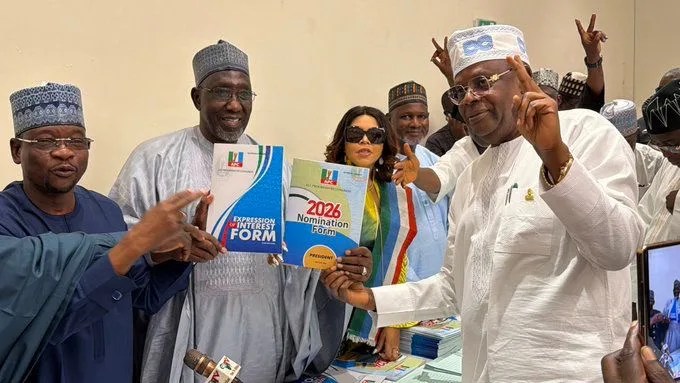
Breaking News: Faleke Picks APC Nomination Form for Tinubu, Reflects Early Push for 2027 Re-Election
The political atmosphere in Nigeria is beginning to stir ahead of the 2027 general elections, as early signals of support for the current administration emerge.
In a notable development, James Faleke, a member of the House of Representatives representing Ikeja Federal Constituency, has taken a decisive step by picking up the APC Expression of Interest and Nomination forms on behalf of President Bola Tinubu.
The move is widely interpreted as a strong endorsement of Tinubu’s leadership and a vote of confidence in his administration’s ongoing reforms.
Since the assuming office, the President Tinubu administration has focused on restructuring key sectors of the economy, implementing policies aimed at stabilizing public finances, and attracting both local and foreign investment.
While challenges persist, supporters argue that these reforms are necessary steps toward long-term national growth.
Faleke’s action underscores a belief among loyalists that continuity in leadership could help consolidate these gains and ensure that ongoing initiatives reach full maturity.
As conversations around 2027 begin to take shape, political observers see this development as an early indication of the strategies and alignments that may define the next election cycle.
For the APC, it presents an opportunity to rally support and build momentum around Presodent Tinubu’s vision for Nigeria.
Whether this early show of backing translates into broader national consensus remains to be seen, but it has certainly set the stage for a politically engaging period ahead.
Uzodimma Appoints 16 Directors to Strengthen Renewed Hope Ambassadors
The Director-General and National Coordinator of the Renewed Hope Ambassadors (RHA), Governor Hope Uzodimma of Imo State, has approved the appointment of 16 directors to lead key directorates within the organisation, in a move aimed at enhancing operational efficiency and nationwide coordination.
The appointments form part of ongoing efforts to reposition the RHA as a strategic platform for public engagement and policy communication ahead of the 2027 general elections.
Established in November 2025 by President Bola Ahmed Tinubu, the Renewed Hope Ambassadors serves as a vehicle for disseminating the policies, programmes, and achievements of the administration’s Renewed Hope Agenda across all regions of the country.
The RHA leadership structure includes Governor Uba Sani of Kaduna State as Deputy Director-General, Governor Mohammed Inuwa Yahaya of Gombe State as Secretary, and Hon. James Abiodun Faleke as Deputy Secretary.
The organisation also maintains an extensive grassroots presence, with six zonal coordinators, 37 state coordinators, and 774 local government coordinators nationwide.
According to the announcement, the newly appointed directors will oversee specialised units critical to the organisation’s mandate.
Dr. Mustapha Abdullahi will head the Youth Directorate, while Chief Olisa Metuh takes charge of Organisation and Mobilisation. Media and Publicity will be led by Tunde Rahman, with Sunday Dare overseeing Digital and New Media.
Other appointments include Mele Kolo Geidam as Director of Finance; Muiz Banire (SAN) for Monitoring, Compliance and Legal; Bisoye Coker-Odusote for Technology and Data; and Abubakar Rabiu Abubakar for Support Groups.
In the remaining directorates, Ibrahim Garba has been assigned to Intelligence; Senator Sani Musa to Special Duties; and Hon. Simon Karu to Planning.
Dr. Halima Suleiman Zakari will oversee Welfare, while Dr. Nnamdi Maurice Mbaeri will manage Administration. Bilikisu Muhammed Kaika has been appointed Director of Women Affairs, Abike Dabiri-Erewa will lead Diaspora engagement, and Hadiza Bala Usman will head Research and Innovation.
The appointments reflect a deliberate effort to assemble a diverse and experienced team capable of driving the organisation’s objectives.
With clearly defined roles across its directorates, the RHA is expected to deepen its outreach, strengthen engagement at all levels, and effectively communicate the administration’s agenda to citizens nationwide.
The expanded structure and leadership appointments position the Renewed Hope Ambassadors as a central component in shaping public discourse and mobilising support in the lead-up to the next electoral cycle.
PBAT Approves ₦68.32 Trillion 2026 Budget, Extends Duration of 2025 Fiscal Plan
President Bola Ahmed Tinubu has signed into law the 2026 Appropriation Bill, approving a record ₦68.32 trillion budget aimed at driving economic growth, strengthening infrastructure, and improving national security.
Alongside this, he also endorsed an extension of the 2025 budget implementation period, shifting its deadline from March 31, 2026, to June 30, 2026.
The newly signed budget reflects the administration’s strong focus on development, with ₦32.2 trillion, about half of the total allocation, earmarked for capital expenditure.
This significant investment signals a continued push toward infrastructure expansion and long-term economic productivity. Other key components include ₦15.8 trillion for debt servicing, ₦15.4 trillion for recurrent expenditure, and ₦4.799 trillion for statutory transfers.
According to the presidency, the structure of the 2026 budget is designed to strike a balance between meeting statutory obligations, servicing debt, and funding day-to-day government operations, while still prioritizing large-scale investments that can stimulate inclusive growth and improve living standards.
In addition to the new budget, President Tinubu approved an amendment extending the lifespan of the 2025 Appropriation Act, specifically its capital expenditure component.
The extension is intended to allow Ministries, Departments, and Agencies (MDAs) more time to complete ongoing projects, particularly those nearing completion.
With the 2026 Appropriation Act taking effect from April 1, the Federal Government has commenced full implementation in line with its broader policy direction.
The President has directed all MDAs to prioritize transparency, efficiency, and accountability in the use of public resources, emphasizing the need for timely project delivery and value for money.
President Tinubu also praised the National Assembly for its swift consideration and passage of the budget, describing the collaboration between the executive and legislative arms as essential for national progress.
He reiterated his administration’s commitment to fiscal reforms, improved revenue generation, and targeted investments that can create jobs and strengthen social protection systems.
The 2026 budget, one of the largest in Nigeria’s history, is expected to play a central role in shaping the country’s economic trajectory, with a clear emphasis on development-driven spending and sustained reform efforts.
At Abuja Dialogue, VP Shettima Calls for Strategic Framework on Youth Leadership Development
Vice President Kashim Shettima has urged the adoption of a deliberate and forward-looking framework for youth leadership development, describing it as essential to Nigeria’s long-term progress.
Speaking at the Abuja Dialogue 2026, he warned that Nigeria’s status as one of the world’s youngest nations would yield little benefit without strong institutional investment and strategic planning to harness its demographic advantage.
He stressed that the country’s youthful population must be treated as a serious national asset requiring concrete policy attention, not mere rhetoric.
According to him, sustainable development will depend not just on natural resources or government programmes, but on well-structured systems that ensure leadership continuity and prepare young people for responsibility through deliberate and institutionalized pathways.
The Vice President emphasized that youth leadership is not a symbolic transition tied to age, but a structured process involving preparation, inclusion, and accountability.
He called for reforms across education, public service, enterprise, and civic institutions to create opportunities for young Nigerians to learn, contribute, and take on leadership roles, noting that responsibility is key to building capacity.
Shettima also encouraged young Nigerians to embrace discipline, readiness, and a sense of national purpose, stating that leadership is defined by the willingness to make tough decisions and prioritize the common good.
The Vice President commended stakeholders involved in convening the Dialogue and reiterated that Nigeria’s future will be built by citizens committed to excellence and sustained national development.
Justice Forum declares support for Hamzat ahead Lagos APC guber primary
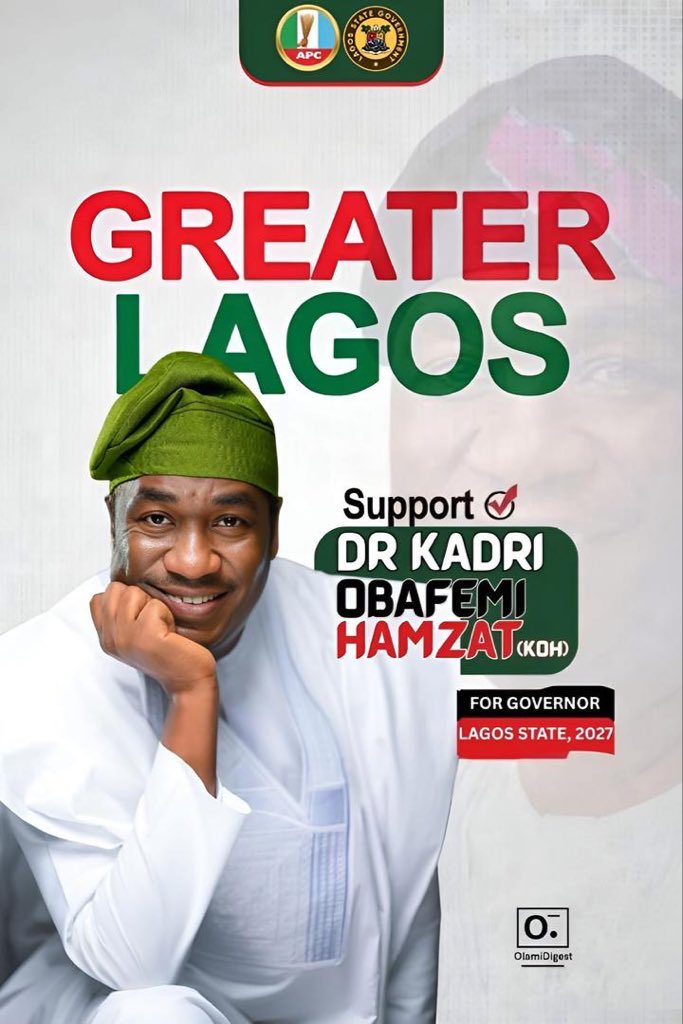
Ahead of next month’s gubernatorial primary of the Lagos chapter of the All Progressives Congress (APC), a prominent group in the party, The Justice Forum, has declared support for the incumbent Deputy Governor, Dr. Obafemi Hamzat.
Aside from that, the group has instructed its supporters to cast their votes for Hamzat, in order to be the party’s flagbearer for the 2027 governorship and possibly succeed Lagos State Governor, Babajide Sanwo-Olu.
The group members include the former governor, Babatunde Fashola, ex-deputy governor, Adejoke Orelope-Adefulire, and the chairman of the GAC, Tajudeen Olusi, and others.
The Chairman of the House of Representatives Committee on Finance and a lawmaker representing Ikeja Federal Constituency, James Faleke, who is also a member of the group, disclosed the JF stance ahead of the primary in the state.
He stated that this is to ensure that Hamzat, who is also a member of the group, becomes the next governor of Lagos state.
The lawmaker disclosed this on Friday, barely 24 hours after a delegation from the party’s highest advisory body, the Governor’s Advisory Council (GAC), met with President and national leader of the APC, Bola Tinubu, in Ikoyi, to discuss who would become the next Lagos State governor.
The meeting was the second within one month between the President, who was a former governor in Lagos, and the party leaders on who would become the APC standard-bearer for the 2027 poll.
Sources from the Presidency, who were privy to the discussions during the meeting, disclosed that the GAC chairman, Tajudeen Olusi, and the Lagos APC chairman, Cornelius Ojelabi, were among the four members who met with the president in the state.
In a statement released through his official social media handle, he said: “Good evening all. As we prepare for Party primaries next month, I urge all our supporters in Ikeja Federal Constituency and Lagos State to support Dr. Kadri Obafemi Hamzat as the next Governor of Lagos State from 2027-2035. IJN. Amen!”.
The Deputy Governor would be contesting the party’s ticket with a Philanthropist and an indigene of Badagry, Samuel Ajose, popularly called SMA Gold, who has become a major aspirant vying to succeed Sanwo-Olu.
Ajose, who has become the choice of many Lagos residents, has received endorsement from many political, business, and religious groups across the state.
The entrepreneur has been described by several groups as the right choice for Lagos, considering his understanding of the business environment and ability to address economic challenges.
The primary is scheduled by the Independent National Electoral Commission (INEC) to hold between April 23 and May 30, 2026, in accordance with the 2026 Electoral Act.
According to the commission, the decision was taken to align the timetable with the provisions of Section 77(4) of the Electoral Act, 2026, which mandates political parties to submit their membership registers at least 21 days before the conduct of their primaries.
The Federal Government has published a list of 48 individuals suspected of financing terrorism in Nigeria.
Here is the full list:
1 ABDULSAMAT OHIDA
2 MOHAMMED SANI
3 ABDURRAHAMAN ABDURRAHAMAN
4 FATIMA ISHAQ
5 TUKUR MAMU
6 YUSUF GHAZALI
7 MUHAMMAD SANI
8 ABUBAKAR MUHAMMAD
9 SALLAMUDEEN HASSAN
10 ADAMU ISHAK
11 HASSANA ISAH
12 ABDULKAREEM MUSA
13 UMAR ABDULLAHI
14 ABDURRAHAMAN ADO
15 BASHIR YUSUF
16 IBRAHIM ALHASSAN
17 MUHAMMAD ISAH
18 SALIHU ADAMU
19 SURAJO MOHAMMAD
20 FANNAMI BUKAR
21 MUHAMMED MUSA
22 Sahabi Ismail
23 Mohammed Buba
24 JAMA’ATU WAL-JIHAD
25 ANSARUL SUDAN (ANSARU)
26 ISLAMIC PROVINCE (ISWAP)
27 INDIGENOUS BIAFRA (IPOB)
28 YAN GROUP
29 YAN GROUP NLBDG
30 ADAMU HASSAN
31 HASSAN MOHAMMED
32 USMAN ABUBAKAR
33 KUBARA SALAWU
34 RABIU SULEIMAN
35 SIMON NJOKU
36 GODSTIME IYARE
37 FRANCIS MMADUABUCHI
38 JOHN ONWUMERE
39 CHIKWUKA EZE
40 EDWIN CHUKWUEDO
41 CHIWENDU OWOH
42 GINIKA ORJI
43 AWO UCHECHUKWU
44 MERCY ALI
45 OHAGWU JULIANA
46 EZE OKPOTO
47 NWAOBI CHIMEZIE
48 OGUMU KEWE