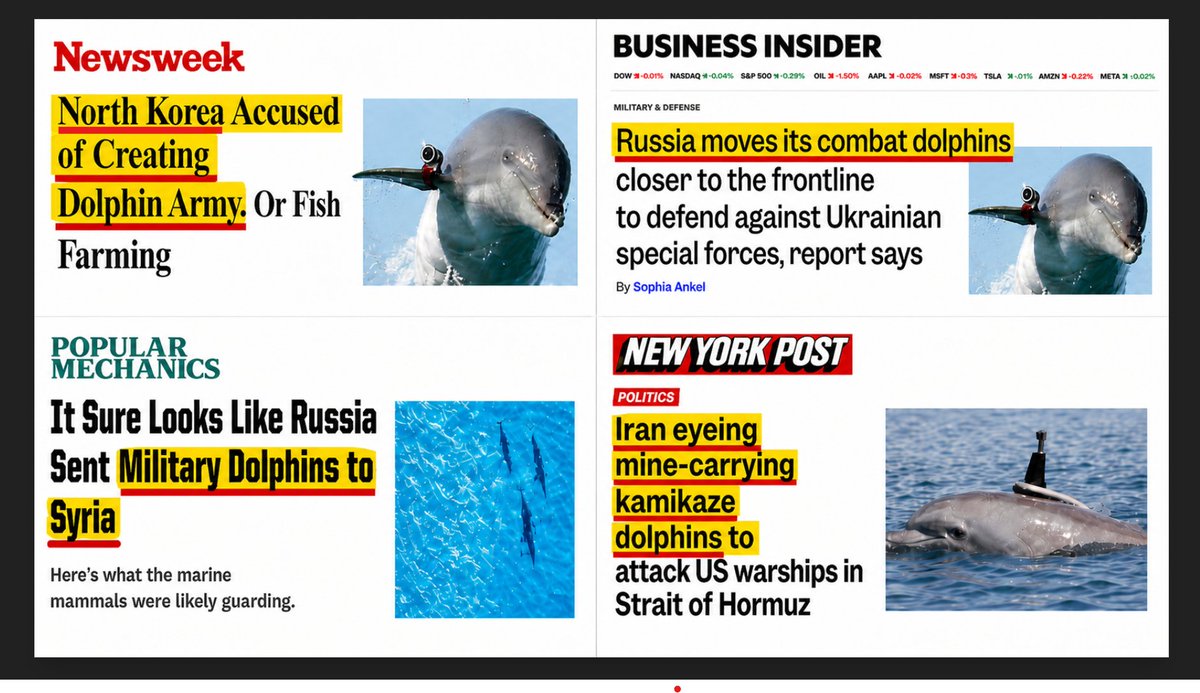
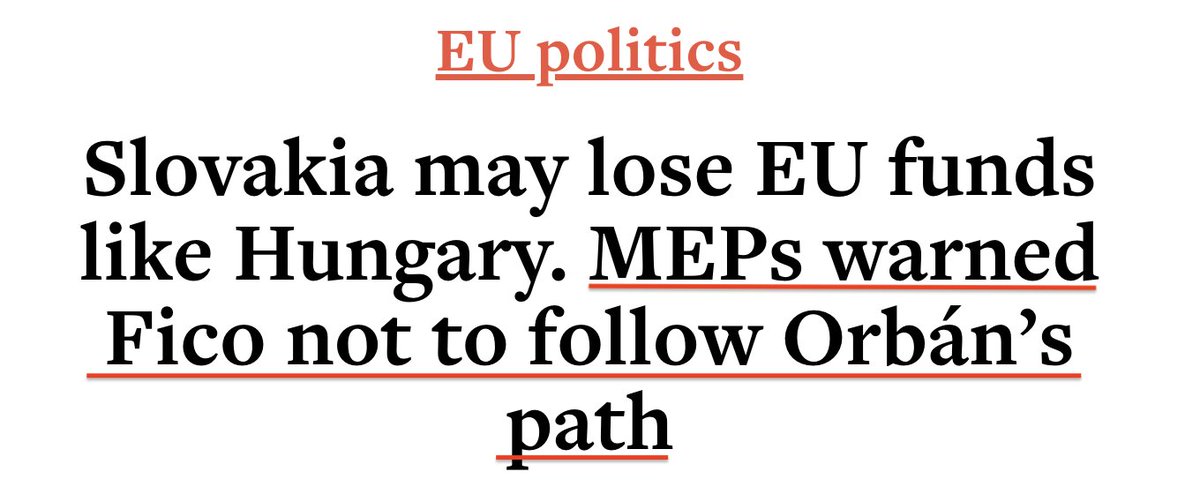
There is a strange development in which academics of international politics are expected to publicly condemn adversarial countries before they are allowed to participate in public discourse. The complexity of international politics is reduced to a moral question of good versus evil, and academics must make moral declarations before even discussing facts, history, strategy, and interpretations. Academics should explain why states behave as they do; they are not moral validators.
What value does it bring to an analysis if the analyst "condemns" one side? After Russia invaded Ukraine, the former Norwegian foreign minister actually argued that "this is not the time to understand, but to condemn". This ridiculous position is pushed on academics. However, understanding is not endorsement, explanation is not advocacy, and ignorance is not strength. I argue it is in Russia's security interest to push NATO away from its borders, it is in Iran's interest to control the Strait of Hormuz, and it is in China's interest to create a new international economic architecture. This is not advocacy, nor is it a normative position about how the world should work; rather, it is a recognition of how the world actually works.
An academic should examine interests, capabilities, and strategic calculations that produce such policies—not participate in ritualised declarations of virtue that contribute absolutely nothing. Furthermore, moralism and condemnation often lead to a lack of understanding and increased conflict. When the conclusion is always that the good guys are confronting the bad guys, then the solution is always "peace through strength", "weapons are the path to peace", and defeating the latest reincarnation of Hitler. If you want war, condemn the other side as pure evil. If you want peace, the first step is to understand the other side.
Das darf doch nicht wahr sein! Jetzt wurde auch noch das Konto der Mutter des Journalisten Hüseyin Dogru eingefroren. Die Bundesregierung darf diesen totalitären Wahnsinn nicht länger mitmachen und muss sich für die Aufhebung der EU-Sanktionen einsetzen!
https://t.co/IVxNptlbiM
USAID 🇺🇸 poured millions into 🇲🇪 Montenegro’s secession from Serbia 🇷🇸 (starting 1997).
The 2006 referendum passed with a razor-thin 55.5% amid dead people "voting" while tens of thousands of Montenegrin Serbs abroad were banned from doing so.
Није важно шта је истина, важно је ко је на којој страни. Ако сте верник новог мита и борац против новог Хитлера, прави Хитлер престаје да буде важан, док његов Тотенкопф остаје само још један стари мит. Па шта и ако је истинит?
Пише Љиљана Смајловић
https://t.co/2tLLegvUk1
Fancy that! The slavishly pro EU government in Bucharest collapsed and suddenly Romania has rule of law issues, a corrupt judiciary and we need to start publishing pictures of bright young people protesting.
Funny how that works.
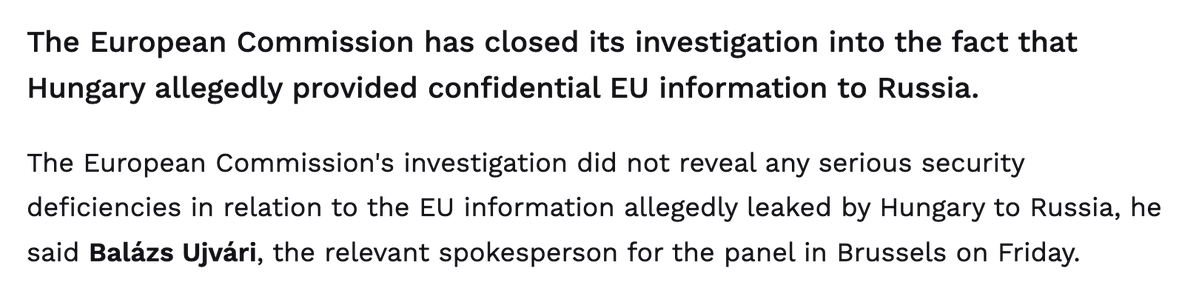
There’s no overstating how extraordinary this Atlantic article is, given the author and the outlet.
As a reminder Bob Kagan is:
- The co-founder of Project for the New American Century, probably the single most imperialist Think Tank in Washington (which is quite a feat)
- A man who spent his entire life advocating for American military interventions, especially in the Middle East, and a vocal advocate of the Iraq war. He started advocating for intervention in Iraq before 9/11, which speaks for itself...
- The husband of Victoria Nuland, an extremely hawkish former senior U.S. official (a key architect of U.S. policy in Ukraine, with the consequences we all witness today)
- The brother of Frederick Kagan, one of the key architects of the Iraq surge
In other words, we ain’t exactly looking at some sort of anti-imperialist peacenik. This is quite literally the guy Dick Cheney called when he needed a pep talk.
And the man is writing in The Atlantic, the most reliably pro-war mainstream media outlet in the U.S. (also quite a feat).
So when HE writes that the U.S. “suffered a total defeat” in Iran that has no precedent in U.S. history and can “neither be repaired nor ignored,” it’s the functional equivalent of Ronald McDonald telling you the burgers aren’t great: it means the burgers really, really aren't great.
Extraordinarily (and somewhat worryingly, for me), his arguments for why this is such a defeat are virtually the same as those I laid out in my article “The First Multipolar War” last month (https://t.co/tbnOpdYqux).
Here they are 👇
1) Vietnam/Afghanistan were survivable, this isn't
He agrees that this war - and the U.S. defeat - is fundamentally different in nature from previous U.S. interventions.
Where I wrote that the wars in Vietnam and Afghanistan didn’t change the equation much in terms of power dynamics (“in the grand scheme of things, the giant walked away with little more than a bruised ego”), Kagan writes that “the defeats in Vietnam and Afghanistan were costly but did not do lasting damage to America's overall position in the world.”
And when I wrote that “it’s painfully obvious that the Iran war is of a qualitatively different nature” from these, he writes that “defeat in the present confrontation with Iran will be of an entirely different character.”
Same point.
2) Iran will never relinquish Hormuz and uses it as selective leverage
When I wrote that Iran has turned “freedom of navigation” on its head by establishing “a permission-based regime” through the Strait of Hormuz, Kagan arrives at the same conclusion: “Iran will be able not only to demand tolls for passage, but to limit transit to those nations with which it has good relations.”
He also agrees that “Iran has no interest in returning to the status quo ante,” when I myself cited Iran’s parliament speaker Ghalibaf in my article, saying: “The Strait of Hormuz situation won’t return to its pre-war status.” Same point and virtually the same words.
3) Gulf states will have to accommodate Iran
He agrees that most Gulf states will have no choice but to accommodate Iran, effectively making Iran into a, if not THE, dominant regional power.
Kagan writes “the United States will have proved itself a paper tiger, forcing the Gulf and other Arab states to accommodate Iran.”
On my end, I wrote that “the Gulf monarchies will eventually have to choose between two security propositions. One where they stay aligned with a distant superpower that [can’t protect them]. The other proposition being: make peace with the regional power that just proved it can hit [them] whenever it wants.” Which is not much of a choice…
4) Military impossibility to reopen Hormuz
Kagan writes that “if the United States with its mighty Navy can't or won't open the strait, no coalition of forces with just a fraction of the Americans' capability will be able to, either.”
On my end, in my article I cited Germany’s defense minister Boris Pistorius: “What does Trump expect a handful of European frigates to do that the powerful US Navy cannot?”
The exact same argument.
5) Global chain reaction
Kagan agrees that this is a global strategic failure that fundamentally changes the U.S.’s position in the world. As he puts it: “America's once-dominant position in the Gulf is just the first of many casualties… America's allies in East Asia and Europe must wonder about American staying power in the event of future conflicts.”
You’ll have guessed it, I wrote essentially the same thing: “Think about what it says if you’re Saudi Arabia, quietly watching your American-built defenses fail to protect your own refineries. Or any European country now facing the worst energy shock since 1973, caused not by your enemy but by your ally, and realizing that said ‘ally,’ supposedly in charge of ‘protecting’ you, couldn’t even protect Israel’s most strategic sites - when it’s the country with which it’s joined at the hip. I’m not even speaking about China or Russia who are seeing their worldview being validated on almost every axis simultaneously.”
6) Weapons stocks depleted, credibility shattered
Kagan: “just a few weeks of war with a second-rank power have reduced American weapons stocks to perilously low levels, with no quick remedy in sight.”
Me: “America’s most advanced weapons systems are much more vulnerable than previously thought - not theoretically, but in actual combat.”
Kagan: “America's allies… must wonder about American staying power in the event of future conflicts.”
Me: “The U.S. security guarantee has been empirically falsified in real time.”
-----------
So, yup, Bob Kagan and I agree on nearly everything. I need a shower 🤢
Reassuringly though, we still differ on a few fundamental aspects.
First of all, arguably the most important one, the moral aspect. In typical neocon fashion, his article contains not a word about the human cost of this war - not the 165 schoolgirls, not the devastation inflicted on Iranians during 37 days of bombing, not the toll this war is taking on the entire world through its devastating economic consequences (the economic devastation on ordinary people worldwide is referenced only as a political problem for Trump). For him, this is purely a strategic chess problem, morality and people don’t figure in his mental map.
For me, the moral bankruptcy of this war isn't separate from the strategic failure - it is the strategic failure. Much like Gaza can only be a failure because of its sheer abjectness.
Secondly, there is not an instant of reflection in the article on how we got there. Which is unsurprising because he personally, alongside his wife, his brother, and every co-signatory of every PNAC letter, spent a generation pushing for exactly this kind of confrontation. The man spend 30 years advocating for military dominance in the Middle East and hostility towards Iran, thereby forging them as an adversary and facilitating this very war that he now says has “checkmated” America.
I know introspection has never been the neocon forte but at some point you have to stop setting houses on fire and then writing op-eds about how surprising the smoke is.
Last but not least, we differ on what should be done. This is the funniest part of Kagan’s article - showing that the man is decidedly beyond salvation. On one hand he calls this a “checkmate” by Iran, and a U.S. defeat that can “neither be repaired nor ignored,” yet an the other hand his solution for it is… surprise, surprise… a bigger war still!
He writes that what’s to be done is “engage in a full-scale ground and naval war to remove the current Iranian regime, and then to occupy Iran until a new government can take hold.”
The arsonist's solution to the fire is a bigger fire ¯\_(ツ)_/¯
For my end, this was the conclusion of my previous article:
"There is almost a Greek tragedy quality to U.S. actions lately where every move taken to escape one’s fate becomes the mechanism that delivers it. The U.S. went to war to reassert dominance - and proved it could no longer dominate. It demanded allies send warships - and revealed it had no real allies. It waged forty years of maximum pressure to break Iran before this moment came - and instead forged the very adversary now capable of meeting it. It started the war in part to have additional leverage over China - and handed the world the spectacle of begging China for help. The prophecy was multipolarity. Every American action to prevent it reveals it instead."
I wouldn’t change a word. The only thing that's changed since I wrote it is that even the arsonists now smell the smoke.
Src for the Atlantic article: https://t.co/ItED9WS9Kn
A scandal has erupted over covert NATO conferences with the Western entertainment industry
Leaked documents reviewed by @KitKlarenberg show how NATO has sought to infiltrate film and TV for decades, with British intelligence operatives taking the lead
https://t.co/wN2mqXJ99i
Just 5 days after the EU launched its latest “press freedom” campaign, Berlin police were standing over journalists, checking the content of the @jungewelt newspaper today, to decide what the public is allowed to read.
And they still call this “press freedom” in Europe.
🇩🇪 En Allemagne, un livre fait du bruit cette semaine : Der Wahrheitskomplex (« Le Complexe de Vérité ») de Norbert Häring, journaliste économique chevronné (ex-Handelsblatt, ex-FT Deutschland).
Sa thèse, présentée dans un long entretien à la Berliner Zeitung : depuis 2014, un réseau dense s’est bâti en Europe — administrations, ONG, fact-checkers, think tanks transatlantiques, militaires, services de renseignement — pour encadrer le débat public sur les sujets sensibles.
Häring l’appelle le « complexe de vérité ». Il décrit un dispositif largement financé sur fonds publics, qui exécute ce que l’État démocratique ne peut faire directement sans violer ses propres règles : signalement, déréférencement, disqualification, marginalisation des voix dissonantes.
Au cœur du système : la doctrine de « guerre hybride » et de « guerre cognitive » importée du monde militaire. L’Allemagne y aurait joué un rôle pionnier en Europe. Covid et guerre en Ukraine ont servi d’accélérateurs.
C’est ce que je document ici avec le #DSA qui est l’aboutissement de cette logique.
https://t.co/zkwMHIizs7
Is Donald Trump a madman, or a rational fascist?
At a recent memorial for late socialist scholar Michael Parenti, @MaxBlumenthal drew a straight line from NATO's assault on the former Yugoslavia under the Clinton administration to Donald Trump's terrorist threats against Iran and attacks on its infrastructure
Notice how 2nd paragraph it says “disinformation undermines the public’s right to know” framing their censorship atrocities as simply protecting fragile minds from accidentally knowing things they shouldn’t know
You can't make this up.
It's World Press Freedom Day, and these posters are on my doorstep: "Free Press. Protect what matters to us."
The very same @eucouncil literally sanctioned me for exactly that.
This is definitely going to be my campaign poster.
Periodic reminder the US government funded at least 23 of the NGOs behind the EU’s Digital Censorship Act, including 13 of the NGOs directly enforcing it
🚨NATO DISBAND !!!
▶️NATO exists to solve the problems created by NATO’s existence.
▶️ NATO has never defended anyone, but only attacked.
▶️NATO is a military Alliance that feeds on war.
▶️To justify its existence, NATO constantly needs an external enemies and conflicts.
Russia on Kosovo Crisis: “Ethnic Cleansing” Claims and NATO Role
Russia’s UN Ambassador Vassily Nebenzya delivers a strong statement at the UN Security Council on the deteriorating situation in Kosovo.
Moscow accuses Kosovo authorities of “ethnic cleansing” of Serbs, criticizes NATO’s role, and warns of rising tensions in the Balkans.
The speech highlights concerns over militarization, alleged violations of UN Security Council Resolution 1244, and the lack of progress in the EU-mediated dialogue between Belgrade and Pristina.
Russia calls for continued UN engagement and stresses support for Serbia’s sovereignty and territorial integrity.






![RnaudBertrand's tweet photo. There’s no overstating how extraordinary this Atlantic article is, given the author and the outlet.
As a reminder Bob Kagan is:
- The co-founder of Project for the New American Century, probably the single most imperialist Think Tank in Washington (which is quite a feat)
- A man who spent his entire life advocating for American military interventions, especially in the Middle East, and a vocal advocate of the Iraq war. He started advocating for intervention in Iraq before 9/11, which speaks for itself...
- The husband of Victoria Nuland, an extremely hawkish former senior U.S. official (a key architect of U.S. policy in Ukraine, with the consequences we all witness today)
- The brother of Frederick Kagan, one of the key architects of the Iraq surge
In other words, we ain’t exactly looking at some sort of anti-imperialist peacenik. This is quite literally the guy Dick Cheney called when he needed a pep talk.
And the man is writing in The Atlantic, the most reliably pro-war mainstream media outlet in the U.S. (also quite a feat).
So when HE writes that the U.S. “suffered a total defeat” in Iran that has no precedent in U.S. history and can “neither be repaired nor ignored,” it’s the functional equivalent of Ronald McDonald telling you the burgers aren’t great: it means the burgers really, really aren't great.
Extraordinarily (and somewhat worryingly, for me), his arguments for why this is such a defeat are virtually the same as those I laid out in my article “The First Multipolar War” last month (https://t.co/tbnOpdYqux).
Here they are 👇
1) Vietnam/Afghanistan were survivable, this isn't
He agrees that this war - and the U.S. defeat - is fundamentally different in nature from previous U.S. interventions.
Where I wrote that the wars in Vietnam and Afghanistan didn’t change the equation much in terms of power dynamics (“in the grand scheme of things, the giant walked away with little more than a bruised ego”), Kagan writes that “the defeats in Vietnam and Afghanistan were costly but did not do lasting damage to America's overall position in the world.”
And when I wrote that “it’s painfully obvious that the Iran war is of a qualitatively different nature” from these, he writes that “defeat in the present confrontation with Iran will be of an entirely different character.”
Same point.
2) Iran will never relinquish Hormuz and uses it as selective leverage
When I wrote that Iran has turned “freedom of navigation” on its head by establishing “a permission-based regime” through the Strait of Hormuz, Kagan arrives at the same conclusion: “Iran will be able not only to demand tolls for passage, but to limit transit to those nations with which it has good relations.”
He also agrees that “Iran has no interest in returning to the status quo ante,” when I myself cited Iran’s parliament speaker Ghalibaf in my article, saying: “The Strait of Hormuz situation won’t return to its pre-war status.” Same point and virtually the same words.
3) Gulf states will have to accommodate Iran
He agrees that most Gulf states will have no choice but to accommodate Iran, effectively making Iran into a, if not THE, dominant regional power.
Kagan writes “the United States will have proved itself a paper tiger, forcing the Gulf and other Arab states to accommodate Iran.”
On my end, I wrote that “the Gulf monarchies will eventually have to choose between two security propositions. One where they stay aligned with a distant superpower that [can’t protect them]. The other proposition being: make peace with the regional power that just proved it can hit [them] whenever it wants.” Which is not much of a choice…
4) Military impossibility to reopen Hormuz
Kagan writes that “if the United States with its mighty Navy can't or won't open the strait, no coalition of forces with just a fraction of the Americans' capability will be able to, either.”
On my end, in my article I cited Germany’s defense minister Boris Pistorius: “What does Trump expect a handful of European frigates to do that the powerful US Navy cannot?”
The exact same argument.
5) Global chain reaction
Kagan agrees that this is a global strategic failure that fundamentally changes the U.S.’s position in the world. As he puts it: “America's once-dominant position in the Gulf is just the first of many casualties… America's allies in East Asia and Europe must wonder about American staying power in the event of future conflicts.”
You’ll have guessed it, I wrote essentially the same thing: “Think about what it says if you’re Saudi Arabia, quietly watching your American-built defenses fail to protect your own refineries. Or any European country now facing the worst energy shock since 1973, caused not by your enemy but by your ally, and realizing that said ‘ally,’ supposedly in charge of ‘protecting’ you, couldn’t even protect Israel’s most strategic sites - when it’s the country with which it’s joined at the hip. I’m not even speaking about China or Russia who are seeing their worldview being validated on almost every axis simultaneously.”
6) Weapons stocks depleted, credibility shattered
Kagan: “just a few weeks of war with a second-rank power have reduced American weapons stocks to perilously low levels, with no quick remedy in sight.”
Me: “America’s most advanced weapons systems are much more vulnerable than previously thought - not theoretically, but in actual combat.”
Kagan: “America's allies… must wonder about American staying power in the event of future conflicts.”
Me: “The U.S. security guarantee has been empirically falsified in real time.”
-----------
So, yup, Bob Kagan and I agree on nearly everything. I need a shower 🤢
Reassuringly though, we still differ on a few fundamental aspects.
First of all, arguably the most important one, the moral aspect. In typical neocon fashion, his article contains not a word about the human cost of this war - not the 165 schoolgirls, not the devastation inflicted on Iranians during 37 days of bombing, not the toll this war is taking on the entire world through its devastating economic consequences (the economic devastation on ordinary people worldwide is referenced only as a political problem for Trump). For him, this is purely a strategic chess problem, morality and people don’t figure in his mental map.
For me, the moral bankruptcy of this war isn't separate from the strategic failure - it is the strategic failure. Much like Gaza can only be a failure because of its sheer abjectness.
Secondly, there is not an instant of reflection in the article on how we got there. Which is unsurprising because he personally, alongside his wife, his brother, and every co-signatory of every PNAC letter, spent a generation pushing for exactly this kind of confrontation. The man spend 30 years advocating for military dominance in the Middle East and hostility towards Iran, thereby forging them as an adversary and facilitating this very war that he now says has “checkmated” America.
I know introspection has never been the neocon forte but at some point you have to stop setting houses on fire and then writing op-eds about how surprising the smoke is.
Last but not least, we differ on what should be done. This is the funniest part of Kagan’s article - showing that the man is decidedly beyond salvation. On one hand he calls this a “checkmate” by Iran, and a U.S. defeat that can “neither be repaired nor ignored,” yet an the other hand his solution for it is… surprise, surprise… a bigger war still!
He writes that what’s to be done is “engage in a full-scale ground and naval war to remove the current Iranian regime, and then to occupy Iran until a new government can take hold.”
The arsonist's solution to the fire is a bigger fire ¯\_(ツ)_/¯
For my end, this was the conclusion of my previous article:
"There is almost a Greek tragedy quality to U.S. actions lately where every move taken to escape one’s fate becomes the mechanism that delivers it. The U.S. went to war to reassert dominance - and proved it could no longer dominate. It demanded allies send warships - and revealed it had no real allies. It waged forty years of maximum pressure to break Iran before this moment came - and instead forged the very adversary now capable of meeting it. It started the war in part to have additional leverage over China - and handed the world the spectacle of begging China for help. The prophecy was multipolarity. Every American action to prevent it reveals it instead."
I wouldn’t change a word. The only thing that's changed since I wrote it is that even the arsonists now smell the smoke.
Src for the Atlantic article: https://t.co/ItED9WS9Kn](https://pbs.twimg.com/media/HIBa-IQacAAr9O1.jpg)