The BJP Government in India has masterfully done this.
All the major central healthcare institutes now have department of "integrative medicine", which are made to beleive to be "better or upgraded" standards of care.
They are not.
Like what Prof. @EdzardErnst writes here. INTEGRATIVE MEDICINE is undeniably, an attempt to smuggle unproven treatments into healthcare.
And this can only happen through public healthcare systems or highly promoted private corporates (eg: Apollo Hospitals, Medanta etc.) For integrative medicine departments, patients are consumers and clients and commodities. A larger business opportunity.
The modern medicine community is not asking for integration. The public is not asking for integration. The patients are not asking for integration.
So who benefits from integrative medicine? Pseudoscience promoters, alternative medicine practitioners and political entities that back them. Integrative medicine helps utterly useless business practices such as Ayush survive into the future. Beware.
I’m a chemist.
I need to say this - because it’s getting dangerous out there.
It’s called chemophobia.
And it’s turning scientifically illiterate panic into a personality trait.
People are now terrified of:
• “artificial chemicals”
• molecules made in a lab
• pesticides at parts-per-billion
• ingredients they can’t pronounce
Meanwhile they drink alcohol, inhale smoke, burn fuel, eat plant toxins and scroll on phones built entirely by chemistry.
The hypocrisy is unbelievable.
Chemistry is not some dark force attacking humanity.
Chemistry is:
• medicine
• fertilizers
• vaccines
• materials
• electronics
• clean water
• food preservation
• modern agriculture
• literally your own body
Without chemistry, modern civilization collapses frighteningly fast.
And yet social media has convinced millions of people that “chemical-free” is a meaningful scientific concept.
It isn’t.
And when fear replaces chemistry, people stop trusting:
• vaccines • medicines • food safety • crop protection • innovation itself
A scientifically illiterate society becomes easy to manipulate.
So yes - I will keep defending chemistry.
Because chemistry is not the enemy.
Chemistry is the reason most of us are alive long enough to complain about it.
Latest episode of #ThePitt . I diagnosed the lady before McKay and Santos did, thanks to one of @theliverdoc's early tweets during the lockdown. Lady was on her way to liver failure due to overdoing turmeric supplements.
Because of science:
Water doesn’t kill you.
Scratches aren’t fatal.
Dentists stop pain fast.
Food lasts through winter.
200 years ago?
None of this was normal.
Life expectancy doubled.
Not luck. Science works.
THIS IS HOW SCIENCE WORKS
Two huge clinical trials just delivered bad news:
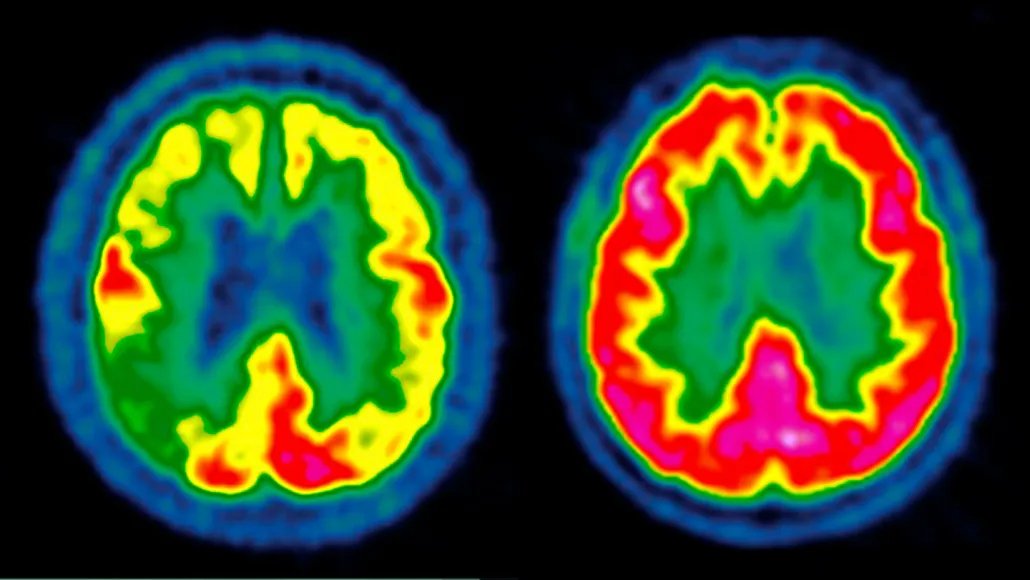
GLP-1 drugs - the Ozempic-style “miracle meds” - failed to slow Alzheimer’s.
Yes, failed.
And this is exactly what real science looks like.
For years, anecdotal reports + early studies hinted at something exciting:
• People said they felt “sharper” on GLP-1s.
• Small trials hinted at cognitive benefits.
• Animal studies looked promising.
• Real-world data suggested protection.
Hope was real - and reasonable.
But hope ≠ evidence.
So scientists did what responsible scientists do:
They ran two massive, well-designed, placebo-controlled trials.
Nearly 4,000 patients, followed for two years, all early-stage Alzheimer’s.
The question:
Can semaglutide actually slow the disease?
The answer: No. Not in this population, not at this dose, not in this form.
There were tiny biomarker changes - signals that something might be happening biologically.
But clinically?
Zero difference.
No better memory.
No slower decline.
No measurable benefit.
A clean, unambiguous result.
That’s what gold-standard data does: it cuts through noise.
And yes - this is disappointing.
Researchers who helped invent GLP-1s hoped this would work.
Patients hoped.
Families hoped.
But science doesn’t care about hype or headlines.
It cares about truth.
And today’s truth is simple:
GLP-1s don’t slow Alzheimer’s - at least not like this.
Is this the end?
Not at all.
Scientists are already asking the next questions:
• Wrong dose?
• Wrong timing?
• Wrong population?
• Not enough drug reaching the brain?
• Maybe GLP-1s help prevent, not treat?
• Or maybe we need better molecules entirely?
Each “failure” narrows the path toward a breakthrough.
This is the opposite of pseudoscience.
No excuses.
No YouTube gurus.
No cherry-picking.
Just data → conclusion → next hypothesis.
It’s slow.
It’s painful.
It’s frustrating.
But it’s honest.
The Alzheimer’s field didn’t collapse today.
It adjusted.
It recalibrated.
It moved forward.
Real science isn’t a straight line.
It’s a messy, disciplined climb toward answers that actually help people - not ones we wish were true.
So yes, GLP-1s stumbled.
And that’s fine.
Because this is how science works:
We test big ideas.
Most fail.
Some don’t.
But every trial - even the disappointing ones - pushes us closer to something that will work.
Misinformation doesn’t win with evidence. It wins with repetition.
By repeating a lie until it feels true people mistake familiarity for facts.
Chemtrails didn’t need proof
Anti-vax myths didn’t need data
Flat Earth didn’t win with physics
GMO panic wasn’t built by toxicology
We cured polio. We wiped out smallpox. We built the modern world.
And somehow the dumbest contagion of all became people rejecting science.
History is going to laugh at this era.
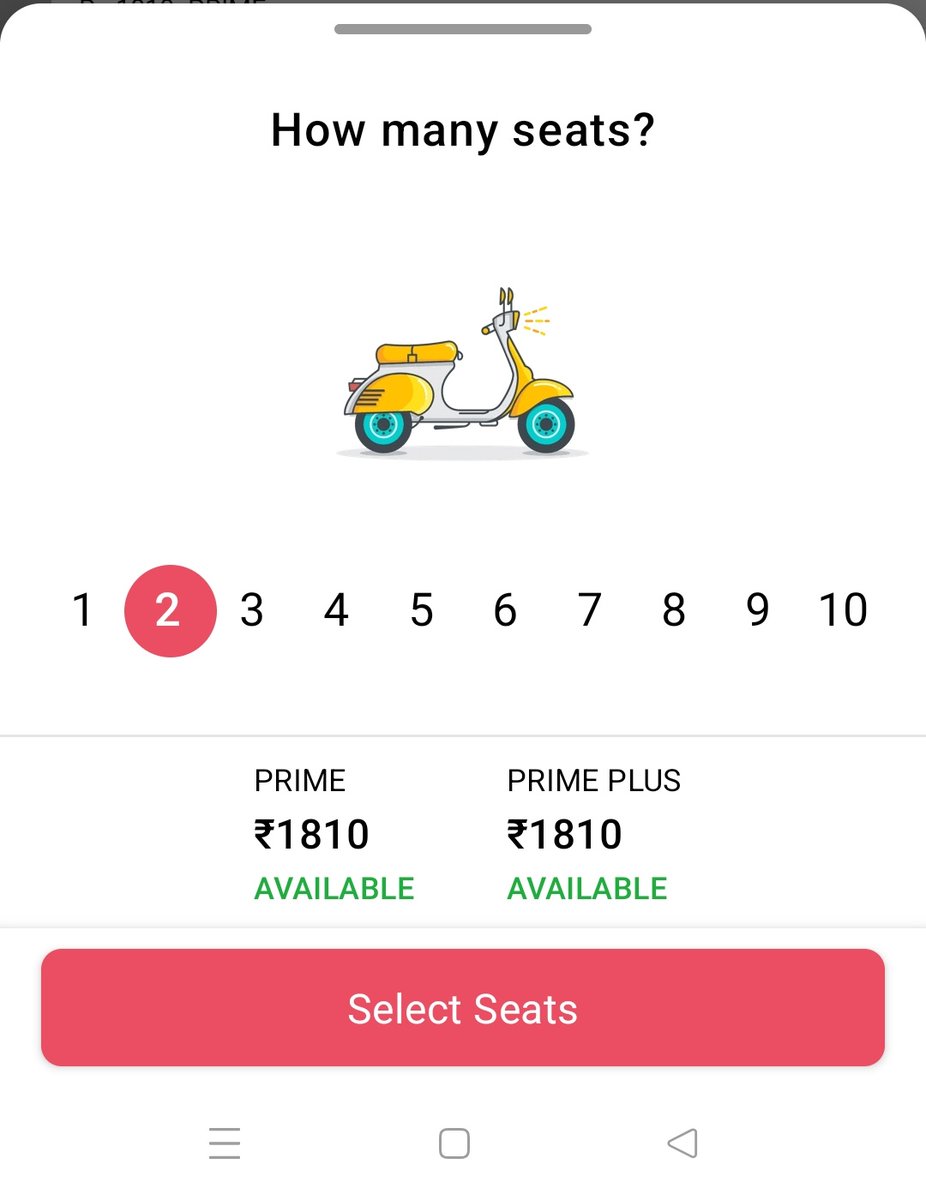
Not that I'm interested in watching another over-the-top propaganda film, I checked tickets for Dhurandhar in two cinema halls near my house in Mumbai.
The prices range from Rs. 700 to Rs. 1800 per ticket for a night show.
An ordinary family of four, would have to spend anywhere between Rs. 2800 to Rs. 7200 in one evening to catch a movie.
Assuming they walk to the theatre and don't eat or drink anything, that's still a lot of money in a country where 90 percent of people earn less than Rs. 25,000 a month.
Essentially, over the past few years, we've told the working class that you don't need to enjoy a movie in the cinema hall. You're not needed there.
You're only supposed to watch reels on Instagram with Mukesh bhai's data.
Watching a movie on the big screen is a luxury afforded to a few.
It wasn't always like that. I remember when I was in school and college, which wasn't that long ago, I used to go to the theatre regularly with my friends on the pocket money our parents provided.
The crowd around us largely cut across people from different socio-economic background. Even those with not a lot of privilege could forget about their woes for a bit and enjoy a movie on the big screen. Those theatres are now far and few.
Lately, we've been hearing this one phrase a lot: the audience isn't interested in movies like Homebound or Superboys of Malegaon.
That's only partly true. More accurately, the privileged aren't interested in movies that make you think or make you uncomfortable. They're interested in mindless jingoism.
And sadly, we've made our theatres exclusive to those with privilege, making it easy to justify Animal or Dhurandhar.
This is not just marginalization of the audience. It also ensures that filmmakers like Neeraj Ghaywan or Dibakar Banerjee have to work a lot harder to make the kind of movies they do.
To all who are saying that the H1B Visa tariff is a blessing in disguise…I have just one question, why are all the blessings we get disguised & not just direct blessings…
Just about a decade ago, a Sanghi made a statement on NDTV that Taj Mahal was not built by Shah Jahan & Jama Masjid was Jamuna Mandir.
The anchor grilled him & the crowd laughed at the stupidity.
Today, movies are made on such stupid comments & they are spread on WhatsApp like ultimate truth.
This is how much the intellect of this nation has come down since 2014.