A 10th-century chapel built on a volcanic needle.
Saint-Michel d’Aiguilhe rises above Le Puy-en-Velay, France, on an ancient volcanic chimney around 82 meters high.
The chapel is reached by climbing 268 steps carved into the rock — turning the approach itself into part of the architecture.
📸 @RomanicoEspana
Visiting Venice changed Claude Monet's life
By 1908, he had spent forty years teaching the world to see light. He was 68, in poor health, and losing faith in his own work. He had just abandoned his water lily paintings, discouraged after a trusted advisor questioned whether anyone would even want them. The man who had founded Impressionism, whose 1873 canvas "Impression, Sunrise" had given the entire movement its name, was convinced his best days were behind him...
His wife, Alice, suggested a trip to Venice. Monet resisted. The city had been painted to death by Canaletto, Turner, and Whistler, and he had always insisted, "I will not go to Venice." It was, he said, "too beautiful to be painted."
He went. And the moment he arrived, standing before the light on the water, he exclaimed: "It is too beautiful to be painted! It is untranslatable!"
Within days he could not stop working. He fell into a fierce daily rhythm, painting the Doge's Palace, the churches, and the palazzos along the Grand Canal at the same hours each day, chasing the shimmer of Venetian air on stone and water. In just over two months he began 37 canvases. His wife wrote home that she was overjoyed to see him so impassioned again, doing beautiful work, and something other than "those same old water lilies."
In a letter to a friend, Monet wrote: "My enthusiasm for Venice continues to grow, and it saddens me that the moment is coming when I must leave this unique light."
He never returned. His beloved Alice died a few years later, and for a long time he could not bring himself to finish the Venice canvases. But when he did, and when they were finally shown in Paris in 1912, they were a triumph.
And the trip had given him back something he thought he had lost: the discouraged old man who had walked away from his water lilies went home and took them up again, and spent his final years creating the enormous, luminous Nymphéas, the paintings the world now loves most.
Sometimes the thing that revives us is an unexpected encounter with beauty we almost talked ourselves out of. He nearly didn't go. It turned out to be the doorway to his greatest work...
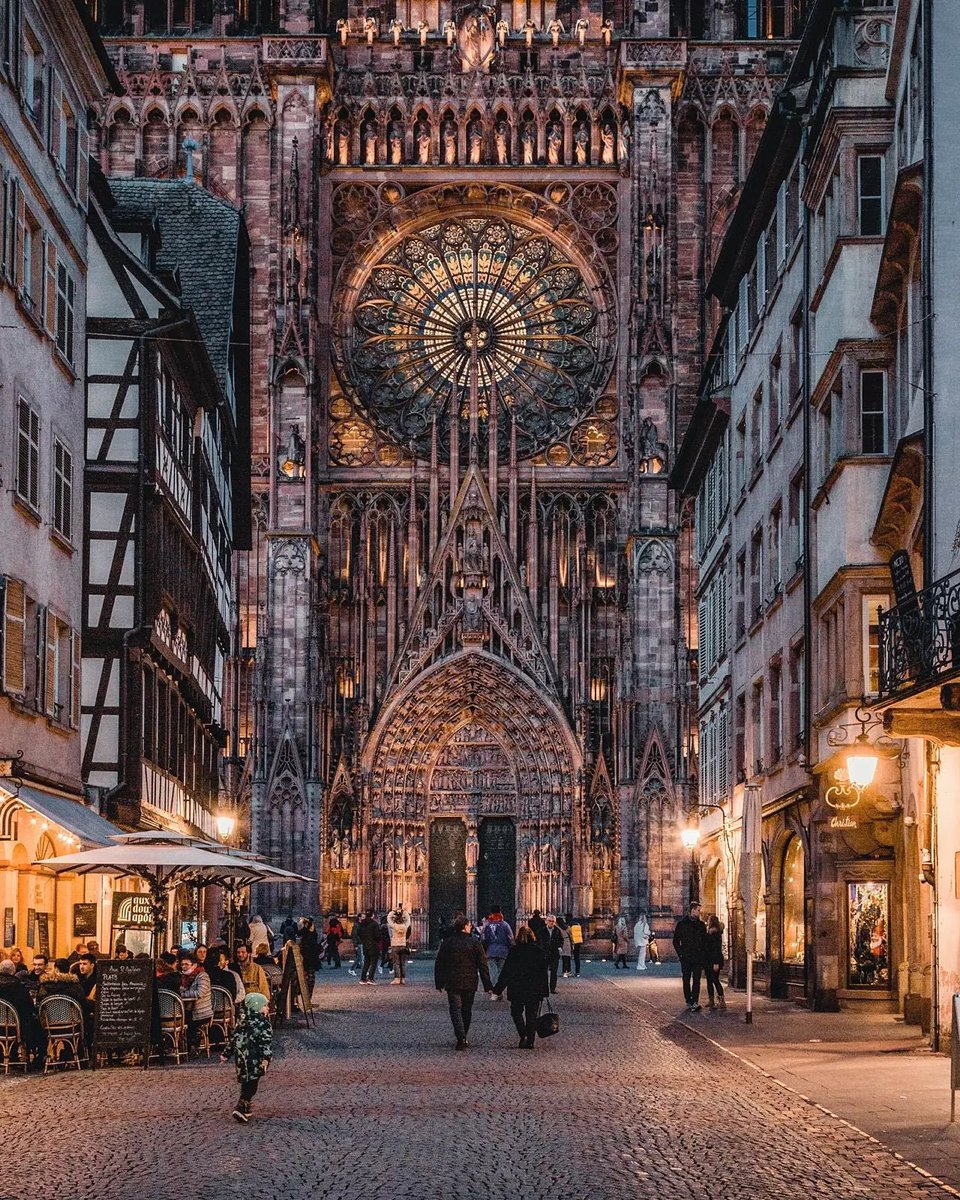
Remember, beauty can also be done on a massive scale.
This is Strasbourg Cathedral — Victor Hugo once described it as a "prodigy of the gigantic and the delicate."
Hermitage of Panagia Kakaviotissa, Island of Lemnos, Greece 🇬🇷
It is the only small roofless church in Greece — and possibly in the world. Carved directly into the mouth of a cave at the summit of Mount Kakavos, it is believed to have housed a paleochristian chapel and hermits as far back as the Byzantine era.
The history of this little church dates back to the 14th Century AD, hen it was founded by monks from the nearby island of Agios Efstratios. They settled here seeking refuge from the Ottomans.
Over the following centuries, no new monks joined them.
Eventually, the last remaining hermits decided to leave Lemnos and move to the great monastic community of Mount Athos.
According to tradition, before departing, the final monk entrusted a local shepherd from the Moumtzi family with the precious icon of the Virgin Mary. He asked him to bring the icon back to the church every year on the Tuesday after Orthodox Easter. The shepherd gave his word — and centuries later, the people of Lemnos continue to honor this promise with profound devotion.
#archaeohistories
89 years since pedestrians first crossed the Golden Gate Bridge.
The Golden Gate Bridge first opened to pedestrians on May 27, 1937 — one day before cars were allowed across.
Decades later, anniversary walks would turn the bridge into one of San Francisco’s most unforgettable public spaces.
Some structures are not just crossed.
They become part of a city’s memory.
📸 @DOverview