Based at @bristoluni, a group of professionals conducting palliative and end-of-life care research. Coordinated by @C_A_Chamberlain, @Lucy_Selman and @drpoco
Wishing everyone a happy new year, and hope you had a restful break. We are back at work and you can now find us on Bluesky too. Please follow us!
@peolcsw.bsky.social
New paper from the NIHR-funded Equitable Bereavement Care for All study: How to tackle inequities in bereavement support for ethnically diverse communities: a national qualitative study using experience-based co-design https://t.co/ulCec3oS4L
@Lucy_Selman
New paper from the NIHR-funded Equitable Bereavement Care for All study: How to tackle inequities in bereavement support for ethnically diverse communities: a national qualitative study using experience-based co-design
https://t.co/ulCec3oS4L
@Lucy_Selman
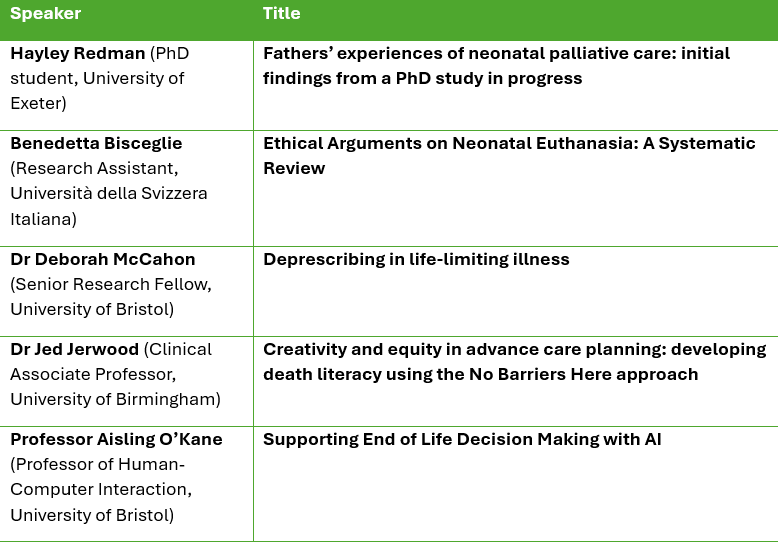
We have a great line up of speakers and talks for our next online PEOLC Research Network Meeting on Tues 3 Nov. We welcome anyone with an interest in palliative or end-of-life care research from any discipline. Please register here https://t.co/vmKYXJvsCV
@Lucy_Selman@drpoco
We have a great line up of speakers and talks for our next online PEOLC Research Network Meeting on Tues 3 Nov. We welcome anyone with an interest in palliative or end-of-life care research from any discipline. Please register here https://t.co/vmKYXJuUNn
@Lucy_Selman@drpoco
“Ultimately, AI is not a magic box; it is simply a tool”
AI is increasing being used in palliative care. But we haven’t yet got to grips with how and when it could and should be used. Dr Amara Nwosu examines some of the pitfalls and possibilities in our latest blog.
Read more 👉https://t.co/anJT8ST42d
🚨Calling researchers - Submissions for abstracts and spotlight sessions for the Marie Curie Research into Practice Conference 2027 are now open!
📋We’re seeking submissions that align with priority areas identified by the priority setting partnership for palliative and end of life care with the James Lind Alliance and/or areas in UK nation health policy priorities relevant to palliative and end of life care.
To fit with the purpose of the conference, submissions should also focus on the implementation of research in practice, showing the latest research impact across palliative and end of life care.
More details and how to submit can be found on our website 👉 https://t.co/5mvmcT7DbL
Marie Curie-funded research shows 1 in 3 people who are entitled to benefits at end of life are missing out.
The Special Rules for End of Life allows terminally ill people to quickly access social security support via an SR1 form, given when a clinician judges a person likely has less than a year to live.
The findings, from research at King's College London, show in England and Wales 1 in 3 people who die from a chronic illness (around 120,000 each year) do not claim despite being entitled. The research also shows take up varies dependent on chronic condition, is lower for working-age people, and higher in the most deprived populations.
Find out more👉 https://t.co/amT4AQPtjH
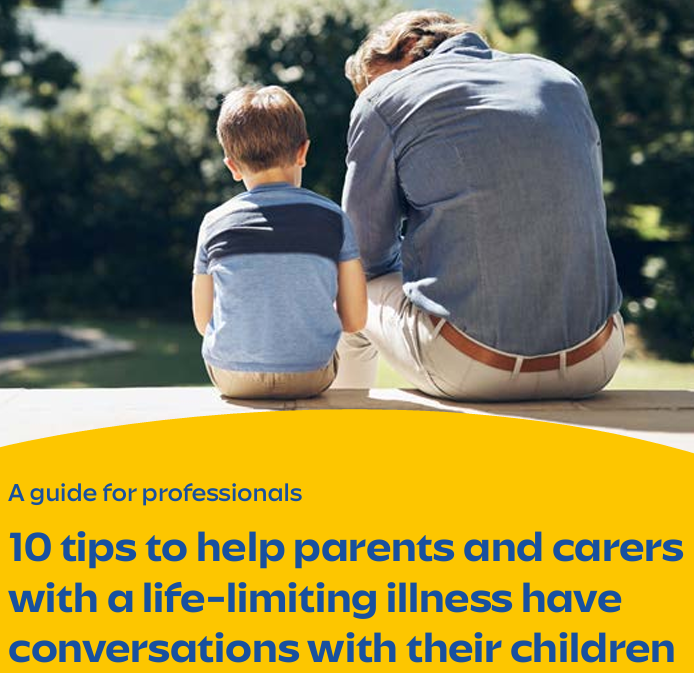
Have you seen our guide for professionals to support parents and carers with a life-limiting illness have conversations with their children?
Developed in partnership with Ulster University and King's College London, the guide provides tips and examples to help you navigate these conversations.
The tips are based on interviews with professionals, parents, and children from diverse backgrounds.
Read the guide in English - https://t.co/UmrGavnmkx
In Welsh - https://t.co/YwI6if6GDi
A fantastic line-up of speakers at our recent in-person PEOLC Network meeting. The last part of the afternoon was dedicated to the End of Life Matters (ELM) HIT which generated lots of discussion.
https://t.co/xckaul0xrO
@Lucy_Selman@shaun_qureshi@JennyKitzinger@skgretton
Today, unscheduled and emergency care is the norm for people at the end of life.
New evidence from Northern Ireland shows how often care happens in crisis 🧵👇
Our digital lives after death: the elephant in the room we’re not addressing.
In this blog, Sarah Stanley, Marie Curie Research Nurse, discusses the importance of including Digital Legacy in Advance Care Planning, the focus of her PhD.
Her research uncovers how our digital lives we leave behind after we die can become a source of stress when unplanned for, but also a source of comfort and connection when addressed.
Read more 👉https://t.co/sjrpSuvrnS
Exploring barriers to and experiences of palliative and end-of-life care for people living with HIV.
Thanks to modern medicine, many people living with HIV now have life expectancies similar to the general population. This comes with a higher likelihood of age-related conditions, including terminal and life-limiting illnesses. The need for high quality, person-centred palliative and end of life care is becoming increasingly important.
With @THTorguk, we carried out a survey to understand the barriers to and experiences of palliative and end of life care in this group. Findings cover misconceptions of palliative care, how HIV status and stigma affect access to healthcare, and top priorities for end of life, including:
(1) being in a calm atmosphere
(2) being free of pain and
(3) support with psychological well-being.
Read now - https://t.co/nIufFEY4r6
Introducing our next Research Grants Scheme, Opening 2 June – Care close to home, in and out of hours
💡Our new call for research seeks to fund projects of up to £150K. The theme closely aligns with:
👉Marie Curie’s mission to close the gap in end of life care.
👉Evidence gaps and research priorities identified by people with lived and professional experience.
👉The UK Government’s focus of shifting the balance of care from hospital to community and providing care at all hours.
Researchers, find out more and submit your expression of interest from 2 June to 17 July - https://t.co/PwfzXeScyj
Patient Perspectives: Integrated Palliative Care for Heart Failure Services
In an NIHR-funded, Marie Curie supported research project at Queen's University Belfast, researchers set out to understand gaps in palliative care integration for heart failure services.
Two project patient and public involvement representatives have authored thought-provoking blogs on their experiences; experiences that have helped shape the project throughout.
Read them here:
https://t.co/9ej1OO3Kbt
https://t.co/KYQMzSy9Jz
This Dying Matters Awareness Week, Good Grief Festival are relaunching their Grief and Bereavement in Primary Care course as a flexible, on demand course. Find out more & register here https://t.co/nCIHo2mn6V
@Lucy_Selman