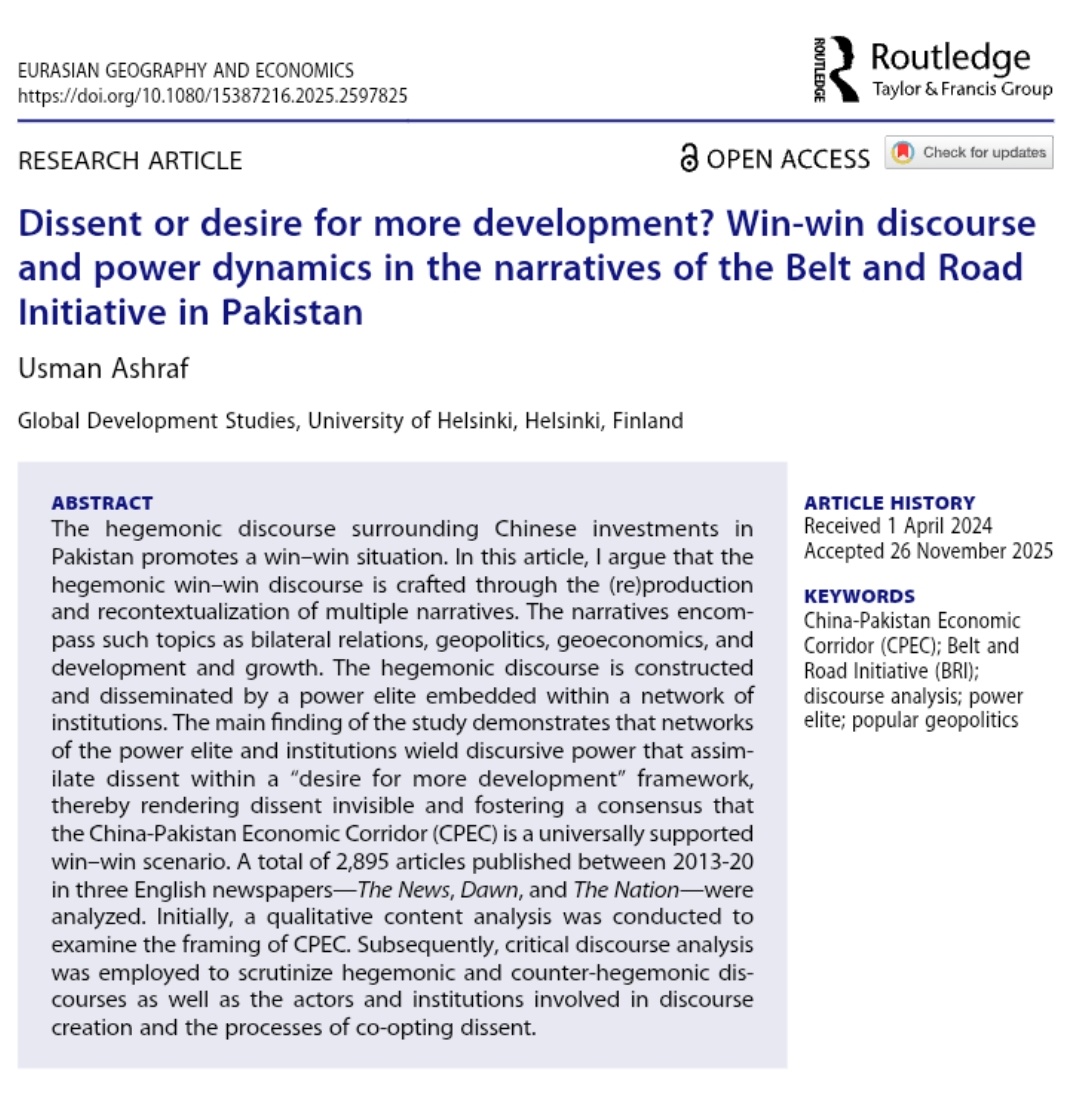
Hot Off Press!! 🔥🔥
In this article I make two-pronged argument
1. Multiple narratives are involed to frame #CPEC as game changer, these are 1. Bilateral relations 2.#Geopolitics 3. #Geoeconomics 4. #development
2. Dissent is co-opted n framed as desire for more dev.
📢 ATTENTION: Visiting Fellows in #Pakistan. Come and spend 8 weeks at our Centre in London in 2027-28.
APPLICATION DETAILS: https://t.co/kjFRAxD1Dt
DEADLINE: 5pm/1700hrs UK time, 30 June 2027
@adnanqk@scholar_corner@pkBritish
At the time of Greece financial crisis, the Greeks were accused on being lazy and taking time of work (essentially nadeem's qrgument). Later multiple survery on labour productivity showed Greek labourers were working the longest hours in the EU.
The least working were Dutch.
Eid coming labor already gone for a holiday. Return in 10 days.
we ALL love a good dramatic lament about poverty 😭💔
Yet the poor? They’re out here living their best lives — taking long luxurious holidays, endless breaks, and sliding into laziness at the first opportunity!
Why work hard for money when you can just… not?
Daily wage laborers refusing to put in extra time for piece rate?
Conclusion: There is no poverty, folks. People are contented. ! 🏖️💅”
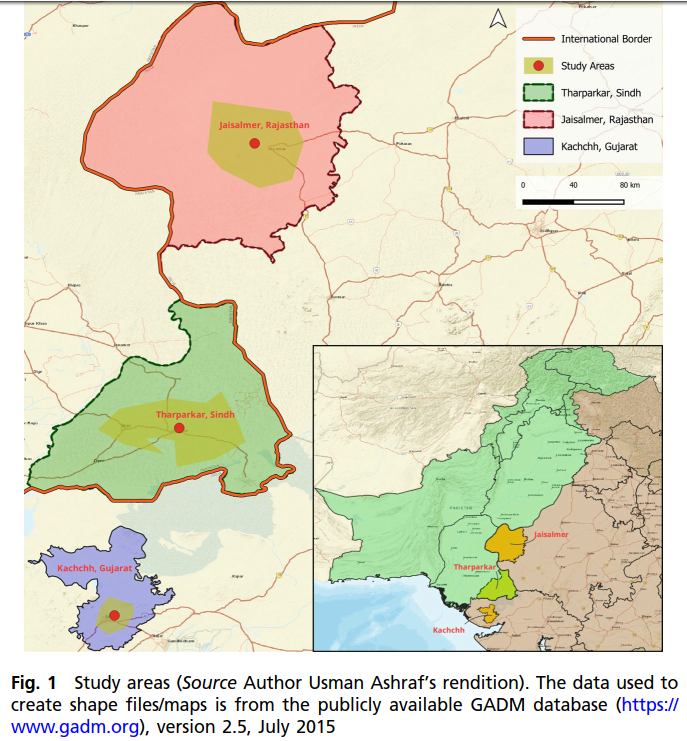
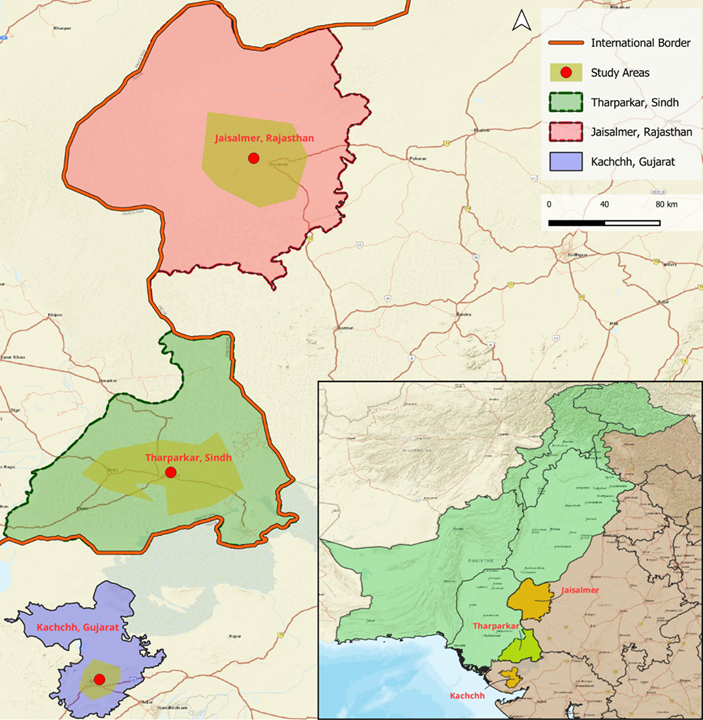
1/ Can renewable energy projects be "extractive"? In our new chapter, we dive into the "energy frontiers" of the Indo-Pak borderlands.Co-authored with Shayan Shokrgozar & David Singh. We looked at three spots:
🔥 Thermal power in Sindh
☀️ Solar in Rajasthan
💨 Wind in Gujarat
"prefigurative politics"—building the pluralistic world they want to see. 6/ "Energy infrastructures do more than generate power: they naturalize hierarchies." It's time to rethink what a "just transition" actually looks like. 7/ Read the full chapter for FREE here:
This perhaps is one of the best piece of reporting on Reko Diq. It unpacks a troubling political economy of 'natural' resource in Pakistan such analysis of resource-making in Pakistan is hard to find.
Well done!! @Akbar_notezai
I always wonder about this debate whether a scholar's opinion/belief discredit their otherwise academically useful work?
the moral dilemma of using scott's work after the accusations of his CIA ties or Focault's after the allegations of sexual misconduct, or heideggar n nazi
and socio-material settings,an extractive resource politics is driving the emer-
gence of similar patterns of enclosure across neighbouring regions of Pakistan and India.
The chapter is published in "Societal Transitions to Sustainability" (Open access).
https://t.co/o6Inj4M1Sp
Energy at the Edge of the State
Shayan, I and David wrote about extractive politics in India and Pakistan. By examining the development of thermal power in Sindh, solar power in Rajasthan, and wind power in Gujarat, we illustrate how, despite differing institutional, relational,
supported win–win scenario. The hegemonic win–win discourse is crafted through the (re)production and recontextualization of multiple narratives.
https://t.co/FxJk2fVBxw
I recently contributed to the journal of Eurasian Geography and Economics.
My article "Dissent or desire for more development?" is an attempt to unpack power elite that constructs the hegemonic disocurse of BRI/CPEC while silencing the dissent.
The networks of the power elite and institutions wield discursive power that assimilate dissent within a “desire for more development” framework, thereby rendering dissent invisible and fostering a consensus that the China-Pakistan Economic Corridor (CPEC) is a universally
Hot Off Press!! 🔥🔥
In this article I make two-pronged argument
1. Multiple narratives are involed to frame #CPEC as game changer, these are 1. Bilateral relations 2.#Geopolitics 3. #Geoeconomics 4. #development
2. Dissent is co-opted n framed as desire for more dev.
On UNICEF’s birthday, we honour Patras Bokhari-the Pakistani diplomat whose leadership helped save UNICEF from dissolution in its early years.
Proud to share this special tribute created in collab with @MhuzaifaNizam
Bokhari's legacy continues to inspire our work #ForEveryChild