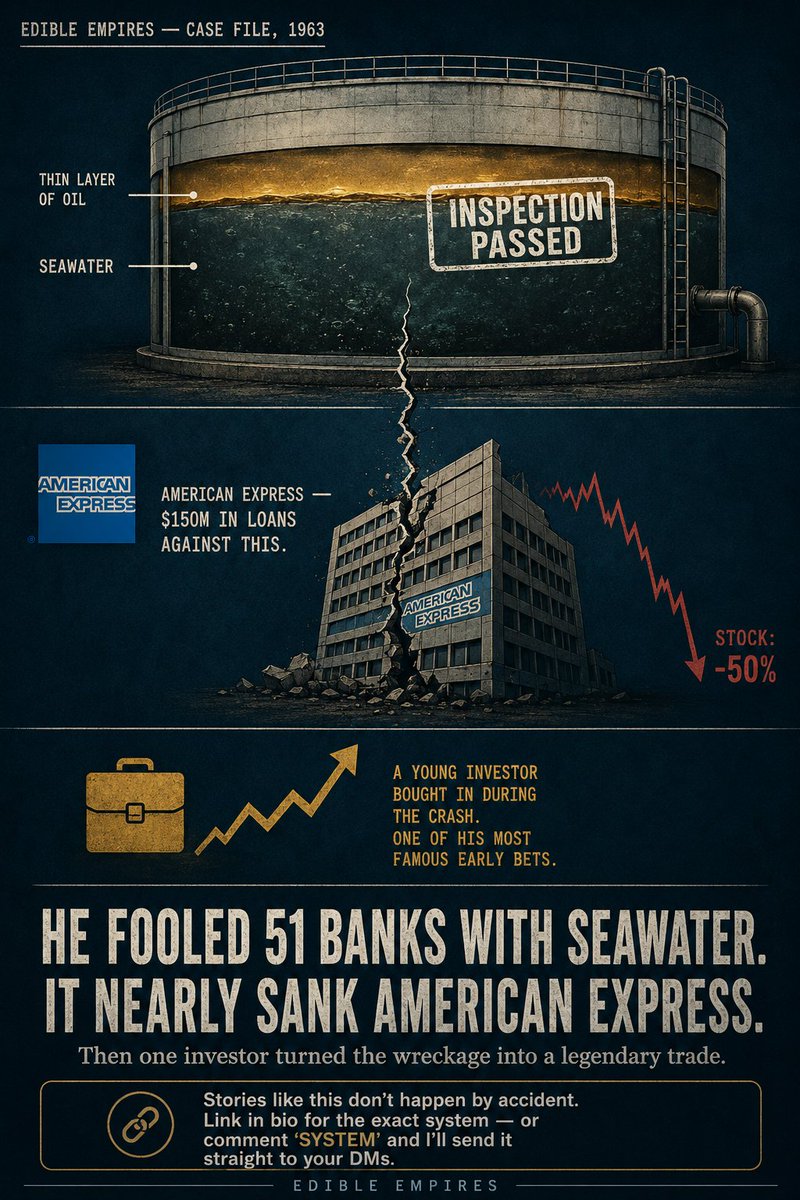
He convinced 51 banks he owned $150 million in salad oil. He had $6 million. The rest was seawater with a thin layer of real oil floating on top — just enough to fool anyone looking in from above.
American Express backed him. When the fraud collapsed, their stock crashed 50% in days.
Anthony "Tino" De Angelis ran Allied Crude Vegetable Oil out of Bayonne, New Jersey. His storage tanks were the entire scheme: real oil floats, so a few feet of it sitting on top of plain seawater passed every inspection an outside auditor could run without draining the tank.
American Express, through a warehousing subsidiary, had effectively vouched for inventory that barely existed — using it as collateral for tens of millions in loans.
In November 1963, the scheme finally collapsed. Export demand didn't materialize. Lenders called in their money. Allied Crude went bankrupt overnight, dragging over $175 million in losses across 51 banks and major Wall Street firms with it. American Express's own stock fell by more than half in the panic that followed.
Here's the twist almost nobody remembers: a 32-year-old Warren Buffett looked at the wreckage and saw opportunity instead of danger. He quietly bought a 5% stake in American Express during the crash — a bet the core business was still sound underneath the scandal.
It became one of the most legendary early trades of his career.
De Angelis got seven years in prison. The story broke days before the Kennedy assassination and got buried under the bigger tragedy — one of the largest corporate frauds in American history, nearly erased from memory by timing alone.
What's the most audacious fraud you've ever read about that almost worked?
#EdibleEmpires #FoodHistory
He forbade his own brother from selling their invention to anyone outside a hospital ward.
When his brother left and got rich anyway, he stole the family name and used it on a rival product.
It ended with him legally banned from ever using his own surname again.
Dr. John Harvey Kellogg ran the Battle Creek Sanitarium — a wellness institution so exclusive it treated presidents. His younger brother Will worked under him for years, helping perfect a flaked cereal that finally made hospital food bearable.
John's rule: Will could not sell it to anyone who wasn't a patient. When Will started adding sugar to make it appeal to regular people, John was furious enough to make him personally pay for factory construction as punishment.
Will finally left in 1906. Built his own company. Got rich.
John's response wasn't pride. It was petty. He started selling his own competing cereal — and put "Kellogg" on the box too.
Nearly a decade of lawsuits followed. It went all the way to the Michigan Supreme Court over one question: who actually owned the right to their own family name.
Will won completely. John was permanently barred from ever putting "Kellogg" on a product again — his own name, in the state where he'd built his career.
They barely spoke again for the rest of their lives.
What's the pettiest thing you've ever seen someone do after losing a fight they started themselves?
#EdibleEmpires #FoodHistory